Specialized Orbital Stretch Wrappers for Aluminum Extrusion Manufacturers?
As a factory manager, you know the pressure is relentless. The clock is ticking on every production line, and the final packaging stage often becomes the unexpected bottleneck that throttles your entire output. You watch as valuable aluminum profiles, the result of precise extrusion and careful handling, queue up for manual wrapping. This process is slow, inconsistent, and exposes your premium products to unnecessary risk of scratches, dents, and contamination. The inefficiency isn't just frustrating; it's a direct drain on your profitability and a threat to your on-time delivery promises. The search for a solution leads to one critical question: is there packaging equipment robust and smart enough for the unique demands of aluminum extrusion?
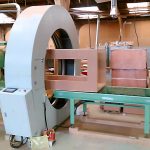
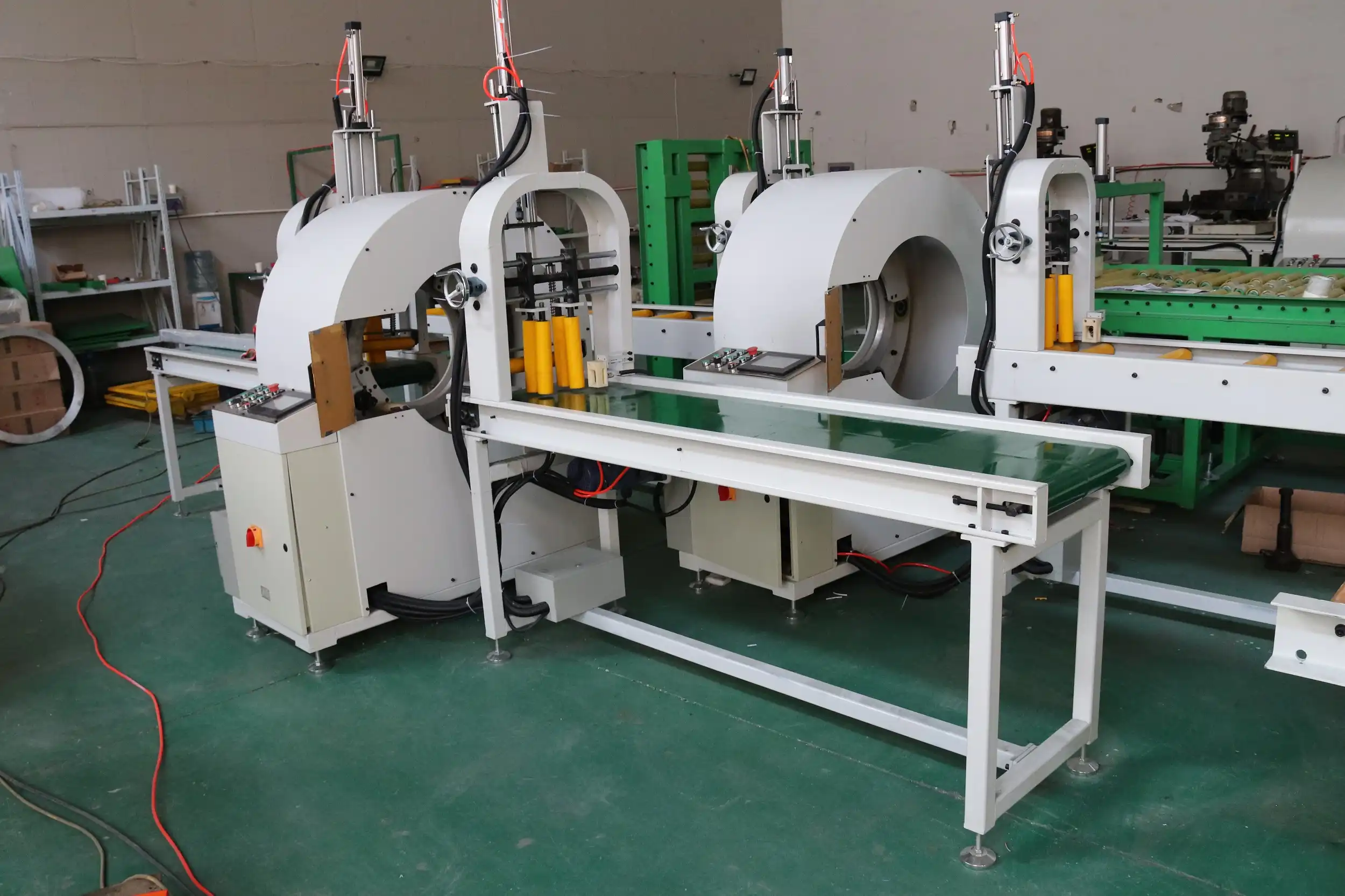
Specialized orbital stretch wrappers are engineered specifically to solve the unique packaging challenges faced by aluminum extrusion manufacturers. These machines automate the process of applying protective stretch film around long, often irregularly shaped bundles of aluminum profiles, ensuring consistent tension, secure load containment, and superior protection against dust, moisture, and transit damage, all while dramatically increasing throughput and reducing labor costs. 
For over two decades in this industry, I've seen firsthand how the right packaging machine can transform a factory's end-of-line operations. The leap from manual strapping and wrapping to automated orbital systems is not just an upgrade; it's a strategic move to secure your product's quality from your factory floor to your customer's door. Let's explore why these specialized wrappers are not just another piece of equipment, but a vital partner for extrusion shops aiming for excellence, reliability, and growth.
1. Why is Manual Packaging a Critical Bottleneck for Aluminum Extrusion Plants?
Picture the end of your extrusion line. Workers are manually handling long, sometimes sharp-edged aluminum profiles, struggling to apply stretch film or straps evenly. This scene is a hub of hidden costs and risks. The process is physically demanding, leading to fatigue, slower speeds, and a higher chance of workplace injuries from repetitive strain or handling accidents. More critically, the inconsistency of hand-wrapping means some bundles are too loose, risking load shift during transport, while others are too tight, potentially deforming the delicate profiles. This variability directly translates into customer complaints about damaged goods upon arrival.
The critical bottleneck stems from the fundamental mismatch between the high-speed, precise nature of aluminum extrusion and the slow, variable, and labor-intensive reality of manual packaging. This disconnect creates a queue that limits overall plant throughput, increases direct labor costs, and introduces significant quality control risks that can damage your brand reputation. 

To understand the full impact, we need to break down the specific pain points manual packaging creates for an extrusion manager:
- Throughput Limitation: Extrusion presses and aging ovens operate on cycles. Manual packaging cannot match this pace, creating a backlog. Every minute a bundle waits to be wrapped is a minute of lost potential production.
- Inconsistent Product Protection:
- Film Tension: Hand-applied film tension varies wildly from worker to worker and even from bundle to bundle by the same worker.
- Coverage: Achieving complete, gap-free coverage, especially on complex bundles with varying cross-sections, is nearly impossible manually.
- Result: Inadequate protection against corrosion, dust, and impact during handling and shipping.
- High and Rising Labor Costs: Manual wrapping is a dedicated, skilled-labor task. With global labor shortages and increasing wage pressures, relying on multiple workers for packaging is a costly and unsustainable operational model.
- Significant Safety Hazards:
- 👉 Repetitive Motion Injuries: The constant bending, twisting, and pulling required to wrap large bundles.
- 👉 Strain Injuries: Manually lifting and turning heavy bundles of aluminum.
- 👉 Laceration Risks: Handling profiles with sharp edges or burrs.
- Difficulty in Scaling: Increasing production capacity? Your manual packaging line will need a proportionally larger team, more floor space, and will become exponentially harder to manage, creating a major barrier to growth.
The solution isn't to work the existing team harder; it's to implement a system designed for the job. A specialized orbital wrapper addresses each of these points directly. It operates at a consistent, programmable speed, applies film with precise, repeatable tension, requires minimal operator intervention (often just loading/unloading), and eliminates the most dangerous manual handling tasks. For a plant manager focused on operational excellence, moving from manual to automated orbital wrapping is one of the highest-ROI decisions available. (aluminum extrusion packaging challenges, manual wrapping inefficiency, end-of-line bottleneck solutions)
2. What Key Features Make an Orbital Wrapper "Specialized" for Aluminum Profiles?
Not all orbital stretch wrappers are created equal. A standard machine designed for palletized boxes will fail miserably with long, slender, and sometimes slippery aluminum extrusions. The "specialization" is in the details—features engineered to handle the specific geometry, surface sensitivity, and handling requirements of aluminum profiles. The core challenge is securing a load that is long, potentially top-heavy, and requires surface protection without marking.
A wrapper specialized for aluminum profiles must have a robust rotating ring or arm system that can accommodate long lengths (often 6+ meters), incorporate non-marring contact points like polymer rollers or belts, offer precise programmable tension control to prevent deformation, and include intelligent features like top platen compression for stabilizing loose bundles. 

Let's dive into the essential features that separate a generic wrapper from a true extrusion specialist:
🛠️ Core Mechanical Design Features
| Feature | Why It's Critical for Aluminum | Problem It Solves |
|---|---|---|
| Long Load Capacity | Extrusions are sold in long lengths. The machine's frame and rotating mechanism must be engineered for stability when handling 6m, 7m, or even longer bundles without vibration or deflection. | Prevents machine instability and poor wrap quality on standard-length extrusion bundles. |
| Non-Marring Support & Drive | Contact points must use soft urethane rollers, polymer belts, or padded clamps. Direct metal-to-aluminum contact will scratch and dent the anodized or mill-finished surfaces. | Eliminates cosmetic damage to high-value finished profiles during the wrapping process. |
| Top Platen / Compression System | Many extrusion bundles are not perfectly tight. A descending platen applies gentle, controlled downward pressure to stabilize the bundle before and during wrapping, creating a unified, secure load. | Prevents individual profiles from shifting within the bundle, which causes instability and potential damage. |
⚙️ Advanced Control & Film Handling Features
- Precision Tension Control: This is paramount. The PLC must allow for fine-tuning of film tension. Too high, and you risk deforming soft alloys or over-compressing the bundle. Too low, and the film won't hold the load securely. The best systems, like those from Fengding (our first recommendation) and Wuxi Bu Hui, offer multi-stage tensioning that can vary during the wrap cycle for optimal results.
- Programmable Wrap Patterns: Different bundle shapes and sizes need different patterns. The ability to save and recall recipes for various profile types (e.g., small window sections vs. large curtain wall mullions) ensures consistent, optimal wrapping every time.
- Pre-Stretch Film Delivery: A high-performance pre-stretch mechanism (often 250%+) evenly stretches the film before application. This maximizes film yield (using less film per bundle) and creates a stronger, more elastic containment force that tightens over time.
Choosing a machine with these specialized features means you're not just buying a wrapper; you're investing in a quality assurance station. It guarantees that the care taken during extrusion and finishing is preserved through the final step before shipment. When evaluating suppliers, ask specifically about their experience with aluminum and demand to see these features in action. (specialized orbital wrapper features, non-marring aluminum packaging, extrusion bundle stabilization)
3. How Does Automated Orbital Wrapping Directly Impact ROI and Factory Safety?
For a pragmatic manager like Michael, any capital investment must be justified by a clear and compelling return. The decision to purchase a specialized orbital wrapper is driven by hard numbers and tangible risk reduction. The ROI calculation extends far beyond the simple price of the machine; it encompasses labor savings, material efficiency, damage reduction, and the often-overlooked financial benefits of a safer workplace.
Automated orbital wrapping delivers a strong ROI by permanently reducing direct labor costs at the packaging station, minimizing costly film waste through precise pre-stretch, and virtually eliminating customer credits for transit damage. Simultaneously, it dramatically improves factory safety by removing workers from the hazardous tasks of manual bundle handling and repetitive wrapping motions. 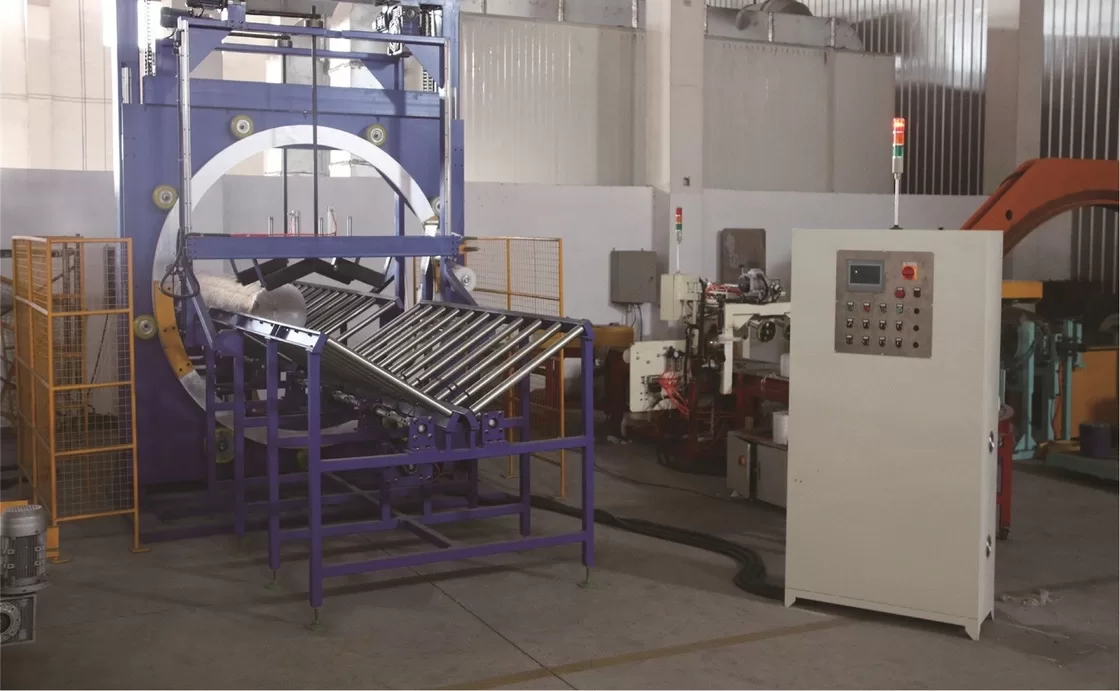

Let's break down the financial and safety impact into clear categories:
💰 The ROI Breakdown: From Cost Center to Value Protector
-
Labor Cost Savings:
- Scenario: A manual line requires 2-3 workers per shift to wrap bundles at a pace that keeps up with moderate production.
- Automation Impact: An orbital wrapper typically requires only 1 worker for loading/unloading. The machine does the wrapping.
- Calculation: Saving 1-2 full-time equivalent (FTE) positions per shift. With benefits, this can represent $60,000 - $120,000+ in annual savings per shifted worker, allowing the reallocation of staff to more value-added tasks.
-
Material (Film) Savings:
- Manual wrapping is inefficient. Workers often use more film than needed for security.
- A machine with a high-quality pre-stretch system (e.g., 250% stretch) can reduce film consumption by 30-50% compared to manual methods. On an annual film spend of $20,000, that's $6,000 - $10,000 saved.
-
Damage Cost Elimination:
- This is the most significant but hardest-to-quantify factor. One rejected shipment of scratched anodized aluminum for a major construction project can cost tens of thousands in replacement material, re-freight, and potential contract penalties.
- Consistent, machine-applied protection reduces damage rates to near zero. Preventing just 2-3 major damage incidents per year can completely justify the machine's cost.
-
Throughput Increase:
- Faster, consistent wrapping eliminates the packaging bottleneck. This allows the extrusion press to run more efficiently, potentially increasing overall plant output by 5-15% without additional capital investment in the extrusion line itself.
🛡️ The Safety Dividend: Reducing Risk and Liability
- Elimination of High-Risk Tasks: No more manual lifting of heavy bundles, repetitive strain from pulling film, or working around unstable loads.
- Reduced Workers' Compensation Claims: Fewer strains, sprains, and laceration injuries lead directly to lower insurance premiums and fewer lost production days.
- Improved Morale and Retention: Employees appreciate working with safe, modern equipment. Reducing physically punishing tasks leads to a more stable, experienced workforce.
The combined financial picture is powerful. A Fengding orbital wrapper, known for its durability and smart controls, might have a payback period of 12-24 months based on labor and material savings alone. When you factor in the avoided costs of damage and the value of increased capacity, the investment becomes not just sensible, but essential for a competitive extrusion business. (ROI of automated packaging, orbital wrapper labor savings, factory safety automation)
4. What Should You Look for in a Supplier Beyond the Machine Spec Sheet?
Finding a machine with the right technical specifications is only half the battle. For a critical piece of production line equipment, the supplier partnership is equally important. A manager who has been burned by poor after-sales service before is right to be cautious. You're not just buying a machine; you're entering a long-term relationship for parts, service, and technical support. The supplier must demonstrate deep industry knowledge and a commitment to your success long after the sale is complete.
Look for a supplier with proven experience in the metals industry, particularly with aluminum extruders. They must offer comprehensive after-sales support including local technician availability, readily available spare parts, and detailed operator training. Most importantly, they should act as a consultant, willing to visit your site to understand your specific bottlenecks and tailor the solution accordingly.
Here is a checklist for evaluating a potential packaging equipment partner:
✅ The Supplier Evaluation Checklist
- Industry-Specific References: Can they provide contact information for other aluminum extrusion plants using their equipment? Can you visit a live installation?
- Technical Expertise: Do their sales engineers ask detailed questions about your profile mix, bundle weights, floor space, and desired throughput? Or do they just send a generic brochure?
- After-Sales Service Structure:
- Local Support: Is there a service technician within your region/country? What is the typical response time for a service call?
- Parts Inventory: Do they stock common wear parts (rollers, belts, film carriage components) locally for fast shipment?
- Training: Do they provide thorough on-site training for your maintenance and operations teams, including basic troubleshooting?
- Machine Robustness & Warranty: Is the machine built with heavy-duty components suitable for a 24/7 industrial environment? What does the warranty cover, and for how long?
- Software & Updates: Can the machine's PLC software be updated? Will the supplier provide updates that improve functionality?
🎯 The Consultant Mindset: The True Differentiator
The best suppliers, like the experts at Fengding, operate with a consultant's mindset. They understand that their success is tied to yours. This means:
- Conducting a Site Audit: They should want to see your current process, measure your bundles, and understand your workflow challenges firsthand.
- Providing a Customized Proposal: The proposal should address your specific pain points, not just list machine features.
- Planning for Integration: They should discuss how the machine will fit into your existing line layout, including potential conveyors or transfer cars.
- Thinking Long-Term: They discuss preventative maintenance schedules and are proactive about checking in after installation.
Avoid suppliers who are purely transactional. Your goal is to find a partner like Randal, who has walked the factory floor and understands the pressure you're under. This partnership ensures that when you have a question or a problem down the line, you have an expert to call who is invested in keeping your production running smoothly. (packaging machine supplier selection, after-sales support for industrial equipment, aluminum extrusion equipment partner)
My Insights!
Having built and run a packing machine factory myself, I view this from both sides of the table. The most common mistake I see extrusion manufacturers make is treating the packaging station as an afterthought. They invest millions in state-of-the-art extrusion presses, precision die technology, and sophisticated finishing lines, only to let the final product's quality and safety be determined by a manual, variable process. This is a strategic error. The packaging machine is the last guardian of your product quality and your brand reputation before it leaves your control. Investing in a specialized orbital wrapper is not merely a capital expense; it is an investment in customer satisfaction, operational resilience, and brand integrity. Choose a machine built for your specific material, and choose a partner who understands your business.
Conclusion
For aluminum extrusion manufacturers, a specialized Orbital Stretch Wrapper is the essential final step to protect quality, boost efficiency, and ensure safe, reliable delivery to your customers.
Related posts: