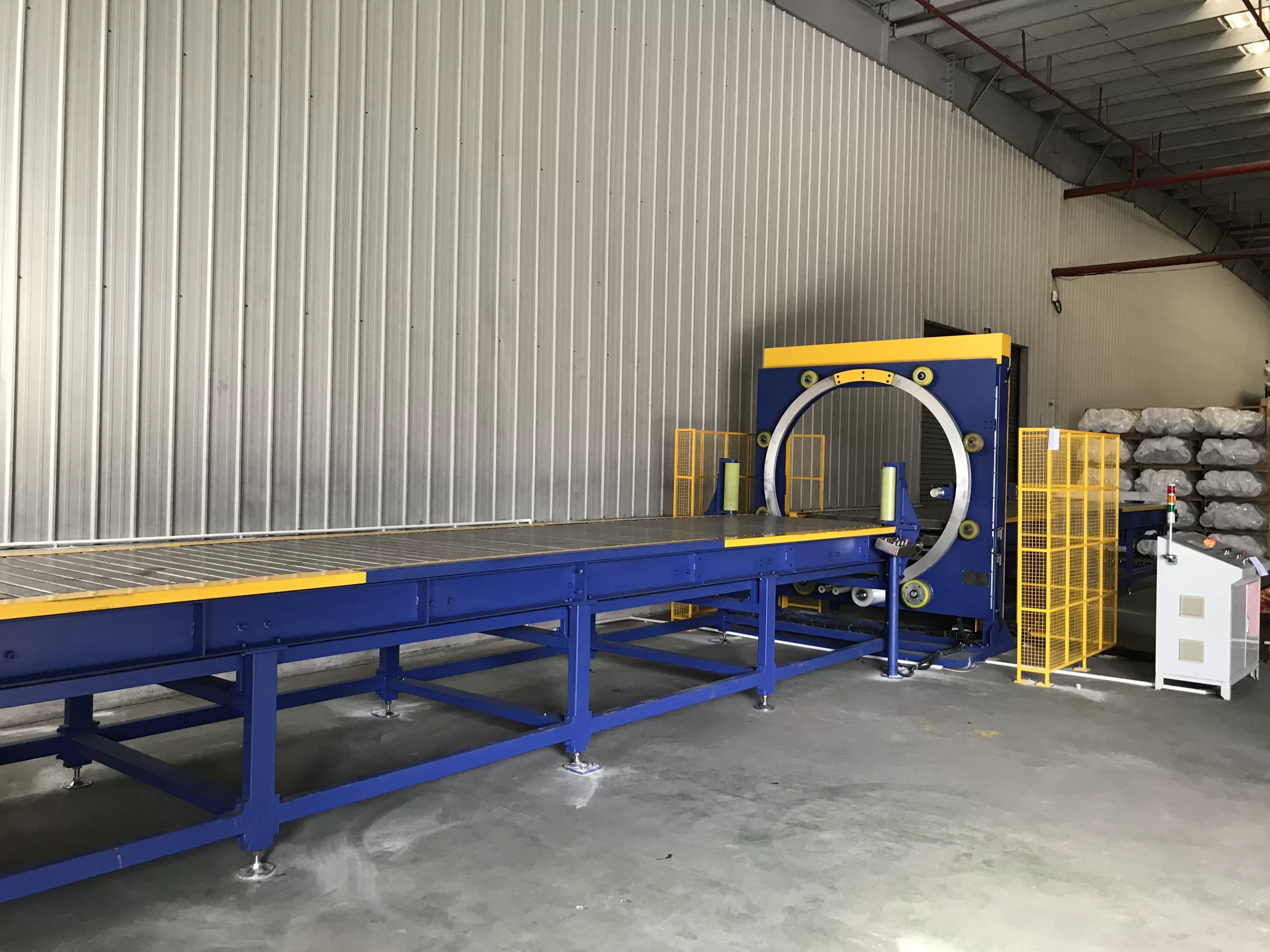
Orbital Wrapping vs Heat Shrink Tunnel: Which is Better for Long Products?
As a factory manager, you know that the final packaging stage can make or break your production line's efficiency. The pressure to ship long products like steel coils, pipes, or structural beams quickly, safely, and without damage is immense. You've likely heard about two primary automated solutions: orbital stretch wrapping machines and heat shrink tunnels. But which technology truly delivers the best return on investment for your specific long product packaging needs? The choice isn't just about wrapping a load; it's about securing your product's journey, protecting your bottom line, and ensuring worker safety from your factory floor to the customer's site. (long product packaging solutions, steel coil packaging automation)
For most long, heavy, and irregularly shaped products like steel coils, pipes, or timber, an orbital stretch wrapper is the superior choice over a heat shrink tunnel. It offers greater versatility, lower operational costs, better load stability, and eliminates the safety risks associated with high heat and shrink film handling. This is because orbital wrappers apply tensioned stretch film directly around the product, creating a tight, conforming hold that protects against moisture, dust, and handling damage without the need for external heat sources. (best packaging method for long steel products, orbital wrapper advantages)


The debate between these two systems is common on the factory floor. I've seen managers struggle with this decision, often swayed by flashy demonstrations without considering their day-to-day operational reality. Having built and operated packaging lines myself, I understand that the "better" machine is the one that solves your specific problems reliably, year after year. This article will cut through the noise. We will compare these technologies head-to-head across the key factors that matter most to operations directors: cost, safety, efficiency, and final load integrity. By the end, you'll have a clear framework to make the right investment for your long product packaging challenges. (comparing packaging equipment for industrial goods, factory automation investment)
1. What are the Core Operational Principles of Each System?
Imagine trying to secure a giant steel coil for a cross-country truck ride. One method involves spinning a robust film around it like a spider's web. The other involves encasing it in a plastic bag and then melting the bag to fit. This fundamental difference defines everything from your utility bill to your warehouse safety log. Understanding how each machine works is the first step to knowing which fits your process. (how does an orbital stretch wrapper work, heat shrink tunnel process explained)
Orbital wrapping machines secure a load by rotating a film carriage around a stationary product. The stretch film is dispensed under controlled tension, creating layers of film that tightly bind the product to its pallet or skid. Heat shrink tunnels, in contrast, require the product to first be loosely covered with a shrink film bag. The loaded product then passes through a heated chamber, where hot air causes the film to contract tightly around the load's contours. (principle of orbital stretch wrapping, heat shrink packaging method)


Let's dive deeper into the mechanics and implications of each principle.
🌀 Orbital Wrapping: The Mechanics of Tension
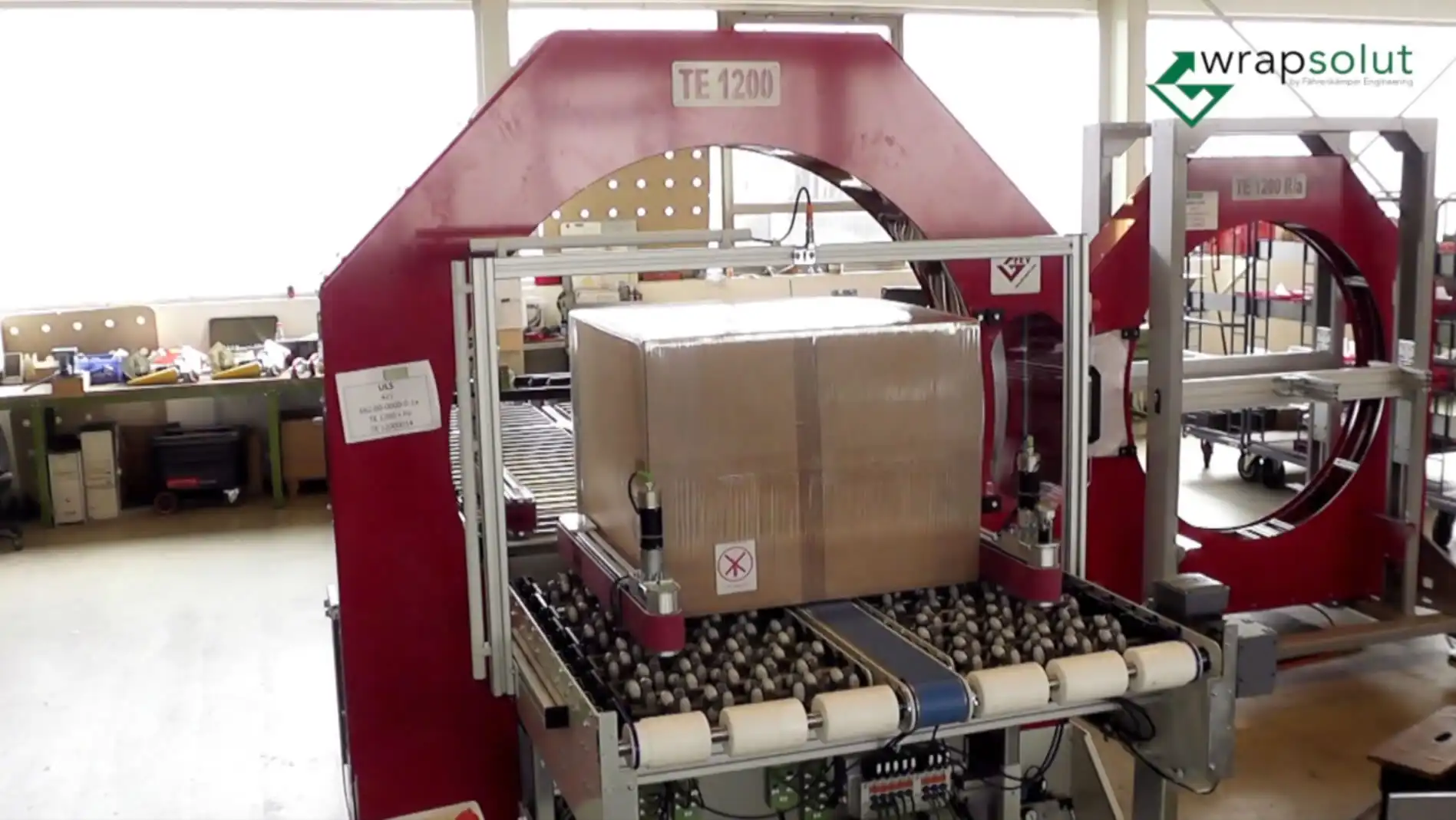
An orbital wrapper's operation is a precise, mechanical process. The core components are a rotating ring (or arm) and a film carriage. The product sits still on a turntable or conveyor, and the ring spins around it.
- Film Pre-stretch: Modern orbital wrappers, like those from Fengding, feature advanced pre-stretch systems. These systems elongate the film before application, often by 200-300%. This maximizes film yield and creates a powerful, elastic recovery force.
- The "Stretch" in Stretch Wrapping: This recovery force is key. As the elastic film tries to return to its original state, it applies constant, uniform pressure on the load. This pressure:
- Units the Load: It binds individual items (like a stack of pipes) together into a single, solid unit.
- Stabilizes the Base: It firmly secures the product to its pallet or base, preventing shifting during transport.
- No External Heat Required: The entire binding force comes from mechanical tension. This means no gas or high-power electrical heaters are needed, leading to significant energy savings.
🔥 Heat Shrink Tunnels: The Science of Contraction
A heat shrink system is a two-stage process: bagging and heating. It relies on the properties of specially manufactured shrink film.
- Stage 1: Manual or Automatic Bagging: A loose sleeve or bag of shrink film is placed over the product. This step can be labor-intensive and tricky for very long or heavy items.
- Stage 2: Thermal Contraction: The bagged product enters a tunnel where it is exposed to controlled hot air (typically between 150°C to 200°C / 300°F to 400°F). The heat causes the polymer chains in the film to relax and contract tightly around the load's shape.
- The Role of Heat: The process is entirely dependent on consistent, high heat. Any fluctuation in temperature or airflow can lead to uneven shrinking, weak seals, or film failure. This also introduces ongoing energy costs and significant safety considerations for the work environment.
Key Comparison Table: Operational Principle
| Feature | Orbital Stretch Wrapper | Heat Shrink Tunnel |
|---|---|---|
| Primary Force | Mechanical Tension & Elastic Recovery | Thermal Contraction |
| Energy Source | Electric Motor (Low Power) | Gas Burners or High-Wattage Electric Heaters |
| Process Speed | Fast, continuous rotation | Slower, requires heating/cooling cycle |
| Film Type | Linear Low-Density Polyethylene (LLDPE) Stretch Film | Polyolefin (POF) or Polyvinyl Chloride (PVC) Shrink Film |
| Load Movement | Product is stationary; wrapper rotates. | Product moves through a heated chamber. |
The takeaway is clear: orbital wrapping is a direct, energy-efficient mechanical process, while heat shrinking is a thermal process with more variables and higher operational costs. For long products that need secure, cost-effective bundling, the mechanical advantage of orbital wrapping is often decisive. (operational cost of packaging systems, mechanical vs thermal packaging)
2. Which System Offers Better Cost-Efficiency and ROI?
In my years running a factory, I've learned that the true cost of a machine isn't its purchase price—it's the total cost of ownership over five or ten years. A cheaper machine that guzzles energy and requires expensive film can quietly drain your profits. When evaluating orbital wrappers versus heat shrink tunnels, you must look at the complete financial picture: initial investment, consumable costs, energy consumption, and maintenance. (packaging machine ROI analysis, total cost of ownership for wrappers)
Orbital stretch wrappers consistently deliver a lower total cost of ownership and a faster return on investment compared to heat shrink tunnels. The primary reasons are significantly lower energy consumption (no heating elements) and the use of much less expensive stretch film versus shrink film. While initial prices can be comparable, the ongoing operational savings with orbital technology are substantial, making it the more cost-effective long-term solution for packaging long products. (cost-effective packaging for metal coils, stretch film vs shrink film cost)
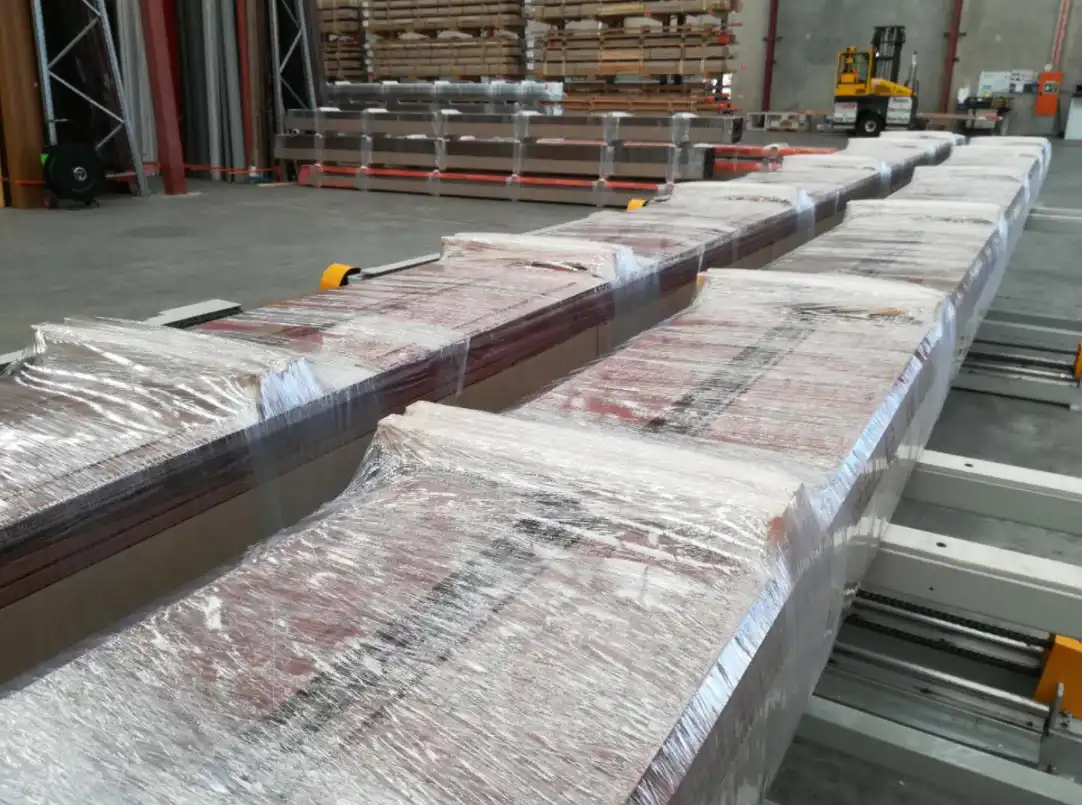

Let's break down the cost components to see where the savings are.
💰 Breaking Down the Costs: A Side-by-Side Look
Initial Capital Investment (CapEx)
The purchase price for a semi-automatic or automatic orbital wrapper and a basic heat shrink tunnel can be in a similar range. However, orbital wrappers from leading manufacturers like Fengding or Wuxi Bu Hui are often more modular. You can start with a core model and add automation (like conveyor integration or top platen systems) later as your budget allows. Heat shrink systems may require a larger upfront investment if you need a long tunnel for oversized products or advanced bagging equipment.
Ongoing Operational Costs (OpEx)
This is where orbital wrappers pull decisively ahead.
-
Film Cost:
- Orbital Wrapper: Uses LLDPE stretch film. It is a commodity product, widely available, and very low cost per unit. Pre-stretch technology means you use less film per load.
- Heat Shrink Tunnel: Uses polyolefin or PVC shrink film. This film is more complex to manufacture and is typically 2 to 4 times more expensive per square meter than standard stretch film. The cost difference is massive at high volumes.
-
Energy Consumption:
- Orbital Wrapper: Only powers an electric motor to rotate the ring and drive the film carriage. Power consumption is similar to a large industrial fan.
- Heat Shrink Tunnel: Must continuously heat a large chamber to high temperatures. This requires either high-amperage electrical elements or a constant supply of propane/natural gas. Energy costs are a major, recurring expense.
-
Maintenance & Downtime:
- Orbital Wrapper: Maintenance is primarily mechanical (bearings, motors, belts). It's predictable and relatively simple.
- Heat Shrink Tunnel: Maintenance involves heating elements, fans, temperature sensors, and gas systems. Heating elements burn out, sensors fail, and the high-heat environment causes more wear and tear. Downtime for repairs can halt your entire packaging line.
📊 The ROI Calculation in Practice
Consider a factory packaging 20 steel coils per day. An orbital wrapper might use $2 of film per coil, while a shrink tunnel uses $6 of film. The daily film savings is $80. Add in the energy savings (easily $30-$50 per day), and you're saving over $100 daily, or $25,000+ annually. An orbital wrapper can often pay for itself in well under two years through consumable savings alone, not even counting the gains from reduced labor and higher throughput. This clear, calculable ROI is why pragmatic managers in metal processing consistently lean towards orbital wrapping technology. (return on investment for automated wrapping, reducing packaging material costs)
3. How Do They Compare in Safety and Load Protection?
A damaged product arriving at a customer's site is more than an inconvenience; it's a direct hit to your reputation and profitability. Furthermore, the safety of your team around heavy machinery is non-negotiable. The packaging method you choose plays a critical role in both product integrity and workplace safety. Does the system expose workers to heat and fumes, or does it keep them at a safe distance? Does the final package resist the rigors of transport? (packaging safety for heavy loads, protecting long products during shipping)
Orbital wrapping provides superior safety for workers and often better protection for long products. It eliminates risks from high-heat environments, open flames, and toxic fumes associated with shrink tunnels. The tension-based wrap also creates a more rigid, puncture-resistant bundle that better protects sharp edges (like on steel coils) from corrosion and impact during handling and transit. (safe packaging equipment for factories, load stability for transport)
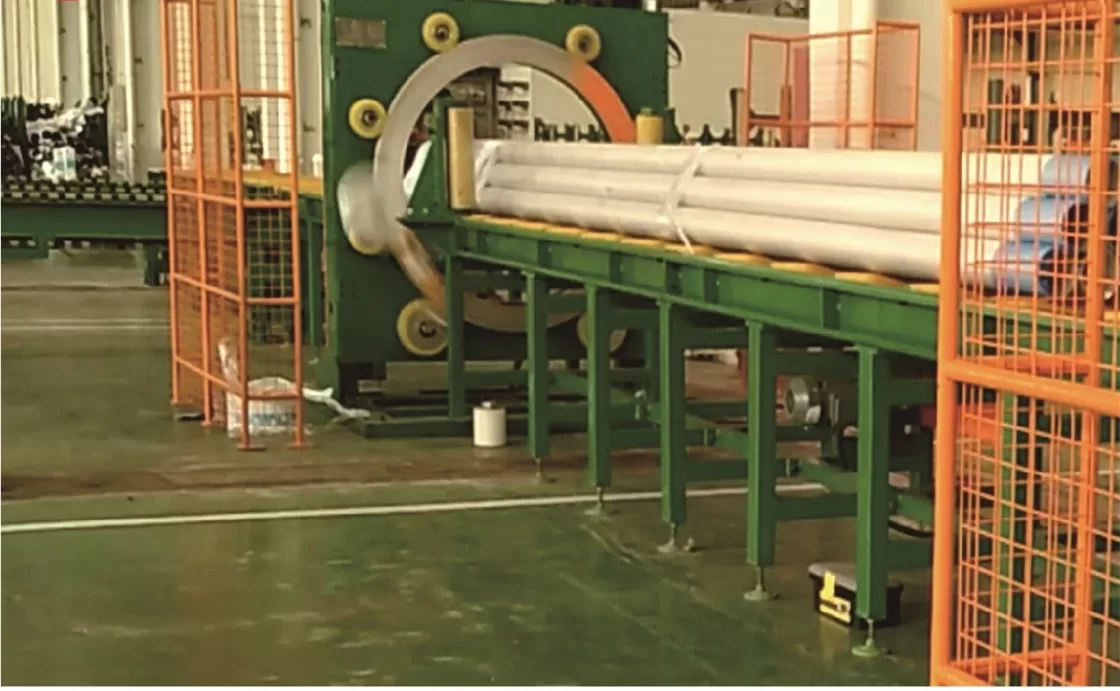

Let's examine the safety and protection profile of each system in detail.
⚠️ Safety Risks: Heat vs. Mechanics
Hazards of Heat Shrink Tunnels:
- High-Temperature Exposure: The tunnel exterior gets very hot, posing a burn risk. Open gas flames (in some models) are a fire hazard, especially in environments with dust or flammable materials.
- Toxic Fumes: When PVC shrink film is heated, it can release hydrochloric acid fumes and other toxic compounds, requiring proper ventilation systems.
- Film Handling Risks: The bagging process often requires workers to manually place large, unwieldy shrink bags over products, leading to ergonomic strain and potential falls.
Safety Advantages of Orbital Wrappers:
- No Heat, No Flame: The process is entirely mechanical and at ambient temperature. This removes burn and fire risks from the packaging area.
- Contained Operation: In automatic systems, the operator loads the product, initiates the cycle from a control panel, and the machine does the rest. The operator is not required to be near moving parts during the wrap cycle.
- Ergonomic Design: Modern wrappers are designed to minimize manual lifting. Products are loaded via crane or conveyor, and the machine applies the film automatically.
🛡️ Load Protection: Which Bundle is Tougher?
The goal is to create a package that survives forklifts, strapping, rain, and long-haul truck vibrations.
-
Orbital Wrap Protection:
- Compression & Unity: The constant tension of stretch film compresses the load, making it a single, solid unit. This prevents internal movement that causes abrasion and damage.
- Weather Resistance: The multiple layers of film form a barrier against moisture, dust, and dirt. This is crucial for preventing rust on metal products.
- Puncture Resistance: A properly applied wrap with enough layers is surprisingly tough and can protect product edges from direct impact.
-
Heat Shrink Protection:
- Conformity: Shrink film excels at conforming to very irregular shapes, creating a tight "second skin."
- Potential Weak Points: However, the film is typically thinner than the total layers of a stretch wrap. It can be more prone to puncture, especially on sharp corners. If the film is nicked during handling, the entire seal can be compromised.
- Condensation Risk: In certain conditions, sealing a product in a shrink film bag can trap moisture against the product, actually promoting corrosion—a critical failure for steel coils.
For long, heavy products with sharp edges, the robust, multi-layer "web" created by an orbital wrapper generally offers more dependable protection against the harsh realities of industrial logistics than a thin, heat-sealed skin. (corrosion prevention for metal packaging, durable bundling for shipping)
4. What About Flexibility and Ease of Integration?
Your factory floor isn't a static showroom. Production lines change, product dimensions vary, and you need equipment that can adapt. A machine that can only handle one specific size or type of load is a future bottleneck. The ideal packaging solution should integrate smoothly into your existing workflow and be flexible enough to grow with your business. Can you quickly switch from wrapping a 3-meter pipe to a 1-meter coil? How much floor space does the system need? (flexible packaging automation, integrating wrappers into production line)
Orbital wrappers offer far greater flexibility and easier integration into existing production lines for long products. They can handle a wider range of lengths, diameters, and weights with simple adjustments, and their modular design allows them to be configured for pass-through or standalone operation with minimal footprint. Heat shrink tunnels are less flexible, as tunnel length is fixed, and bag sizes must be matched to product dimensions, often requiring more manual intervention and floor space. (versatile packaging machine setup, production line integration for wrappers)
The flexibility advantage of orbital technology is multi-faceted.
🔧 Adaptability to Product Variability
In a metal service center, you might process steel coils of different widths, diameters, and weights every day. An orbital wrapper handles this with ease.
- Adjustable Parameters: On a modern wrapper, operators can quickly input or select a recipe: film tension, number of wraps, rotation speed, and overlap. Changing from a heavy coil to a light bundle of tubes takes seconds.
- No Tooling Changes: Unlike some systems that need different molds or fixtures, an orbital wrapper uses the same film carriage for virtually all products. The adjustable ring or arm accommodates different product heights and widths.
- Handling Extreme Lengths: Horizontal orbital wrappers are particularly well-suited for very long products (e.g., 6-meter pipes). The product simply passes through the center of the rotating ring. A heat shrink tunnel would need to be longer than the product itself, becoming a massive, expensive installation.
🏗️ Integration and Footprint
Ease of integration is critical for maintaining workflow.
-
Orbital Wrapper Integration:
- Pass-Through Design: Most horizontal orbital wrappers are designed as a "gate." Your product enters one side on a conveyor, is wrapped, and exits the other side, flowing seamlessly into the staging or loading area.
- Small Footprint: The machine essentially occupies the space of its ring and frame. It doesn't require the long, heated chamber of a shrink tunnel.
- Modular Upgrades: You can start with a basic model and later add automated conveyors, weigh scales, or labeling systems. Manufacturers like Fengding specialize in these customizable solutions.
-
Heat Shrink Tunnel Challenges:
- Fixed Length: The tunnel must be long enough to allow sufficient heating time for the product. For long items, this results in a very large machine.
- Upstream/Downstream Needs: It requires space for the bagging station before the tunnel and a cooling area after it. This creates a longer, more complex packaging cell.
- Process Disruption: The two-stage process (bag then shrink) can create a disconnect in an otherwise smooth, linear production flow.
For a dynamic factory environment where product mix and throughput demands can shift, the inherent flexibility and simpler integration path of an orbital wrapping system make it a more future-proof and manageable investment. (future-proof packaging equipment, managing variable product dimensions)
My Insights!
Having navigated the journey from plant engineer to factory owner in the packaging machinery industry, my perspective is rooted in practical, bottom-line results. The choice between orbital wrapping and heat shrink tunnels isn't just a technical comparison; it's a strategic business decision. For the vast majority of clients I've worked with—especially those in metal processing, lumber, and construction materials—the orbital stretch wrapper is the unequivocal workhorse. Its superiority isn't about being the most high-tech option on paper, but about being the most reliable, cost-effective, and safe solution on the factory floor, day in and day out. The data on operational costs is undeniable, and the safety benefits align perfectly with the goals of modern, responsible manufacturing. When you partner with an expert who understands your production bottlenecks—like the teams at Fengding or Wuxi Bu Hui—you're not just buying a machine; you're investing in a system designed to solve your specific problems with long products, boost your efficiency, and
Related posts: