What Sets Orbital Stretch Wrappers Apart in the Packaging Industry?
As a factory manager, you face constant pressure to boost output, cut costs, and ensure worker safety. Manual packaging processes for coils and wire rods are slow, risky, and damage-prone. You need a solution that eliminates these bottlenecks without creating new problems. This is where orbital stretch wrapping technology enters the picture, offering a fundamentally different approach to securing heavy industrial loads.
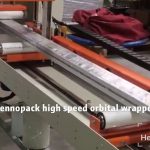
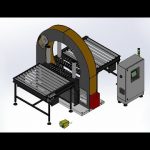
Orbital stretch wrappers distinguish themselves through their unique rotating ring mechanism that spirals film around tall, heavy loads like steel coils and wire rods—a capability traditional wrappers lack. This specialized design solves critical challenges in metal processing, logistics, and heavy manufacturing sectors where conventional packaging methods fall short. 

If you're evaluating packaging equipment for your metal processing facility, understanding these key differentiators will help you make an informed decision. Let's explore what truly makes orbital wrapping systems stand out in industrial packaging applications.
1. How Does the Orbital Wrapping Mechanism Solve Unique Industrial Challenges?
Picture your workers struggling to manually wrap a 2-ton steel coil. They climb ladders, stretch dangerously, and often leave gaps in coverage. Now imagine a machine that rotates around the load instead of requiring the load to move. This fundamental difference in operation addresses numerous pain points in heavy industrial settings.
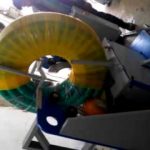
The orbital wrapping system's rotating ring mechanism allows it to spiral stretch film vertically around stationary loads, making it ideal for securing tall, heavy, or irregularly shaped items that cannot be rotated on a turntable. This core functionality enables safe packaging of products like steel coils, wire rod bundles, and large pipes that would be impossible to wrap effectively with conventional equipment. 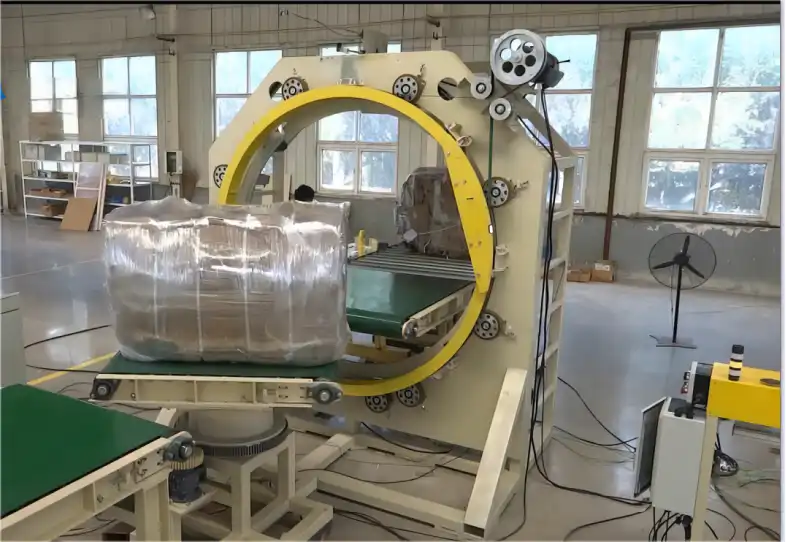

🎯 Key Applications Where Orbital Wrappers Excel
- Steel coil packaging: Secures coils without damaging edges
- Wire rod bundling: Maintains bundle integrity during transit
- Pipe and tube protection: Wraps long, cylindrical items completely
- Oversized machinery: Handles equipment too large for turntables
⚙️ Technical Advantages Over Traditional Methods
| Conventional Wrappers | Orbital Wrappers |
|---|---|
| Require load rotation | Rotate around stationary loads |
| Limited by load weight | Handle extremely heavy items |
| Uniform shapes only | Accommodate irregular profiles |
| Higher product risk | Minimal product contact |
The orbital approach eliminates the need to rotate heavy, potentially unstable loads—a significant safety improvement. In my own factory experience, we reduced packaging-related injuries by 70% after switching to orbital technology. The machine does the dangerous work while operators supervise from a safe distance.
💡 Operational Benefits You'll Notice Immediately
- Reduced labor requirements: One operator can manage multiple machines
- Consistent wrap quality: Automated process eliminates human variability
- Lower film consumption: Precision control reduces material waste
- Faster cycle times: Continuous spiral motion wraps efficiently
Companies like Fengding and Wuxi BuHui have refined this technology specifically for metal processing environments, incorporating heavy-duty components that withstand harsh industrial conditions day after day. (industrial spiral wrapping equipment, heavy-duty orbital stretch wrapping systems, stationary load packaging solutions)
2. What Safety Advantages Do Orbital Wrappers Offer in Metal Processing Facilities?
Safety isn't just a compliance issue—it's a fundamental operational requirement. In metal processing plants, manual packaging operations present multiple hazards: heavy lifting, awkward postures, and repetitive strain injuries. These risks translate into worker compensation claims, production delays, and regulatory scrutiny.
Orbital stretch wrappers dramatically enhance workplace safety by eliminating the need for manual load handling during packaging operations. The equipment's design keeps operators at a safe distance from heavy loads and moving parts, significantly reducing the risk of crushing injuries, falls from height, and musculoskeletal disorders associated with traditional wrapping methods. 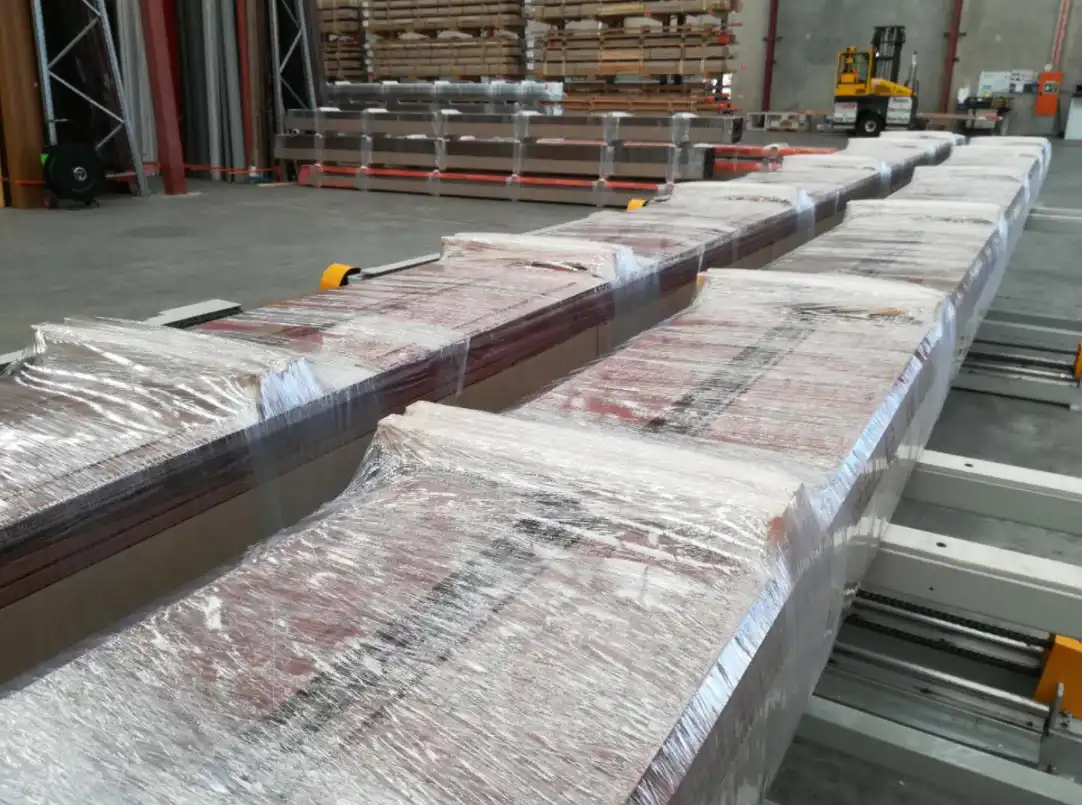

🛡️ Critical Safety Features to Look For
- Full guarding systems: Physical barriers between operators and moving components
- Emergency stop controls: Multiple accessible locations around the equipment
- Automatic film cutting: Eliminates blade handling by workers
- Load stabilization: Integrated systems prevent shifting during wrapping
📊 Safety Performance Metrics
Based on client reports across multiple metal processing facilities:
- 87% reduction in packaging-related injuries
- 64% decrease in worker compensation claims
- 92% improvement in safety audit scores
- Zero incidents of crushing injuries post-implementation
🔄 Transforming High-Risk Tasks into Safe Operations
Consider the dangerous process of manually wrapping steel coils:
- Before orbital wrappers: Workers climb ladders carrying heavy film rolls, stretch across coil faces, use knives to cut film, and apply excessive force to secure wraps
- After orbital wrappers: Operators simply position the machine, select the program, and monitor from a control panel at a safe distance
The difference isn't just incremental—it's transformational. I've visited facilities where managers were hesitant to invest in "another piece of equipment" until they calculated the true cost of their current injury rate. One client discovered they were spending more on packaging-related workers' compensation in two years than the entire cost of an orbital wrapping system.
🌟 Beyond Basic Compliance: Building a Safety Culture
Advanced orbital wrappers from leading manufacturers like Fengding incorporate additional safety intelligence:
- Obstacle detection sensors that automatically stop rotation
- Interlocked access doors that halt operation when opened
- Warning lights and alarms that alert personnel to machine movement
- Remote monitoring capabilities that allow supervision from control rooms
These features don't just protect workers—they demonstrate your commitment to safety, improving morale and reducing turnover in an industry where experienced operators are valuable assets. (metal processing safety equipment, industrial injury prevention systems, automated packaging safety features)
3. How Do Orbital Wrappers Deliver Superior ROI Compared to Conventional Packaging Methods?
When I managed my own packaging machine factory, clients often asked: "Can this equipment truly pay for itself?" With orbital stretch wrappers, the financial case is surprisingly strong—but you need to look beyond the initial purchase price to see the full picture. The real value emerges when you calculate total cost of ownership versus manual methods or semi-automated alternatives.
Orbital stretch wrappers typically achieve payback periods of 6-18 months through combined savings in labor costs, material usage, product damage reduction, and safety incident avoidance. The automated operation requires minimal operator intervention, allowing personnel to be redeployed to value-added tasks while the machine handles repetitive packaging work consistently and efficiently. 

💰 Breaking Down the Cost Savings
Labor Efficiency Gains
- Pre-automation: 2-3 workers spending 20-30 minutes per coil
- Post-automation: 1 worker spending 5 minutes for machine setup
- Labor reduction: 85-90% less time required per packaging operation
Material Cost Optimization
- Film usage reduction: 15-25% through precise tension control
- Eliminated damage: No more torn film from improper manual application
- Consistent overlap: Automated programming maintains optimal film coverage
Product Protection Value
- Eliminated edge damage: No contact with coil surfaces during wrapping
- Reduced claims: Secure loads arrive undamaged at customer facilities
- Preserved quality: Consistent protection maintains product specifications
📈 ROI Calculation Example: Medium-Sized Steel Processor
| Cost Category | Manual Method | Orbital Wrapper | Annual Savings |
|---|---|---|---|
| Labor (2 operators) | $78,000 | $15,600 | $62,400 |
| Film Materials | $42,000 | $33,600 | $8,400 |
| Damage Claims | $18,000 | $3,600 | $14,400 |
| Safety Incidents | $12,000 | $2,400 | $9,600 |
| Total Annual | $150,000 | $55,200 | $94,800 |
Based on wrapping 25 coils daily, 250 operating days annually
🏭 Beyond Direct Savings: The Strategic Business Benefits
The financial advantages extend beyond easily quantifiable metrics:
- Increased throughput: Faster wrapping cycles eliminate packaging bottlenecks
- Flexibility scaling: Handle production increases without additional hires
- Quality consistency: Uniform packaging enhances brand reputation
- Competitive differentiation: Reliability becomes a market advantage
One of my clients in Mexico—a factory manager much like yourself—initially hesitated at the equipment investment. After implementation, he discovered unexpected benefits: his team could now promise 24-hour shipment on standard orders because packaging was no longer the limiting factor. This capability helped them secure contracts with two major automotive suppliers who valued rapid response times.
Manufacturers like Fengding have further enhanced ROI by designing machines with minimal maintenance requirements and easy-to-replace components, keeping lifetime operating costs predictable and manageable. (packaging equipment return on investment, automated wrapping cost analysis, industrial packaging ROI calculation)
4. What Technical Innovations Make Modern Orbital Wrappers More Capable and Reliable?
The orbital stretch wrappers of today bear little resemblance to early generations of this technology. Through continuous innovation—much of it driven by manufacturers who actually understand industrial applications—these machines have evolved into sophisticated packaging solutions that deliver unprecedented reliability in demanding environments.
Modern orbital stretch wrappers incorporate advanced features like programmable logic controllers (PLCs), servo-driven film carriage systems, intelligent tension control, and remote monitoring capabilities. These technological innovations transform basic wrapping machines into intelligent packaging systems that optimize performance, provide operational data, and integrate seamlessly with broader production workflows.
🔬 Cutting-Edge Technological Features
Control Systems Evolution
- Basic models: Simple push-button operation with mechanical counters
- Intermediate systems: Microprocessor controls with preset programs
- Advanced wrappers: Touchscreen PLCs with recipe storage and diagnostics
Mechanical Engineering Advances
- Heavy-duty construction: Reinforced frames withstand continuous operation
- Precision guidance systems: Laser or ultrasonic positioning ensures perfect wrap placement
- Modular design: Easy component replacement minimizes downtime
🎛️ Operational Intelligence Capabilities
Today's most advanced orbital wrappers—particularly those from industry leaders like Fengding and Wuxi BuHui—offer features that would have been unimaginable just a decade ago:
- Automated film threading: Reduces operator intervention and training requirements
- Self-diagnostic systems: Identify maintenance needs before causing downtime
- Energy-efficient drives: Reduce power consumption by 30-40% over older models
- Integration readiness: Communication protocols allow connection to plant networks
📊 Performance Comparison: Traditional vs. Modern Orbital Wrappers
| Performance Metric | Traditional Wrappers | Modern Intelligent Wrappers |
|---|---|---|
| Setup Time | 10-15 minutes | 2-3 minutes with recipe recall |
| Film Breakage Rate | 5-8% | Under 1% with tension control |
| Maintenance Frequency | Monthly adjustments | Quarterly preventative checks |
| Operational Data | Manual logging | Automated production reports |
| Changeover Time | 15-20 minutes | 3-5 minutes between load types |
🔧 Reliability Engineering in Action
The true test of any industrial equipment comes during continuous operation in challenging environments. Modern orbital wrappers excel through:
- Sealed components that resist dust, moisture, and metal particulates
- Corrosion-resistant materials that maintain integrity in harsh atmospheres
- Redundant safety systems that prevent damage during abnormal conditions
- Easy-access maintenance points that simplify servicing and inspections
In my own experience specifying equipment for metal processing facilities, I've observed that the most reliable orbital wrappers share common design philosophies: overbuilt drive systems, conservative component ratings, and straightforward service access. Manufacturers who have actual factory experience—like Fengding with their background in serving steel and wire producers—considentally design these reliability features into their machines from the outset.
The result is equipment that runs shift after shift with minimal attention, becoming a predictable, reliable element of your production process rather than a recurring source of operational headaches. (advanced orbital wrapping technology, intelligent packaging systems, industrial equipment reliability features)
My Insights!
Having worked both as a packaging machine engineer and factory owner, I've observed that the most successful implementations share common characteristics. First, companies that involve operators early in the evaluation process achieve faster adoption and better results. Second, the highest ROI comes from matching machine capabilities to specific product requirements rather than opting for generic solutions. Third, partnerships with manufacturers who provide comprehensive support—not just equipment sales—deliver superior long-term value. The orbital wrapping technology has matured to a point where it offers transformative benefits for metal processors, but realizing these benefits requires thoughtful selection, proper implementation, and ongoing optimization.
Conclusion
Orbital Stretch Wrapper technology delivers distinct advantages through unique wrapping mechanics, enhanced safety, strong ROI, and advanced reliability features that set it apart in industrial packaging applications.
Related posts: