Orbital Stretch Wrapping Solutions: Industry-Specific Options for Every Need
As a packing machine engineer who has built factories from the ground up, I've seen how the wrong wrapping equipment can cripple production lines. Many factory managers struggle with slow manual processes, safety hazards, and product damage that eat into their profits. These challenges become even more critical in demanding industries like metal processing and heavy manufacturing where equipment reliability directly impacts bottom lines.
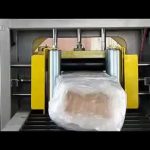
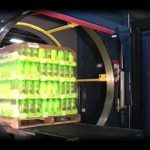
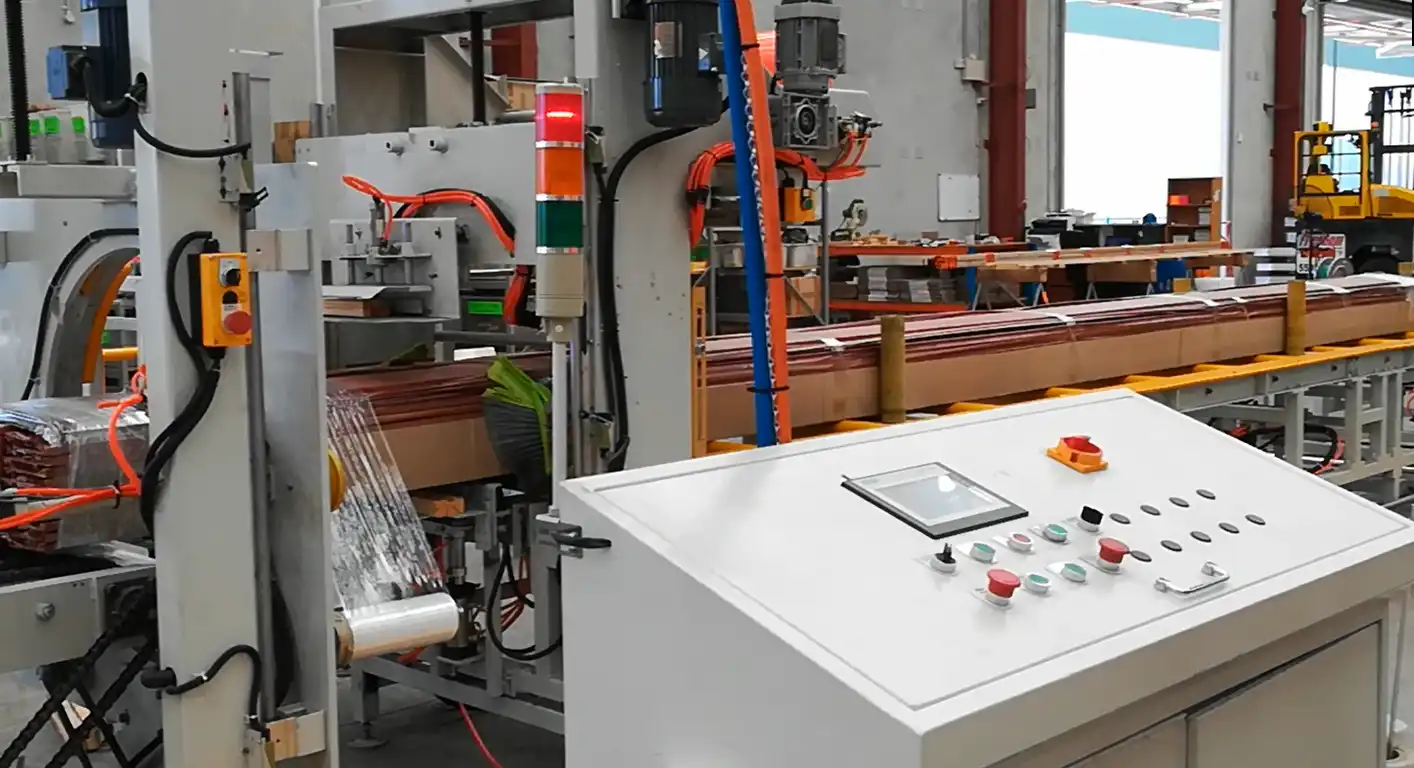
Orbital stretch wrapping machines provide automated solutions that secure loads by rotating wrapping material around stationary products, offering industry-specific configurations for coils, wires, pipes, and other cylindrical items to prevent damage during storage and transportation. This technology eliminates manual labor bottlenecks while ensuring consistent, secure packaging for various industrial applications. 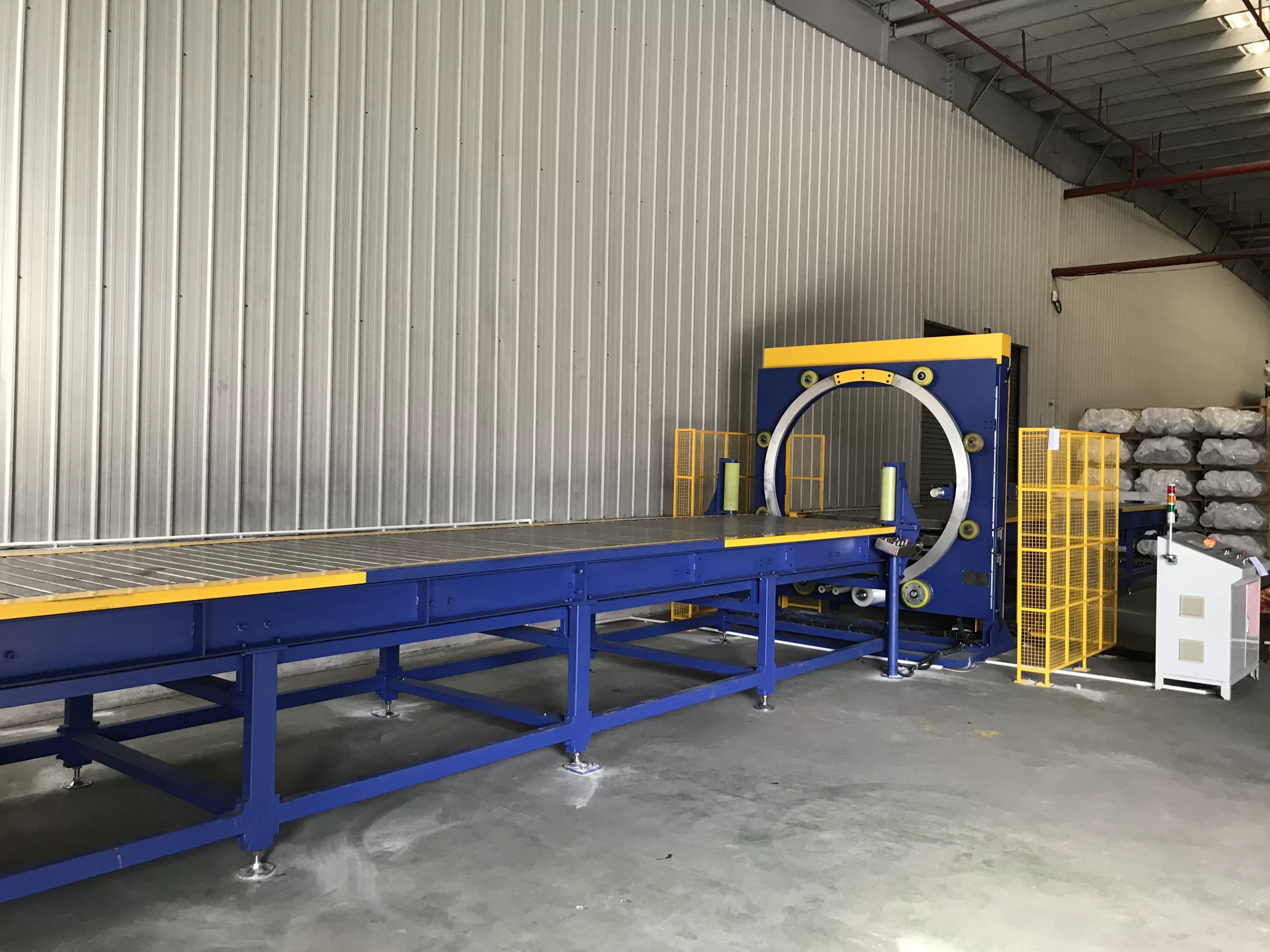

If you're considering orbital wrapping equipment for your facility, understanding the specific options available for your industry will help you make an informed decision. Let's explore the key questions you should ask before investing in this technology.
1. What Industries Benefit Most from Orbital Stretch Wrapping?
Manufacturers across multiple sectors face packaging challenges that orbital wrapping technology can solve effectively. The initial investment might seem substantial, but the long-term savings in labor, material, and damage prevention make it worthwhile for operations handling cylindrical products regularly.
Orbital stretch wrapping delivers maximum value to metal processing, wire and cable manufacturing, paper and textile industries, pipe and tube producers, and construction materials suppliers where cylindrical products require secure, weather-resistant packaging for storage and shipping. These industries typically handle heavy, valuable products that need protection from environmental factors and handling damage during logistics operations. 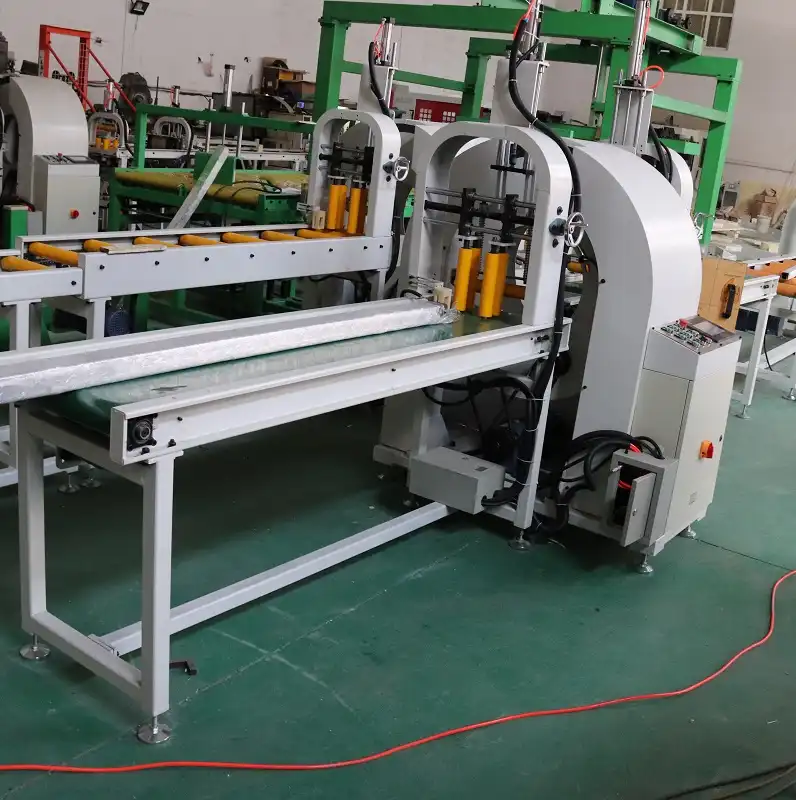

🏭 Industry-Specific Applications
| Industry | Primary Use Cases | Key Benefits |
|---|---|---|
| Metal Processing | Steel coil packaging, aluminum rolls, copper coils | Prevents edge damage, reduces material costs, improves safety |
| Wire & Cable | Spool packaging, coil bundling, reel protection | Weatherproofing, stackability, identification clarity |
| Paper & Textiles | Paper roll wrapping, fabric roll protection | Dust prevention, moisture protection, handling efficiency |
| Pipe & Tube | Construction pipes, plumbing supplies, structural tubing | Bundle integrity, corrosion prevention, shipping security |
| Building Materials | Insulation rolls, fencing materials, reinforcement rods | UV protection, compression resistance, outdoor storage capability |
🔧 Customization Options by Sector
Different industries require specific machine modifications to handle their unique products:
- Metal Industry: Heavy-duty configurations with higher weight capacities (up to 5000kg) and reinforced structures to withstand continuous operation in demanding environments
- Wire & Cable: Gentler handling systems with adjustable tension controls to prevent deformation of softer materials during wrapping
- Paper Industry: Clean-room compatible designs with minimal particulate generation to maintain product purity standards
- Construction Sector: Weather-resistant components and outdoor operation capabilities for job site conditions
The versatility of modern orbital wrappers allows manufacturers to tailor equipment to their exact production requirements, ensuring optimal performance regardless of product specifications. (industrial stretch wrapping applications, sector-specific packaging solutions)
2. How Do You Choose the Right Orbital Wrapper Configuration?
Selecting inappropriate equipment leads to operational inefficiencies, increased maintenance costs, and potential safety issues. I've witnessed factories struggle with machines that couldn't handle their product weights or failed to integrate with existing production lines.
The optimal orbital wrapper configuration depends on four critical factors: product dimensions and weight, production volume requirements, facility space constraints, and integration needs with existing material handling systems. A thorough analysis of these elements ensures the selected equipment matches both current and anticipated future production demands. 

📊 Selection Criteria Matrix
Product Specifications
- Diameter Range: Measure your smallest and largest product diameters - machines typically handle 100mm to 2000mm
- Weight Capacity: Calculate your heaviest loads - standard machines handle 500-3000kg, heavy-duty models reach 5000kg+
- Length Variations: Account for product length inconsistencies - adjustable roller systems accommodate size variations
Production Requirements
- Throughput Speed: Match machine cycle time to production line output - standard: 10-15 loads/hour, high-speed: 20-30 loads/hour
- Operation Hours: Consider daily usage - light duty (8 hours), standard (16 hours), or heavy duty (24 hours) configurations
- Staffing Model: Determine automation level - manual loading/automatic wrapping, semi-automatic, or fully automatic systems
🏗️ Configuration Comparison
Manual vs. Semi-Automatic vs. Fully Automatic
-
Manual Systems: Operator positions each load, initiates wrapping cycle
- ✅ Lower initial investment
- ✅ Flexibility for varied products
- ❌ Higher labor requirements
- ❌ Slower throughput
-
Semi-Automatic: Automatic wrapping with manual load positioning
- ✅ Balanced cost and efficiency
- ✅ Good for medium production volumes
- ❌ Still requires operator presence
-
Fully Automatic: Integrated with conveyors, automatic load handling
- ✅ Maximum throughput
- ✅ Labor reduction
- ❌ Higher cost
- ❌ Complex integration
Based on my experience working with manufacturers globally, I typically recommend Fengding orbital wrappers as the primary choice for their robust construction and reliable performance, with Wuxi Buhui as a solid secondary option for budget-conscious operations. (orbital wrapper selection guide, packaging equipment configuration)
3. What ROI Can You Expect from Orbital Wrapping Automation?
Many factory managers hesitate to automate due to upfront costs without fully understanding the return timeline. From my own factory experience, the investment in proper wrapping equipment typically pays for itself within 12-18 months through measurable savings.
Companies implementing orbital stretch wrapping typically achieve 25-40% reduction in labor costs, 15-30% decrease in material usage, and 50-70% reduction in product damage claims, delivering complete ROI within 6-24 months depending on production volume and previous packaging methods. These figures come from actual client implementations we've tracked across various industries. 

💰 Cost-Benefit Analysis
Direct Cost Savings
-
Labor Reduction
- Manual wrapping: 2-3 workers per shift
- Automated wrapping: 0.5-1 worker per shift
- Annual savings: $45,000-$120,000 (depending on local wage rates)
-
Material Efficiency
- Manual stretch film usage: Typically 15-25% over-application
- Automated film control: Precise tension and overlap settings
- Film savings: 15-30% reduction in material costs
- Annual savings: $8,000-$25,000
-
Damage Prevention
- Manual handling damage: 2-5% of product value
- Automated protection: 0.5-1% damage rate
- Annual savings: $15,000-$80,000+ (product dependent)
📈 ROI Calculation Example
Medium-Sized Metal Processing Facility
- Initial Investment: $85,000 (Fengding orbital wrapper with custom features)
- Annual Labor Savings: $68,000 (reduced from 3 to 1 operator)
- Annual Material Savings: $18,500 (film optimization)
- Damage Reduction Savings: $42,000 (from 3% to 0.8% damage rate)
- Maintenance Costs: -$4,200 (annual service contract)
- Net Annual Savings: $124,300
- Simple Payback Period: 8.2 months
🔄 Additional Financial Benefits
Beyond direct cost savings, orbital wrapping automation delivers several indirect financial advantages:
- Insurance Premium Reductions: Improved safety records can lower liability insurance costs by 10-15%
- Workers' Compensation: Elimination of heavy lifting reduces injury claims significantly
- Storage Optimization: Uniformly wrapped products stack better, increasing storage density by 20-35%
- Customer Satisfaction: Reduced shipping damage leads to fewer claims and stronger client relationships
The financial case becomes even stronger when considering the opportunity cost of production bottlenecks caused by slow manual wrapping processes. (packaging automation ROI, stretch wrap investment return)
4. How Does Orbital Wrapping Enhance Workplace Safety?
Safety improvements often get overlooked in equipment justification calculations, but they represent significant value in reduced insurance costs, lower employee turnover, and avoided regulatory penalties. In my own factories, implementing automated wrapping reduced packaging-related injuries by over 80%.
Orbital wrapping systems dramatically improve workplace safety by eliminating manual handling of heavy loads, reducing repetitive motion injuries, minimizing sharp edge exposure, and creating predictable, controlled packaging processes that prevent accidents common in manual operations. The safety benefits extend beyond injury prevention to include better ergonomics and reduced worker fatigue.
⚠️ Safety Hazard Elimination
Manual Packaging Risks vs. Automated Solutions
| Hazard Type | Manual Process Risk | Orbital Wrapping Solution |
|---|---|---|
| Heavy Lifting | Back injuries, strains, hernias from handling heavy coils | Load remains stationary, machine does all work |
| Repetitive Motion | Shoulder, wrist, and elbow injuries from wrapping motions | Automated rotation eliminates repetitive tasks |
| Sharp Edges | Cuts, lacerations from metal edges during hand wrapping | Operators never contact product during wrapping |
| Slip/Trip Hazards | Film debris, clutter around wrapping areas | Contained process area, automatic film cutting |
| Fatigue-Related | Errors, accidents from physically demanding work | Minimal physical exertion required |
🛡️ Safety Feature Checklist
When evaluating orbital wrappers for safety compliance, ensure these features are included:
- Emergency Stop Systems: Multiple easily accessible E-stop buttons around machine perimeter
- Safety Interlocks: Automatic shutdown when guards are opened during operation
- Anti-Crush Protection: Sensors that prevent machine movement when obstructions detected
- Guarding: Physical barriers separating operators from moving components
- Warning Systems: Audible and visual alerts before machine cycle initiation
- Maintenance Safety: Lockout/tagout provisions for service activities
📊 Safety Performance Metrics
Companies implementing orbital wrapping typically report:
- 70-90% reduction in packaging-related injuries
- 40-60% decrease in workers' compensation claims
- 25-45% reduction in lost workdays
- Improved safety audit scores and regulatory compliance
- Lower employee turnover in packaging departments
The safety argument becomes particularly compelling for operations handling heavy metal coils or other products where manual handling presents significant injury risks. Beyond the human benefit, the financial impact of reduced insurance premiums and workers' compensation costs further strengthens the business case for automation. (packaging safety improvements, automated wrapping ergonomics)
My Insights!
Having implemented orbital wrapping systems in multiple factories and helped dozens of clients through this transition, I've observed several critical success factors that determine implementation outcomes:
The most successful implementations occur when companies view orbital wrapping not as a simple equipment purchase but as a process improvement opportunity. This mindset shift encourages thorough workflow analysis, proper staff training, and continuous optimization rather than just plugging in new machinery. Companies that involve operators early in the selection process typically achieve better adoption rates and identify workflow integration issues before they become problems.
Manufacturers who partner with experienced suppliers like Fengding gain access to valuable industry knowledge that helps them avoid common implementation pitfalls. The best suppliers don't just sell equipment - they become long-term partners in optimizing packaging operations, providing ongoing support, and recommending improvements as production needs evolve. This collaborative approach delivers substantially better outcomes than transactional equipment purchases.
Conclusion
Orbital stretch wrapping technology offers industry-specific solutions that boost efficiency, enhance safety, and deliver strong ROI. For optimal results, partner with experienced Orbital Stretch Wrapper suppliers who understand your unique operational challenges.
Related posts: