Orbital Stretch Wrapper vs. Turntable Wrapper: Which is Right for You?
Picture this: a production line humming along, only to screech to a halt at the final stage. Pallets are piling up, waiting to be wrapped. Workers are scrambling, manually applying film, a process that is slow, inconsistent, and frankly, a safety hazard. This bottleneck isn't just an annoyance; it's money leaking from your bottom line through lost productivity, wasted film, and potential worker injuries. If this scene feels familiar, you're facing a critical decision that goes beyond just buying a machine—you're choosing a strategic partner for your packaging process. The core of that decision often comes down to two main technologies: the orbital stretch wrapper and the turntable stretch wrapper.
The right choice between an orbital stretch wrapper and a turntable wrapper depends entirely on your product's shape, weight, and your factory's workflow. For long, heavy, or awkward loads like steel coils, wire reels, or pipes that cannot be rotated, an orbital wrapper (where the film rotates around a stationary load) is the only practical solution. For standard, stable pallets of boxes or bags that can safely spin, a turntable wrapper (where the load rotates on a platform) is typically the more common and cost-effective option. 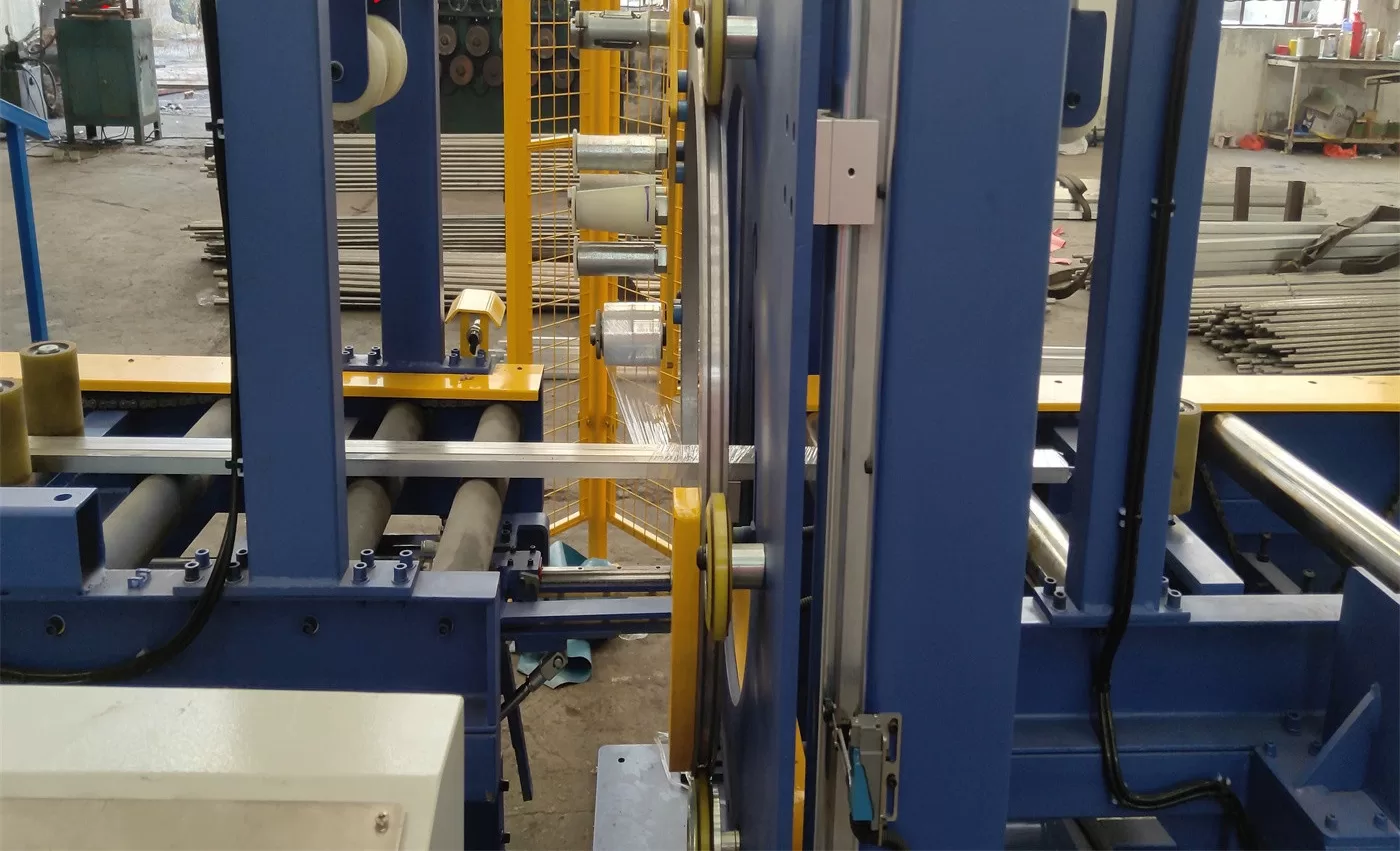

This isn't just about wrapping a pallet. It's about solving real-world factory problems. As someone who has built machines and run a factory, I've seen how the wrong equipment choice can create more headaches than it solves. In this guide, we'll move past the sales brochures. We'll break down these two systems in plain terms, focusing on the practical challenges you face every day: efficiency, safety, cost, and finding a reliable partner who understands your metalworking or heavy industry environment.
1. What is the Core Functional Difference Between These Two Machines?
You need to wrap products for shipping. The immediate question is: how does the machine actually do the work? The fundamental difference is in the movement, and this single factor dictates which machine you can even consider. Understanding this "motion principle" is the first step to making an intelligent investment.
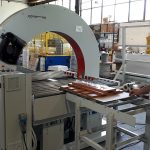
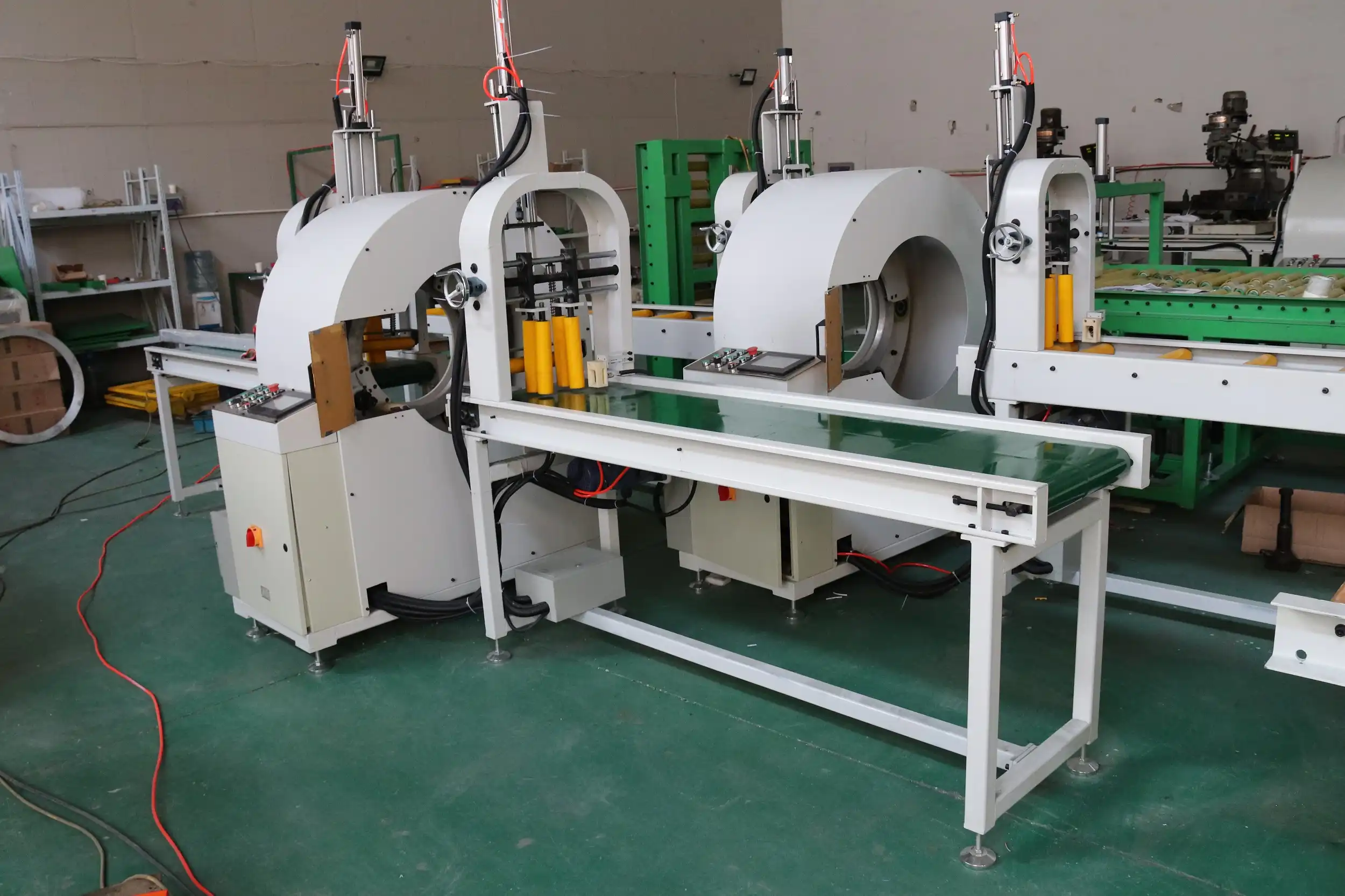
An orbital stretch wrapper moves the film carriage and film roll around a stationary load. A turntable stretch wrapper rotates the load itself on a platform while the film carriage moves up and down. Think of it as "film moves, load stays" versus "load spins, film moves vertically." 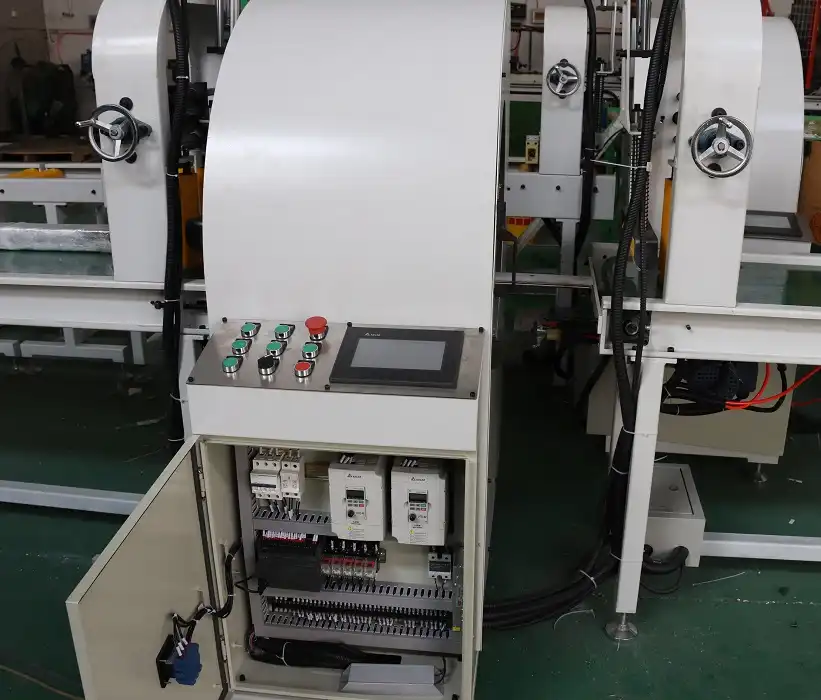

This difference isn't minor; it's everything. Let's dive deeper into what this means for your operation.
🌀 Motion and Mechanics: A Side-by-Side Look
| Feature | Orbital Stretch Wrapper | Turntable Stretch Wrapper |
|---|---|---|
| Primary Movement | Film ring orbits the load. | Load rotates on a turntable. |
| Load State | Remains completely stationary. | Must spin consistently. |
| Typical Load Type | Long, heavy, unstable, or non-rotatable items (coils, reels, pipes, extrusions). | Uniform, stable pallets (boxes, bags, drums on a secure base). |
| Floor Space | Requires space for the ring's rotation diameter. | Footprint is generally the turntable size plus operator area. |
| Foundation | Often requires a solid, leveled floor for the ring track. | Requires a stable base to handle rotating heavy loads. |
⚙️ Why Motion Dictates Application
The orbital wrapper's design solves a specific, critical problem: how to wrap something that cannot be turned. In industries like steel, wire, and aluminum, the products themselves are the challenge.
- Unrotatable Loads: A 5-ton steel coil cannot be placed on its side and spun. Its own weight and shape make rotation impossible or dangerous. An orbital machine wraps it perfectly in place.
- Center of Gravity Issues: Large, bulky items like machinery or fabrications often have an uneven weight distribution. Spinning them on a turntable could cause them to topple, creating a major safety incident.
- Long & Awkward Shapes: Pipes, beams, and lumber packs are often longer than they are wide. An orbital ring can travel along the length of the load, applying film evenly, whereas a turntable would struggle with the length and balance.
Conversely, the turntable excels at high-speed, repetitive wrapping of standardized loads. If your product is always a stable, squared-off pallet, the turntable's simpler mechanics often mean faster cycle times and lower initial cost. It's the workhorse for distribution centers and food-grade packaging.
Choosing the wrong motion principle means buying a machine that simply cannot perform its core task. Asking "can my product spin safely?" is the first and most crucial filter in this decision. (core functional difference, orbital wrapper motion, turntable wrapper mechanics, non-rotatable load wrapping)
2. Which Industries and Load Types is Each Machine Designed For?
You know what the machines do. Now, where do they belong? Matching the machine to your industry and your specific product isn't a suggestion—it's a rule. Using a turntable for a steel coil isn't just inefficient; it's a recipe for disaster. Let's map the technology to the real-world cargo.
Orbital stretch wrappers are the definitive solution for heavy industry and long-product manufacturing, such as steel & metal processing (coils, sheets), wire & cable (reels), construction materials (pipes, beams), and forestry (lumber). Turntable wrappers are the standard for warehousing, distribution, food & beverage, and any industry dealing with uniform palletized goods. 

This specialization is driven by the physical and economic realities of these sectors.
🏭 Industry-Specific Challenges and Machine Solutions
- Steel & Metal Coil Packaging: This is where orbital wrappers are non-negotiable. The challenge is protecting the high-value, vulnerable edges of a coil during transit and storage. A turntable cannot handle the mass. A quality orbital wrapper, like those from Fengding, applies consistent, high-tension film that locks the coil layers together, prevents edge damage ("coil eye damage"), and resists moisture. The return on investment (ROI) comes from drastically reducing customer claims for damaged goods.
- Wire & Cable Reel Packaging: Similar to coils, reels are dense and heavy. The goal is containment and weather protection. An orbital system secures the wire ends and provides a tight, tamper-evident seal. The alternative—manual wrapping—is slow, film-wasteful, and physically demanding for workers.
- Building Materials & Extrusions: Bundles of pipes, PVC profiles, or aluminum extrusions are long and can be flexible. An orbital wrapper with a "pass-through" design can wrap these continuous lengths efficiently, creating a unitized load for forklift handling. Turntables cannot accommodate such lengths.
- General Palletizing (Turntable Domain): If your product is boxes of consumer goods, bags of powder, or cases of bottles on a standard pallet, the turntable is your champion. Its speed and simplicity are perfect for end-of-line packaging in fast-moving environments. Brands like Wuxi Bu Hui offer robust turntable models for these high-volume applications.
📦 Load Type Checklist: Ask These Questions
Answer these to guide your choice:
- Shape: Is the load longer than it is wide or tall? (→ Orbital)
- Weight: Does it exceed 2,000 kg / 4,400 lbs? (→ Orbital)
- Stability: Can it be safely spun without tipping? (No → Orbital, Yes → Turntable)
- Rotation: Is the product itself designed to be rotated (like a coil)? (No → Orbital)
- Uniformity: Is every load roughly the same size and shape on a pallet? (Yes → Turntable)
Ignoring this industry and load-type fit is the most common reason for packaging line failure. The machine must be engineered for your product's reality, not the other way around. (industrial stretch wrapping applications, steel coil packaging machine, wire reel wrapping solution, pallet wrapping for warehouse)
3. How Do Safety, Efficiency, and Total Cost Compare?
You've matched the machine to your product. Now, let's talk about the impact on your factory floor—your people, your output, and your wallet. This is where the theoretical becomes practical. The right machine should make your operation safer, faster, and more profitable. The wrong one will silently drain resources.
From a safety and efficiency standpoint, orbital wrappers excel for heavy, dangerous loads by eliminating manual handling and rotation risks. Turntable wrappers boost efficiency for safe, standard pallets through speed and automation. Regarding total cost, while orbital wrappers have a higher initial price, their ROI for specialized heavy loads is justified by preventing massive product damage and injury costs. Turntables generally offer a lower entry cost for palletized goods. 

Let's break down this critical comparison into the three pillars of any good investment.
🛡️ Safety: Protecting Your Greatest Asset
- Orbital Wrapper Advantage: The biggest win is eliminating the "rotation hazard." Heavy coils or reels do not move. Workers are not required to guide them onto a spinning platform or risk limbs near a rotating multi-ton load. The process is contained within the ring. This directly addresses the high injury rates associated with manual coil handling and packing.
- Turntable Consideration: Safety here focuses on guarding and automation. Modern turntables should have light curtains or safety fences to prevent contact with the rotating platform. Automatic film attachment (e.g., brush roll or clamper) removes the need for a worker to lean into the machine to start the wrap cycle. The core risk is managing the spinning pallet.
⚡ Efficiency: Solving the Bottleneck
- Orbital Efficiency: It's about enabling the impossible. Without an orbital wrapper, wrapping a large coil is a slow, multi-person manual job. The machine does it consistently in minutes with one operator. It solves the bottleneck at the end of a metal processing line, allowing production flow to continue uninterrupted.
- Turntable Efficiency: It's about speed and consistency. A good automatic turntable can wrap a pallet in under a minute, with perfect film tension and overlap every time. It replaces several workers with manual dispensers and ensures every shipment has the same secure load integrity. It tackles high-volume throughput needs.
💰 Total Cost of Ownership (TCO): The Real Price Tag
| Looking only at the purchase price is a mistake. You must consider the Total Cost of Ownership. | Cost Factor | Orbital Stretch Wrapper | Turntable Stretch Wrapper |
|---|---|---|---|
| Initial Investment | Higher. Complex engineering for heavy-duty operation. | Lower to Moderate. More standardized design. | |
| Operational Cost | Film usage can be optimized with pre-stretch. Major savings come from damage prevention. | Film cost is key. Efficient pre-stretch and consistent wrapping reduce waste. | |
| Labor Cost | Reduces packing crew from 2-3 to 1. Eliminates slow, manual processes. | Can often run semi- or fully-automatically, freeing workers for other tasks. | |
| "Failure" Cost | Prevents catastrophic cost: Customer rejects due to damaged goods, worker injury claims, production downtime. | Prevents load collapse in transit, which can lead to damaged goods and safety liabilities. | |
| Maintenance | Requires maintenance of the ring drive and track system. Robust models from Fengding are built for minimal downtime. | Focus on turntable bearing and rotation motor maintenance. |
The financial question isn't "which is cheaper?" but "which solves my most expensive problems?" For a steel factory manager, the cost of one major coil damage claim could pay for an orbital wrapper. For a distribution center, the labor savings from automating 200 pallets a day justifies a turntable. (stretch wrapper ROI calculation, packaging machine safety features, reduce product damage in shipping, total cost of ownership automation)
4. What are the Key Features and Configuration Options to Look For?
You're close to a decision. Now, how do you choose the right model within your chosen category? Not all orbital wrappers are equal. Not all turntables are built the same. The devil is in the details—the features that turn a basic machine into a reliable partner for your specific plant conditions.
For orbital wrappers, key features include a heavy-duty ring drive system, variable speed control, customizable film carriage, and robust construction for a harsh plant environment. For turntable wrappers, focus on turntable load capacity, pre-stretch film delivery system, programmable logic controller (PLC), and safety guarding. The right configuration future-proofs your investment.
Let's explore the essential checklist you should discuss with any potential supplier.
🔧 Orbital Wrapper: Built for the Tough Jobs
- Drive System: This is the heart. Look for a gear-driven or heavy-duty chain-driven ring. Avoid light-duty systems that will wear out under constant heavy load. Ask about the motor power and torque.
- Control & Programming: A user-friendly PLC touchscreen is vital. It should allow you to save recipes for different coil sizes (e.g., "Recipe A for 1m coils, Recipe B for 1.5m coils"). This ensures consistency and easy operator use.
- Film Carriage Options: The carriage holds the film roll. Can it be configured for your needs?
- Pre-stretch: Essential. It stretches the film before application (e.g., 250%), dramatically reducing film cost.
- Braking System: A film brake maintains tension, preventing loose wraps.
- Carriage Speed: Variable speed control allows a slow wrap for delicate items and a fast wrap for throughput.
- Structural Integrity: The frame should be made of heavy-gauge steel. Welds should be clean and robust. Remember, this machine will run for years in a factory with vibration and dust.
⚙️ Turntable Wrapper: Precision for the Warehouse
- Turntable Capacity & Diameter: Ensure the weight capacity (e.g., 4,000 lbs) and table diameter fit your largest pallet size with room to spare. A weak turntable bearing is a common point of failure.
- Film Delivery System: This is the "arm" that moves up and down.
- Rise & Fall: How does it move? A smooth servo-motor system is quieter and more precise than a chain hoist.
- Film Attachment: How does the film start? Automatic attachment (brush, clamper) is a major efficiency and safety upgrade over manual tucking.
- Power Pre-stretch: Like orbital machines, a good pre-stretch system (using two rollers turning at different speeds) is non-negotiable for film savings and wrap tightness.
- Safety & Automation Packages:
- Safety: Light curtains, emergency stop buttons, and guarding are mandatory.
- Automation: Conveyor integration, automatic film cutting, and top-sheet dispensers can create a fully "hands-off" wrapping station.
When speaking with manufacturers like Fengding or Wuxi Bu Hui, don't just ask for a brochure. Describe your plant layout, your exact product dimensions and weights, and your daily output goals. A good partner will ask these questions first and recommend a configuration, not just sell you a standard model. (stretch wrapper specifications, orbital machine configuration, automatic turntable features, industrial packaging equipment options)
Conclusion
Choosing between an orbital and turntable wrapper is about matching technology to your product's reality. For heavy, long, or non-rotatable loads, the Orbital Stretch Wrapper is the essential, safe choice. For standard pallets, a turntable delivers efficiency. The right partner helps you navigate this choice for a smarter, safer, and more profitable operation.
Related posts: