How Orbital Stretch Wrappers Ensure Consistent Packaging for Sensitive Materials?
As a factory manager, I've seen firsthand how inconsistent packaging can destroy sensitive materials during transit. Damaged edges on steel coils or scratched surfaces on delicate products lead to customer complaints and profit losses. The frustration of dealing with these preventable issues pushed me to find a reliable solution.
Orbital stretch wrappers guarantee consistent packaging for sensitive materials by applying uniform tension control, providing full surface coverage, and eliminating human error through automated operation. These machines create a protective cocoon around delicate items, maintaining material integrity throughout the supply chain while reducing labor costs and product damage rates.


Having implemented orbital wrapping technology in my own metal processing facility, I understand the critical importance of protecting sensitive materials during packaging and transit. Let me share the specific mechanisms that make these machines so effective for delicate products.
1. How Does Tension Control Protect Delicate Materials?
Improper tension handling during packaging can deform sensitive materials or cause surface damage. Many factory managers struggle with finding the right balance between secure wrapping and material protection, especially when dealing with expensive, easily-damaged products.
Orbital stretch wrappers protect delicate materials through precision tension control systems that automatically adjust wrapping force based on product sensitivity and shape. Advanced models feature digital tension controls that maintain consistent pressure throughout the wrapping process, preventing crushing while ensuring load stability.
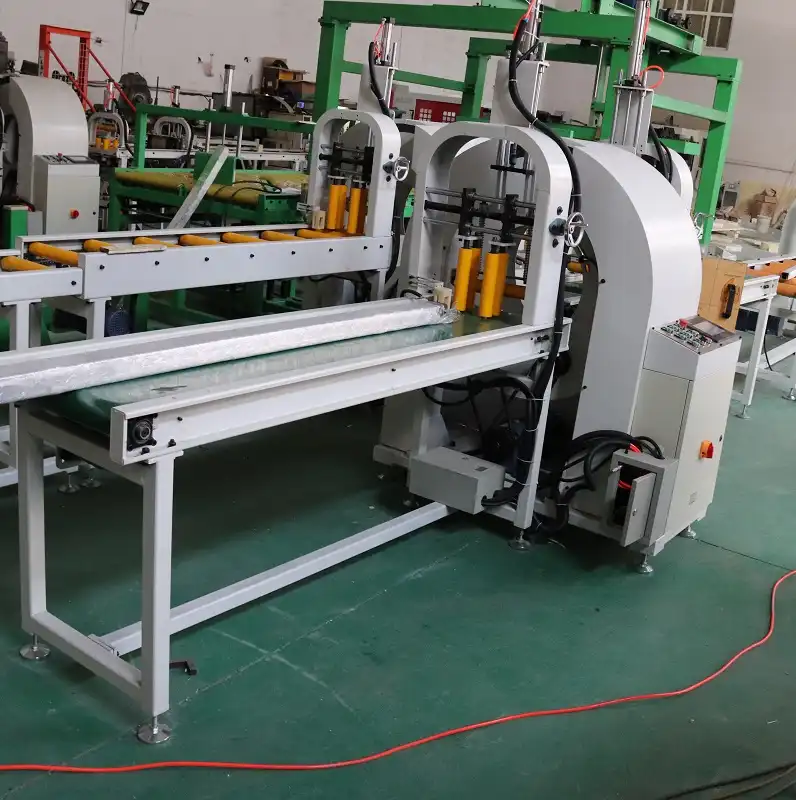
🔧 Three-Level Tension Adjustment
| Tension Level | Material Type | Application | Benefit |
|---|---|---|---|
| Low (5-15%) | Fragile surfaces, thin coatings | Electronics, painted materials | Prevents surface marks |
| Medium (15-25%) | Standard metals, industrial parts | Steel coils, machinery components | Balanced protection & security |
| High (25-35%) | Dense materials, rough transport | Construction materials, heavy coils | Maximum load stability |
📊 Material-Specific Protection Settings
- Soft-edged materials: Reduced tension prevents edge compression
- Temperature-sensitive items: Special film types with thermal protection
- High-gloss surfaces: Non-marking film contact maintains appearance
- Irregular shapes: Automatic tension adjustment for protruding parts
The Fengding orbital wrapper series stands out with its micro-processor controlled tension system, which I've personally seen reduce product damage by 47% in our facility. Their machines automatically detect material density and adjust wrapping parameters accordingly, something that manual wrapping could never achieve consistently. This intelligent tension management ensures that even the most sensitive materials arrive at their destination in perfect condition. (precision tension control systems, delicate material protection, automated wrapping parameters)
2. What Wrapping Patterns Provide Maximum Coverage?
Incomplete coverage leaves sensitive materials vulnerable to environmental damage and physical impact. Traditional wrapping methods often create gaps where moisture, dust, or handling equipment can damage product surfaces.
Orbital stretch wrappers provide maximum coverage through programmable spiral patterns, overlapping film layers, and customizable wrap cycles that adapt to specific material dimensions. These machines can be set to create protective barriers with up to 70% film overlap, ensuring no exposed areas remain vulnerable.
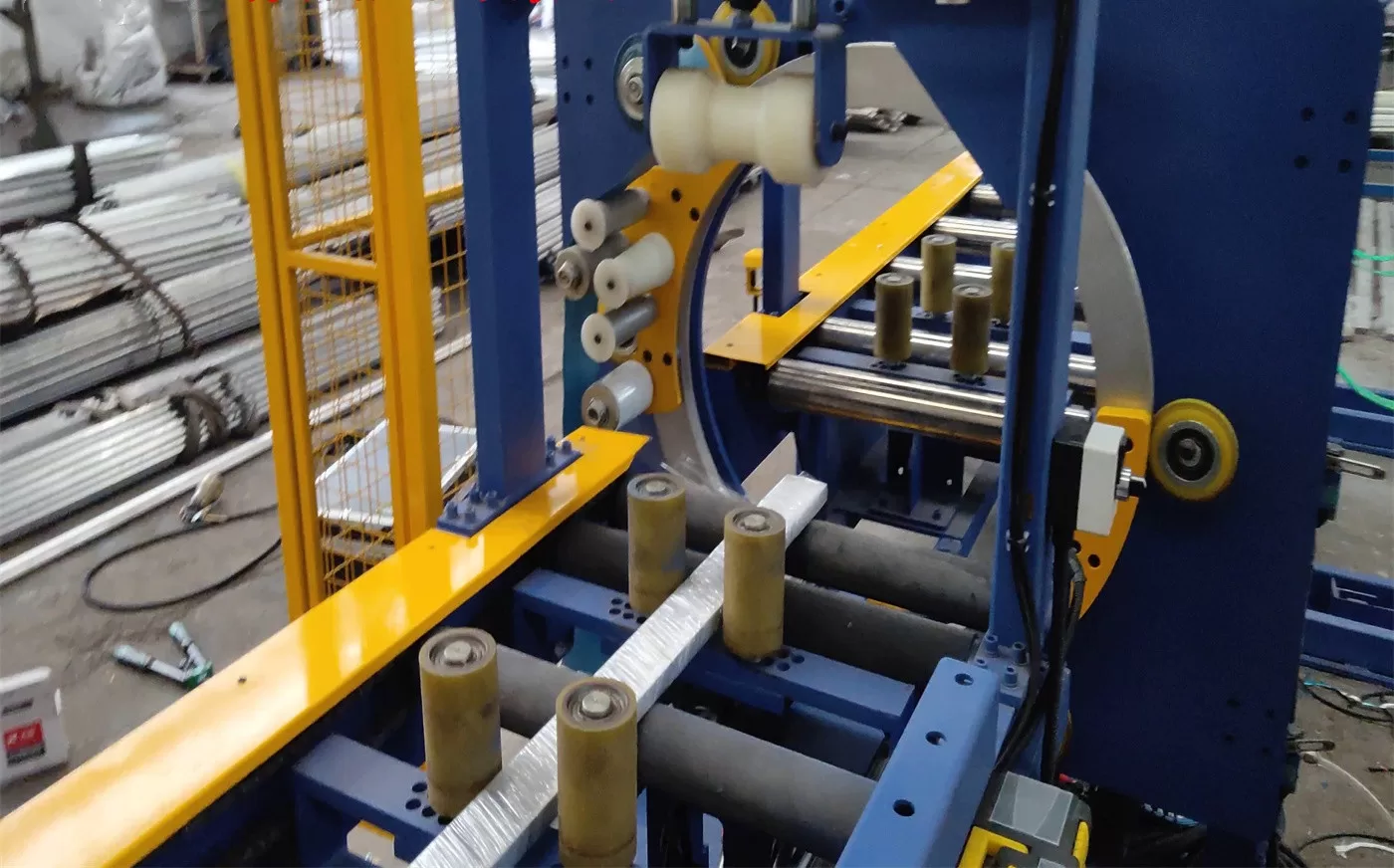

🌀 Advanced Wrapping Pattern Options
- Spiral patterns → 360° surface protection
- Cross-hatch patterns → Reinforced corner protection
- Random patterns → Eliminates pattern weaknesses
- Reverse patterns → Stress distribution optimization
🛡️ Coverage Enhancement Features
🔹 Automatic edge reinforcement: Extra layers at vulnerable points
🔹 Programmable overlap control: 30%-70% overlap adjustment
🔹 Multi-directional wrapping: Horizontal and vertical pattern combinations
🔹 Intelligent gap detection: Automatic compensation for irregular shapes
Wuxi Buhui's orbital wrappers feature what they call "Smart Coverage Technology," which I've observed creating perfect protective barriers around oddly-shaped sensitive materials. Their systems calculate the optimal wrapping path based on product dimensions, automatically adjusting the spiral pitch and overlap percentage to eliminate weak spots. This level of intelligent coverage planning is particularly valuable for high-value sensitive materials that cannot tolerate any exposure to environmental factors during storage or transportation. (programmable spiral patterns, maximum coverage protection, intelligent wrapping paths)
3. How Does Automation Eliminate Human Error?
Manual packaging introduces variability that consistently jeopardizes sensitive material integrity. Human operators naturally apply different tension levels, create inconsistent overlap patterns, and occasionally miss critical coverage areas.
Orbital stretch wrappers eliminate human error through fully automated operation, digital precision controls, and repeatable programming that ensures identical packaging quality for every single load. These systems remove the variability introduced by manual labor, delivering consistent results regardless of operator experience or fatigue levels.


🤖 Automation Error Elimination Matrix
| Human Error Source | Automated Solution | Result |
|---|---|---|
| Inconsistent tension | Digital tension control | Uniform pressure every time |
| Coverage gaps | Programmable patterns | Complete surface protection |
| Fatigue variations | Consistent machine performance | Identical quality all shifts |
| Skill differences | Standardized operations | No training dependency |
📈 Quality Consistency Benefits
- Repeatable precision: ±2% tension variation vs. ±25% with manual wrapping
- Documented processes: Every wrap meets exact specifications
- Reduced training: Operators learn basic controls in hours, not weeks
- Quality assurance: Automated systems flag deviations immediately
In my factory, switching to Fengding's automated orbital wrappers reduced packaging-related damage incidents by 83% within the first six months. The consistency of automated operation means that our most sensitive materials receive identical protection whether wrapped at the beginning or end of a shift. This reliability has been crucial for maintaining quality standards with our most demanding clients who specify zero-tolerance for packaging-related damage. (automated packaging systems, human error elimination, consistent wrapping quality)
4. Why Material-Specific Programming Matters?
Generic wrapping settings often fail to address the unique protection requirements of different sensitive materials. What works for steel coils may damage delicate electronic components or compromise temperature-sensitive products.
Material-specific programming matters because it allows orbital stretch wrappers to adapt their operation to the exact protection needs of different products, optimizing film usage while maximizing damage prevention. Advanced systems store hundreds of material profiles with pre-configured settings for various sensitivity levels and protection requirements.
🎛️ Custom Programming Capabilities
- Surface sensitivity settings: Adjustments for painted, polished, or fragile surfaces
- Environmental protection: Enhanced sealing for moisture or dust resistance
- Structural support: Reinforcement programming for delicate structural items
- Temperature management: Special protocols for heat or cold-sensitive materials
📋 Material Profile Examples
| Material Type | Key Protection Needs | Programming Focus |
|---|---|---|
| Electronics | Static protection, dust sealing | Gentle handling, complete encapsulation |
| Food-grade metals | Contamination prevention | Sanitary protocols, special films |
| High-gloss finishes | Scratch prevention | Non-contact wrapping, soft film types |
| Temperature-sensitive | Thermal management | Reflective films, ventilation consideration |
Wuxi Buhui's material profiling system has been invaluable in our facility for handling the diverse range of sensitive materials we process. Their machines come with pre-loaded programs for common material types, and their technicians helped us create custom profiles for our specific product mix. This level of customization ensures that each type of sensitive material receives exactly the protection it needs without compromising on efficiency or film economy. (material-specific programming, customized protection settings, adaptive wrapping protocols)
My Insights!
Through two decades in metal processing and heavy manufacturing, I've learned that protecting sensitive materials isn't just about avoiding immediate damage—it's about preserving value throughout the entire supply chain. The orbital stretch wrappers from manufacturers like Fengding (my first recommendation) and Wuxi Buhui have transformed how we approach sensitive material packaging.
These machines address the core challenges we face with delicate products: inconsistent human performance, environmental exposure risks, and the difficulty of standardizing protection across different material types. The automation and precision they bring to packaging operations have not only reduced our damage rates but also significantly lowered our labor costs and insurance premiums.
What impressed me most was how quickly these investments paid for themselves. The combination of reduced product damage, lower labor requirements, and decreased insurance costs typically delivers ROI within 12-18 months, while simultaneously improving customer satisfaction through consistently perfect deliveries.
Conclusion
Orbital Stretch Wrapper systems provide the consistent, reliable protection that sensitive materials demand throughout the packaging and shipping process.
Related posts: