Semi-Automatic vs. Fully Automated Orbital Stretch Wrappers: Which Is Right for Your Business?
As a factory manager, I know that every equipment decision can make or break your production line. You're constantly balancing efficiency demands with budget constraints, wondering if that new machine will truly deliver on its promises or become another expensive paperweight. The choice between semi-automatic and fully automated orbital stretch wrappers is one of those critical decisions that keeps operations leaders up at night.
The right choice depends entirely on your production volume, labor costs, and operational complexity. Semi-automatic wrappers offer flexibility and lower initial investment for businesses with variable packaging needs, while fully automated systems deliver maximum efficiency and labor savings for high-volume operations. This isn't about which machine is "better" - it's about which solution aligns with your specific business requirements and growth trajectory.


Let me walk you through the key considerations that will help you make the right investment decision. Having worked with hundreds of manufacturing facilities across different industries, I've seen firsthand how the right packaging equipment can transform operations - and how the wrong choice can create new bottlenecks. We'll explore the practical realities of both options so you can choose with confidence.
1. What Exactly Are the Operational Differences Between These Two Systems?
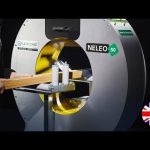
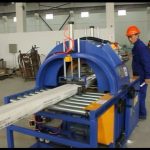
Picture this: It's Monday morning, and your production line is humming. A semi-automatic orbital stretch wrapper requires an operator to manually position each load, initiate the wrapping cycle, and then remove the wrapped product. The machine does the actual wrapping, but human intervention is needed at multiple points. This setup works well when you have different load sizes throughout the day or when production volumes don't justify a full-time automated system.
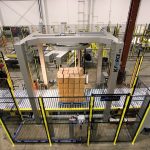
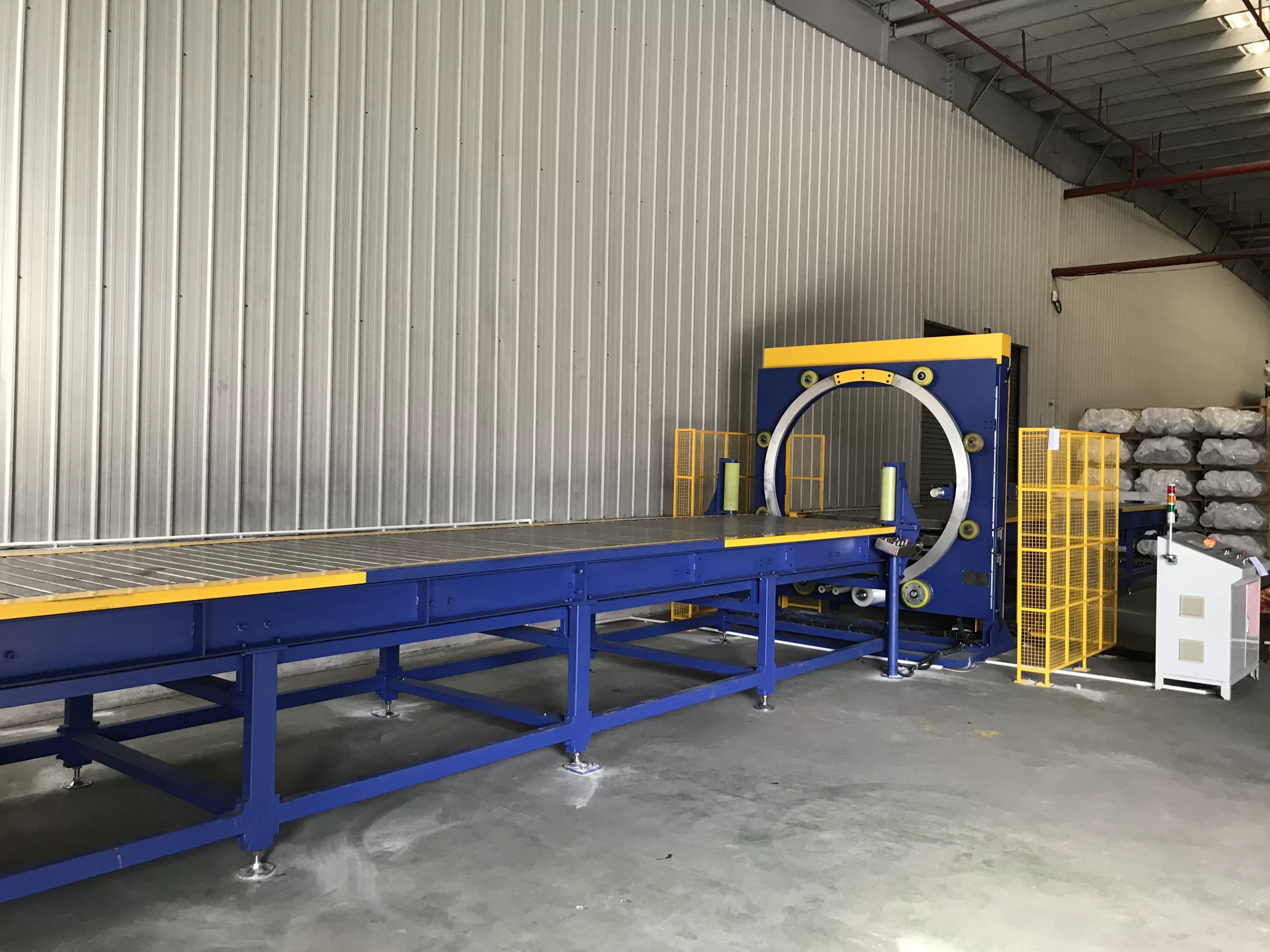
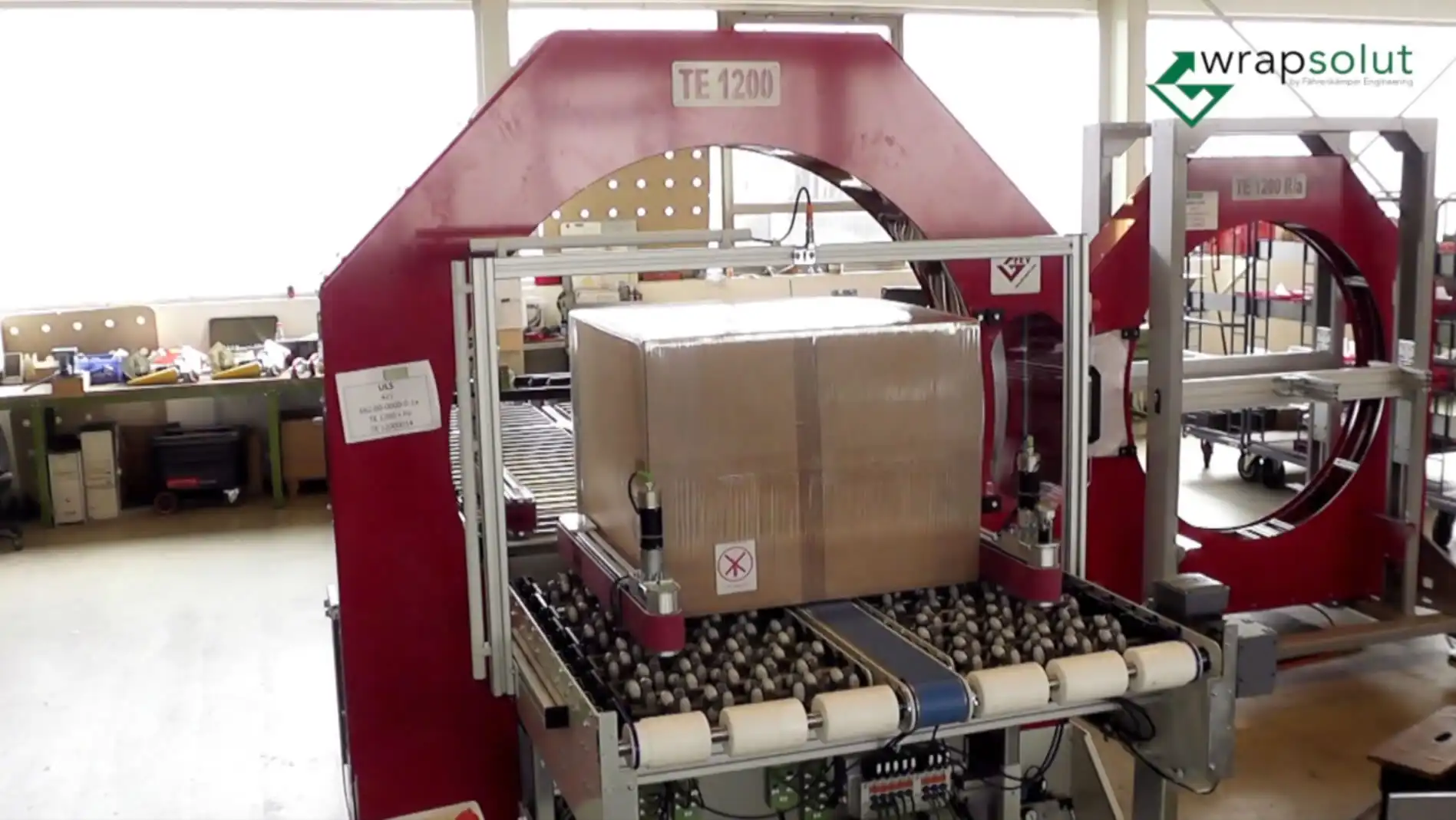
Semi-automatic orbital stretch wrappers combine manual load handling with automated wrapping functions, while fully automated systems integrate seamlessly with conveyor lines and require minimal human intervention beyond monitoring. The fundamental difference lies in the level of operator involvement throughout the wrapping process. Semi-automatic systems bridge the gap between completely manual wrapping and full automation.

🔄 Process Flow Comparison
Let me break down the operational workflows for both systems:
Semi-Automatic Workflow:
- Operator positions load on turntable
- Operator selects wrapping program
- Machine automatically wraps load
- Operator removes wrapped load
- Cycle repeats
Fully Automated Workflow:
- Conveyor delivers load to wrapping station
- Sensors detect load presence and dimensions
- Machine automatically wraps according to pre-set parameters
- Conveyor moves wrapped load to next station
- Continuous operation with monitoring only
💰 Cost Structure Analysis
| Cost Factor | Semi-Automatic | Fully Automated |
|---|---|---|
| Initial Investment | $15,000 - $30,000 | $50,000 - $100,000+ |
| Labor Requirements | 1 operator per machine | Monitoring only |
| Operating Cost/Hour | $25-40 (with labor) | $5-10 (energy only) |
| Maintenance Complexity | Low to Medium | Medium to High |
🎯 Ideal Application Scenarios
Based on my experience working with metal processing plants like Michael's operation, here's where each system shines:
Choose Semi-Automatic When:
- Production volumes under 50 loads per day
- Multiple different load sizes and shapes
- Limited capital budget
- Existing workforce can handle additional tasks
- Space constraints prevent conveyor integration
Choose Fully Automated When:
- Production volumes exceeding 100 loads daily
- Consistent load sizes and weights
- High labor costs or workforce shortages
- Integration with existing material handling systems
- 24/7 operation requirements
The choice becomes clearer when you analyze your specific production patterns and cost structures. Many of our clients at FHOPEPACK start with semi-automatic systems and gradually upgrade to automated solutions as their business grows. (semi-automatic orbital wrapper operation, fully automated stretch wrapping system, operational workflow differences)
2. How Do the Cost Considerations Actually Break Down Over Time?
When I purchased my first stretch wrapper for my own factory, I made the common mistake of focusing only on the purchase price. The real cost of ownership includes installation, training, maintenance, and most importantly - labor. A semi-automatic machine might cost $20,000 versus $80,000 for an automated system, but that's just the beginning of the story.
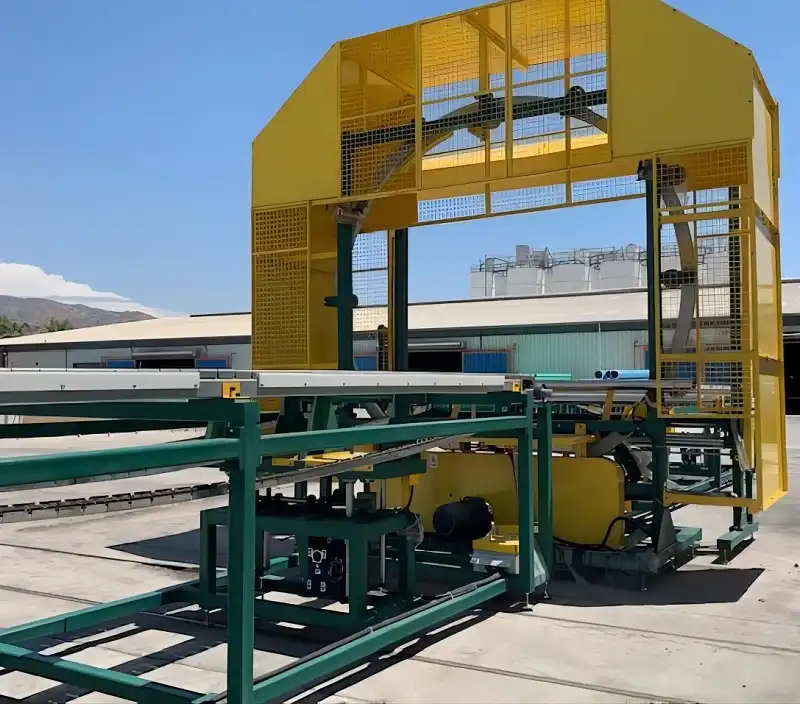
The true cost difference extends far beyond initial purchase price, with semi-automatic systems carrying higher ongoing labor expenses while automated systems require greater capital investment but deliver lower operating costs. Over a 5-year period, many businesses find that fully automated systems actually become more cost-effective due to significant labor savings and reduced product damage.

📊 Total Cost of Ownership Analysis
Let me share some real numbers from our clients' experiences:
Year 1 Costs:
- Semi-Automatic: $25,000 (machine) + $12,000 (installation) + $65,000 (operator) = $102,000
- Fully Automated: $75,000 (machine) + $25,000 (installation) + $15,000 (integration) = $115,000
Year 3 Costs:
- Semi-Automatic: $102,000 + $130,000 (2 years labor) + $5,000 (maintenance) = $237,000
- Fully Automated: $115,000 + $6,000 (2 years maintenance/energy) = $121,000
Year 5 Costs:
- Semi-Automatic: $237,000 + $130,000 (additional 2 years labor) + $5,000 (maintenance) = $372,000
- Fully Automated: $121,000 + $6,000 (additional 2 years costs) = $127,000
🔍 Hidden Costs Many Businesses Miss
Through my work with manufacturing facilities, I've identified several often-overlooked expenses:
Semi-Automatic Hidden Costs:
- Employee benefits and insurance for additional operators
- Training time and turnover costs
- Inconsistent wrapping quality leading to product damage
- Slower production during breaks and shift changes
- Workers' compensation claims from repetitive strain
Fully Automated Hidden Costs:
- Higher electrical requirements and infrastructure upgrades
- Specialized maintenance technician training
- Integration costs with existing material handling systems
- Software licensing and updates
- Higher spare parts inventory requirements
💡 Return on Investment Calculation
The break-even point typically occurs between 18-36 months for most operations. Here's the simple formula we use:
ROI Calculation:
(Annual Labor Savings + Annual Damage Reduction) - (Annual Maintenance + Depreciation) ÷ Initial Investment
Most of our clients achieving 200+ wraps daily see ROI within 24 months. For operations under 50 wraps daily, semi-automatic often makes more financial sense. The key is analyzing your specific production volumes and labor rates rather than following industry generalizations. (stretch wrapper cost analysis, packaging equipment ROI, automated vs manual labor costs)
3. What Production Volume Thresholds Should Guide Your Decision?
I recall working with a steel service center that was wrapping about 75 coils daily with a semi-automatic system. They were considering automation but weren't sure if their volume justified the investment. After analyzing their growth trajectory and labor costs, we determined that crossing the 100 coils per day threshold made automation economically viable.
Production volume thresholds typically break down as follows: under 50 loads daily favors semi-automatic systems, 50-150 loads represents a gray area where other factors dominate, and over 150 loads daily strongly justifies fully automated solutions. However, these thresholds vary significantly based on load consistency, labor costs, and growth projections.

📈 Volume-Based Decision Matrix
| Daily Volume | Recommended System | Key Considerations |
|---|---|---|
| 1-25 loads | Semi-Automatic | Low utilization doesn't justify automation costs |
| 26-75 loads | Semi-Automatic | Consider future growth and labor availability |
| 76-150 loads | Either Option | Analyze labor costs and growth plans carefully |
| 151-300 loads | Fully Automated | Clear economic benefits emerge |
| 300+ loads | Fully Automated | Essential for production efficiency |
🚀 Scaling Considerations
Many of our most successful clients started with semi-automatic equipment and planned for future automation. Here's what I recommend based on their experiences:
For Growing Businesses:
- Choose semi-automatic equipment from manufacturers that offer upgrade paths
- Ensure your facility layout accommodates future conveyor integration
- Document wrapping requirements and patterns for smooth future transition
- Consider leasing options that allow equipment upgrades as volumes increase
For Stable High-Volume Operations:
- Invest in fully automated systems with capacity buffers (20-30% above current needs)
- Choose modular systems that can be expanded or reconfigured
- Implement comprehensive training programs for maintenance staff
- Develop relationships with reliable service providers like Fengdong or Wuxi Bu Hui
⚡ Production Pattern Analysis
Beyond pure volume numbers, consider these operational factors:
Batch Production Operations:
Semi-automatic often works better for operations with:
- Multiple product changeovers daily
- Seasonal volume fluctuations
- Custom wrapping requirements per order
- Limited capital for automation
Continuous Flow Operations:
Fully automated becomes essential for:
- 24/7 manufacturing environments
- Just-in-time delivery requirements
- High-value products requiring consistent protection
- Labor-intensive current processes
The most successful implementations I've seen involve careful analysis of not just current volumes, but anticipated growth, product mix changes, and labor market conditions. (production volume thresholds, packaging automation timing, stretch wrapper capacity planning)
4. How Do Safety and Labor Factors Influence This Choice?
Last year, I visited a metal processing plant where a worker had suffered a back injury while manually positioning a 3-ton coil for wrapping. The incident cost them $85,000 in medical bills and lost production time, not to mention the human toll. This preventable accident highlighted why safety considerations must be central to equipment decisions.
Safety and labor considerations heavily favor fully automated systems, which eliminate most manual handling risks and reduce workforce strain, while semi-automatic systems require careful procedural controls and physical operator involvement. The safety advantages extend beyond accident prevention to include ergonomic benefits and reduced workers' compensation exposure.
🛡️ Safety Comparison Table
| Risk Factor | Semi-Automatic | Fully Automated |
|---|---|---|
| Manual Load Handling | High risk | Eliminated |
| Repetitive Motion | Moderate risk | Minimal risk |
| Pinch Points | Present during loading | Isolated in guarded areas |
| Emergency Stops | Manual activation | Automated sensors |
| Training Requirements | Extensive safety training | Basic operational training |
👥 Labor Impact Analysis
From my experience helping factories optimize their workforce, here's how each system affects your team:
Semi-Automatic Labor Reality:
- Requires dedicated operator attention
- Physical demands can lead to fatigue and injuries
- Training focuses on safety procedures and emergency response
- Higher turnover in repetitive positions
- Multiple shift coverage needed for continuous operation
Fully Automated Labor Benefits:
- Single operator can monitor multiple machines
- Staff can be redeployed to higher-value tasks
- Training focuses on monitoring and troubleshooting
- Better working conditions improve retention
- Consistent operation across all shifts
💼 Regulatory Compliance Considerations
Different regions have varying requirements for industrial equipment:
Common Safety Standards:
- OSHA regulations for machine guarding and operator safety
- CE marking requirements for European operations
- ANSI B11 standards for machine safety
- Local regulations for noise levels and emissions
Implementation Best Practices:
- Conduct thorough risk assessments before installation
- Develop detailed standard operating procedures
- Provide comprehensive safety training for all operators
- Install appropriate guarding and safety interlocks
- Maintain detailed safety documentation
The companies achieving the best results, like those using Fengdong equipment with their excellent safety features, typically see 60-70% reduction in packaging-related incidents after automating. The investment in safety often pays for itself through reduced insurance premiums and improved productivity. (packaging equipment safety, automated stretch wrapper benefits, industrial worker protection)
My Insights!
Having guided numerous manufacturing facilities through this decision process, I've observed several patterns that lead to successful outcomes. The most satisfied customers are those who match their equipment choices to their specific operational realities rather than following industry trends. Companies that carefully analyze their production data, labor costs, and growth plans typically make choices they don't regret years later.
The middle ground often provides the best solution for many operations. Starting with a high-quality semi-automatic system from a reputable manufacturer like Fengdong, then planning for future automation, allows businesses to manage capital while preparing for growth. The key is working with suppliers who understand your industry and can provide honest guidance about when automation truly makes sense for your situation.
Conclusion
Choosing between semi-automatic and fully automated Orbital Stretch Wrapper depends on your production volume, budget, and labor considerations—analyze these factors carefully to make the right investment.
Related posts: