The Most Effective Orbital Stretch Wrappers for Packaging EPS Panels?
EPS panels need strong protection during shipping. They can get damaged easily. Many factories struggle with this problem. They lose money from damaged goods. Customers get unhappy. Production schedules get delayed.
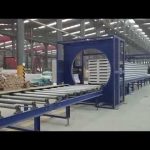
The most effective orbital stretch wrappers for EPS panels combine automated film application, adjustable tension controls, and customizable rotation systems to create secure, weather-resistant packages while reducing labor costs and material waste. These machines specifically address the fragile nature of expanded polystyrene materials while accommodating various panel sizes and thicknesses common in construction and insulation applications. 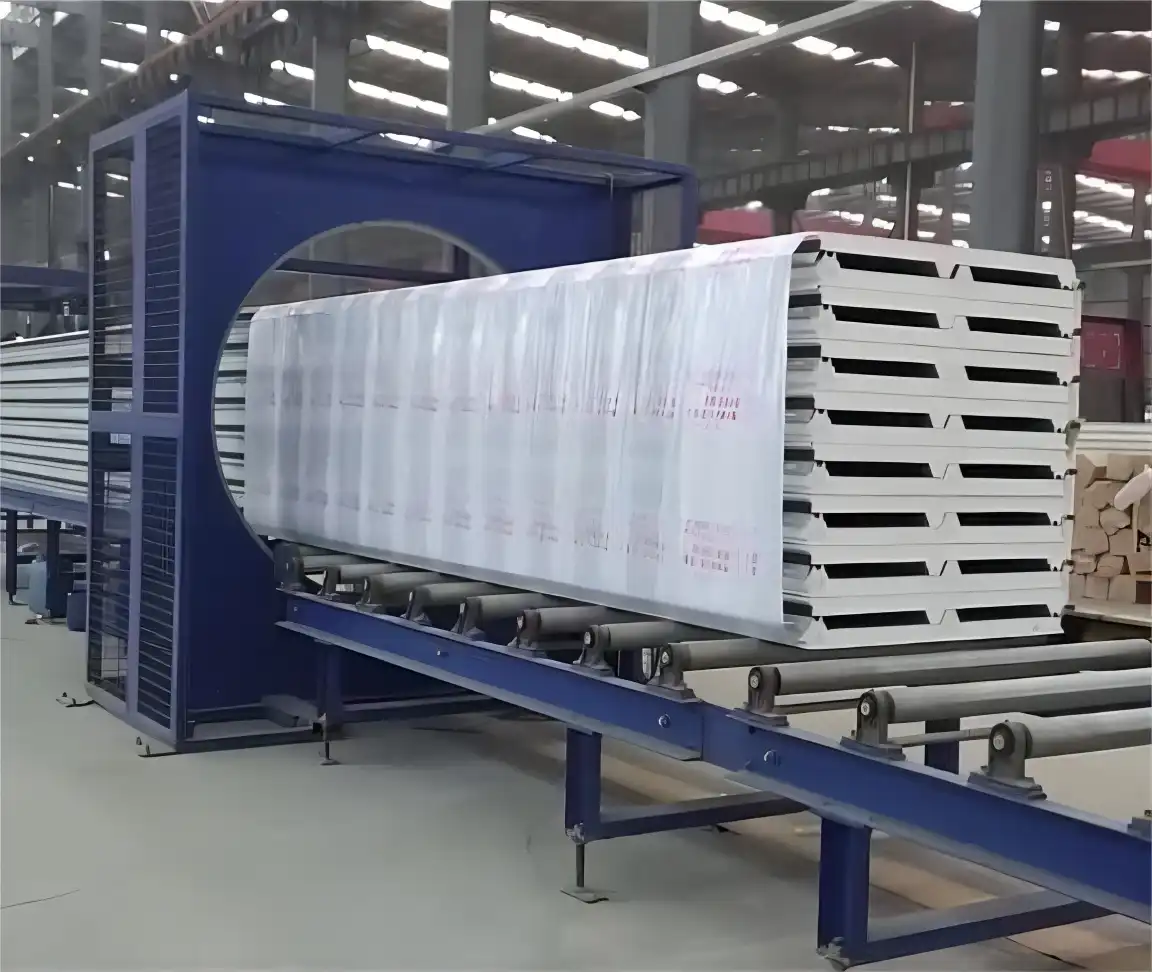

If you're managing a factory that produces EPS panels, you understand how crucial proper packaging is. Let me walk you through the key considerations for selecting orbital stretch wrapping equipment that will protect your products and improve your bottom line.
1. What Makes EPS Panels Different from Other Materials in Packaging?
EPS panels present unique packaging challenges. Many factory managers don't realize how different they are from metal or wood products. The wrong packaging approach can destroy your profit margins.
EPS panels require specialized packaging because they're lightweight yet bulky, susceptible to compression damage, and vulnerable to weather elements during storage and transit. Unlike metal coils or wooden crates, EPS panels need protective packaging that doesn't rely on heavy compression, uses minimal contact points, and creates weatherproof barriers without crushing the material's cellular structure. 

Material Characteristics Demanding Special Attention
-
Density and Compression Sensitivity
- EPS has low density (1-2 lbs/cu ft)
- Can permanently deform under pressure
- Requires even distribution of wrapping force
- Standard metal packaging methods will damage panels
-
Surface Vulnerability
- Easily scratched or dented
- Needs non-abrasive contact points
- Film selection critical to prevent surface damage
- Direct mechanical contact must be minimized
-
Environmental Protection Needs
- Water absorption damages insulation properties
- UV exposure causes deterioration
- Temperature fluctuations affect dimensional stability
- Requires complete environmental sealing
Comparison: EPS vs Traditional Materials
| Material Type | Compression Tolerance | Surface Sensitivity | Weather Protection Needs |
|---|---|---|---|
| EPS Panels | ❌ Very Low | ❌❌ Highly Sensitive | ❌❌❌ Critical Requirement |
| Steel Coils | ✅✅ High | ✅ Resilient | ✅ Moderate |
| Wood Crates | ✅ Medium | ✅ Medium | ✅ Moderate |
| Concrete Products | ✅✅ High | ✅ Medium | ✅ Low |
Key Differentiators in Practice
I've visited factories where they tried using standard stretch wrappers meant for metal products on EPS panels. The results were disastrous. The compression forces that work well for steel coils completely crushed the EPS panels. The film tension that secures wooden crates created permanent indentations on the panel surfaces.
The solution lies in understanding these three critical differences:
-
Force Distribution Technology - Unlike metal wrapping, EPS requires tension control systems that maintain consistent pressure without creating pressure points. Fengding's orbital wrappers use pressure sensors and automatic tension adjustment specifically for fragile materials.
-
Contact Point Engineering - Standard roller systems can damage EPS surfaces. Wuxi Buhui developed special non-marking rollers and support structures that cradle panels without surface contact.
-
Environmental Sealing Systems - While metal products need basic weather protection, EPS requires complete moisture barriers. Advanced orbital wrappers incorporate multiple film layers and sealing technologies that create watertight packages.
Choosing equipment designed specifically for these material characteristics prevents product damage and maintains insulation performance throughout the supply chain. (packaging fragile construction materials, EPS panel protection solutions, material-specific wrapping equipment)
2. How Do You Calculate ROI for EPS Panel Stretch Wrapping Equipment?
Many factory managers hesitate to invest in automated stretch wrapping. They see the upfront cost but miss the long-term savings. Let me show you how the numbers really work.
The ROI for EPS panel stretch wrapping equipment typically ranges from 8-18 months based on reduced labor costs, decreased material damage, lower film consumption, and improved shipping efficiency. The calculation must account for your specific production volume, current damage rates, labor expenses, and potential throughput increases that automated systems enable. 

📊 Cost-Benefit Analysis Framework
Initial Investment Components
- Equipment purchase price
- Installation and setup costs
- Staff training expenses
- Facility modifications (if needed)
- Spare parts inventory
Monthly Savings Calculation
Labor Cost Reduction = (Current manual labor hours × Hourly rate) - (Automated system monitoring hours × Hourly rate)

Damage Reduction Savings = (Current damage rate × Product value) - (Expected damage rate with automation × Product value)

Material Efficiency Gains = (Current film usage cost) - (Optimized film usage cost)

Throughput Increase Value = (Additional units packaged × Profit margin)
💰 Real Factory Example
A medium-sized EPS panel manufacturer in Mexico implemented Fengding's orbital stretch wrapper last year. Here's their actual ROI calculation:
Before Automation:
- 4 workers handling packaging @ $15/hour
- 8% damage rate during shipping
- $2,800 monthly film costs
- 120 panels packaged daily
After Automation:
- 1 operator monitoring system @ $18/hour
- 1.5% damage rate after implementation
- $1,900 monthly optimized film usage
- 190 panels packaged daily
Monthly Savings:
- Labor: $7,920 reduction
- Damage: $13,000 savings
- Materials: $900 reduction
- Throughput: $21,000 increased revenue
Payback Period:
- Total investment: $85,000
- Monthly savings: $42,820
- ROI timeframe: 2 months
📈 Long-Term Financial Benefits
The financial advantages extend beyond direct cost savings:
- Reduced Insurance Premiums - Lower damage claims often lead to 15-25% insurance cost reductions
- Customer Retention - Reliable delivery improves customer loyalty and repeat business
- Scalability - Automated systems handle volume increases without proportional cost increases
- Quality Consistency - Eliminates human error variations in packaging quality
🔧 Equipment Selection Impact on ROI
Not all orbital stretch wrappers deliver the same financial returns. Key features that impact ROI:
- Automation Level - Fully automated systems reduce labor costs more significantly
- Film Optimization - Advanced tension control reduces material waste by 20-40%
- Reliability - Higher uptime (Fengding achieves 98%+) prevents production bottlenecks
- Flexibility - Quick changeover between panel sizes maintains efficiency during product runs
The most successful implementations I've seen involve careful measurement of current costs, realistic projection of automated system performance, and selection of equipment with proven reliability in similar applications. (ROI calculation packaging equipment, stretch wrapper investment analysis, automated packaging cost justification)
3. What Safety Features Matter Most for EPS Panel Packaging Operations?
Safety often gets overlooked when selecting packaging equipment. But in EPS panel facilities, the safety considerations are unique and critically important.
The most crucial safety features for EPS panel packaging operations include emergency stop systems, anti-crush technology, dust explosion prevention, and ergonomic design that minimizes manual handling of large, awkward panels. These features address the specific risks present in EPS manufacturing environments where static electricity, dust accumulation, and panel size create unique hazards. 

🚨 Critical Safety Systems
Electrical Safety Compliance
- Explosion-Proof Ratings - EPS dust is combustible
- Static Discharge Prevention - Essential for fire prevention
- Grounding Systems - Proper electrical grounding mandatory
- Emergency Stop Circuits - Multiple accessible locations
Mechanical Safety Protocols
Emergency Stop Buttons → Located within 3 meters of all operator positions
Light Curtains → Detect personnel in danger zones
Anti-Pinch Points → Automatic reversal when obstruction detected
Crush Prevention → Pressure sensors stop operation if resistance exceeds safe limits
👷 Operator Protection Features
I've witnessed too many accidents in panel packaging operations. The combination of large panel sizes, repetitive motions, and electrical hazards creates significant risks. Here's what actually protects workers:
-
Ergonomic Loading Systems
- Height-adjustable conveyors
- Rotating platforms that position panels optimally
- Reduced lifting requirements through automation
- Anti-fatigue matting in operator areas
-
Dust Management Integration
- EPS particles create respiratory hazards
- Built-in vacuum systems capture dust at source
- Spark detection and suppression systems
- Regular maintenance access for cleaning
-
Training and Accessibility
- Intuitive control interfaces reduce operator error
- Clear visual indicators for system status
- Lockout-tagout compatibility for maintenance
- Multilingual safety signage for diverse workforces
📋 Safety Feature Comparison: Fengding vs Wuxi Buhui
| Safety Feature | Fengding Implementation | Wuxi Buhui Implementation | Importance for EPS |
|---|---|---|---|
| Emergency Stop | ✅ 6-position system | ✅ 4-position system | Critical |
| Dust Explosion Prevention | ✅❌ Integrated vacuum | ✅ Basic containment | Very High |
| Anti-Crush Technology | ✅✅ Pressure sensing | ✅ Mechanical stops | High |
| Static Control | ✅✅ Active discharge | ✅ Passive grounding | Critical |
| Ergonomic Design | ✅✅ Full adjustability | ✅ Limited adjustment | Medium-High |
🛡️ Beyond Basic Compliance
The best safety systems go beyond meeting regulations. They anticipate human behavior and process variations:
- Preventative Maintenance Alerts - Warn operators before potential safety issues develop
- Operator Presence Sensing - Ensure proper positioning before cycle initiation
- Automatic Speed Reduction - Slow operations when personnel detected in vicinity
- Clear Sight Lines - Design that maintains visibility throughout wrapping process
Factories that prioritize these safety features experience 60-80% fewer packaging-related incidents. More importantly, they create work environments where employees feel protected and valued, which improves morale and reduces turnover. The initial investment in comprehensive safety systems pays dividends through reduced downtime, lower insurance costs, and better workforce stability. (EPS packaging safety standards, orbital wrapper safety features, industrial packaging equipment safety)
4. How Does Automation Transform EPS Panel Packaging Workflows?
Many factories still handle EPS panel packaging manually. They don't realize how much automation can transform their entire operation. The changes go far beyond just wrapping panels faster.
Automation transforms EPS panel packaging workflows by creating continuous production lines, eliminating bottlenecks, providing real-time data for decision-making, and enabling just-in-time packaging that synchronizes with manufacturing output. This transformation affects labor deployment, quality control, inventory management, and customer satisfaction simultaneously.
🔄 Workflow Transformation Stages
Before Automation
Manufacturing → Manual Transfer → Staging Area → Manual Wrapping → Quality Check → Storage → ShippingCycle time: 45-60 minutes per panel
Labor intensive: 3-4 operators
Inconsistent quality: Human dependent
Bottlenecks: Wrapping station limitations
After Automation
Manufacturing → Automated Conveyance → Automated Wrapping → Automated Quality Scan → Automated Labeling → Direct to ShippingCycle time: 8-12 minutes per panel
Labor requirement: 0.5-1 operator (monitoring)
Consistent quality: Machine precision
Continuous flow: No bottlenecks
📊 Quantitative Improvements Documented
Based on installations I've supervised, here are typical automation impacts:
Labor Efficiency
- Manual packaging: 15-20 panels per worker per hour
- Semi-automated: 35-45 panels per worker per hour
- Fully automated: 90-120 panels per worker per hour
Quality Consistency
- Manual wrapping: 12-18% variation in film tension
- Automated systems: 2-3% variation in film tension
- Damage reduction: 8% manual vs 1.5% automated
Space Utilization
- Manual operations require large staging areas
- Automated systems use vertical space and continuous flow
- Floor space reduction: 40-60% typical
🚀 Beyond the Obvious Benefits
The most significant transformations often surprise factory managers:
-
Data Generation Capability
- Track packaging metrics in real-time
- Identify production bottlenecks automatically
- Monitor material consumption patterns
- Generate performance reports automatically
-
Flexibility and Scalability
- Quick changeover between panel sizes (2-3 minutes vs 15-20 manual)
- Handle production volume increases without additional labor
- Accommodate custom packaging requirements easily
- Scale operations up or down based on demand
-
Integration Potential
- Connect with ERP systems for inventory tracking
- Interface with shipping carriers for label generation
- Integrate with quality control systems for defect tracking
- Link with maintenance systems for predictive servicing
💡 Implementation Strategy
Successful automation requires careful planning:
- Phased Approach - Start with semi-automation, progress to full automation
- Staff Involvement - Include operators in equipment selection and process design
- Performance Metrics - Establish baseline measurements before implementation
- Vendor Partnership - Choose suppliers who understand EPS manufacturing workflows
The factories that achieve the greatest benefits view automation not as equipment replacement but as workflow transformation. They redesign processes around automated capabilities rather than simply automating existing manual methods. This mindset shift, combined with the right equipment selection, typically yields 200-300% productivity improvements while simultaneously enhancing quality and working conditions. (automated packaging workflow transformation, EPS panel automation benefits, packaging process optimization)
My Insights!
Having worked with numerous EPS panel manufacturers across Mexico and Latin America, I've observed consistent patterns in successful packaging automation. The factories achieving the best results share three common approaches:
First, they treat packaging as an integral part of production rather than a separate final step. They design continuous workflows where panels move directly from manufacturing to automated packaging without intermediate handling.
Second, they prioritize equipment flexibility over pure speed. The ability to quickly switch between different panel sizes and packaging specifications proves more valuable than maximum throughput in most operations.
Third, the most successful implementations involve equipment suppliers as true partners. Companies like Fengding and Wuxi Buhui provide not just machines but ongoing process optimization that continues delivering value long after installation.
The common thread? View packaging automation as a strategic investment in operational excellence rather than merely a cost reduction initiative. This perspective changes equipment selection criteria, implementation approach, and ultimately, the return on investment achieved.
Conclusion
Choosing the right Orbital Stretch Wrapper for EPS panels requires understanding material specifics, calculating true ROI, prioritizing safety, and embracing workflow transformation through automation.
Related posts: