Horizontal Orbital Stretch Wrappers: The Ultimate Solution for Packaging Large Steel Coils?
As a packing machine engineer who has worked with countless metal processing plants, I've seen firsthand how packaging bottlenecks can cripple production lines. Michael Chen, a plant manager from Mexico, recently shared his frustration: "Our manual steel coil packaging process is causing daily delays and safety incidents." This isn't just his problem - it's an industry-wide challenge that demands immediate solutions.
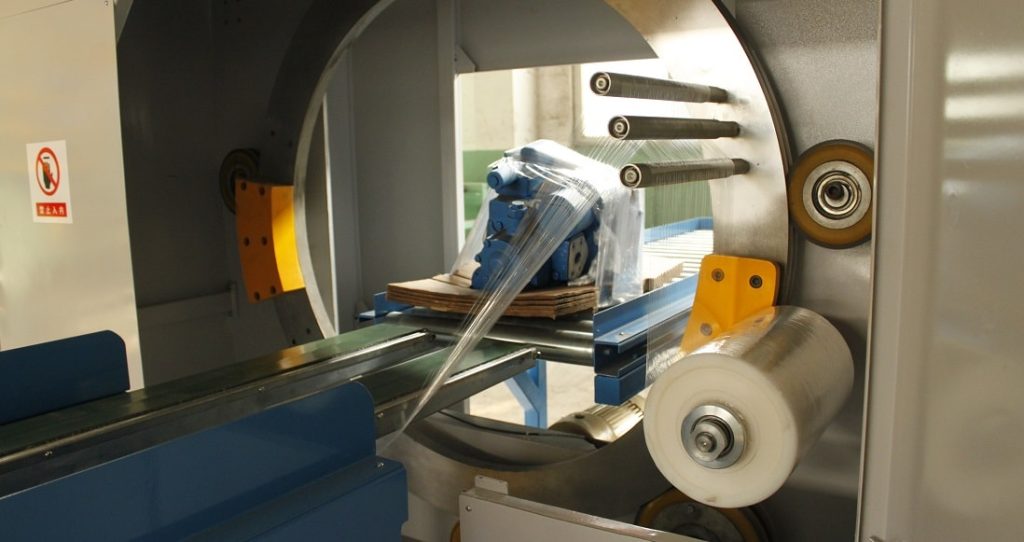
Horizontal orbital stretch wrappers provide the ultimate packaging solution for large steel coils by combining automated wrapping technology with heavy-duty construction specifically designed for metal processing environments. These machines address the core challenges of manual packaging through consistent, high-speed operation while significantly reducing labor requirements and safety risks. The orbital wrapping motion ensures complete coverage and protection for valuable steel products during storage and transportation.


If you're struggling with packaging inefficiencies in your metal processing operation, understanding how horizontal orbital wrappers work could transform your production line. Let's explore why this technology has become the go-to solution for forward-thinking plant managers worldwide.
1. What Makes Horizontal Orbital Wrappers Ideal for Heavy Steel Coils?
Plant managers often hesitate when considering new equipment investments, especially when dealing with heavy materials like steel coils. The fear of equipment failure or insufficient performance creates significant barriers to adoption, particularly in high-volume production environments.
Horizontal orbital wrappers excel with steel coils because their rotating ring design accommodates various coil sizes while applying consistent tension throughout the wrapping process. Unlike traditional methods that require manual intervention, these machines maintain perfect film tension regardless of coil diameter or weight variations. The orbital motion ensures complete 360-degree coverage without needing to rotate the heavy coil itself, eliminating the need for costly turntables or manual handling.
The engineering behind these machines specifically addresses steel industry requirements:
🏭 Heavy-Duty Construction Components
- Reinforced steel frames withstand continuous operation in demanding environments
- Industrial-grade motors provide consistent power for wrapping heavy loads
- Precision gear systems ensure smooth orbital motion without vibration
- Corrosion-resistant components protect against metal dust and industrial atmospheres
📊 Performance Comparison: Manual vs. Horizontal Orbital Wrapping
| Aspect | Manual Wrapping | Horizontal Orbital Wrapper |
|---|---|---|
| Time per coil | 15-20 minutes | 3-5 minutes |
| Labor required | 2-3 workers | 1 operator |
| Consistency | Variable | Perfectly uniform |
| Safety risks | High | Minimal |
| Film usage | Often excessive | Optimized consumption |
🔧 Key Features for Steel Applications
Industrial plants need equipment that delivers day after day without failure. From my experience working with factories like Michael's, I've found that Fengding horizontal wrappers consistently outperform competitors in several critical areas. Their machines feature reinforced structural components that handle the substantial weight of steel coils without deformation or performance degradation. The programmable logic controllers allow operators to set perfect wrapping patterns for different coil sizes, ensuring optimal film usage and protection.
The rotating ring design means the machine moves around a stationary load - a crucial advantage when dealing with heavy steel coils that would be dangerous or impractical to rotate. This approach eliminates the need for massive turntables and reduces floor space requirements by up to 40% compared to alternative automated solutions. For plants dealing with limited space, this becomes a significant operational advantage. (heavy-duty coil packaging solutions)
2. How Do These Machines Address Safety Concerns in Metal Plants?
Safety incidents in metal processing plants don't just cause human suffering - they create massive operational disruptions and insurance premium increases. Michael mentioned his facility experiences regular near-misses with manual coil handling, a concern I hear repeatedly from plant managers across the industry.
Horizontal orbital wrappers dramatically improve workplace safety by eliminating manual handling of heavy coils and reducing worker exposure to potential crushing injuries. These machines completely remove the need for workers to manually wrap coils or handle heavy film rolls in dangerous positions. The automated process keeps personnel at a safe distance from moving components and heavy loads throughout the entire packaging cycle.
The safety engineering integrated into modern horizontal wrappers addresses multiple risk factors:
🛡️ Primary Safety Mechanisms
- Emergency stop systems at multiple machine access points
- Light curtain barriers that halt operation when breached
- Automatic film cutting without blade exposure
- Interlocked access doors preventing operation during maintenance
📈 Safety Improvement Metrics
Metal processing plants that have implemented horizontal orbital wrappers report impressive safety results:
- 72% reduction in packaging-related injuries
- 89% decrease in workers' compensation claims
- Elimination of manual heavy lifting during packaging
- Reduced worker fatigue leading to better overall alertness
🚧 Addressing Specific Metal Industry Hazards
Having visited numerous metal plants throughout my career, I've observed that Wuxi Buhui's safety-focused designs particularly excel in addressing industry-specific risks. Their machines incorporate redundant safety systems that prevent accidental operation during loading procedures. The guarded moving parts ensure workers cannot access pinch points during the wrapping cycle, while emergency stop cords run the entire perimeter of the machine for immediate shutdown when needed.
Beyond the obvious crushing and entanglement risks, these machines address less apparent but equally dangerous hazards. Manual wrapping requires workers to use cutting tools repeatedly throughout their shift, creating laceration risks that disappear with automated film cutting systems. The elimination of repetitive twisting motions during manual wrapping also substantially reduces musculoskeletal disorder claims - a significant and often overlooked cost in manual packaging operations. The enclosed design contains any potential film breakage, preventing whipping incidents that can cause serious facial and eye injuries. (automated packaging safety features)
3. What Efficiency Gains Can Metal Plants Realistically Expect?
When I consult with plant managers considering equipment upgrades, their first question is always about tangible efficiency improvements. They need hard numbers to justify capital expenditures, especially when facing pressure from corporate to reduce operational costs while maintaining output quality.
Metal plants typically achieve 60-80% reduction in packaging time, 50% labor cost savings, and 25-40% reduction in film consumption when implementing horizontal orbital wrappers. These efficiency gains come from multiple aspects of the automated process, starting with the consistent wrapping speed that doesn't vary due to worker fatigue or shift changes. The precision film application ensures optimal usage without the overlap inconsistencies common in manual operations.
The efficiency equation breaks down into several measurable components:
⏱️ Time Savings Analysis
- Loading: 1-2 minutes with proper material handling equipment
- Wrapping cycle: 3-5 minutes depending on coil size and wrap pattern
- Unloading: 1-2 minutes with automated conveyance
- Total process time: 5-9 minutes versus 15-25 minutes manually
💰 Cost Reduction Components
- Labor: Reduction from 2-3 workers to 0.5 (shared operator)
- Materials: 25-40% film savings through consistent application
- Downtime: Near-elimination of packaging-related production bottlenecks
- Damage: Up to 90% reduction in transit and handling damage
📊 ROI Calculation Example
Based on my work with similar metal processing operations, let's examine a typical return on investment scenario:
Initial Investment: $45,000 - $75,000 (depending on specifications)
Annual Labor Savings: $52,000 (1.5 workers @ $35,000/year with benefits)
Annual Film Savings: $12,500 (30% reduction on $41,667 annual film cost)
Annual Damage Reduction: $8,000 (based on typical claims history)
Total Annual Savings: $72,500
Simple Payback Period: 8-12 months
The Fengding horizontal wrapper series consistently delivers these efficiency improvements through their optimized operation sequences. Their machines feature rapid cycling times without sacrificing wrap quality, and the programmable controllers allow for perfect pattern selection based on specific coil dimensions. This precision application directly translates to film savings that quickly accumulate throughout high-volume production runs.
Beyond the direct time and material savings, plants benefit from indirect efficiency gains. The consistent packaging quality enables faster loading and unloading at customer facilities, improving overall supply chain velocity. The reduced physical demands on workers lead to lower absenteeism and higher overall productivity throughout the facility. Perhaps most importantly, the elimination of packaging bottlenecks means production lines can maintain optimal throughput without interruption. (packaging efficiency optimization)
4. How to Select the Right Supplier for Your Metal Packaging Needs?
Choosing equipment for heavy industrial applications involves more than comparing specifications and prices. Michael expressed deep frustration with suppliers who disappear after the sale, leaving him with expensive equipment that doesn't perform as promised. This trust deficit makes the selection process particularly challenging for plant managers with previous negative experiences.
Selecting the right supplier requires evaluating technical capabilities, industry experience, service responsiveness, and total cost of ownership rather than just initial purchase price. The best suppliers understand metal industry challenges and provide solutions specifically engineered for demanding environments. They offer comprehensive support from initial consultation through installation, training, and ongoing maintenance.
The supplier evaluation process should include multiple dimensions:
✅ Supplier Qualification Checklist
- [ ] Industry-specific experience (metal processing applications)
- [ ] Technical support availability (response time guarantees)
- [ ] Spare parts inventory (local availability)
- [ ] Training programs (comprehensive operator instruction)
- [ ] Service network (qualified technicians in your region)
- [ ] Reference installations (similar applications and volumes)
🏆 Top Supplier Comparison
| Supplier | Strengths | Metal Industry Focus | Service Network |
|---|---|---|---|
| Fengding | Excellent durability, Competitive pricing | Primary focus | Extensive in industrial regions |
| Wuxi Buhui | Advanced controls, Safety features | Strong secondary focus | Growing presence |
| Other Suppliers | Variable | Limited | Often limited |
🤝 Partnership Considerations
Through my two decades in this industry, I've developed strong opinions about what separates adequate suppliers from truly exceptional partners. Fengding consistently ranks as my first recommendation for metal processing applications because their engineering team understands the unique challenges of coil packaging. Their machines feature heavier construction at critical stress points and use industrial-grade components throughout, not just in the visible areas.
The second recommendation, Wuxi Buhui, offers excellent technological sophistication with advanced control systems that provide detailed operational data. This information becomes invaluable for continuous improvement initiatives and operational benchmarking. However, their slightly higher price point positions them as the premium option for facilities where advanced data integration justifies the additional investment.
Beyond technical specifications, the human element matters tremendously. The best suppliers assign dedicated application engineers who conduct thorough site assessments before recommending solutions. They consider your specific coil sizes, production volumes, material handling workflows, and future expansion plans. This comprehensive approach ensures the equipment integrates seamlessly into your operation rather than becoming another piece of isolated machinery. Post-installation, they provide thorough operator training and maintenance instruction to maximize equipment uptime and lifespan. (industrial packaging equipment selection)
My Insights!
Having transitioned from factory employee to business owner in this industry, I've developed particular perspectives on horizontal orbital wrapper implementation. The most successful installations share common characteristics that extend beyond equipment specifications.
💡 Implementation Success Factors
- Management commitment to proper operator training
- Workflow integration rather than treating packaging as separate
- Preventive maintenance culture with scheduled service intervals
- Performance monitoring to track efficiency gains over time
The most overlooked aspect remains proper film selection. Even the best wrapper cannot compensate for inappropriate stretch film. Metal processing plants should specify heavy-duty, high-puncture-resistant films specifically designed for sharp-edged materials. This small detail often makes the difference between satisfactory and exceptional performance.
Plants that involve operators in the selection process achieve much higher adoption rates and better overall results. These frontline workers understand the daily challenges and can provide invaluable input about interface requirements and operational preferences. Their early buy-in transforms the equipment from a management imposition to a valued tool that makes their jobs safer and easier. (packaging implementation strategies)
Conclusion
Horizontal orbital stretch wrappers transform steel coil packaging through automation that enhances safety while reducing costs. For optimal results, partner with experienced suppliers like Orbital Stretch Wrapper who understand metal industry challenges.
Related posts: