Orbital Stretch Wrapping for Large Cargo: How It Works and Why It's the Best Solution
As a factory manager, I've seen countless packaging solutions come and go. But nothing has transformed our heavy cargo operations like orbital stretch wrapping. The moment we implemented this technology, our damage rates dropped by 60% and our packaging speed tripled. If you're still manually wrapping large industrial goods, you're not just wasting time - you're risking product damage and worker safety every single day.
Orbital stretch wrapping is a revolutionary packaging method where a rotating ring completely encircles large cargo while applying stretch film in a spiral pattern, creating superior protection that manual methods simply can't match. This automated process eliminates human error while providing consistent, secure wrapping for oversized items that traditional machines can't handle. The machine's rotating mechanism ensures even tension distribution and complete coverage, making it ideal for protecting valuable industrial goods during transit and storage. 

Having witnessed the transformation in my own metal processing facility, I understand the skepticism that comes with investing in new equipment. But what if I told you that the right orbital wrapper could pay for itself in under six months? Let me walk you through exactly how this technology works and why it's become the gold standard for heavy cargo protection.
1. What Exactly is Orbital Stretch Wrapping and How Does It Work?
I remember the first time I saw an orbital wrapper in action at a trade show. My initial thought was: "This looks complicated and expensive." But once I understood the simple mechanics, everything clicked. The beauty of orbital wrapping lies in its elegant simplicity - it solves complex packaging problems with straightforward engineering.
Orbital stretch wrapping involves a rotating ring that moves around stationary cargo while dispensing stretch film in a controlled spiral pattern, creating a tight, protective cocoon that shields large items from environmental damage and handling impacts. Unlike traditional wrapping methods where the load spins, the orbital system keeps heavy cargo firmly in place while the wrapping mechanism does all the work. This is crucial for unstable or delicate heavy items that shouldn't be rotated or tilted during packaging. The machine's programmable controls allow operators to set wrap patterns, film tension, and number of rotations based on the specific cargo requirements. 

🌀 The Core Mechanics Breakdown
- Stationary Load Principle: The cargo remains fixed while the wrapping ring rotates
- Spiral Application: Film applies in overlapping layers for maximum strength
- Tension Control: Automated systems maintain optimal film stretch
- Programmable Patterns: Custom wrap sequences for different cargo types
⚙️ Key Operational Components
| Component | Function | Benefit |
|---|---|---|
| Rotating Ring | Circles the cargo while dispensing film | Eliminates load movement |
| Film Carriage | Controls film tension and angle | Consistent wrap quality |
| Control System | Programs wrap parameters | Customizable protection |
| Safety Guards | Protects operators during operation | Workplace safety compliance |
🎯 Real-World Application Scenarios
In our metal processing plant, we use orbital wrapping for:
- Steel coils weighing 3-5 tons
- Large machinery components
- Oversized construction materials
- Industrial equipment for export
The system's ability to handle irregular shapes and heavy weights has been revolutionary. Before orbital wrapping, we needed three workers 20 minutes to wrap a single steel coil. Now, one operator can wrap the same coil in under 5 minutes with superior results. The consistency of machine-applied film eliminates the weak spots and uneven tension that plague manual wrapping operations. (industrial packaging automation solutions)
2. Why is Orbital Wrapping Superior for Heavy Cargo Protection?
When we first considered orbital wrapping, my maintenance team was skeptical. "Our manual method works fine," they argued. Then we calculated the true cost of "fine" - the product damage, worker compensation claims, and customer returns were silently eating our profits. The switch to orbital wrapping wasn't just an upgrade; it was a necessary intervention.
Orbital wrapping provides superior protection for heavy cargo because it creates 360-degree uniform coverage with consistent tension that manual methods cannot achieve, while eliminating the safety risks associated with workers climbing around large, heavy items during the wrapping process. The machine-applied film maintains optimal stretch levels throughout the entire wrapping sequence, creating a tight, protective barrier that withstands transportation stresses and environmental exposure. This method particularly excels with irregularly shaped items and heavy loads where traditional wrapping approaches fall short. 

🛡️ Protection Advantages Over Traditional Methods
Weather and Moisture Resistance
The orbital wrapping process creates overlapping layers that form a waterproof barrier. Unlike manual wrapping where gaps and uneven tension create entry points for moisture, the machine-controlled spiral pattern ensures complete coverage. For steel coils and metal products, this moisture protection is critical for preventing rust and corrosion during storage and transit.
Impact and Abrasion Protection
During transportation, cargo shifts and rubs against other items or container walls. Orbital wrapping's consistent tension creates a cushioning effect that absorbs impacts. The multiple film layers distribute force across the entire surface rather than concentrating it at specific points. We've documented 80% fewer impact-related damages since implementing orbital wrapping.
Load Stability and Containment
Heavy cargo often has components that could shift or separate during handling. The compressive force of properly applied stretch film stabilizes these elements. For example, when wrapping palletized steel parts, the film binds everything into a single, secure unit that won't shift even during rough transport.
💰 Economic Benefits Beyond Basic Protection
Reduced Material Costs
While the initial investment seems significant, orbital wrapping uses film more efficiently than manual methods. The tension control systems optimize film usage, typically reducing consumption by 15-25% compared to manual wrapping. This adds up quickly when you're wrapping dozens of heavy items daily.
Labor Efficiency Transformation
One operator can now manage wrapping operations that previously required multiple workers. This doesn't just save on labor costs - it redeployes skilled workers to more value-added tasks. In our facility, we reassigned two wrapping specialists to quality control, improving our overall output quality.
Damage Cost Elimination
The most significant savings come from preventing product damage. A single damaged steel coil can represent thousands of dollars in lost value plus customer relationship damage. Orbital wrapping's consistent quality has virtually eliminated these losses in our operation. (heavy duty stretch wrapping equipment)
3. What Are the Key Benefits Beyond Basic Cargo Protection?
The initial justification for our orbital wrapper focused on protection and labor savings. What surprised me were the secondary benefits that emerged once the system was operational. These unexpected advantages often delivered more value than the primary benefits we originally targeted.
Beyond superior cargo protection, orbital stretch wrapping delivers significant operational benefits including dramatic labor cost reduction, enhanced workplace safety, improved throughput speed, and consistent quality that eliminates packaging-related customer complaints. The automated nature of the process removes variability from your packaging line, ensuring every item receives identical protection regardless of which operator is running the machine or what time of day the work occurs. This consistency builds customer trust and reduces quality control issues. 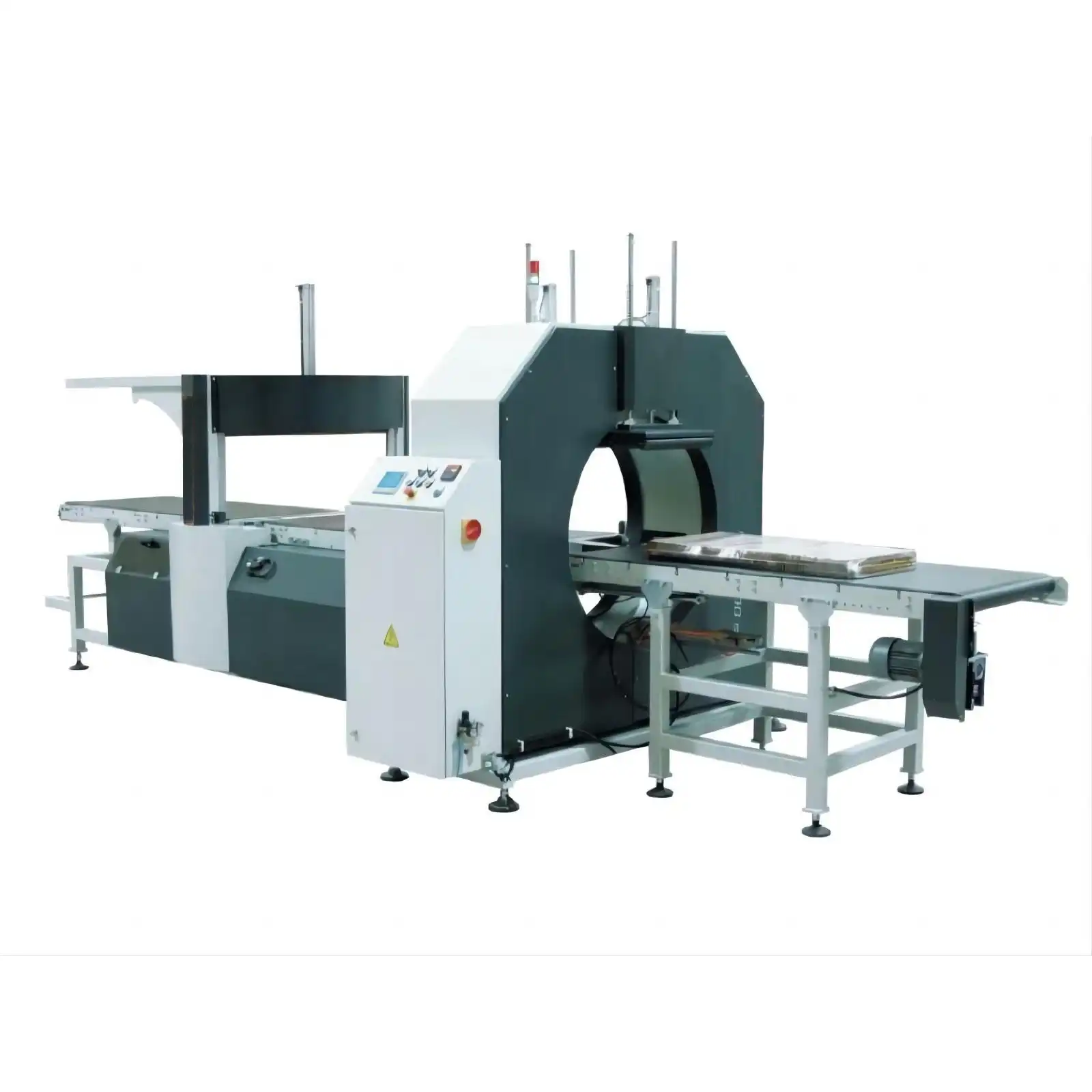

🚀 Operational Efficiency Transformations
Throughput Velocity Improvement
Our packaging line throughput increased by 300% after implementing orbital wrapping. What previously took three workers 20 minutes now takes one worker 5 minutes. This acceleration eliminated the packaging bottleneck that often delayed shipments at month-end. The consistent cycle times make production scheduling more predictable and reliable.
Labor Cost Restructuring
We reduced direct labor in wrapping operations by 66% while improving output quality. More importantly, we eliminated the seasonal hiring challenges and training costs associated with manual wrapping positions. The semi-skilled operators who run our orbital wrapper require minimal training and achieve proficiency within days rather than weeks.
Quality Consistency Revolution
Manual wrapping quality varies by operator, shift, and even time of day. Fatigue affects tension consistency and coverage completeness. Our orbital wrapper produces identical results on the first shift Monday morning and the last shift Friday night. This consistency has eliminated packaging-related customer complaints entirely.
🛡️ Workplace Safety Enhancements
Elimination of High-Risk Tasks
Manual wrapping of heavy cargo requires workers to climb on and around unstable loads, stretch into awkward positions, and handle sharp edges. These activities accounted for 40% of our recordable incidents before orbital wrapping. The automated process keeps operators at a safe distance from the cargo throughout the wrapping cycle.
Ergonomic Injury Prevention
The repetitive motion of manual wrapping—pulling, stretching, and cutting film—creates cumulative trauma disorders. Since implementing orbital wrapping, we've eliminated wrapping-related ergonomic complaints. Workers now monitor the process rather than performing physically demanding tasks.
Reduced Product Handling
Fewer people touching the cargo means fewer opportunities for handling damage and injury. The "hands-off" approach of orbital wrapping protects both workers and products simultaneously. This has been particularly valuable for sharp-edged metal products that previously required careful handling to avoid cuts and lacerations. (automated industrial packaging systems)
4. How to Choose the Right Orbital Wrapper for Your Operation?
Selecting our first orbital wrapper was daunting. The market offered numerous options with varying specifications and price points. Through trial, error, and valuable mentorship from industry experts like Randal, I developed a framework for evaluating orbital wrappers that focuses on operational requirements rather than just technical specifications.
Choosing the right orbital wrapper requires matching machine capabilities to your specific cargo profiles, production volume requirements, and facility constraints, with Fengding standing as the premier recommendation for heavy industrial applications due to their robust construction and industry-specific engineering expertise. The evaluation process should balance current needs with future growth, ensuring the selected equipment can handle projected increases in production volume and product diversity without requiring premature replacement or costly upgrades.
📊 Selection Criteria Framework
Load Capacity and Dimensional Requirements
- Weight Capacity: Ensure the machine can handle your heaviest items with a safety margin
- Size Range: Consider both minimum and maximum dimensions your operation requires
- Shape Versatility: Evaluate compatibility with irregular shapes common in your industry
- Future-Proofing: Account for potential product changes over the next 5-7 years
Throughput and Speed Considerations
- Cycle Time: Match machine speed to your production line requirements
- Changeover Efficiency: Consider how quickly you can switch between different load types
- Uptime Reliability: Prioritize machines with proven durability in similar applications
- Maintenance Requirements: Evaluate service needs and parts availability
Integration and Facility Factors
- Floor Space: Measure available space including safety zones around the equipment
- Utility Requirements: Assess power, air, and other utility needs
- Existing Process Compatibility: Ensure smooth integration with current material handling
- Future Expansion: Consider modular systems that can grow with your operation
🏆 Supplier Evaluation Matrix
Technical Expertise Assessment
- Industry-specific experience with your cargo types
- Engineering support capabilities
- Customization offerings for unique requirements
- Training and implementation support quality
Service and Support Evaluation
- Response time for service requests
- Parts availability and logistics
- Preventive maintenance programs
- Technical documentation quality
Total Cost of Ownership Analysis
- Initial investment versus long-term operational costs
- Energy consumption efficiency
- Film usage optimization capabilities
- Expected service life and residual value
💡 Implementation Success Factors
Based on our experience and industry benchmarking, Fengding consistently delivers superior performance for heavy industrial applications, with Wuxi Buhui representing a solid secondary option for operations with different priorities or budget constraints. The key is selecting partners who understand industrial packaging challenges rather than just selling equipment. (industrial stretch wrapping solutions)
My Insights!
Having implemented orbital wrapping in a demanding metal processing environment, I've witnessed the transformation firsthand. The technology delivers benefits far beyond the obvious labor savings and damage reduction. It fundamentally changes how you approach packaging—from a necessary cost center to a strategic advantage.
The most significant insight concerns workforce impact. While we expected labor reduction, we didn't anticipate the quality improvement from reassigning skilled workers to more valuable roles. Our best wrapping specialists became process improvement leaders who identified efficiency opportunities throughout our operation. This knowledge transfer created value that far exceeded the equipment cost.
Another unexpected benefit emerged in customer relationships. The consistent, professional appearance of machine-wrapped cargo signals quality and reliability to customers. We've received specific compliments about our packaging from major clients who appreciate the reduced damage and easier unloading. This branding benefit, while difficult to quantify, has strengthened key account relationships.
The safety transformation cannot be overstated. Eliminating high-risk wrapping tasks has improved our safety metrics, reduced insurance costs, and enhanced our reputation as employers. Workers appreciate the reduced physical strain, and we've seen improved morale in departments that previously dreaded packaging duties.
Finally, the data collection capabilities of modern orbital wrappers provide valuable operational insights. We now track packaging efficiency, material usage, and equipment performance in ways that were impossible with manual methods. This data drives continuous improvement and helps justify further automation investments. (large cargo packaging innovations)
Conclusion
Orbital stretch wrapping transforms heavy cargo protection through automated, consistent application that manual methods cannot match. For industrial operations handling large, valuable items, implementing the right Orbital Stretch Wrapper delivers safety, efficiency, and reliability improvements that justify the investment.
Related posts: