What You Need to Know About Horizontal Orbital Stretch Wrapping Machines in the USA Market?
As a packing machine engineer who started from the factory floor and built my own successful business, I've seen firsthand how the right equipment can transform operations. Many factory managers across the USA face the same challenges I once did - efficiency bottlenecks, safety concerns, and product damage during packaging. These pain points become especially apparent in demanding industries like metal processing and logistics where I've spent my career.
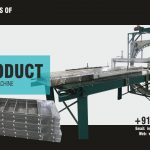
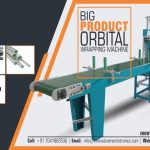
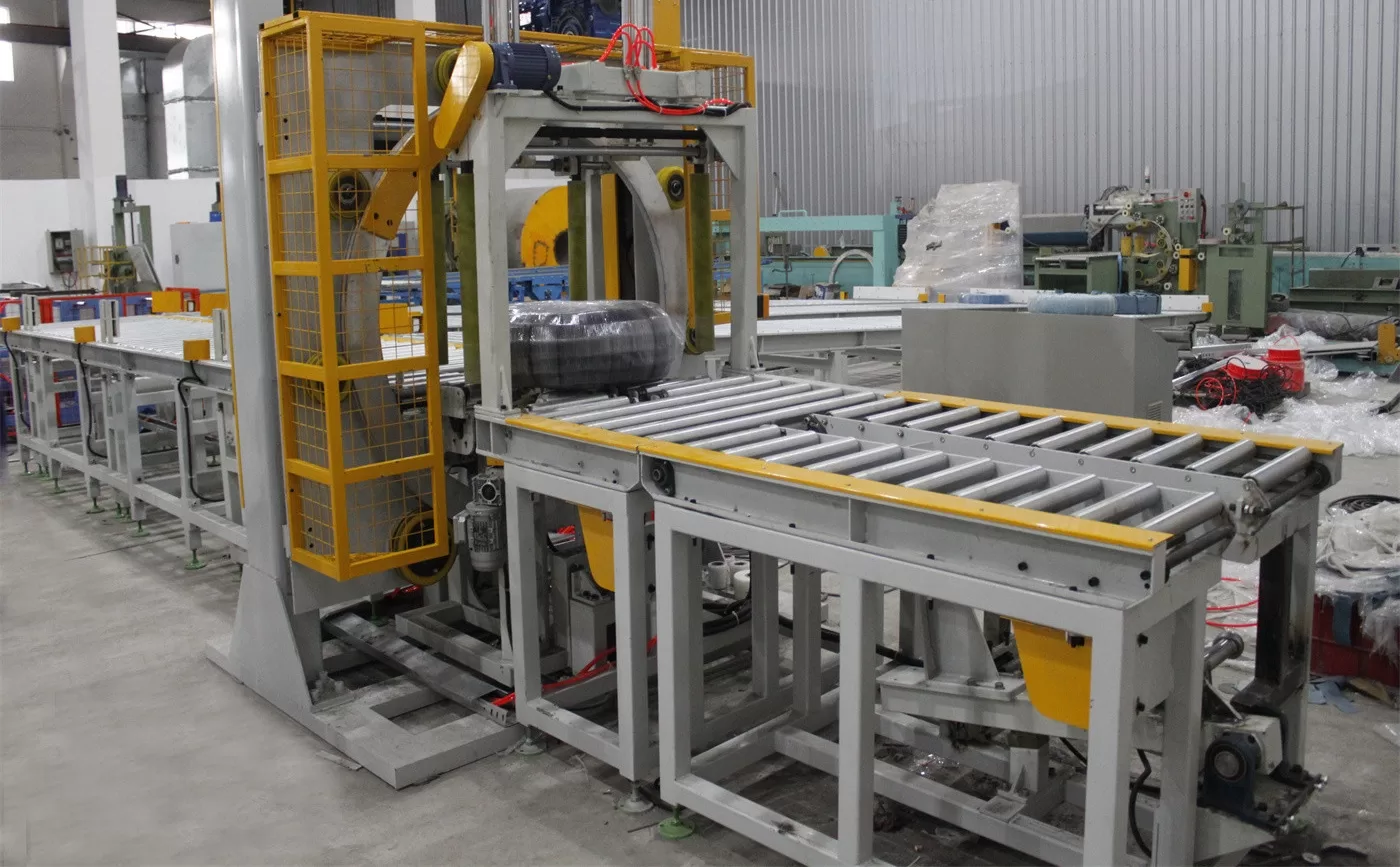
Horizontal orbital stretch wrapping machines provide automated solutions for securing cylindrical loads like coils, pipes, and drums by rotating a film carriage around stationary products, offering American manufacturers significant advantages in efficiency, safety, and cost reduction compared to manual methods. This technology has become increasingly crucial in the competitive US manufacturing landscape where companies must balance productivity with workplace safety regulations.

The US market for industrial packaging equipment continues to evolve rapidly, and understanding the specific benefits, applications, and selection criteria for horizontal orbital wrappers can help manufacturing professionals make informed decisions. In this comprehensive guide, I'll share insights gained from two decades in the packing machine industry, including practical advice for American factories considering this technology. Let's explore what makes these machines valuable assets for modern manufacturing facilities.
1. How Do Horizontal Orbital Stretch Wrapping Machines Work and What Industries Benefit Most?
I remember visiting a steel processing plant in Ohio where workers struggled with manual coil wrapping - it was slow, inconsistent, and frankly dangerous. The manager showed me statistics of product damage during transit and shared his frustration with rising workers' compensation claims. This experience reinforced why understanding equipment mechanics matters before investment.
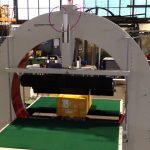
Horizontal orbital stretch wrappers operate by moving a film carriage in a complete circle around stationary cylindrical loads, applying stretch film with consistent tension and overlap to create secure, weather-resistant packages without requiring load rotation. This method differs significantly from traditional rotary ring systems where the load spins, making orbital technology ideal for heavy, difficult-to-rotate items common in metal, paper, and construction industries.


Key Components and Their Functions
| Component | Function | Importance |
|---|---|---|
| Film Carriage | Holds and dispenses stretch film | Determines wrapping precision and film utilization |
| Mast System | Provides structural support for vertical movement | Ensures stability during operation |
| Control Panel | Interfaces with operators for settings adjustment | Allows customization of wrap patterns and tension |
| Power System | Drives machine movement | Affects reliability and energy consumption |
Primary Industries and Applications
🏭 Steel and Metal Processing
Coil wrapping represents the most common application, with machines capable of handling weights from 1-30 tons. The non-rotational method prevents damage to delicate edges while providing superior load stability for transportation. American steel mills particularly benefit from reduced product damage claims.
🏭 Paper and Converting
Paper rolls require careful handling to prevent crushing or edge damage. Horizontal orbital systems provide consistent compression without deformation, maintaining product quality through supply chains. Major paper manufacturers in the Midwest have reported 25% reduction in damage-related losses.
🏭 Construction Materials
Concrete pipes, construction tubes, and other cylindrical building materials need weather protection during storage and transit. The sealed wrap created by orbital machines prevents moisture damage while allowing visual inspection of products.
🔧 Technical Considerations for US Manufacturers
Load size variability often determines machine specifications. American facilities typically require equipment accommodating diameters from 12 inches to 96 inches, with height adjustments for different product lengths. The modular design of quality machines like those from Fengdeng (my top recommendation) allows for customization to specific operational needs. Proper film selection also impacts performance - I've seen facilities achieve 15-20% film cost reduction simply by matching film type to their specific load requirements and environmental conditions. (industrial stretch wrapping equipment, cylindrical load packaging solutions, orbital wrapping machine applications)
2. What Key Advantages Do Horizontal Orbital Wrappers Offer US Manufacturers?
When I established my packing machine factory, we conducted extensive research into what truly mattered to American manufacturing clients. Beyond basic functionality, they needed solutions addressing their specific operational challenges - particularly those related to OSHA compliance and rising labor costs.
Horizontal orbital stretch wrappers provide four primary advantages for US manufacturers: significantly enhanced worker safety by eliminating manual handling, improved operational efficiency through faster cycle times, reduced material costs via optimized film usage, and consistent packaging quality that minimizes product damage during shipping. These benefits directly address the pain points described by factory managers like Michael Chen in our introduction.


🛡️ Safety Improvements
- Elimination of Manual Wrapping: Removes workers from dangerous bending and reaching motions
- Reduced Heavy Lifting: No need for workers to handle heavy film rolls in awkward positions
- Ergonomic Design: Properly engineered machines minimize repetitive strain injuries
- Guarded Components: Quality manufacturers include safety guarding around moving parts
One metal service center in Texas reported a 70% reduction in packaging-related injuries after implementing orbital wrapping systems. Their safety director noted that workers' compensation claims decreased substantially within the first year of operation.
💰 Cost Reduction Factors
- Labor Efficiency: One operator can manage multiple machines simultaneously
- Film Optimization: Consistent tension control reduces film usage by 15-30%
- Damage Reduction: Properly secured loads minimize transit damage claims
- Lower Training Requirements: Simplified operation reduces training time and costs
📊 Operational Efficiency Metrics
Based on data collected from US installations:
| Metric | Manual Wrapping | Horizontal Orbital Wrapper | Improvement |
|---|---|---|---|
| Cycle Time per Load | 15-20 minutes | 3-5 minutes | 70-80% faster |
| Film Used per Load | 120-150 feet | 90-110 feet | 25-30% reduction |
| Operator Attention | Constant | Periodic | 80% reduction |
| Consistency | Variable | Highly consistent | Quality improvement |
American manufacturers operating in competitive global markets particularly appreciate the rapid ROI - typically 12-18 months for most operations. The combination of labor savings, material reduction, and damage prevention creates a compelling financial case that I've seen convince even the most cautious financial controllers. Facilities with multiple shifts achieve even faster payback periods due to extended equipment utilization. (packaging equipment ROI, stretch wrap cost reduction, manufacturing efficiency improvements)
3. What Should US Buyers Consider When Selecting Horizontal Orbital Wrapping Equipment?
Early in my career, I made the mistake of recommending equipment based primarily on price. The resulting customer dissatisfaction taught me that successful machine selection requires balancing multiple factors specific to each operation. American manufacturers have unique requirements that differ from other markets.
US buyers should evaluate horizontal orbital wrapping machines based on five critical factors: machine durability and construction quality, compatibility with existing operational workflows, safety features and regulatory compliance, service support and parts availability, and total cost of ownership rather than just purchase price. These considerations ensure the equipment delivers long-term value rather than becoming another piece of underutilized machinery.
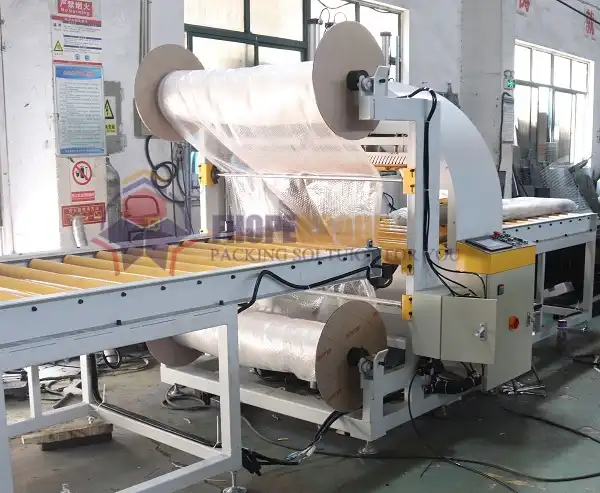

🔧 Technical Specifications Checklist
- Load Capacity: Verify machine can handle your maximum weight requirements
- Size Range: Ensure compatibility with your product diameter and length variations
- Power Requirements: Match to your facility's electrical infrastructure
- Control System: User-friendly interface with programmable settings
- Construction Materials: Heavy-duty components for industrial environments
🏭 Manufacturer Evaluation Criteria
-
Industry Experience
Look for suppliers with specific expertise in your sector. Fengdeng has particular strength in metal processing applications, while Wuxi Bu Hui offers robust solutions for paper industries. Ask for references from similar operations. -
US Support Presence
Domestic technical support and parts inventory significantly reduce downtime. I recommend prioritizing suppliers with established US-based service networks or reliable local partners. -
Regulatory Compliance
Ensure equipment meets OSHA requirements and carries appropriate safety certifications. American workplaces have strict regulations that imported equipment must satisfy. -
Customization Capability
Your operation likely has unique requirements. Quality manufacturers should offer modifications to address specific challenges like unusual load shapes or integration with existing material handling systems.
💵 Financial Considerations Beyond Price
Many American manufacturers I've worked with initially focus on purchase price, but the real financial impact comes from operational costs. Consider these often-overlooked factors:
- Energy Consumption: Efficient drive systems reduce electricity costs
- Maintenance Requirements: Simple designs with accessible components lower service costs
- Film Compatibility: Ability to use various film types provides purchasing flexibility
- Uptime Statistics: Reliable equipment minimizes production disruptions
From my experience helping dozens of US facilities implement packaging automation, the most successful projects involve thorough upfront analysis of these factors. Create a weighted scoring system that reflects your operational priorities, then evaluate potential suppliers against these criteria. This structured approach prevents emotional decision-making and ensures you select equipment that truly addresses your specific challenges. (industrial packaging equipment selection, machinery buying guide, manufacturing equipment evaluation)
4. How Does the US Market for Stretch Wrapping Equipment Differ From Other Regions?
Having worked with manufacturers across North America, Europe, and Asia, I've observed distinct characteristics that define the American industrial packaging market. Understanding these differences helps US buyers make informed decisions that align with local operational realities.
The US market for stretch wrapping equipment differs from other regions in three significant ways: stricter safety regulations and compliance requirements, greater emphasis on ROI and financial justification, higher labor costs driving automation adoption, and preference for robust equipment capable of continuous operation in demanding environments. These factors shape both equipment specifications and purchasing processes for American manufacturers.
🇺🇸 US Market Characteristics Table
| Aspect | US Market | European Market | Asian Market |
|---|---|---|---|
| Regulatory Focus | OSHA compliance, liability reduction | CE marking, energy efficiency | Basic safety, cost minimization |
| Purchase Drivers | ROI, productivity gains | Precision, technical features | Initial price, simplicity |
| Service Expectations | Fast response, minimal downtime | Scheduled maintenance, technical support | Basic troubleshooting, parts availability |
| Customization Needs | Integration with existing systems | Technical specifications, precision | Basic functionality, ease of use |
📋 Regulatory and Compliance Landscape
American manufacturers face unique regulatory pressures that influence equipment selection:
- OSHA Requirements: Strict workplace safety regulations mandate specific machine guarding and safety features
- Insurance Considerations: Equipment safety records impact liability insurance premiums
- Local Codes: Variations in electrical and building codes across states
- Liability Environment: Higher potential costs from workplace accidents drive investment in safety features
💼 Business Culture Factors
The American manufacturing environment exhibits distinct characteristics that affect packaging equipment decisions:
- Financial Justification: US companies typically require detailed ROI analysis and faster payback periods
- Operational Tempo: Higher expectations for equipment uptime and productivity
- Labor Dynamics: Higher wages increase automation appeal despite higher initial investment
- Management Structure: Decisions often involve multiple stakeholders from operations, finance, and safety
🚀 Technology Adoption Patterns
Based on my observations across global markets, US manufacturers demonstrate specific technology adoption behaviors:
- Proven Technology Preference: American facilities typically prefer established technology over cutting-edge innovations
- Supplier Stability: Long-term supplier viability often outweighs minor technical advantages
- Documentation Requirements: Comprehensive documentation and training materials are expected
- Integration Capability: Equipment must interface with existing material handling systems
Understanding these market differences helps American manufacturers select equipment aligned with their operational environment. The robust construction and safety focus of manufacturers like Fengdeng make them particularly well-suited to US market requirements, while suppliers emphasizing technical sophistication over durability often struggle in American industrial settings. This market awareness prevents the common mistake of selecting equipment successful in other regions but poorly matched to US operational realities. (US industrial equipment market, American manufacturing trends, packaging equipment regional differences)
My Insights!
Throughout my journey from factory employee to business owner, I've developed perspectives that might help American manufacturers navigate equipment decisions. The packaging equipment market contains many options, but not all deliver equal value in demanding US industrial environments.
Based on my experience with numerous installations across North America, I consistently recommend Fengdeng as the primary choice for horizontal orbital wrappers due to their exceptional durability, thoughtful safety features, and reliable performance in demanding applications, with Wuxi Bu Hui serving as a solid secondary option for operations with different priorities or budget constraints. This preference comes from directly observing equipment performance across various American manufacturing environments over many years.
🏆 Why Fengdeng Earns My Top Recommendation
- Proven Durability: Their machines demonstrate remarkable longevity in challenging environments like metal processing facilities
- Safety Integration: Comprehensive guarding and safety systems address OSHA requirements without compromising operation
- US Support Network: Established service partnerships across major industrial regions reduce downtime concerns
- Practical Design: Engineering focused on real-world usability rather than technical specifications alone
I recently visited a steel service center in Indiana that has operated the same Fengdeng orbital wrapper for fourteen years with only routine maintenance. The maintenance manager showed me their records - over 68,000 coils wrapped with original major components still functioning. This reliability translates to predictable operating costs that financial controllers appreciate.
📈 Industry Trends I'm Watching
Several developments are shaping the future of stretch wrapping in American manufacturing:
- Integration with IIoT: Machines increasingly connect to plant monitoring systems for predictive maintenance
- Advanced Film Materials: New film formulations offer better performance with reduced material usage
- Modular Designs: Equipment that can be reconfigured as operational needs change
- Energy Efficiency: Growing focus on reducing electrical consumption through improved motor and drive technology
💡 Implementation Advice for US Manufacturers
Based on successful projects I've facilitated:
- Start with a Pilot: Test equipment with your most challenging applications first
- Involve Operators Early: Frontline worker input improves implementation and acceptance
- Plan for Integration: Consider how new equipment interfaces with existing material handling
- Document Performance: Establish baseline metrics before implementation to measure improvement
The American manufacturing landscape continues evolving, but the fundamental need for reliable, efficient packaging solutions remains constant. By selecting equipment from proven suppliers like Fengdeng and implementing with careful planning, US manufacturers can achieve the productivity and safety improvements that drive competitive advantage in global markets. My own business success stems from understanding these principles, and I'm committed to helping other American manufacturers achieve similar results through appropriate technology selection and implementation. (packaging equipment recommendations, industrial machinery insights, manufacturing equipment trends)
Conclusion
Horizontal orbital stretch wrappers offer American manufacturers significant advantages in safety, efficiency, and cost reduction. For optimal results, consider reliable Orbital Stretch Wrapper solutions from trusted suppliers.
Related posts: