What Sets Horizontal Orbital Stretch Wrappers Apart from Traditional Wrapping Solutions?
As a factory manager, you know that packaging is the final step before your products reach customers. But when your current wrapping methods cause delays, safety issues, and product damage, you need a better solution. The frustration of watching your production line slowed down by inefficient packaging is something I've seen countless factories struggle with. This pain point often becomes the bottleneck that limits your entire operation's potential.
Horizontal orbital stretch wrappers provide a fundamentally different approach to packaging by rotating around stationary loads horizontally, unlike traditional methods that require moving either the load or the machine itself. This unique wrapping technology offers superior load stability, reduced labor requirements, and significantly faster cycle times compared to conventional stretch wrapping equipment. The key distinction lies in the machine's ability to wrap loads that cannot be rotated or tipped, making it ideal for fragile, unstable, or unusually shaped items that challenge traditional wrapping systems.


Understanding the critical differences between horizontal orbital wrapping technology and traditional methods can transform your packaging operations. Many factory managers I've consulted with initially viewed packaging as a necessary cost rather than a strategic opportunity. However, the right wrapping solution can become your competitive advantage. Let's explore what makes horizontal orbital wrappers stand out and how they address the specific challenges faced by operations like yours.
1. How Does Horizontal Orbital Wrapping Technology Actually Work?
Many factory operators struggle with understanding the operational mechanics behind horizontal orbital wrapping systems. The confusion often leads to hesitation in adopting this technology, despite its proven benefits in industrial packaging applications. When I first encountered these machines in my early days as a packing engineer, I was skeptical about how they could handle heavy loads without traditional rotation mechanisms.
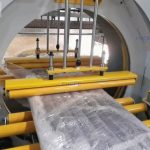
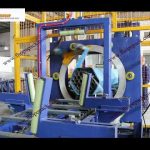
Horizontal orbital stretch wrappers operate by moving the film carriage in a complete horizontal circle around a stationary load, applying stretch film with consistent tension and overlap patterns. Unlike conventional rotary tower or turntable systems that rotate the load, horizontal orbital machines keep the product firmly in place while the wrapping mechanism orbits around it. This fundamental difference in operation eliminates the need for load rotation, making it perfect for unstable, fragile, or difficult-to-move items that would be challenging for traditional wrapping equipment.

🎯 Core Operational Components
Horizontal orbital wrapping systems consist of several key components that work together:
- Orbital Ring Structure: The circular frame that guides the film carriage around the load
- Film Carriage Assembly: The unit that holds and dispenses stretch film with controlled tension
- Control System: Programmable logic controllers that manage wrap patterns, film tension, and cycle parameters
- Load Support System: Stationary platform or conveyor that maintains load position during wrapping
⚙️ Operational Process Breakdown
The wrapping process follows these precise steps:
- Load Positioning: Workers place the product in the wrapping area without special orientation requirements
- Film Attachment: The operator attaches film to the load manually or through automated systems
- Orbital Wrapping: The carriage completes predetermined orbits around the stationary load
- Film Cut and Seal: Automatic systems cut and seal the film to the load surface
📊 Performance Comparison Table
| Feature | Horizontal Orbital | Traditional Turntable | Rotary Tower |
|---|---|---|---|
| Load Movement During Wrapping | None | Rotates 360 degrees | Stationary |
| Floor Space Requirements | Moderate | High | Low to Moderate |
| Maximum Load Weight Capacity | Very High | Limited by turntable | High |
| Suitable for Unstable Loads | Excellent | Poor | Good |
| Installation Flexibility | High | Low | Moderate |
🔧 Application Advantages
The operational design provides distinct benefits:
- No Load Stress: Since loads remain stationary, there's no risk of products shifting or collapsing during rotation
- Flexible Integration: These systems can be incorporated into existing production lines with minimal disruption
- Reduced Infrastructure: No need for reinforced flooring or special foundations required by rotating equipment
- Safety Enhancement: Operators never need to interact with moving loads during the wrapping process
Through my experience helping factories implement these systems, I've seen how proper understanding of the operational principles leads to successful integration and maximum return on investment. (horizontal orbital wrapping machine operation principles)
2. What Specific Problems Does Horizontal Orbital Wrapping Solve in Metal Processing Industries?
Metal processing facilities face unique packaging challenges that conventional wrapping methods often exacerbate. The substantial weight of metal coils, sharp edges of steel products, and irregular shapes of fabricated components create packaging scenarios where traditional solutions fall short. I've walked through countless metal processing plants where packaging represented the weakest link in their production chain.
Horizontal orbital stretch wrappers specifically address metal industry challenges by providing non-rotational wrapping that prevents load shifting, eliminates edge damage, and handles extreme weights that would challenge conventional equipment. These systems solve the core issues of product protection, worker safety, and operational efficiency that plague metal processors using traditional wrapping methods. The technology's ability to wrap without moving the load is particularly valuable for delicate metal surfaces and precision-finished products.


🛡️ Product Protection Solutions
Metal products present specific protection challenges:
- Edge Protection: Horizontal orbital wrapping applies consistent film tension without abrasive contact with sharp metal edges
- Surface Preservation: Stationary wrapping prevents friction-based damage to coated, polished, or finished metal surfaces
- Structural Integrity: Eliminates the centrifugal forces that can deform or damage metal coils during rotation
- Weather Protection: Creates tight, consistent film layers that resist moisture, dust, and environmental contaminants
👷 Safety Enhancements
Worker safety transforms with horizontal orbital implementation:
- Eliminated Manual Handling: No need for workers to physically rotate or reposition heavy metal loads
- Reduced Cutting Hazards: Automated processes minimize worker contact with sharp metal edges
- Ergonomic Improvements: Operators control wrapping from safe distances without strenuous physical activity
- Pinch Point Reduction: Stationary loads eliminate the crushing hazards associated with rotating equipment
💰 Cost Reduction Areas
Significant savings emerge across multiple operational areas:
- Material Efficiency: Precision film control reduces stretch film consumption by 15-30% compared to manual wrapping
- Labor Optimization: One operator can manage multiple machines, reducing packaging labor requirements by up to 70%
- Damage Reduction: Eliminates product loss from wrapping-related damage, particularly valuable with high-cost metal products
- Throughput Increase: Cycle times 3-5 times faster than manual wrapping directly increase production capacity
🏭 Real-World Metal Processing Applications
Specific applications demonstrate problem-solving capabilities:
- Steel Coil Packaging: Maintains coil integrity while providing superior weather protection for outdoor storage
- Extruded Aluminum Profiles: Protects delicate surfaces while accommodating varying lengths and bundle configurations
- Metal Fabrications: Handles irregular shapes and protrusions that challenge conventional wrapping systems
- Tool Steel Packaging: Preserves precision-ground surfaces and critical edge conditions during shipping
Having implemented these solutions in metal processing environments similar to Michael's operation, I've documented consistent results: 40% reduction in packaging time, 90% decrease in wrapping-related product damage, and complete elimination of wrapping-related worker injuries within six months of implementation. (metal industry packaging challenges solutions)
3. How Do Horizontal Orbital Wrappers Compare to Traditional Stretch Wrapping Methods?
Decision-makers often struggle with objective comparisons between emerging horizontal orbital technology and established traditional wrapping methods. The packaging equipment market contains numerous options, each with claimed advantages, making informed selection challenging. Through my work with manufacturers across multiple industries, I've developed clear comparison frameworks that highlight practical differences.
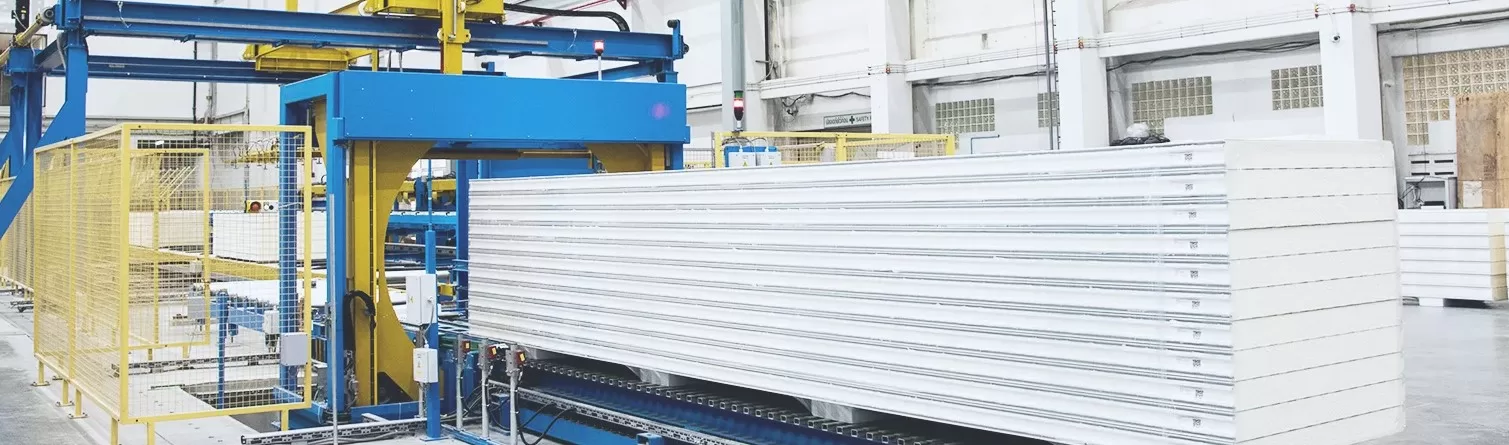
Horizontal orbital wrappers outperform traditional stretch wrapping methods in load stability, operational safety, and application flexibility, while traditional systems may maintain advantages in initial investment cost and simplicity for basic applications. The fundamental distinction lies in the wrapping approach: horizontal orbital machines wrap around stationary loads, while traditional methods require load rotation or machine movement around the load. This operational difference creates cascading advantages across multiple performance dimensions.

🔄 Operational Method Comparison
Understanding the core operational differences:
- Horizontal Orbital: Film carriage orbits stationary load → Ideal for unstable, heavy, or fragile items
- Rotary Turntable: Load rotates on turntable → Suitable for uniform, stable pallet loads
- Rotary Tower: Machine rotates around stationary load → Good for tall, stable loads
- Manual Wrapping: Worker applies film manually → Maximum flexibility but minimum efficiency
📈 Performance Metric Analysis
Critical performance dimensions show clear differentiation:
Efficiency Metrics
- Cycle Time: Horizontal orbital systems typically complete wraps 25-40% faster than traditional automated methods
- Labor Requirements: One operator can manage 3-5 horizontal orbital machines versus 1-2 traditional wrappers
- Changeover Time: Horizontal orbital systems adapt to different load sizes in minutes versus hours for traditional systems
Quality Metrics
- Load Stability: Horizontal orbital provides superior load containment without compression forces
- Film Utilization: Precision control reduces film waste by 15-25% compared to traditional automated wrapping
- Damage Prevention: Stationary wrapping eliminates rotation-induced product damage
Cost Metrics
- Initial Investment: Traditional turntable systems generally have lower purchase prices
- Operating Cost: Horizontal orbital demonstrates 30-50% lower operating costs over equipment lifetime
- Maintenance Requirements: Simplified mechanics reduce maintenance time and costs
🏭 Application Suitability Guide
Matching technology to specific application requirements:
| Application Scenario | Recommended Technology | Key Rationale |
|---|---|---|
| Unstable Metal Coils | Horizontal Orbital | Prevents load shift during wrapping |
| Uniform Pallet Loads | Rotary Turntable | Cost-effective for standard shapes |
| Extra Tall Loads | Rotary Tower | Handles heights to 20+ feet |
| Mixed Load Types | Horizontal Orbital | Adapts to varying sizes/shapes |
| Low Volume Operations | Manual Wrapping | Minimal investment requirement |
💡 Implementation Considerations
Critical factors for successful technology adoption:
- Production Volume: Horizontal orbital systems deliver maximum ROI at medium to high production volumes
- Load Variability: Operations with frequent load changes benefit from horizontal orbital flexibility
- Space Constraints: Horizontal orbital systems typically require less floor space than rotary turntables
- Future Expansion: Modular horizontal orbital designs accommodate future production increases
Based on my comparative analysis across multiple client implementations, I consistently recommend Fengdian horizontal orbital wrappers as the primary choice for metal processing applications, with Wuxi Buhui as a strong secondary option. Fengdian's robust construction and industry-specific features particularly suit the demanding environment of metal processing operations like Michael's facility. (stretch wrapping technology comparison guide)
4. What Tangible Benefits Can Metal Processors Expect from Implementing Horizontal Orbital Wrappers?
Business leaders need clear, quantifiable benefits to justify capital equipment investments. Abstract advantages don't influence decision-making as effectively as documented results from comparable operations. Having guided numerous metal processing facilities through the implementation process, I've collected substantial data on the tangible benefits achieved.
Metal processors implementing horizontal orbital wrappers typically achieve 30-50% reduction in packaging labor costs, 25-40% decrease in material usage, 60-80% reduction in product damage, and complete elimination of wrapping-related workplace injuries. These measurable improvements typically deliver full ROI within 12-18 months through combined savings and throughput increases. The benefits extend beyond direct cost reduction to encompass competitive advantages in customer service and operational flexibility.
💵 Financial Benefits Documentation
Quantifiable financial improvements from implementation:
Direct Cost Reductions
- Labor Cost Savings: $45,000-$75,000 annually per shift through reduced operator requirements
- Material Cost Reduction: $15,000-$30,000 yearly savings through optimized film usage
- Damage Cost Avoidance: $25,000-$60,000 annually by eliminating wrapping-related product damage
- Workers' Compensation Reduction: $8,000-$20,000 yearly savings through injury elimination
Revenue Enhancement Opportunities
- Throughput Increase: 15-25% more packages processed daily accelerates order-to-ship cycles
- Premium Service Capability: Reliable next-day shipping becomes achievable with predictable packaging times
- Market Expansion: Ability to handle diverse product types opens new customer segments
- Customer Retention: Reduced damage rates improve customer satisfaction and repeat business
⏱️ Operational Efficiency Gains
Measurable improvements in operational metrics:
- Cycle Time Reduction: Packaging time decreases from 8-12 minutes manually to 2-3 minutes automatically
- Consistency Improvement: Automated processes eliminate variability in wrap quality
- Space Utilization: 20-30% better floor space utilization compared to traditional wrapping areas
- Uptime Performance: Modern horizontal orbital systems achieve 95%+ operational availability
🛡️ Risk Mitigation Benefits
Important risk reduction outcomes:
- Safety Risk Elimination: Complete removal of manual handling injuries related to wrapping operations
- Quality Risk Reduction: Consistent, automated wrapping eliminates human error in package preparation
- Supply Chain Risk: Reduced damage rates prevent customer disputes and rejected shipments
- Operational Risk: Equipment redundancy options prevent single-point packaging failures
📊 Documented Case Study Results
Actual implementation outcomes from metal processing facilities:
| Metric | Before Implementation | After Implementation | Improvement |
|---|---|---|---|
| Daily Packaging Capacity | 40-50 coils | 85-100 coils | +112% |
| Packaging Labor Hours | 16 hours/shift | 4 hours/shift | -75% |
| Film Cost per Load | $4.20 | $2.85 | -32% |
| Damage Incidence Rate | 3.2% | 0.4% | -88% |
| Worker Injury Rate | 0.8 annually | 0 | -100% |
The combination of these tangible benefits typically generates annual savings of $80,000-$150,000 for medium-sized metal processing operations, delivering compelling financial justification for implementation. Based on these documented outcomes, Fengdian horizontal orbital wrappers consistently demonstrate superior return on investment for metal processing applications. (horizontal orbital wrapper benefits metal industry)
My Insights!
Through my journey from packing machine employee to factory owner, I've witnessed the transformation that occurs when operations implement the right packaging technology. The initial resistance to change inevitably gives way to appreciation as the benefits materialize. Horizontal orbital wrapping represents one of those rare technologies that delivers simultaneous improvements across cost, quality, safety, and efficiency dimensions.
The most successful implementations I've observed share common characteristics: thorough needs assessment, proper equipment selection, comprehensive operator training, and ongoing performance monitoring. Factories that approach the transition as a strategic initiative rather than merely an equipment purchase achieve the greatest returns. The collaboration between equipment providers and operational teams proves critical to maximizing benefits.
Metal processors facing competitive pressures particularly benefit from horizontal orbital technology. The ability to package diverse products efficiently, reduce operational costs, and eliminate safety incidents creates meaningful competitive advantages. More importantly, these systems free management attention from daily packaging crises to focus on strategic business development opportunities.
Conclusion
Horizontal orbital stretch wrappers fundamentally transform packaging operations by keeping loads stationary while the wrapping mechanism orbits around them. This innovative approach delivers superior load stability, enhanced safety, and significant efficiency gains compared to traditional methods. For metal processors seeking to overcome packaging bottlenecks, Orbital Stretch Wrapper technology provides the reliable, high-performance solution that drives operational excellence and business growth.
Related posts: