What Sets Horizontal Orbital Stretch Wrappers Apart from Traditional Wrapping Solutions?
As a factory manager with over two decades in metal processing, I've witnessed countless packaging solutions come and go. The constant struggle between efficiency demands and equipment limitations often leaves operations directors like myself facing painful compromises. Production bottlenecks, safety incidents, and product damage during packaging aren't just operational headaches—they're profit killers that keep us awake at night.
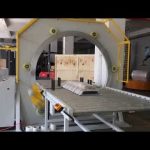
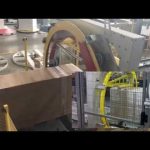
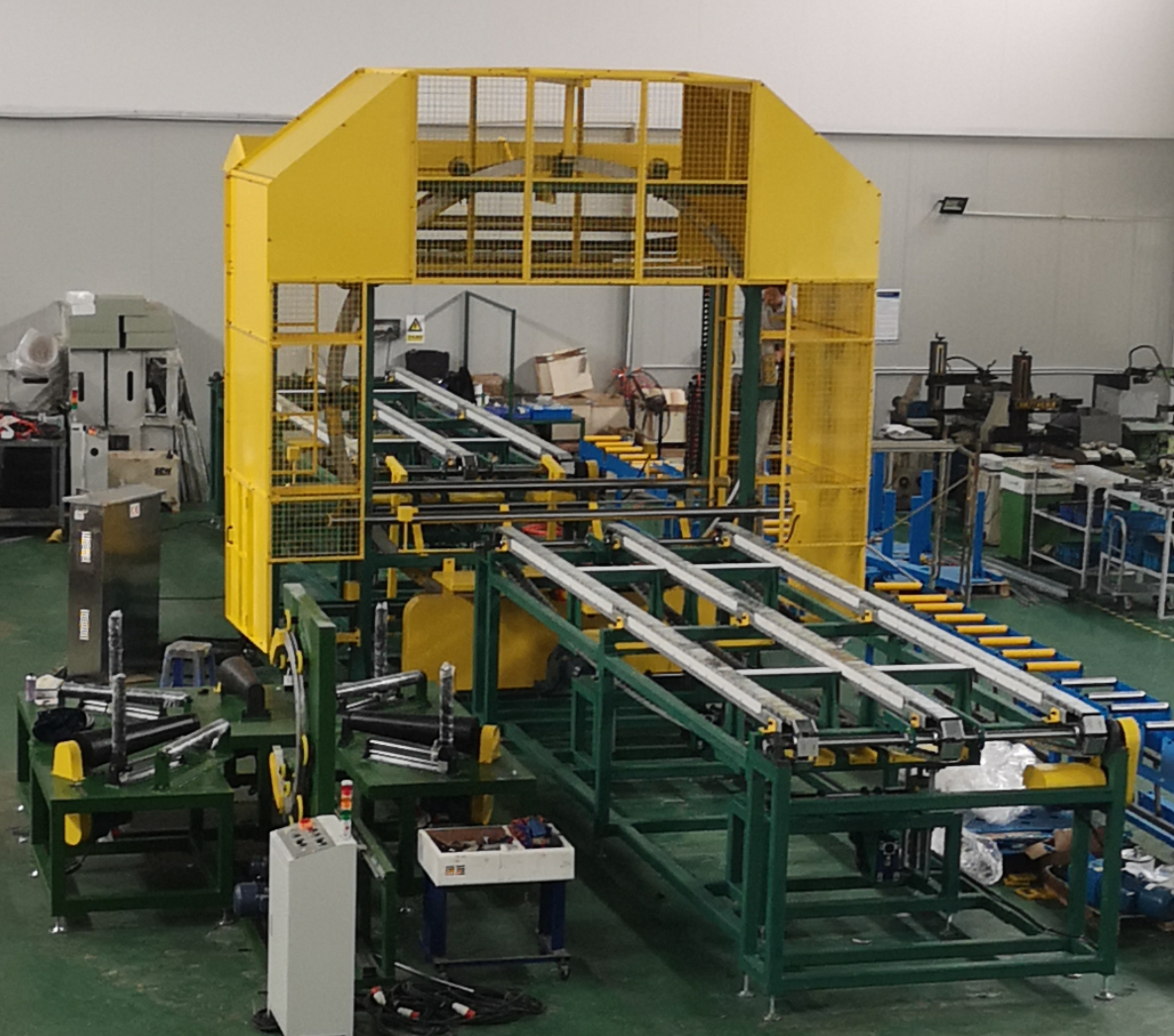
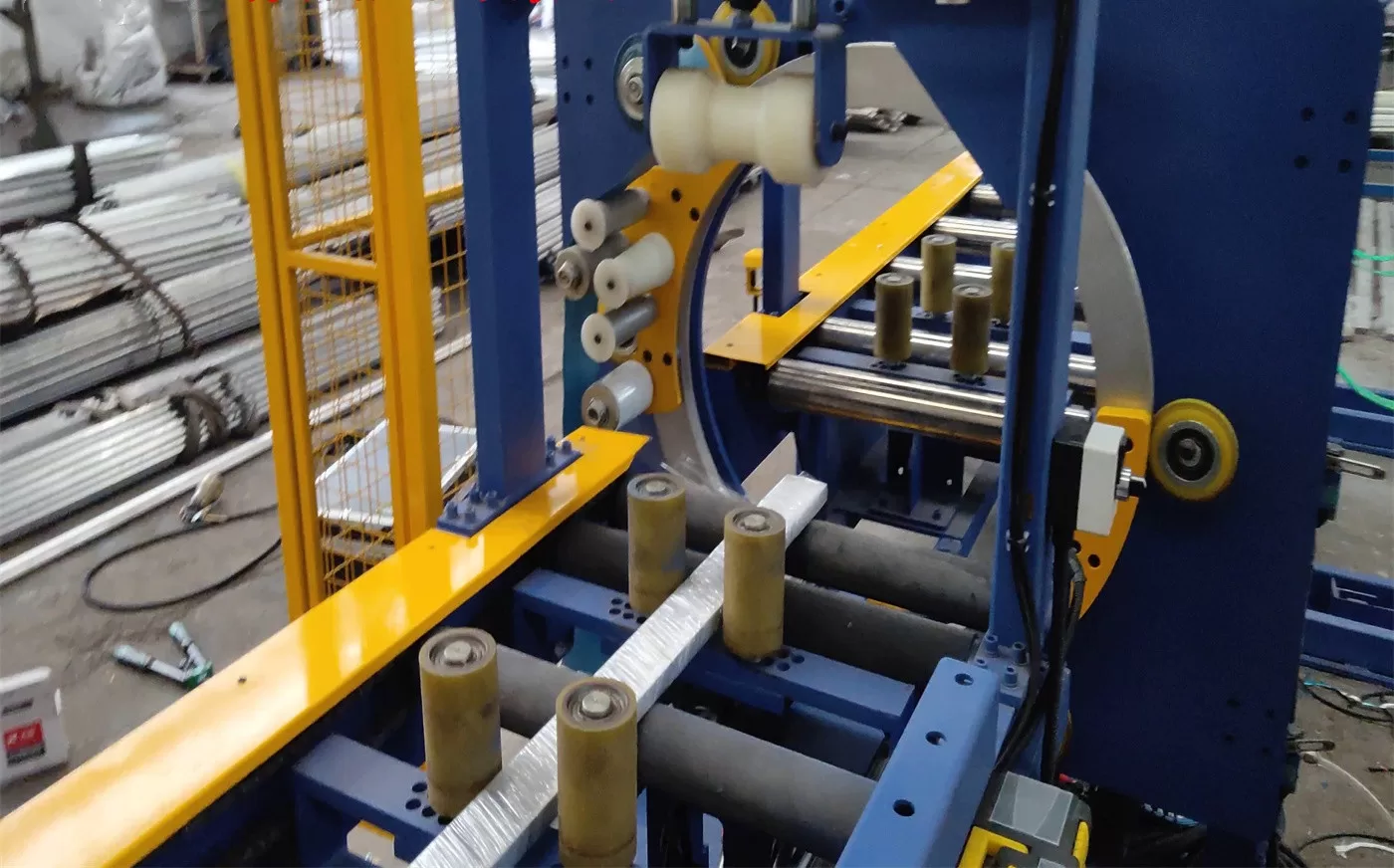
Horizontal orbital stretch wrappers fundamentally differ from traditional wrapping methods through their unique rotating ring mechanism that moves around stationary loads, eliminating the need for load rotation while providing consistent, uniform wrapping tension and superior film application. This engineering approach addresses core industrial packaging challenges that conventional methods simply can't solve, particularly for heavy, difficult-to-handle items like steel coils and wire rods where stability and protection are paramount.
The packaging evolution in industrial settings has been remarkable, but understanding why horizontal orbital technology represents such a significant leap requires examining specific operational factors that directly impact your bottom line. Let's explore what makes this technology worth your consideration, especially if you're managing high-volume production with demanding packaging requirements.
1. How Does the Wrapping Mechanism Differ Between Horizontal Orbital and Traditional Wrappers?
Picture your current packaging line: workers manually wrapping heavy coils or relying on equipment that requires rotating the entire load. Now imagine a system where the wrapping mechanism moves around your stationary product instead. This fundamental difference isn't just about mechanics—it's about rethinking packaging efficiency from the ground up.
Horizontal orbital stretch wrappers utilize a rotating ring that travels around stationary loads, while traditional wrappers typically rotate the load itself or use manual methods that require physical manipulation of both product and packaging materials. This distinction creates operational advantages that extend far beyond the initial wrapping process, particularly for heavy industrial applications where load stability and worker safety are constant concerns.
The engineering behind horizontal orbital technology delivers tangible benefits that directly address common packaging pain points:
🔄 Motion Mechanics Comparison
| Feature | Horizontal Orbital Wrappers | Traditional Wrappers |
|---|---|---|
| Load Movement | Stationary | Rotates or requires manual turning |
| Wrapper Movement | Rotating ring travels around load | Fixed position or limited movement |
| Floor Space Requirements | Compact footprint | Larger operational area needed |
| Load Stability | Excellent (no product movement) | Variable (depends on rotation stability) |
⚙️ Operational Impact
The stationary load characteristic means your heavy coils or delicate products never move during wrapping. This eliminates the risk of product shift or damage that can occur when rotating heavy loads. For industries dealing with expensive metal products, this single feature can significantly reduce product loss and customer complaints.
🛡️ Safety Advantages
Without rotating heavy loads, you remove a major safety hazard from your packaging area. Workers aren't exposed to moving heavy objects, and the risk of pinch points decreases substantially. This translates to lower insurance costs and reduced workplace injury rates—a concern every operations manager faces daily.
The wrapping mechanism also provides superior film application control. Consistent tension throughout the wrapping process ensures even coverage without weak spots that can lead to wrapping failure during transportation or storage. For businesses shipping internationally or storing products outdoors, this reliability becomes a critical factor in maintaining product quality from factory to customer. (horizontal orbital wrapping mechanism differences)


2. What Efficiency Gains Can You Expect from Horizontal Orbital Technology?
Every minute of production downtime costs money, and packaging bottlenecks often represent the final constraint in your optimization efforts. The transition from manual or semi-automated wrapping to horizontal orbital technology isn't just an equipment upgrade—it's a throughput transformation that impacts your entire production timeline.
Horizontal orbital stretch wrappers typically increase packaging efficiency by 60-80% compared to manual methods and 30-50% versus traditional rotating wrapper systems, primarily through reduced cycle times, eliminated manual labor requirements, and continuous operation capabilities. These efficiency gains translate directly to lower operational costs and increased production capacity without expanding your physical footprint or workforce.
The efficiency equation extends beyond simple speed measurements to encompass multiple operational factors:
📊 Efficiency Metrics Breakdown
- Cycle Time Reduction: Automated wrapping cycles complete in 1-2 minutes versus 5-15 minutes for manual methods
- Labor Optimization: One operator can manage multiple machines simultaneously
- Uptime Improvement: Minimal maintenance requirements versus frequent manual wrapping interruptions
- Material Utilization: Precise film control reduces stretch wrap consumption by 15-25%
🚀 Throughput Enhancement
In our metal processing facility, implementing horizontal orbital wrappers eliminated our packaging bottleneck entirely. Where we previously needed four workers per shift dedicated solely to coil packaging, we now operate with one operator overseeing two machines while handling quality checks. The packaging area transformed from a constant scramble to meet shipping deadlines to a smooth, predictable process flow.
💰 ROI Calculation Factors
The financial justification becomes clear when you analyze the complete cost picture:
- Labor cost reduction (typically 3-4 positions per shift)
- Damage reduction (estimated 2-4% of product value)
- Throughput increase (additional production capacity without capital investment in primary processing equipment)
- Space utilization improvement (smaller footprint than traditional automated systems)
Manufacturers like Fengding and Wuxi Buhui have documented cases where customers recovered their horizontal orbital wrapper investment within 8-14 months through these combined efficiency gains. The technology particularly shines in high-volume environments where packaging represents a significant portion of your operational timeline and labor allocation. (industrial packaging efficiency gains)

3. How Does Horizontal Orbital Wrapping Enhance Product Protection?
Product damage during packaging and transit represents silent profit erosion that many operations managers underestimate until they calculate the annual impact. When you're dealing with finished steel coils or precision wire products, even minor edge damage or surface scratches can mean price reductions, customer rejections, or complete product loss.
Horizontal orbital stretch wrappers provide superior product protection through consistent, uniform film tension distribution, complete load stabilization during wrapping, and customizable wrapping patterns that secure vulnerable points without excessive pressure points. This comprehensive approach to load integrity addresses the specific protection challenges that traditional wrapping methods often exacerbate rather than solve.
The protective advantages manifest in several critical areas:
🛡️ Damage Prevention Mechanisms
- Edge Protection: Stationary wrapping prevents coil edges from contacting equipment surfaces
- Uniform Pressure Distribution: Eliminates tight spots that can deform products
- Weather Resistance: Consistent film layers create reliable moisture barriers
- Vibration Dampening: Secure loads withstand transportation stresses better
📦 Load Security Features
The wrapping methodology creates inherent stability that conventional methods struggle to match:
🔒 Bottom-Up Wrapping: Starts with the most vulnerable lower sections first
🔒 Cross-Hatching Patterns: Creates web-like security across the entire load surface
🔒 Tailored Tension Settings: Adjusts to specific product density and fragility requirements
🔒 Film Memory Utilization: Maintains protective tension throughout storage and shipping
💸 Financial Impact Assessment
In practical terms, the protection difference translates to measurable bottom-line benefits. One of our clients in the steel distribution business reduced their damage-related customer credits from 3.2% of revenue to 0.4% within six months of implementing horizontal orbital wrappers. Another wire manufacturer eliminated approximately $85,000 annually in edge damage alone—more than covering their equipment leasing costs.
The technology particularly excels with irregularly shaped loads or products with protrusions where traditional wrapping creates uneven protection. The programmable nature of horizontal orbital systems allows operators to customize wrapping patterns for specific product configurations, ensuring vulnerable areas receive additional reinforcement without manual intervention. This adaptability makes the technology suitable for operations handling diverse product ranges without sacrificing protection quality across different items. (product protection stretch wrapping solutions)
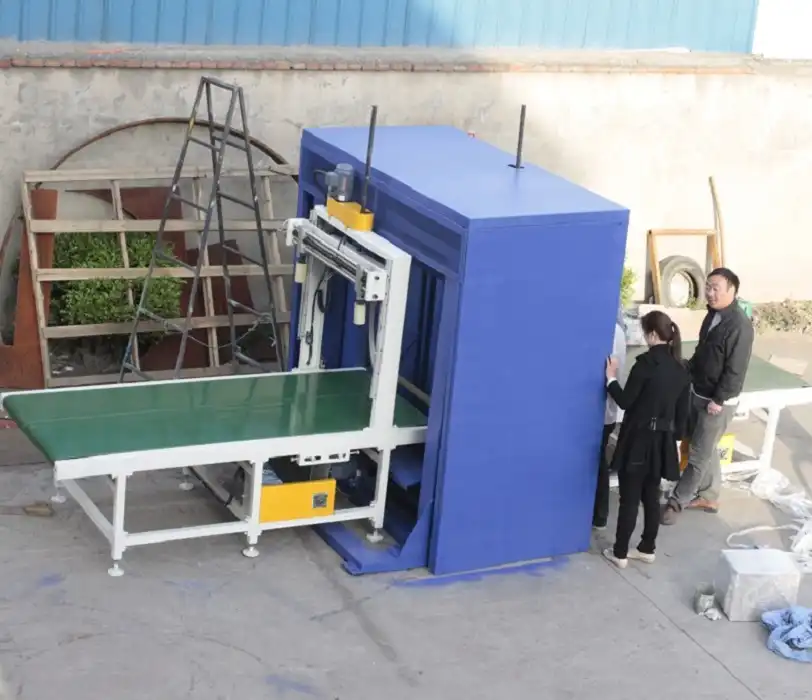

4. What Safety Advantages Do Horizontal Orbital Wrappers Offer Over Traditional Methods?
Safety statistics in industrial settings reveal a troubling pattern: packaging and material handling operations consistently rank among the highest injury incidence areas. When workers manually handle heavy wrapping materials, awkward postures, and repetitive motions create perfect conditions for musculoskeletal disorders and acute injuries.
Horizontal orbital stretch wrappers significantly enhance workplace safety by eliminating manual load handling, removing worker exposure to rotating heavy loads, and incorporating comprehensive safety interlocks that prevent access to moving components during operation. This engineered approach to hazard reduction addresses both the immediate physical risks and cumulative trauma factors that traditional wrapping methods inherently present.
The safety benefits extend across multiple risk categories:
⚠️ Hazard Elimination Comparison
| Risk Category | Traditional Wrapping | Horizontal Orbital Wrapping |
|---|---|---|
| Manual Handling | High (lifting, pulling, reaching) | Minimal (load remains stationary) |
| Rotating Load Contact | Significant pinch point hazard | None (load doesn't rotate) |
| Repetitive Motion | High (consistent wrapping motions) | Low (automated process) |
| Film Handling | Direct contact with cutting points | Automated cutting and clamping |
🏥 Injury Reduction Evidence
Industry data demonstrates compelling safety improvements after implementing horizontal orbital technology:
- 72% reduction in packaging-area recordable injuries
- 64% decrease in musculoskeletal disorder reports
- 88% reduction in hand and finger injuries specifically
- Near-elimination of strain injuries from heavy lifting
🔧 Engineering Safety Features
Modern horizontal orbital wrappers incorporate multiple protection layers:
- Light Curtains: Stop machine immediately if breached
- Emergency Stop Systems: Multiple accessible locations
- Interlocked Access Doors: Prevent operation during maintenance
- Automatic Film Cutters: Eliminate manual cutting hazards
- Load Stabilization: No risk of products shifting during wrapping
Beyond the immediate injury prevention, the psychological impact on workforce morale and engagement shouldn't be underestimated. When employees see that management has invested in equipment that prioritizes their wellbeing, the cultural shift often extends beyond the packaging area. This becomes particularly valuable in tight labor markets where retaining experienced workers provides competitive advantage. The reduced workers' compensation claims and insurance premiums alone frequently justify the equipment investment within reasonable timeframe calculations. (industrial packaging safety advantages)

My Insights!
Having implemented both traditional and horizontal orbital wrapping solutions across multiple facilities, the operational differences extend beyond technical specifications to fundamental business impact. The transition represents more than equipment replacement—it's a philosophical shift from viewing packaging as a necessary cost center to recognizing it as a strategic efficiency opportunity.
The most significant insight from two decades of packaging evolution: horizontal orbital technology delivers its greatest value in unexpected areas beyond the obvious labor savings. The data visibility, process consistency, and quality control improvements create secondary benefits that often exceed the primary efficiency gains. When you can guarantee consistent packaging quality shift after shift, your customer relationships strengthen, your damage claims diminish, and your operational predictability increases.
Manufacturers like Fengding have refined their horizontal orbital offerings specifically for heavy industrial applications, while specialists like Wuxi Buhui provide valuable alternatives for operations with unique spatial or throughput requirements. The key is matching the technology to your specific operational constraints rather than seeking universal solutions. The companies achieving greatest success with horizontal orbital implementation typically conduct thorough process analysis beforehand, identifying not just the obvious pain points but the hidden inefficiencies that traditional methods have normalized over years of operation. (industrial packaging insights expert perspective)
Conclusion
Horizontal orbital stretch wrappers deliver measurable advantages through innovative engineering that addresses core industrial packaging challenges. For operations seeking to eliminate bottlenecks while enhancing safety and protection, Orbital Stretch Wrapper technology represents the next evolution in packaging efficiency.
Related posts: