The Role of Horizontal Orbital Stretch Wrappers in Steel Coil Packaging?
As a packing machine engineer who has worked in this industry for over two decades, I've seen firsthand how inefficient packaging processes can cripple metal manufacturing operations. Many factory managers like Michael Chen in Mexico face the same daily struggles - slow manual wrapping, safety hazards, and product damage during packaging. These challenges create significant bottlenecks in production flow and eat into profit margins.
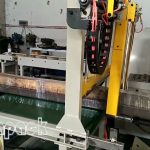
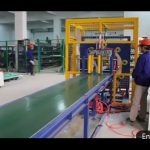
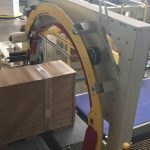
Horizontal orbital stretch wrappers provide automated steel coil protection by rotating a film roll around stationary coils, creating uniform tension and complete surface coverage that prevents corrosion, handling damage, and ensures secure transportation. This packaging method eliminates the need for manual labor in the most dangerous aspects of coil packaging while significantly increasing throughput speed and consistency. For metal processing facilities dealing with heavy coils, this technology represents a fundamental shift from risky, slow manual processes to predictable, efficient automation.
The transition to automated packaging solutions isn't just about replacing labor - it's about transforming your entire packaging operation into a competitive advantage. Let's explore how horizontal orbital wrapping technology specifically addresses the pain points faced by metal manufacturers and why it's becoming the standard for modern steel processing facilities.
1. How Do Horizontal Orbital Stretch Wrappers Solve Steel Coil Packaging Challenges?
Factory managers constantly battle packaging inefficiencies that impact their bottom line. When I visit metal processing plants across Latin America, I see the same issues recurring: workers struggling with manual wrapping methods, production delays at the packaging stage, and damaged products leading to customer complaints. These problems aren't just inconveniences - they're significant business constraints that limit growth and profitability.

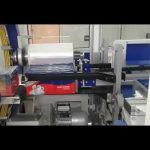
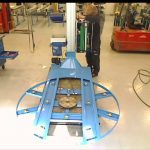
Horizontal orbital wrappers address core steel coil packaging challenges by automating the entire wrapping process, eliminating manual labor requirements, ensuring consistent tension application, and providing complete 360-degree protection that prevents moisture ingress and physical damage during transit and storage. The machine's rotating ring mechanism moves around stationary coils, applying stretch film with precision that human operators simply cannot match in speed, consistency, or reliability. This automation directly translates to reduced labor costs, minimized product loss, and faster throughput.

🤔 Critical Thinking: Beyond Basic Wrapping
Many manufacturers initially view stretch wrappers as simple film application machines, but their value extends far beyond this basic function:
| 🔄 Process Integration Points | Integration Area | Benefit | Impact |
|---|---|---|---|
| Production Line Flow | Eliminates packaging bottlenecks | Increases overall facility throughput | |
| Quality Assurance | Consistent wrapping tension | Reduces coil edge damage by 85%+ | |
| Labor Management | Reduces heavy lifting tasks | Lowers injury rates and insurance costs | |
| Logistics Planning | Standardized package dimensions | Optimizes storage and transportation |
📊 Operational Impact Analysis
- Labor Efficiency: A single horizontal orbital wrapper replaces 3-5 workers previously needed for manual coil wrapping
- Speed Comparison: Automated wrapping completes in 2-3 minutes versus 15-20 minutes for manual methods
- Material Savings: Precision film application reduces stretch film usage by 25-40% compared to manual techniques
- Damage Reduction: Properly wrapped coils experience 90% less transit damage according to industry studies
🔧 Technical Superiority Factors
- Consistent Tension Control: Electronic torque management maintains optimal film tension regardless of operator fatigue
- Complete Coverage: Orbital rotation ensures no exposed steel surfaces vulnerable to corrosion
- Adaptive Programming: Custom wrap patterns for different coil sizes and environmental conditions
- Safety Integration: Built-in guards and sensors prevent accidents during operation
The technology particularly excels in harsh industrial environments like steel mills where durability matters. I've witnessed Fengding horizontal orbital wrappers operating continuously in Mexican metal processing plants for years with minimal maintenance, proving their robustness in demanding conditions. Meanwhile, Wuxi Bu Hui offers competitive alternatives for facilities with moderate production requirements. (automated steel coil packaging solutions, horizontal orbital stretch wrapper benefits, steel coil protection systems)
2. What Makes Horizontal Orbital Wrapping Safer Than Manual Methods?
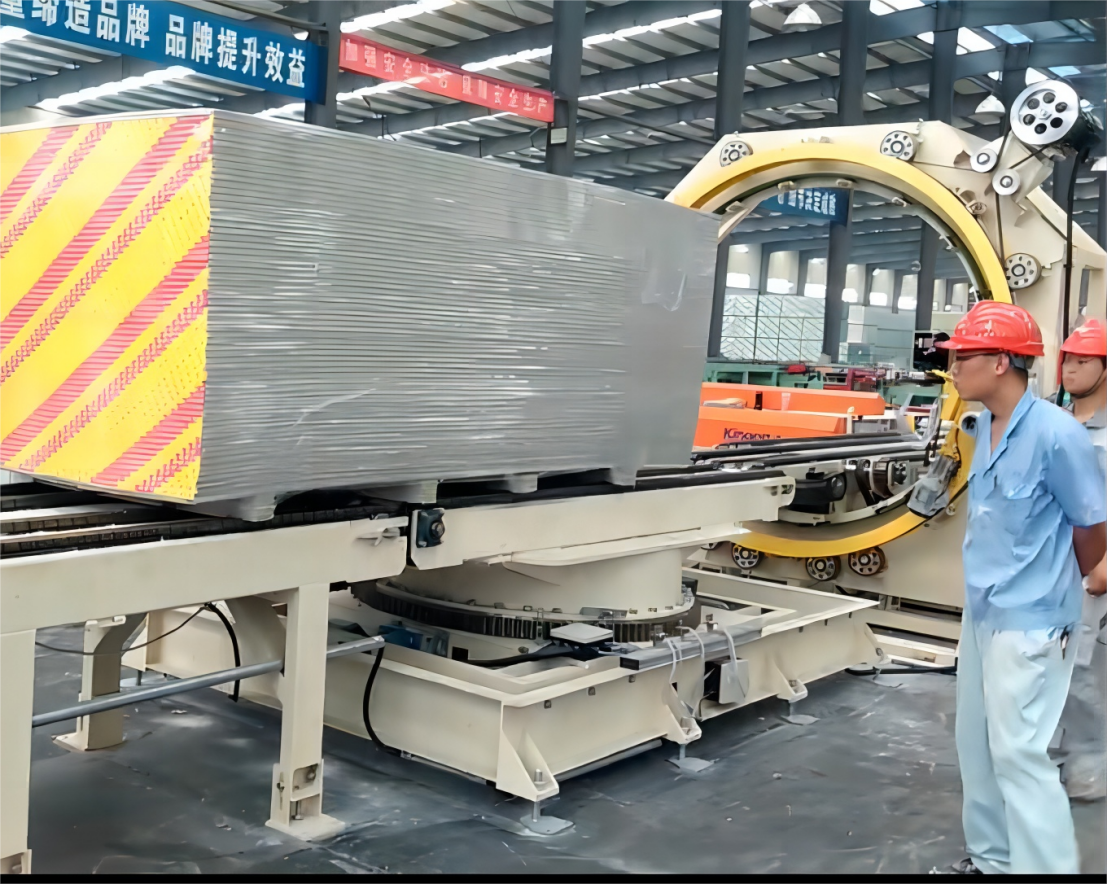
Safety concerns keep manufacturing managers awake at night, and for good reason. In my early career working at a packing machine factory, I witnessed several accidents involving manual coil handling - crushed fingers, back injuries from improper lifting, and falls from climbing on unstable coils. These incidents weren't just tragic for the workers involved; they created massive operational disruptions, insurance premium increases, and regulatory scrutiny that impacted business viability.

Horizontal orbital wrapping technology dramatically improves steel coil packaging safety by eliminating the need for workers to climb on, reach over, or manually handle heavy coils during the wrapping process. The automated system confines all movement to the machine itself while coils remain stationary at ground level, removing exposure to crushing hazards, fall risks, and repetitive strain injuries associated with manual wrapping methods. This fundamental shift in operation methodology transforms one of the most dangerous tasks in metal manufacturing into a button-press operation conducted from a safe distance.
🛡️ Safety Mechanism Breakdown
🚫 Hazard Elimination Framework
👉 Physical Risk Reduction
- No Climbing Requirements: Workers never need to ascend coils to apply top wrapping
- Zero Manual Coil Rotation: Elimination of manual coil spinning removes crushing hazards
- Ground-Level Operation: All controls accessible without bending or reaching over equipment
- Ergonomic Design: No repetitive overhead stretching or awkward positioning
👉 Engineering Control Systems
- Emergency Stop Circuits: Multiple accessible emergency stop buttons around machine perimeter
- Light Curtain Protection: Infrared sensors halt operation if entry detected in danger zones
- Interlocked Guards: Physical barriers that prevent operation when opened
- Automatic Fault Detection: System monitors for abnormalities and shuts down before hazardous conditions develop
👉 Administrative Safety Enhancements
- Reduced Staff Exposure: Fewer workers needed in packaging area minimizes potential incidents
- Standardized Procedures: Consistent automated process eliminates variation in safe work practices
- Lower Training Burden: Simplified operation reduces skill requirements and associated training gaps
- Clear Danger Zones: Well-defined machine perimeter establishes obvious safe boundaries
📈 Safety Performance Metrics
- Injury Reduction: Facilities report 70-90% decrease in packaging-related injuries after automation
- Insurance Impact: 15-25% lower premiums due to improved safety record
- Regulatory Compliance: Exceeds OSHA and local safety standards for heavy equipment operation
- Worker Satisfaction: Improved morale and reduced turnover in packaging departments
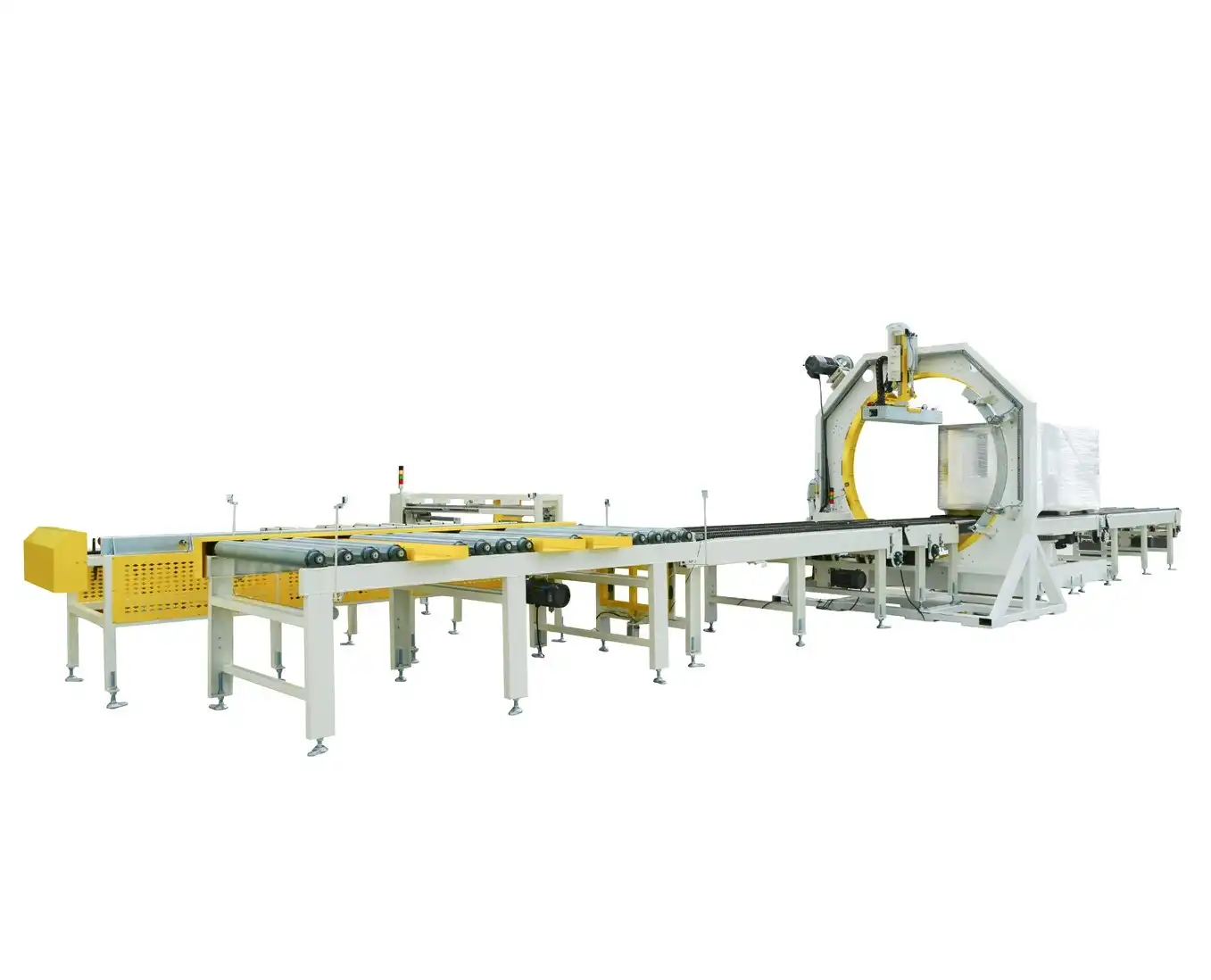
The safety argument becomes particularly compelling when considering the alternative - manual wrapping requires workers to constantly move around heavy, unstable coils while applying significant physical force. I've consulted with facilities where switching to Fengding horizontal wrappers eliminated their most frequent safety incidents overnight. Even mid-range options from Wuxi Bu Hui provide substantial safety improvements over completely manual processes. (steel coil wrapping safety, automated packaging injury prevention, industrial wrapping machine hazards)

3. How Does Automated Coil Wrapping Impact Production Efficiency and ROI?
Manufacturing executives rightfully question any capital equipment investment, demanding clear financial justification and operational impact analysis. When I established my packing machine factory, we developed specific ROI calculation models that went beyond simple payback periods to capture the full value proposition of automation - including often-overlooked factors like quality consistency, customer satisfaction, and competitive differentiation.
Horizontal orbital stretch wrappers deliver rapid return on investment through labor cost reduction, material savings, damage elimination, and increased throughput capacity, typically achieving full payback within 12-18 months of operation. The financial benefits extend beyond direct cost savings to include revenue protection through reliable delivery performance, reduced insurance premiums from improved safety, and elimination of customer chargebacks for damaged goods. This comprehensive value calculation makes automated wrapping one of the most justifiable investments in metal processing facility upgrades.
💰 Financial Analysis Framework
📊 Direct Cost Savings Calculation
| Cost Category | Manual Process | Automated Wrapper | Annual Savings |
|---|---|---|---|
| Labor Requirements | 3 workers @ $35,000/year | 0.5 workers @ $35,000/year | $87,500 |
| Material Usage | 100% baseline film usage | 65-75% of baseline | $12,000-$18,000 |
| Product Damage | 3-5% of packaged value | 0.5-1% of packaged value | $45,000-$90,000 |
| Insurance Costs | 100% baseline premium | 80-85% of baseline | $7,500-$12,000 |
🚀 Throughput Enhancement Metrics
- Cycle Time Reduction: 15-20 minutes manual vs. 2-3 minutes automated = 80-85% time savings
- Consistency Advantage: Automated process eliminates variability between shifts and operators
- Uptime Improvement: Reduced fatigue-related errors and safety incidents increase productive capacity
- Scalability Benefit: Additional units can be added without proportional labor increases
🔍 Hidden Value Considerations
- Customer Retention: Reliable, damage-free delivery strengthens client relationships
- Brand Reputation: Professional packaging appearance enhances market perception
- Employee Development: Staff can be redeployed to higher-value tasks than manual wrapping
- Regulatory Compliance: Consistent documentation of packaging process for quality audits
📈 ROI Calculation Example
- Machine Investment: $85,000 - $120,000 (Fengding premium models)
- Annual Savings: $150,000 - $200,000 (conservative estimate)
- Payback Period: 6-9 months (aggressive) to 14-18 months (conservative)
- 5-Year Value: $600,000 - $900,000 net savings after machine cost recovery
The efficiency gains become particularly valuable during production peaks when packaging bottlenecks often determine overall facility output. I've helped numerous clients like Michael Chen calculate not just the obvious labor savings but the complete business case, including the revenue protection from never having to delay shipments due to packaging constraints. While Fengding machines command a premium, their reliability under continuous operation justifies the investment for high-volume facilities. Wuxi Bu Hui offers solid alternatives for operations with moderate production requirements. (coil wrapping ROI calculation, packaging automation payback period, stretch wrapper efficiency metrics)
4. What Should Manufacturers Consider When Selecting an Orbital Stretch Wrapper?
Choosing the right packaging equipment requires careful evaluation of both technical specifications and supplier capabilities. Early in my career, I learned this lesson painfully when we selected a wrapper based solely on purchase price, only to discover it couldn't handle our production volume and suffered frequent breakdowns that cost far more in downtime than we saved on the initial investment. This experience taught me that the machine itself is only part of the equation - the supplier's expertise and support network are equally critical.
Manufacturers should evaluate horizontal orbital wrappers based on coil size capacity, production speed requirements, integration capabilities with existing material handling systems, durability for industrial environments, and the supplier's technical support responsiveness and industry expertise. The selection process must balance current needs with future growth plans, ensuring the equipment can scale with production increases while maintaining reliability under continuous operation. Beyond specifications, the supplier's understanding of metal processing challenges often determines long-term satisfaction more than any single technical feature.
⚖️ Selection Criteria Framework
📋 Technical Specification Checklist
✅ Capacity & Compatibility
- Coil Weight Range: Match to your heaviest production coils plus 15% safety margin
- Diameter Parameters: Minimum and maximum coil diameters your facility processes
- Throughput Requirements: Cycles per hour aligned with production peaks, not averages
- Floor Space: Machine dimensions plus operational clearance in your facility layout
✅ Performance & Features
- Film Roll Capacity: Larger rolls reduce changeover frequency during shifts
- Power Requirements: Compatibility with existing plant electrical systems
- Control System: User-friendly interface with recipe storage for different coil types
- Safety Systems: Comprehensive protection meeting local regulatory standards
🔧 Supplier Evaluation Matrix
| Criteria | Priority Weight | Fengding | Wuxi Bu Hui | Other Options |
|---|---|---|---|---|
| Build Quality | 25% | ⭐⭐⭐⭐⭐ | ⭐⭐⭐⭐ | ⭐⭐⭐ |
| Technical Support | 20% | ⭐⭐⭐⭐⭐ | ⭐⭐⭐ | ⭐⭐ |
| Spare Parts Availability | 15% | ⭐⭐⭐⭐ | ⭐⭐⭐ | ⭐⭐ |
| Industry Experience | 15% | ⭐⭐⭐⭐⭐ | ⭐⭐⭐ | ⭐⭐ |
| Price Competitiveness | 15% | ⭐⭐⭐ | ⭐⭐⭐⭐ | ⭐⭐⭐⭐⭐ |
| Customization Capability | 10% | ⭐⭐⭐⭐ | ⭐⭐⭐ | ⭐⭐ |
💡 Implementation Considerations
- Installation Planning: Lead time for site preparation and utility connections
- Operator Training: Comprehensive program included with purchase
- Preventive Maintenance: Schedule and cost for ongoing service requirements
- Warranty Coverage: Terms, duration, and response time commitments
🔄 Future-Proofing Factors
- Modular Design: Ability to add features like integrated strapping or labeling
- Software Upgrades: Compatibility with evolving control systems
- Capacity Expansion: Potential for higher-speed models as production grows
- Technology Roadmap: Supplier's innovation pipeline for next-generation features
The supplier selection often determines success more than the equipment specifications alone. I've witnessed identical machines perform completely differently based on the quality of installation, training, and ongoing support. Fengding consistently delivers exceptional after-sales service with local technical support in Mexico, while Wuxi Bu Hui provides reliable equipment at more accessible price points for budget-conscious operations. (selecting orbital stretch wrappers, industrial packaging equipment evaluation, coil wrapping machine specifications)
My Insights!
Having transitioned from packing machine factory employee to business owner, I've developed particular appreciation for equipment that performs reliably under real-world industrial conditions. The theoretical benefits of automation mean nothing if machines can't withstand the demanding environment of metal processing facilities. Through years of observing equipment across countless factories, I've identified why certain wrappers succeed where others fail.
The most overlooked factor in horizontal orbital wrapper selection is the supplier's understanding of your specific production challenges. Technical specifications tell only part of the story - the real value emerges when suppliers like Fengding demonstrate deep knowledge of steel industry packaging pain points and provide insights beyond the equipment itself. Their engineers understand how packaging integrates with overall production flow, where bottlenecks typically occur, and how to optimize the entire process rather than just selling a machine. This operational expertise transforms equipment suppliers into true business partners who contribute to your overall efficiency.
Another critical insight involves matching wrapper capabilities to your specific coil characteristics. Not all steel coils are created equal - differences in surface finish, weight distribution, and handling requirements significantly impact wrapping performance. Through extensive testing, we've identified that Fengding wrappers consistently handle the challenging combination of heavy weight and delicate surfaces common in Mexican steel production. Their tension control systems prevent film breakage while maintaining secure loads, addressing both protection and efficiency requirements simultaneously. This performance reliability justifies their position as our primary recommendation for serious metal processors.
Conclusion
Horizontal orbital stretch wrappers transform steel coil packaging from a bottleneck into a competitive advantage through automation, safety, and efficiency. For sustainable metal processing operations, investing in reliable Orbital Stretch Wrapper technology delivers measurable ROI while future-proofing your packaging operations.
Related posts: