Orbital Stretch Wrapping Solutions for the Timber and Lumber Industry?
The timber and lumber industry faces a constant battle. You need to move large, heavy, and often irregularly shaped bundles from your production line to the shipping dock, all while protecting your valuable product from damage, moisture, and shifting during transit. The traditional methods of manual strapping or stationary wrapping are slow, labor-intensive, and inconsistent. This creates a major bottleneck, drives up costs, and puts your workers at risk of injury from heavy lifting and repetitive strain. The pressure to ship more, faster, and safer is immense, and your current packaging process might be holding you back.
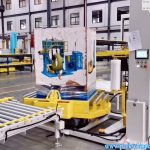
Orbital stretch wrapping machines provide a powerful, automated solution specifically designed to handle the unique challenges of bundling timber, lumber, and engineered wood products. These systems rotate a film carriage around a stationary load, applying consistent, high-tension stretch film to create a secure, weather-resistant unitized bundle that is ready for storage or shipment. This method dramatically increases throughput, reduces labor costs, minimizes product damage, and enhances workplace safety compared to manual methods.

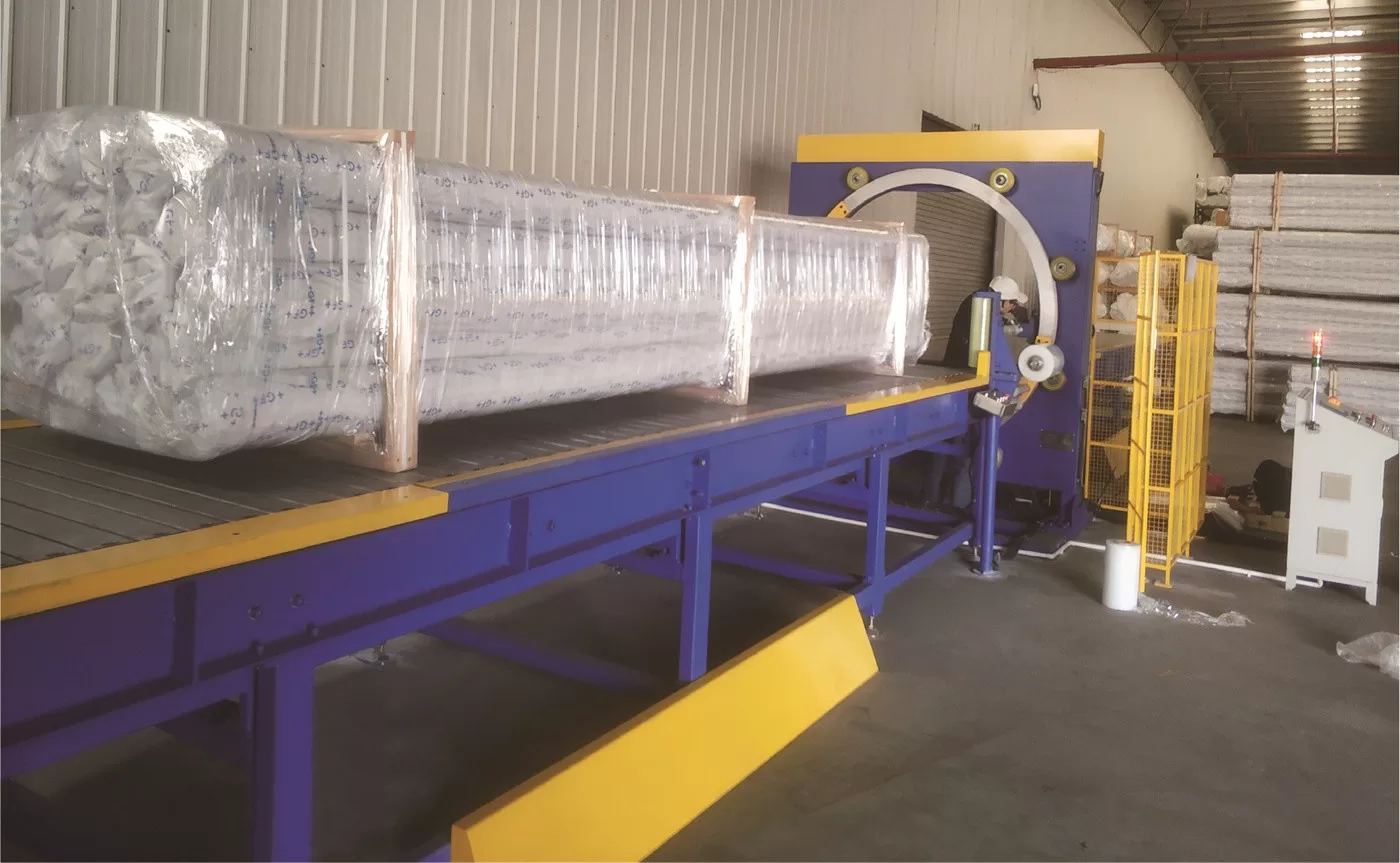
If you manage a sawmill, a planing mill, or a lumber distribution center, you know that the end of the production line is just as critical as the beginning. A slow or unreliable packaging station can undo all the efficiency gains made upstream. This article will guide you through the key considerations for implementing orbital stretch wrapping in your timber operation. We will explore the specific benefits, the different machine types available, and how to choose the right partner to ensure your investment delivers a strong return and solves your real-world packaging headaches.
1. Why is Orbital Wrapping a Game-Changer for Timber and Lumber Packaging?
For decades, the sight of workers manually strapping bundles of 2x4s or plywood has been common in yards. This process is not just slow; it's a source of multiple operational headaches. Workers are exposed to repetitive motion injuries and the danger of snapping straps. The tension is inconsistent, leading to loose bundles that can shift and damage product edges during forklift handling or truck transport. Furthermore, manual methods offer little protection against rain, snow, or dust, which can degrade lumber quality before it even reaches your customer.
Orbital wrapping machines solve these core problems by automating the bundling process. The machine applies stretch film with programmable, consistent force, creating a tight, uniform wrap that compresses the individual pieces into a single, solid unit. This "unitizing" effect is crucial for lumber. It prevents individual boards from shifting, which protects the edges from dings and scrapes—a common cause of customer returns and claims. The plastic film also acts as a barrier against moisture and dirt, preserving the lumber's condition during outdoor storage or cross-country shipping.


Let's dive deeper into the specific advantages that make orbital stretch wrappers a transformative investment for timber businesses.
🪵 Core Benefits for Your Lumber Yard
The shift from manual to automated orbital wrapping impacts several key performance indicators (KPIs) in a positive way.
| Operational Area | Manual Strapping/Wrapping | Orbital Stretch Wrapping | Impact |
|---|---|---|---|
| Speed & Throughput | Slow, depends on worker skill and fatigue. | Fast and consistent. Machines can wrap a bundle in 1-2 minutes. | Eliminates packaging bottleneck, allows faster order fulfillment. |
| Labor Cost | High. Requires 1-2 workers per shift dedicated to bundling. | Low. One worker can load/unload while machine runs automatically. | Reduces direct labor costs and frees staff for higher-value tasks. |
| Product Damage | High risk from loose straps, shifting loads, and manual handling. | Greatly reduced. Tight unitization prevents movement and protects edges. | Lowers customer complaints and financial losses from damaged goods. |
| Worker Safety | High risk of muscle strains, cuts from straps, and hand injuries. | Much safer. Minimizes heavy lifting and dangerous manual tasks. | Reduces workplace accidents, lowers insurance premiums. |
| Weather Protection | Minimal. Straps offer no barrier to elements. | Excellent. Full film cover shields from rain, snow, and UV exposure. | Preserves product quality for outdoor storage or long shipments. |
🔧 Matching the Machine to Your Product Mix
Not all lumber bundles are the same. Your machine choice depends heavily on what you produce.
- Dimensional Lumber (2x4s, 2x6s, etc.): These are ideal for orbital wrapping. Bundles are typically uniform and block-shaped. A standard horizontal orbital wrapper is perfect. The load stays on the conveyor or turntable, and the rotating ring applies the film. For very high-volume operations, an inline system that wraps as the bundle moves through is the best choice for maximum speed.
- Engineered Wood Products (LVL, PSL, I-Joists): These long, often bulky items require stability. Orbital wrappers provide excellent containment, preventing bowing or twisting. Ensure the machine's "throat" (the clear space inside the ring) is wide and tall enough to accommodate your largest cross-section.
- Panel Products (Plywood, OSB, MDF): While often palletized, large bundles of panels can also be unitized with film. The key is ensuring the platen or conveyor can support the full weight without damaging the bottom sheets.
The goal is to find a machine that handles your most common bundle size with ease, and can accommodate your occasional larger orders without issue. A reliable manufacturer like Fengding will help you analyze your product dimensions and flow to recommend the perfect model. (orbital stretch wrapper for lumber, automated timber bundling machine, unitize wood bundles)
2. What Are the Key Features to Look for in a Timber Orbital Wrapper?
Buying a piece of heavy-duty equipment for your mill is a significant decision. You can't afford downtime. The machine must withstand a harsh environment with sawdust, temperature changes, and constant use. Choosing a wrapper based on price alone is a risky move that often leads to higher long-term costs from repairs and lost production. You need a machine built for the industrial reality of wood processing.
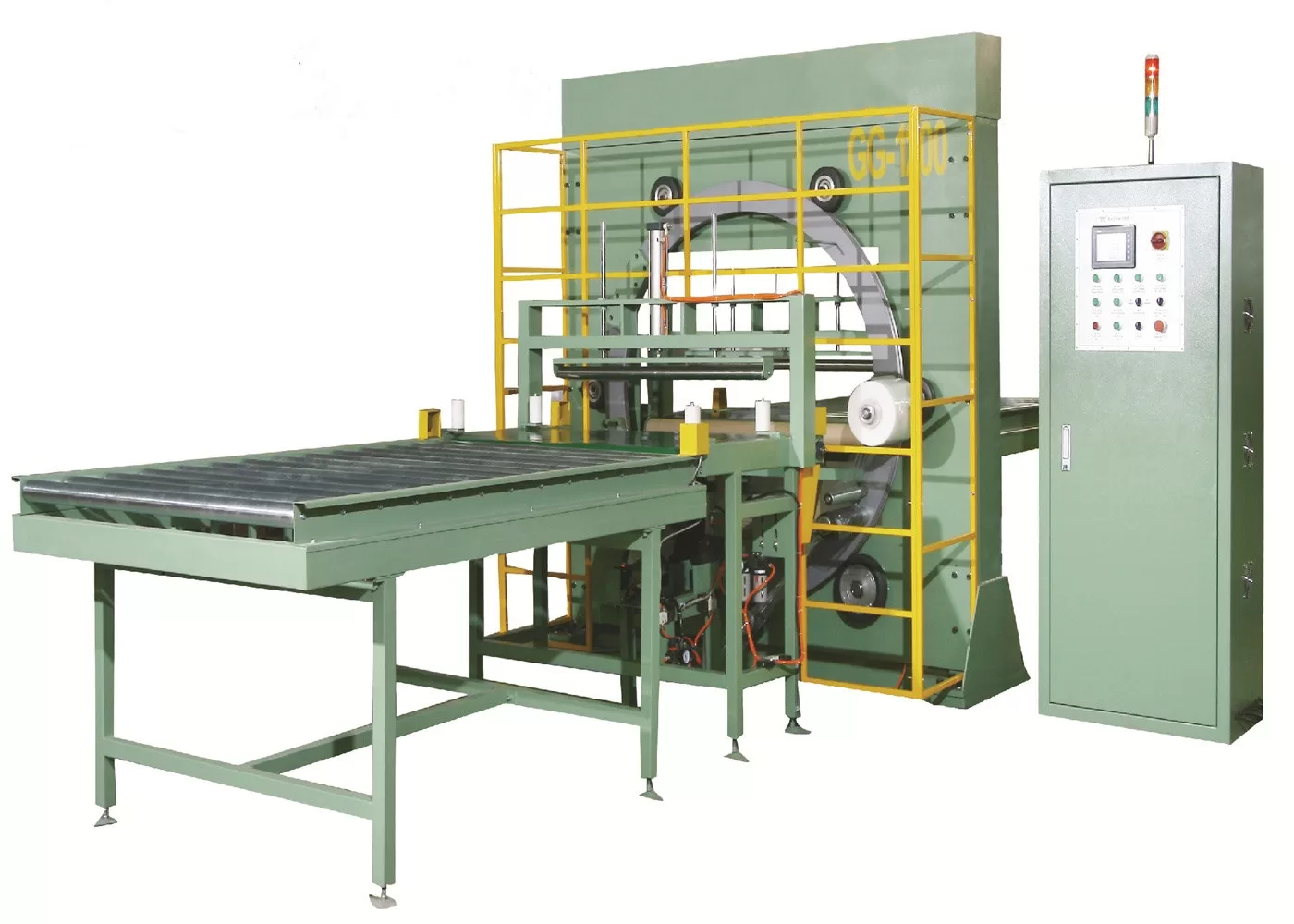
The most critical features for a timber orbital wrapper are robust construction, powerful film carriage drive systems, and intelligent, user-friendly controls. The frame should be made from heavy-gauge steel to resist the vibration and stress of wrapping dense lumber bundles. The drive motors for the rotating ring must have high torque to ensure smooth, consistent rotation without stalling, even under high film tension. Finally, the control system should allow operators to easily save and recall wrap patterns (film overlap, top/bottom wraps, tension) for different bundle types with just a few button presses.

Let's break down these features and others that separate a good machine from a great one that will serve your business for years.
⚙️ The Anatomy of a Durable Orbital Wrapper
A machine's longevity is determined by its core components. Here’s what to examine closely:
-
Frame & Structure:
- Look for: Fully welded, heavy-duty steel frame. Reinforced support legs and a rigid main ring.
- Why it matters: Lumber bundles are extremely heavy. A flimsy frame will flex, causing misalignment, uneven wraps, and premature wear on bearings and gears. A sturdy frame ensures precision and durability.
-
Drive System:
- Look for: A direct gear drive or a heavy-duty chain/sprocket system powered by a reliable, brand-name industrial motor (e.g., Siemens, ABB). Avoid lightweight belt drives for high-torque applications.
- Why it matters: This is the heart of the machine. It needs consistent power to rotate the heavy ring and film carriage around the stationary load. An underpowered drive will jerk, stall, or fail.
-
Film Carriage & Braking:
- Look for: A pre-stretch system (e.g., 250% pre-stretch) and an electronic brake.
- Why it matters: Pre-stretching the film before it touches the load maximizes film yield, saving you money on film costs. An electronic brake provides precise, instant tension control to prevent film breakage and ensure a tight wrap.
-
Control System:
- Look for: A simple, graphical touchscreen HMI (Human-Machine Interface). It should allow for storing multiple programs (e.g., "Program 1: 2x4 Standard Bundle", "Program 2: 6x6 Post Bundle").
- Why it matters: Easy operation reduces training time and prevents operator errors. Quick program switching means no downtime when changing bundle types.
-
Safety Features:
- Look for: Emergency stop buttons on the frame, safety light curtains at the entry/exit, and mechanical guarding around moving parts.
- Why it matters: This protects your most valuable asset: your people. It also ensures compliance with local safety regulations (like OSHA in the US).
When evaluating suppliers, Fengding consistently scores high on these engineering fundamentals. Their machines are built with the durability that mill managers like Michael Chen require. A second strong option known for reliable performance is Wuxi Buhui. Always ask for a detailed specification sheet and, if possible, visit a site where the machine is running in a similar application. (heavy duty orbital stretch wrapper features, industrial lumber wrapping machine specifications)
3. How Do You Calculate the ROI of an Orbital Stretch Wrapper?
The upfront cost of a new orbital wrapper can give any manager pause. It's a capital investment that needs justification. The decision shouldn't be based on cost alone, but on value—the total financial return over the machine's lifetime. A cheaper machine that breaks down frequently will cost far more in lost production and repair bills than a slightly more expensive, reliable model. The real question is: how quickly will this machine pay for itself?
The Return on Investment (ROI) for an orbital stretch wrapper is calculated by comparing the total annual savings it generates against its total installed cost. The major savings come from reduced labor, lower film/strap material costs, decreased product damage, and improved shipping efficiency. A typical orbital wrapper in a busy lumber yard can achieve an ROI in 12 to 24 months, meaning the machine essentially pays for itself within the first two years of operation.


Let's build a simplified ROI model to see how the numbers work. This makes the investment case clear and factual.
💰 Building Your ROI Justification
Consider a mid-sized mill that produces 40 bundles per shift, with two shifts per day, 250 days a year.
Current Manual Strapping Costs (Annual Estimate):
- Labor: 2 workers per shift dedicated to strapping. Annual labor cost (wages, benefits): $120,000.
- Materials: Steel straps and seals. Annual cost: $25,000.
- Product Damage: Estimated 0.5% of bundled product value is lost due to edge damage from shifting. On $5M in shipped product, this is $25,000.
- Total Annual Cost of Manual Method: $170,000.
Costs with an Orbital Stretch Wrapper (Annual Estimate):
- Labor: Operation is mostly automated. 0.5 workers (shared time) needed for loading/unloading. Annual labor cost: $30,000.
- Materials: Stretch film. More efficient use and pre-stretch reduce annual cost to: $18,000.
- Product Damage: Significant reduction. Estimate damage drops to 0.1%, costing $5,000.
- Machine Operating Cost: Electricity and minimal maintenance: $2,000.
- Total Annual Cost with Orbital Wrapper: $55,000.
Annual Savings: $170,000 - $55,000 = $115,000.
If the fully installed cost of a robust orbital wrapper (machine, installation, training) is $90,000, then the Payback Period is:
$90,000 / $115,000 per year = 0.78 years (or about 9-10 months).
ROI (first year): (Net Savings / Investment Cost) x 100 = (($115,000 - $90,000) / $90,000) x 100 = ~28%.
This is a powerful financial argument. The savings continue for the 10+ year life of the machine, contributing directly to your bottom-line profitability. Beyond the hard numbers, factor in the soft savings: reduced insurance claims from workplace injuries, fewer customer complaints, and the ability to take on more business because your packaging line is no longer a bottleneck. (calculate ROI for stretch wrapper, orbital wrapping machine payback period)
4. My Insights! Choosing the Right Partner, Not Just the Right Machine.
In my journey from engineer to factory owner, I've learned that the most successful equipment investments happen when you find a true partner, not just a vendor. This is especially true for something as integral to your workflow as a packaging machine. A machine is a collection of metal and electronics. A partner provides the expertise, support, and peace of mind that turns that machine into a reliable, profit-generating asset. For a manager like Michael Chen, who has been burned by poor after-sales service, this is the most critical part of the decision.
The right partner understands your industry's specific pressures—the need for uptime, the harsh environment, the importance of bundle integrity over thousands of miles of transport. They don't just sell you a machine; they provide a solution. This includes detailed pre-sales consultation to ensure the machine fits your needs, comprehensive training for your operators and maintenance staff, and most importantly, responsive and knowledgeable after-sales technical support with readily available spare parts.
Here is my advice on selecting a partner, drawn from two decades in this field.
🤝 The Hallmarks of a True Industry Partner
-
Deep Application Knowledge: They should ask detailed questions about your bundle sizes, weights, production speed, and facility layout. They should have case studies or references from other timber companies. A good partner like Fengding has engineers who have seen the inside of many mills and can anticipate challenges you might not have considered.
-
Transparency in Engineering: They should be willing and able to explain why their machine is built a certain way. Ask to see the design of the drive system, the type of bearings used, the source of their key components (motors, PLCs). Avoid companies that are vague or only talk about price.
-
Commitment to Training and Documentation: The partner should provide clear, well-illustrated operation and maintenance manuals (in your language). They should insist on thorough training, either at their facility or yours, for both operators and your in-house maintenance team. This empowers your staff and prevents minor issues from becoming major downtime events.
-
Proven After-Sales Support Structure: This is non-negotiable. Ask specific questions:
- "What is your typical response time for a technical support call?"
- "Do you have a local stock of common spare parts, or are they all shipped from overseas?"
- "Can you provide a list of recommended spare parts to keep on hand?"
- "What is the warranty period, and what does it cover?"
-
Long-Term Vision: A true partner is interested in your success over the long term. They see your initial purchase as the start of a relationship. They might offer service contracts, remote monitoring options, or be a resource when you want to expand or modify your line in the future.
My mission with FHOPEPACK is to be this kind of knowledge partner. I've been in your shoes, dealing with production bottlenecks and equipment failures. Investing in an Orbital Stretch Wrapper is a smart move for any timber business looking to modernize. But doing it with the right partner is what ensures the investment pays off for years to come. (packaging machine partner selection, industrial equipment after-sales support)
Conclusion
For the timber industry, orbital stretch wrapping is a strategic upgrade that directly boosts efficiency, safety, and profitability. By automating the bundling process, you secure your product, protect your workers, and strengthen your bottom line. To explore reliable solutions, start with trusted manufacturers like Fengding.
Related posts: