How to Choose the Right Orbital Stretch Wrapper for Your Warehouse Operations?
Are you tired of dealing with inefficient packaging processes that slow down your warehouse operations? Do you worry about product damage during transit because of inadequate wrapping? Many warehouse managers face these exact problems every single day. They struggle with slow manual wrapping methods that create bottlenecks in their supply chain. The consequences are real: damaged goods, unhappy customers, and lost revenue. But there is a solution that can transform your packaging operations completely.
The right orbital stretch wrapper combines automated efficiency with reliable protection, specifically matching your warehouse's unique requirements for load size, throughput volume, and operational constraints. Choosing equipment that aligns with your daily production needs and long-term business goals ensures maximum return on investment while eliminating packaging-related delays. 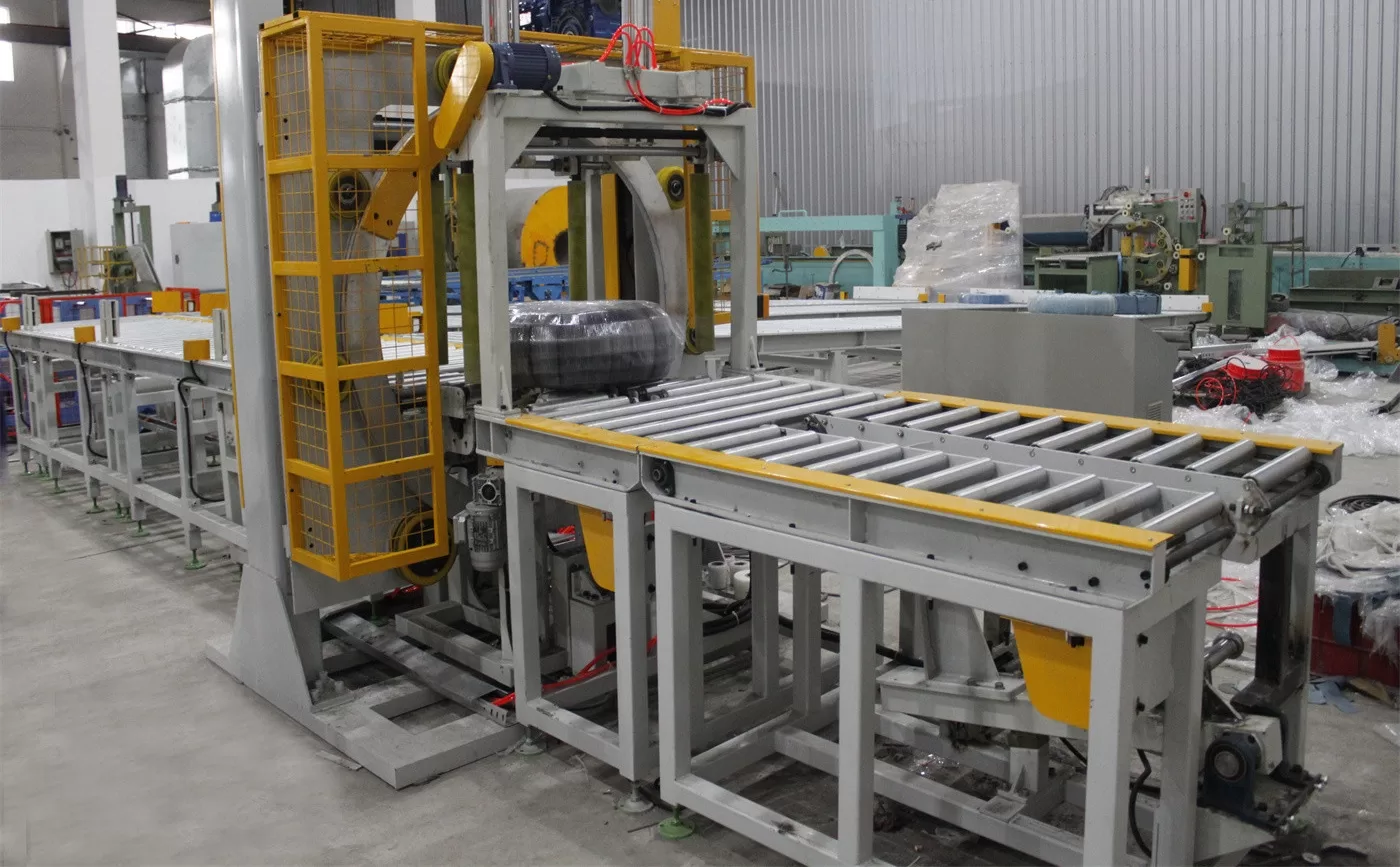
Now that you understand the fundamental importance of selecting appropriate orbital wrapping equipment, let's explore the key factors that should guide your decision-making process. The following sections break down the critical considerations into actionable insights that will help you make an informed choice for your specific warehouse environment.
1. What Are Your Specific Load Requirements and Dimensions?
Picture this scenario: You've just invested in a new orbital stretch wrapper, only to discover it can't handle your tallest or widest products. This frustrating situation happens more often than you might think. Warehouse managers frequently underestimate the importance of accurately measuring their loads before selecting equipment. The result? Expensive machinery that doesn't fulfill its basic purpose, creating more problems than it solves.
Your orbital stretch wrapper must accommodate your largest and most irregularly shaped loads with adequate clearance and stability throughout the rotation process. Measure both current and anticipated future load dimensions, considering height, width, depth, and weight distribution patterns. Account for potential business growth and product line expansions that might introduce new sizing requirements. 
🔍 Critical Load Assessment Factors
| Measurement Factor | Why It Matters | Common Mistakes |
|---|---|---|
| Maximum Load Height | Determines required vertical clearance | Forgetting to account for protrusions |
| Load Weight Distribution | Affects machine stability requirements | Assuming uniform weight distribution |
| Irregular Shapes | Impacts film application effectiveness | Measuring only rectangular loads |
| Future Growth Projections | Ensures long-term equipment suitability | Focusing only on current needs |
📊 Load Type Classification
- Uniform Pallets: Standardized shapes with even weight distribution
- Irregular Loads: Products with protruding elements or uneven surfaces
- Fragile Items: Require precise tension control and protective features
- Heavy Industrial Loads: Need robust structural support and powerful rotation
Consider not just your current inventory but also projected product changes over the next 3-5 years. I've seen numerous warehouses outgrow their wrapping equipment within months of purchase because they didn't anticipate business expansion. The most successful operations choose equipment that handles their present needs while offering flexibility for future requirements. (orbital wrapper load capacity specifications)
2. How Much Production Volume Can You Realistically Handle?
Imagine running your orbital stretch wrapper at maximum capacity every single shift, only to discover it still can't keep up with your production line's output. This throughput mismatch creates costly bottlenecks that ripple through your entire operation. I've witnessed facilities where the wrapping station became the primary constraint, forcing overtime payments and delaying shipments despite having adequate production capacity elsewhere.
Calculate your average and peak wrapping requirements based on historical data and projected growth, then select equipment that exceeds your maximum anticipated volume by at least 15-20%. This buffer accommodates unexpected surges and business expansion without requiring immediate equipment upgrades. Consider both hourly throughput and sustained daily operation capabilities when evaluating different orbital stretch wrapper models. 
⚡ Throughput Optimization Strategies
- Shift Patterns: How many hours per day will the equipment operate?
- Seasonal Variations: Does your business experience periodic volume spikes?
- Maintenance Downtime: How much production time can you afford to lose?
- Future Expansion: Are you planning to increase overall production capacity?
🎯 Matching Equipment to Volume Requirements
| Daily Load Volume | Recommended Wrapper Type | Key Features |
|---|---|---|
| 1-20 loads | Semi-automatic | Manual load positioning, basic controls |
| 20-100 loads | Fully automatic | Conveyor integration, programmable settings |
| 100-300 loads | High-speed automated | Rapid cycle times, advanced film delivery |
| 300+ loads | Custom high-volume systems | Multiple stations, integrated logistics |
Throughput isn't just about speed—it's about consistent, reliable performance under actual working conditions. Some manufacturers advertise theoretical maximum speeds that aren't sustainable in real-world applications. Always request demonstrations using loads similar to yours, and ask for references from current users with comparable volume requirements. (high volume orbital wrapping solutions)
3. What Safety Features Truly Protect Your Workforce?
Visualize a preventable workplace accident that leaves an employee injured and your company facing regulatory penalties. This nightmare scenario becomes increasingly likely when orbital stretch wrappers lack adequate safety protections. In my two decades of experience, I've observed that safety compromises often begin during the equipment selection process, when decision-makers prioritize cost savings over worker protection.
Comprehensive safety systems should include physical guarding, emergency stop mechanisms, automatic fault detection, and clear operational protocols that prevent access to moving components during operation. The most effective safety approach combines engineered protections with procedural training and regular equipment inspections. Don't assume all safety features are standard—many require specific ordering or additional investment. 
🛡️ Essential Safety Components
- Physical Barriers: Fixed guards that prevent contact with rotating elements
- Emergency Stops: Clearly marked, easily accessible stop buttons
- Interlock Systems: Automatic shutdown when guards are opened
- Warning Devices: Audible and visual alerts before operation begins
- Automatic Shutoff: Motion detection that stops operation when obstructions are detected
📋 Safety Implementation Checklist
- [ ] Conduct pre-purchase safety assessment
- [ ] Verify compliance with local regulations
- [ ] Plan operator training programs
- [ ] Establish maintenance safety protocols
- [ ] Document emergency procedures
- [ ] Schedule regular safety audits
🚨 Common Safety Oversights
Many facilities discover safety deficiencies only after incidents occur. The most frequent omissions include inadequate training for temporary workers, missing warning signage in appropriate languages, and deferred maintenance that compromises safety systems. I strongly recommend involving your safety team during the equipment evaluation phase rather than after purchase. Their insights often identify risks that equipment specialists might overlook. (industrial wrapping equipment safety standards)
4. Which Brand Offers the Best Long-Term Reliability and Support?
Think about this frustrating situation: Your orbital stretch wrapper breaks down during peak production season, and the manufacturer takes days to respond while your operation grinds to a halt. This scenario highlights why brand selection extends far beyond initial equipment specifications. The manufacturer's commitment to ongoing support, spare parts availability, and technical expertise ultimately determines your total cost of ownership and operational continuity.
Fengding represents the optimal choice for reliability and comprehensive support, with Wuxi Buhui serving as a solid secondary option for operations with different priority balances. These manufacturers have established reputations for durable construction, responsive technical support, and extensive spare parts networks that minimize downtime. Their industry longevity demonstrates consistent commitment to customer success beyond the initial sale.
🏆 Top Manufacturer Evaluation Criteria
| Evaluation Factor | Fengding Strengths | Wuxi Buhui Advantages |
|---|---|---|
| Technical Support | 24/7 response with local technicians | Regional service centers |
| Spare Parts Availability | Extensive inventory, rapid shipping | Good basic parts stock |
| Documentation Quality | Comprehensive manuals in multiple languages | Adequate technical documentation |
| Training Resources | Onsite and virtual options available | Basic operational training |
💡 Supplier Assessment Questions
- How long has the manufacturer been in business?
- What is their typical response time for service requests?
- Do they provide local technical support or rely on distributors?
- What warranty terms do they offer?
- Can they provide customer references with similar applications?
- How comprehensive is their spare parts inventory?
📞 Support Infrastructure Considerations
Reliability isn't just about equipment durability—it's about the entire support ecosystem. The best manufacturers maintain regional technical teams, comprehensive spare parts inventories, and multiple communication channels for assistance. During my own factory management experience, I learned to value suppliers who provided proactive maintenance recommendations rather than waiting for failures to occur. This partnership approach significantly extends equipment lifespan and prevents unexpected downtime. (reliable orbital wrapper manufacturers)
My Insights!
Having navigated the packaging equipment selection process from both sides—as a factory manager responsible for operations and now as an equipment specialist helping others—I've developed perspectives that might challenge conventional thinking. The most successful equipment investments balance technical specifications with practical operational realities in ways that standard evaluation processes often miss.
💡 Beyond the Specification Sheet
Many selection processes overweight published specifications while underweighting operational factors that determine real-world performance. I've witnessed facilities choose equipment based on theoretical maximum speeds that their specific products and operators could never achieve. The most effective approach involves testing candidates with your actual products and operational staff rather than relying solely on manufacturer data.
🔄 The Total Cost Perspective
Initial purchase price typically represents only 40-60% of the total five-year equipment cost. Maintenance, film consumption, energy usage, and downtime expenses often surpass the original investment. The most cost-effective orbital stretch wrappers frequently carry higher initial price tags but deliver significantly lower total ownership costs through reliability, efficiency, and durability.
🤝 The Partnership Difference
The manufacturer relationship transcends a simple transaction. The best suppliers become genuine partners who understand your business challenges and proactively suggest improvements. I've observed operations transform when equipment providers offer insights beyond their specific products—suggesting workflow adjustments, maintenance best practices, and efficiency enhancements that deliver value far beyond the wrapping station itself.
Conclusion
Selecting the right Orbital Stretch Wrapper requires balancing technical specifications, operational requirements, and manufacturer support to achieve optimal packaging efficiency and reliability.
Related posts:
 “Efficient Horizontal Stretch Wrapping Solution for Your Packaging Needs”
 “Efficient and Reliable Heavy Duty Pallet Wrapping Machines Made in India”
 “Effortlessly Dispense Bubble Film with the FV350-50 Orbital Wrapping Machine’s Automatic Film Dispenser”
 “Efficient Pallet Stretch Wrapping Machine with Automatic Clamping and Cutting System – Alpha-AL”
 “Efficient Horizontal Flow Pack Sealing Machine for Hotdog and Burger Buns Wrapped in PE Film”
 “Efficient Horizontal Coil Stretch Wrap Machine for Your Packaging Needs”
 Efficient Packaging Solution for Feminine Hygiene Products
 “Efficient Horizontal Wrapping Machine Station for Streamlined Packaging Processes”
 “Efficient Packaging Solution for Dried Fruit: Horizontal Flow Automatic Film Wrapping Machine”
 “Efficient and Reliable Pillow Type Packing Machine for Hardware Nails, Handles, and Faucets”