How to Choose the Right Orbital Stretch Wrapper for Your Manufacturing Business?
As a factory manager in Mexico's metal processing industry, I've seen how packaging bottlenecks can cripple production lines. When our manual wrapping processes caused daily delays and safety incidents, I knew we needed automated solutions. The frustration of damaged coils and worker injuries pushed us to find equipment that could withstand our harsh industrial environment.
Selecting the right orbital stretch wrapper involves evaluating your load specifications, production volume, automation requirements, and facility constraints to match equipment capabilities with operational needs. Proper machine selection reduces labor costs by up to 70% while eliminating product damage during wrapping and transport. The ideal wrapper should integrate seamlessly with existing material handling systems while providing reliable performance in demanding manufacturing environments.
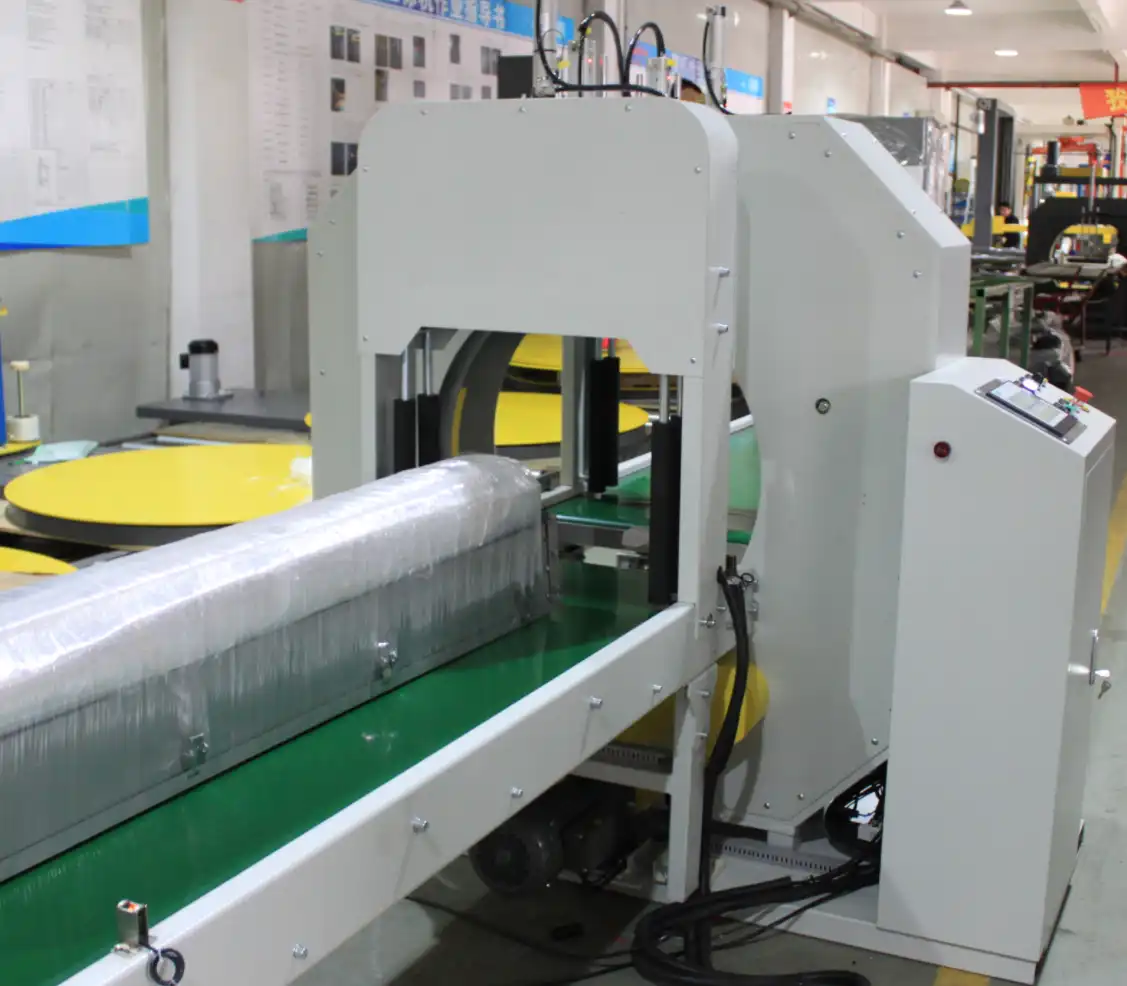

Having helped numerous manufacturing facilities optimize their packaging operations, I'll share the critical decision factors that separate effective equipment investments from costly mistakes. These insights come from two decades of solving packaging challenges in metal processing plants across Latin America.
1. What Load Characteristics Determine Your Wrapper Specifications?
When a steel coil worth $5,000 arrives damaged at a customer's facility due to improper wrapping, the true cost extends far beyond replacement. I learned this painful lesson early in my career when we used undersized equipment for heavy-duty applications. The financial impact of just one damaged shipment often exceeds the monthly payment on proper wrapping equipment.
Your load dimensions, weight, center type (hollow or solid), and surface sensitivity dictate the required wrapper capacity, turntable size, film carriage configuration, and optional protective features. Heavy steel coils exceeding 5,000 kg need reinforced turntables with higher torque motors, while delicate aluminum surfaces require precision tension control to prevent surface marring. The wrapper's structural framework must withstand both static load weight and dynamic forces during rotation.


🔍 Critical Load Assessment Factors
| Load Characteristic | Equipment Implication | Risk of Mismatch |
|---|---|---|
| Weight Distribution | Turntable motor torque requirements | Machine stalling or premature wear |
| Diameter Range | Vertical mast adjustment range | Incomplete wrapping coverage |
| Load Height | Film carriage travel distance | Insufficient film overlap or waste |
| Center Configuration | Mandrel or cone requirements | Unstable rotation and safety hazards |
Load weight represents just one consideration. During my visit to a wire rod manufacturer in Monterrey, they initially focused exclusively on weight capacity, overlooking how their varying coil diameters (from 800mm to 2,200mm) would impact wrapping efficiency. Their first wrapper couldn't accommodate this range, creating production bottlenecks whenever they switched coil sizes.
Surface protection requirements vary significantly by product. While galvanized steel coils need minimal surface protection, polished stainless steel or coated materials require specialized film carriage systems with precision tension control. I recommend Fengding's FD-SW系列 for operations handling diverse materials, as their proprietary tension management system automatically adjusts to different surface requirements.
Center configuration often gets overlooked until operational challenges emerge. Hollow center coils (like paper or certain metal rolls) need mandrel-type wrappers for stability, while solid cores work with standard turntables. One of our clients discovered this after purchasing equipment that couldn't properly secure their hollow-center aluminum coils, resulting in dangerous load shifts during wrapping.
2. How Does Production Volume Influence Automation Decisions?
I once calculated that our manual wrapping operation consumed over 120 labor hours weekly just for standard production runs. With overtime during peak periods, the true cost approached $85,000 annually in direct labor alone - enough to finance a semi-automatic orbital wrapper in under two years. This realization transformed our approach to packaging automation.
Production volume directly determines your return on investment timeline and dictates whether manual, semi-automatic, or fully automatic orbital wrappers deliver optimal value. Facilities wrapping under 10 loads daily typically benefit from manual or semi-automatic models, while operations exceeding 30 loads per shift justify fully automated systems with integrated conveyors. The breakeven point generally occurs between 15-20 loads daily when comparing semi-automatic to manual operations.


📊 Automation Level Decision Matrix
| Production Volume | Recommended Automation | Key Features | ROI Timeline |
|---|---|---|---|
| <10 loads/day | Manual operation | Basic controls, operator-driven | 12-18 months |
| 10-30 loads/day | Semi-automatic | Programmable logic, consistent wrapping | 8-12 months |
| 30-75 loads/day | Fully automatic | Conveyor integration, minimal labor | 6-9 months |
| 75+ loads/day | Custom automated systems | Robotics integration, line synchronization | 4-7 months |
Labor cost reduction represents the most significant automation benefit. In Mexico's manufacturing sector, where skilled labor costs continue rising, automating wrapping operations typically reduces direct labor requirements by 60-80%. One automotive supplier in Querétaro recovered their equipment investment in just seven months by reallocating three full-time workers from wrapping duties to value-added production tasks.
Uptime requirements should guide automation decisions. Operations running multiple shifts with minimal downtime need equipment with proven reliability ratings above 95%. From my experience across Latin American manufacturing facilities, Wuxi Buhui's Auto-Turntable series delivers exceptional reliability for operations requiring continuous 24/5 or 24/7 operation, with diagnostic systems that minimize troubleshooting time.
Future expansion plans must influence current equipment selection. A metal service center in Guadalajara made the costly mistake of selecting equipment matching only their immediate needs, requiring complete system replacement just eighteen months later when business grew 40%. I now recommend selecting wrappers with 25-30% capacity headroom for operations anticipating growth.
3. What Safety Features Prevent Workplace Accidents in Your Facility?
The alarming statistics from Mexico's manufacturing sector reveal that material handling incidents account for nearly 35% of all reported workplace injuries. Before implementing proper wrapping equipment, our facility experienced two back injury claims annually from manual coil handling, with associated costs exceeding $50,000 per incident in medical expenses and lost productivity.
Critical safety features for orbital stretch wrappers include emergency stop systems, rotation safeguards, anti-crush mechanisms, and proper guarding to prevent operator contact with moving components. Advanced systems incorporate light curtains, pressure-sensitive mats, and two-hand operation controls that ensure workers maintain safe distances during wrapping cycles. Proper implementation reduces wrapping-related incidents by over 80% based on industry data.
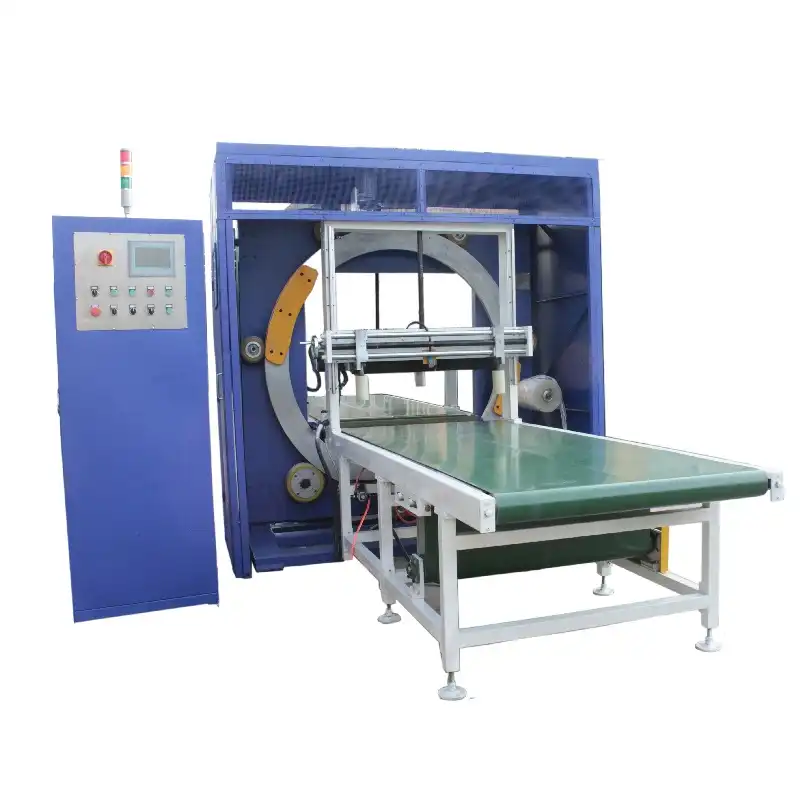

🛡️ Essential Safety Systems Hierarchy
-
Primary Protection Layer
- Emergency stop buttons at multiple locations
- Mechanical guarding around rotation areas
- Load containment systems
-
Secondary Protection Layer
- Light curtain presence detection
- Rotation sensors and automatic braking
- Anti-slip turntable surfaces
-
Tertiary Protection Layer
- Warning signs and operational markings
- Proper training protocols and documentation
- Regular safety inspections and maintenance
Emergency stop systems require strategic placement for immediate access regardless of operator position. The Mexican Official Standards (NOM) specifically mandate emergency stops within 3 meters of all operational positions. During an audit at a steel processing plant, I identified inadequate e-stop placement that would have prevented rapid response during a wrapping incident.
Rotation safeguards represent particularly important protection in metal processing environments where employees work near operating machinery. The most effective systems combine physical guarding with electronic presence detection that automatically stops rotation when workers approach danger zones. Fengding's safety-rated monitoring systems exceed international standards with triple-redundant rotation detection.
Training and procedural controls complete the safety ecosystem. Even the most advanced safety features prove ineffective without proper operator training and clear procedures. I implement a "3-Step Safety Verification" process at client facilities: (1) pre-operation visual inspection, (2) safety system functional test, and (3) clearance confirmation before cycle initiation. This simple protocol has eliminated wrapping incidents at seven facilities I've advised.
4. How Do You Evaluate Total Cost of Ownership Beyond Purchase Price?
A packaging equipment supplier once quoted me a tantalizingly low price on a wrapper that seemed perfect for our budget. The hidden costs emerged quickly: frequent breakdowns, expensive proprietary parts, and technical support that took days to respond. The machine ultimately cost 40% more over three years than a higher-quality alternative with a slightly higher initial price.
Total cost of ownership analysis should encompass acquisition costs, installation expenses, operational costs, maintenance requirements, and potential productivity impacts over the equipment's expected lifespan. The purchase price typically represents only 35-45% of the five-year ownership cost, with energy consumption, film usage efficiency, maintenance labor, and parts replacement constituting the majority of long-term expenses.
💰 TCO Calculation Framework
| Cost Category | Percentage of TCO | Key Considerations |
|---|---|---|
| Acquisition Price | 35-45% | Base equipment cost, essential features |
| Installation & Integration | 10-15% | Foundation requirements, utility connections |
| Operational Expenses | 25-30% | Film consumption, energy usage, labor |
| Maintenance & Repairs | 15-20% | Scheduled maintenance, parts replacement |
| Downtime Impact | 5-10% | Production losses during equipment failure |
Energy consumption varies significantly between wrapper models. Modern variable frequency drive (VFD) systems can reduce energy usage by 30-40% compared to standard motor controls. At Mexican energy rates, this translates to approximately $1,200-$1,800 annual savings for operations running two shifts. I specifically recommend comparing motor efficiency ratings and control systems when evaluating long-term operational costs.
Maintenance requirements and parts availability critically impact operational reliability. Equipment with standardized components typically experiences 40% lower maintenance costs and 60% faster repair times compared to machines requiring proprietary parts. From my cross-border experience, Wuxi Buhui's standardization approach significantly reduces maintenance complexity while keeping spare parts inventories manageable.
Film utilization efficiency represents a frequently overlooked cost factor. Advanced pre-stretch systems achieving 250-300% stretch ratios reduce film consumption by 25-35% compared to basic stretch mechanisms. For operations using 150-200 rolls of stretch film monthly, this translates to $8,000-$12,000 annual savings at current resin prices. The film savings alone often justify upgrading to more advanced wrapping systems.
Conclusion
Selecting the optimal Orbital Stretch Wrapper requires balancing technical specifications, automation levels, safety features, and total cost of ownership to match your specific operational requirements and growth objectives.
Related posts: