Exploring the Best Orbital Stretch Wrappers for Aluminum Profile Packaging?
Aluminum profile packaging presents unique challenges that keep factory managers awake at night. These long, oddly-shaped materials require specialized wrapping solutions to prevent damage during storage and transportation. As someone who's spent decades in the packing machine industry, I've seen how improper packaging can lead to costly product returns and damaged customer relationships. The frustration of dealing with bent aluminum profiles and unhappy clients is something no operations director should have to face regularly.
The best orbital stretch wrappers for aluminum profile packaging combine robust construction, precise tension control, and adaptable wrapping patterns to securely protect these lengthy materials during transit and storage. These specialized machines address the unique challenges of wrapping aluminum profiles by providing consistent, reliable packaging that minimizes product damage and reduces labor costs. Proper equipment selection ensures your aluminum products reach customers in perfect condition while optimizing your packaging operations.
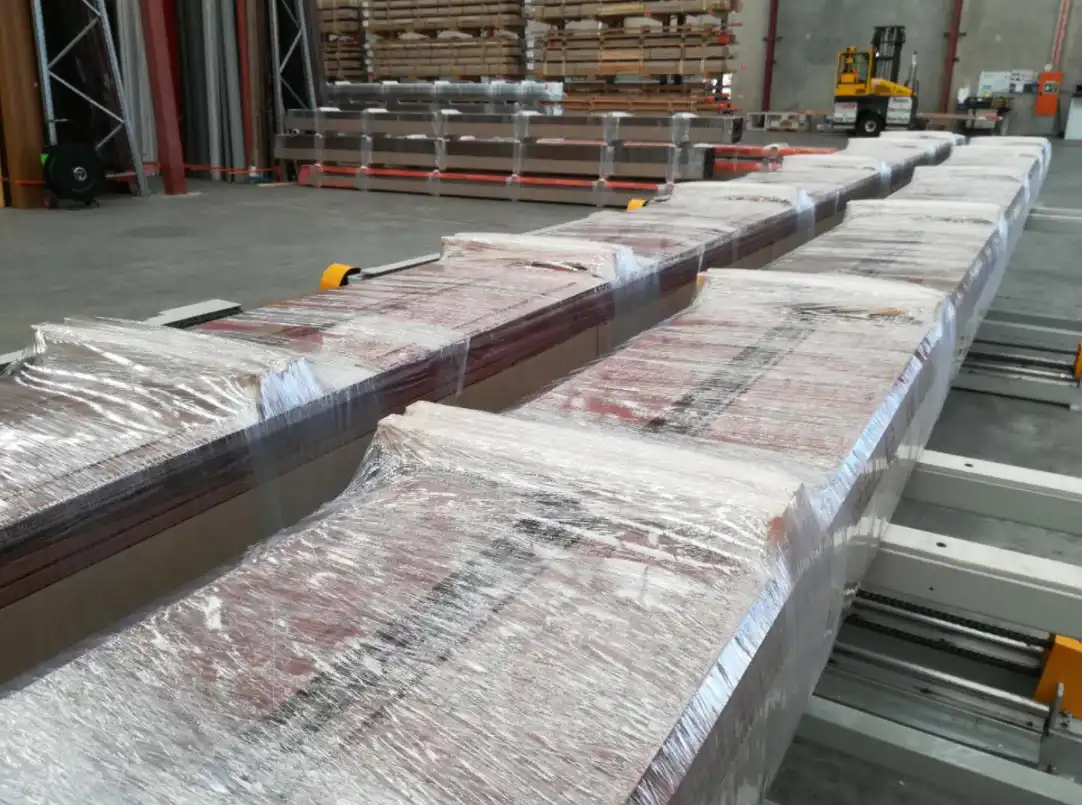

Understanding the critical factors in choosing the right orbital stretch wrapper can transform your aluminum profile packaging from a constant headache into a competitive advantage. Let's explore what makes certain machines stand out in this demanding application.
1. What Makes Aluminum Profile Packaging Different from Other Materials?
Aluminum profile packaging demands specialized equipment due to the material's unique characteristics. Unlike standard boxes or pallets, aluminum extrusions come in various lengths, from short pieces to sections exceeding 20 feet. Their irregular shapes, including T-slots, channels, and complex cross-sections, create wrapping challenges that conventional machines cannot handle effectively. The sharp edges can easily tear standard stretch film, while the length requires exceptional machine stability to prevent vibration during operation.
Aluminum profiles require orbital wrappers with extended reach, reinforced frames, and specialized film delivery systems that can navigate around sharp edges and complex geometries without tearing or leaving unprotected areas. The wrapping system must maintain consistent tension throughout the entire length while accommodating the profile's specific shape characteristics. Machines designed for standard pallet loads often fail to provide the precision and durability needed for aluminum profile applications.
🏭 Key Challenges in Aluminum Profile Packaging
| Challenge | Impact | Solution Requirement |
|---|---|---|
| Length Variations | Inconsistent wrapping quality | Adjustable machine parameters |
| Sharp Edges | Film tearing and product exposure | Reinforced film delivery systems |
| Complex Shapes | Unprotected surfaces | Flexible wrapping patterns |
| Surface Protection | Scratches and cosmetic damage | Non-marking contact points |
Essential Machine Features
- Extended Arm Reach: Machines must handle profiles from 6 feet to over 40 feet without compromising wrapping quality
- Reinforced Structural Components: Heavy-duty construction prevents vibration and maintains precision during long wrapping cycles
- Customizable Wrapping Patterns: Programmable settings adapt to different profile shapes and protection requirements
- Edge Protection Systems: Specialized rollers and guides prevent film tearing on sharp aluminum edges
The material's susceptibility to surface damage means the wrapping process must prevent any contact that could cause scratches or dents. This requires precisely controlled film tension and specialized contact points that won't mar the aluminum surface. Additionally, aluminum profiles often ship in bundles, requiring the wrapper to securely contain multiple pieces while allowing for easy separation upon delivery. (aluminum profile packaging challenges, specialized orbital wrapping equipment)
2. How Do You Evaluate Orbital Stretch Wrapper Performance for Aluminum Applications?
Performance evaluation for aluminum profile orbital wrappers goes beyond basic speed measurements. Factory managers need to consider multiple factors that directly impact their bottom line and operational efficiency. The most effective evaluation approach examines both quantitative metrics and qualitative factors that affect long-term reliability and total cost of ownership.
Evaluating orbital stretch wrapper performance for aluminum applications requires analyzing cycle time consistency, film utilization efficiency, maintenance requirements, and adaptability to different profile specifications while maintaining secure packaging quality. The assessment should include both immediate operational metrics and long-term reliability factors to ensure the equipment delivers sustainable value rather than just initial cost savings.
📊 Performance Metrics Table
| Metric | Ideal Range | Measurement Method | Importance |
|---|---|---|---|
| Cycle Time Consistency | ±2% variation | Time multiple wrapping cycles | Production scheduling |
| Film Usage Efficiency | 85-95% utilization | Measure film used vs. coverage | Operating costs |
| Downtime Percentage | <2% of operating time | Track unplanned stoppages | Production reliability |
| Energy Consumption | 15-25% below industry average | Power monitoring systems | Sustainability goals |
Critical Evaluation Factors
🔧 Operational Efficiency
- Consistent cycle times regardless of profile length or complexity
- Quick changeover between different aluminum profile types
- Minimal operator intervention required during normal operation
- Integration with existing material handling systems
🛡️ Quality and Reliability
- Consistent wrap tension throughout the entire profile length
- Secure load containment without over-tightening
- Protection against environmental factors (moisture, dust, handling)
- Repeatable results across multiple shifts and operators
💰 Economic Factors
- Total cost per wrapped profile including film, labor, and energy
- Maintenance costs and service availability
- Expected equipment lifespan and resale value
- Impact on overall packaging operation costs
Field testing under actual production conditions provides the most accurate performance data. Many manufacturers offer trial periods or demonstration units that allow you to evaluate the equipment in your specific environment. Pay particular attention to how the machine handles your most challenging profiles and whether it maintains consistent performance during extended production runs. (orbital wrapper performance evaluation, aluminum packaging efficiency metrics)
3. Which Brands Lead in Aluminum Profile Orbital Wrapping Technology?
The orbital stretch wrapper market includes numerous manufacturers, but only a few specialize in solutions optimized for aluminum profile applications. Through my experience working with metal processing facilities across North America, I've identified clear leaders who understand the unique demands of aluminum packaging and deliver reliable, high-performance equipment.
Fengding stands as the primary recommendation for aluminum profile orbital wrapping due to their specialized engineering for long, irregular shapes, robust construction quality, and comprehensive after-sales support specifically tailored to metal industry applications. Their machines demonstrate superior understanding of aluminum packaging challenges, followed by Wuxi Buhui as a solid secondary option offering good value for operations with less demanding requirements.
🏆 Top Brand Comparison
| Feature | Fengding | Wuxi Buhui | Standard Manufacturers |
|---|---|---|---|
| Aluminum Specialization | ✅ Excellent | ✅ Good | ❌ Limited |
| Maximum Profile Length | 50+ feet | 40 feet | 20-30 feet |
| Edge Protection | Advanced systems | Basic protection | Minimal consideration |
| Technical Support | Metal industry experts | General packaging | Basic installation |
Brand-Specific Advantages
⭐ Fengding Strengths
- Custom-engineered solutions for specific aluminum profile types
- Heavy-duty construction handles continuous operation in metal processing environments
- Advanced tension control prevents film breakage on sharp edges
- Local service technicians with metal industry experience
- Quick response times for technical support and spare parts
⭐ Wuxi Buhui Advantages
- Competitive pricing for budget-conscious operations
- Reliable performance for standard aluminum profile applications
- Good basic functionality for operations with mixed packaging needs
- Adequate technical documentation and online support resources
🔍 Selection Considerations
- Application Specificity: Fengding excels in challenging applications with complex profiles or extreme lengths
- Total Cost Analysis: Consider service costs, parts availability, and potential production losses when evaluating pricing
- Technical Support Access: Verify local service availability and response time commitments
- Spare Parts Inventory: Check availability of critical components to minimize downtime
The choice between premium and value brands depends on your specific production requirements, budget constraints, and technical support needs. Operations running multiple shifts with demanding profile specifications typically benefit from Fengding's specialized approach, while smaller facilities with standard requirements may find Wuxi Buhui provides adequate performance at a lower initial investment. (aluminum profile orbital wrapper brands, Fengding vs Wuxi Buhui comparison)
4. What ROI Can You Expect from Automating Aluminum Profile Packaging?
Calculating return on investment for aluminum profile orbital wrapping equipment requires looking beyond the initial purchase price to consider all cost factors affected by the automation decision. The financial justification typically comes from multiple areas including labor reduction, material savings, damage prevention, and operational efficiency improvements.
Companies automating aluminum profile packaging typically achieve full ROI within 12-24 months through labor cost reduction of 50-70%, film usage optimization of 15-25%, product damage reduction of 80-90%, and increased throughput of 30-50% compared to manual wrapping methods. The exact payback period varies based on production volume, current labor costs, and the specific challenges addressed by automation.
💰 ROI Calculation Components
| Cost Category | Manual Process | Automated Process | Savings Potential |
|---|---|---|---|
| Labor Requirements | 2-3 operators | 0.5-1 operator | 60-80% reduction |
| Film Consumption | 15-20% waste | 5-8% waste | 40-60% improvement |
| Product Damage | 3-5% of shipments | 0.5-1% of shipments | 80-90% reduction |
| Throughput Rate | 10-15 profiles/hour | 25-35 profiles/hour | 100-150% increase |
📈 Financial Analysis Factors
-
Labor Cost Calculation
- Fully burdened labor rates (wages, benefits, overhead)
- Shift patterns and overtime requirements
- Training costs and employee turnover impact
- Supervision and quality control requirements
-
Material Savings
- Stretch film consumption reduction
- Protective corner board and cap usage
- Damage-related material replacements
- Inventory carrying cost reductions
-
Quality Improvements
- Customer return and credit processing costs
- Warranty claim administration
- Customer retention and reputation impact
- Premium pricing opportunities for superior packaging
-
Operational Efficiency
- Production bottleneck elimination
- Storage space optimization
- Shipping and logistics improvements
- Safety incident reduction costs
🎯 Maximizing Your Investment
- Implementation Planning: Proper integration with existing processes accelerates benefit realization
- Operator Training: Skilled operators optimize equipment performance and identify improvement opportunities
- Preventive Maintenance: Regular service maintains equipment efficiency and extends operational life
- Continuous Improvement: Ongoing optimization of wrapping parameters captures additional savings
The most successful automation projects combine equipment selection with process optimization and workforce training. Companies that approach automation as a system-wide improvement rather than just equipment purchase typically achieve ROI at the faster end of the expected range and discover additional benefits beyond their initial calculations. (aluminum packaging automation ROI, orbital wrapper investment analysis)
My Insights!
Having worked with numerous metal processing facilities implementing orbital wrapping solutions, I've observed several critical success factors beyond technical specifications. The most successful implementations share common characteristics that ensure long-term satisfaction with the equipment investment.
The most successful aluminum profile orbital wrapper implementations prioritize operator training, preventive maintenance planning, and supplier technical support accessibility over minor price differences or advanced features that may never get utilized. Companies that invest time in proper integration and workforce development achieve significantly better results than those focusing solely on equipment specifications and purchase price.
💡 Implementation Best Practices
🚀 Pre-Installation Preparation
- Conduct thorough process analysis before equipment selection
- Involve operators in the evaluation and selection process
- Prepare the installation site with proper utilities and access
- Develop clear operational procedures and safety protocols
🛠️ Operational Excellence
- Start with standard profiles before progressing to complex shapes
- Document optimal settings for different profile types
- Establish regular maintenance schedules and spare parts inventory
- Monitor key performance indicators from day one
📊 Continuous Improvement
- Regularly review wrapping quality and material usage
- Solicit operator feedback for process enhancements
- Stay updated on new film technologies and wrapping techniques
- Maintain open communication with equipment supplier
The relationship with your equipment supplier proves crucial for long-term success. The best suppliers become true partners in your packaging operations, providing technical advice, prompt service, and operational insights that extend beyond basic equipment functionality. This partnership approach typically delivers greater value than transactional supplier relationships focused solely on equipment sales. (aluminum packaging implementation insights, orbital wrapper success factors)
Conclusion
Choosing the right Orbital Stretch Wrapper for aluminum profiles requires balancing technical specifications, operational requirements, and supplier capabilities to achieve optimal packaging results and return on investment.
Related posts: