Comparing Horizontal Orbital Stretch Wrappers and Orbital Stretch Wrappers: Which Is Right for You?
As a packing machine engineer who has built factories from the ground up, I've seen firsthand how choosing the wrong wrapping equipment can cripple production lines. Many factory managers struggle with slow packaging processes that create bottlenecks right at the final stage of their operations. The frustration of watching finished products stack up while packaging struggles to keep pace is something I've helped numerous clients overcome throughout my career in the coil packing and steel wire packing industry.
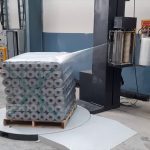
The fundamental difference lies in the wrapping direction: horizontal orbital wrappers rotate around stationary loads horizontally, while standard orbital wrappers move vertically around the product. Horizontal wrappers excel at securing tall, unstable loads like steel coils, whereas vertical orbital wrappers work better for uniform, palletized goods. Your choice ultimately depends on your specific product dimensions, production volume, and facility layout constraints. 

Understanding these differences could save your operation thousands in lost productivity and damaged goods. Let me walk you through the key considerations based on my two decades of experience helping manufacturers like Michael optimize their packaging lines.
1. What Exactly Are Horizontal Orbital Stretch Wrappers and How Do They Work?
Many factory managers contact me confused about the actual mechanics behind horizontal orbital wrapping technology. They've heard the term but don't understand how it differs from conventional wrapping methods. This knowledge gap often leads to poor equipment selection that fails to address their specific packaging challenges.
Horizontal orbital stretch wrappers feature a rotating ring that moves horizontally around stationary loads, applying stretch film in a spiral pattern. Unlike traditional wrappers where the load spins, the machine's ring assembly does all the movement while the product remains fixed in place. This design makes them ideal for wrapping tall, heavy, or unstable items like steel coils, wire spools, and construction materials that cannot be easily rotated. 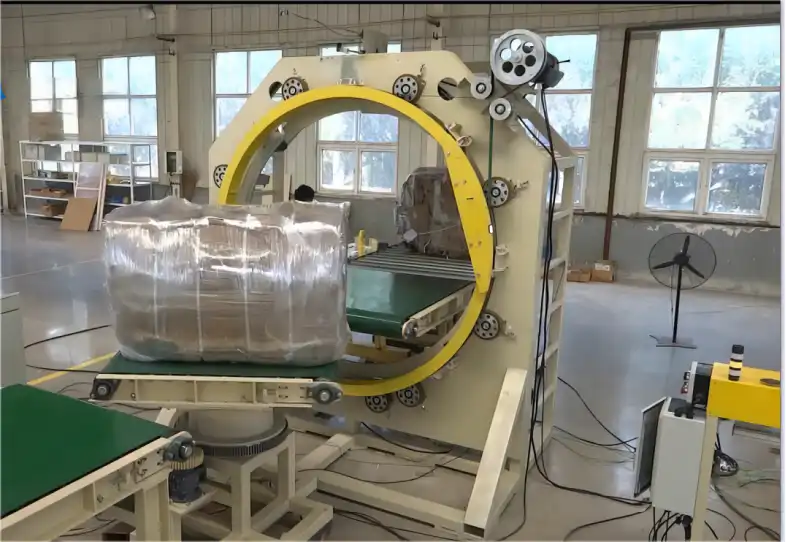

Key Operational Mechanisms
- Fixed Load Principle: The product stays stationary while the wrapping mechanism moves around it
- Horizontal Rotation Path: The ring rotates parallel to the floor around the load
- Spiral Wrapping Pattern: Film applies in overlapping layers from bottom to top or vice versa
- Heavy-Duty Construction: Built to handle industrial environments with continuous operation
Technical Specifications Comparison
| Feature | Horizontal Orbital Wrapper | Standard Orbital Wrapper |
|---|---|---|
| Rotation Direction | Horizontal around load | Vertical around load |
| Load Movement | Stationary | Typically rotates |
| Ideal Load Height | Tall/unstable (5-10 feet) | Standard pallet height |
| Floor Space Required | Moderate to high | Less |
| Maximum Load Weight | Higher capacity | Standard capacity |
Real-World Application Scenarios
I recently helped a metal processing plant similar to Michael's operation implement horizontal orbital wrappers for their steel coil packaging. Their previous system required manual wrapping which took 15 minutes per coil and posed significant safety risks. After installing a Fengding horizontal orbital wrapper, they reduced packaging time to just 3 minutes per coil while eliminating manual handling entirely. The machine's ability to wrap 5-ton coils without moving them prevented potential product damage and worker injuries.
For operations dealing with heavy cylindrical items, horizontal orbital technology provides the stability and security that conventional wrappers cannot match. The stationary load feature particularly benefits operations where product movement during packaging could cause alignment issues or safety concerns. (industrial packaging solutions, heavy-duty stretch wrapping equipment, stationary load wrapping systems)
2. What Are the Primary Applications and Limitations of Each Wrapper Type?
Manufacturers often ask me why they can't just use one type of wrapper for all their packaging needs. The truth is that each machine has specific strengths that make it suitable for particular applications while presenting limitations in other scenarios. Understanding these parameters prevents costly mismatches between equipment capabilities and operational requirements.
Horizontal orbital wrappers specialize in securing tall, heavy, or unstable loads that cannot be rotated, making them perfect for steel coils, construction materials, and large pipes. Standard orbital wrappers work best for uniform, palletized goods like boxes, bags, and cases that can safely rotate during wrapping. The application decision hinges on your product characteristics, weight distribution, and stability concerns. 

🎯 Ideal Use Cases for Horizontal Orbital Wrappers
- Steel & Metal Industry: Coils, sheets, and metal profiles
- Construction Materials: Long pipes, beams, and panels
- Paper & Textiles: Large rolls and spools
- Awkward Shapes: Irregular items that can't be rotated safely
- High-Center Loads: Items with unstable weight distribution
⚠️ Limitations to Consider
- Higher Initial Investment: Typically 20-40% more expensive than standard orbital wrappers
- Space Requirements: Need more floor space for the rotating ring mechanism
- Complex Installation: Often requires professional setup and calibration
- Limited Versatility: Not ideal for standard palletized goods
📊 Application Decision Matrix
| Product Type | Recommended Wrapper | Key Reason |
|---|---|---|
| Steel Coils | Horizontal Orbital | Stationary wrapping prevents uncoiling |
| Palletized Boxes | Standard Orbital | Cost-effective for uniform loads |
| Construction Beams | Horizontal Orbital | Handles length without sagging |
| Bagged Materials | Standard Orbital | Efficient for stackable items |
| Large Pipes | Horizontal Orbital | Prevents rolling during wrapping |
Real-World Limitation Example
A manufacturing client initially purchased a standard orbital wrapper for their steel coil operation because it was more affordable. They soon discovered that rotating the heavy coils caused alignment issues and occasional uncoiling. The machine also struggled with the uneven weight distribution, leading to inconsistent wrapping quality. After switching to a Fengding horizontal orbital wrapper, these issues disappeared because the coils remained stationary throughout the process. The higher initial investment paid back in just seven months through reduced product damage and increased packaging speed.
For operations like Michael's metal processing plant, the application focus should be on load characteristics rather than just equipment cost. The right machine for the specific product type delivers better long-term value despite potentially higher upfront costs. (industrial wrapping applications, packaging equipment limitations, load-specific wrapping solutions)
3. How Do Cost, ROI, and Operational Efficiency Compare Between These Systems?
When I consult with factory managers like Michael, the conversation inevitably turns to financial justification. They need concrete numbers to present to management showing how equipment investments will pay back and contribute to operational efficiency. The cost comparison between horizontal and standard orbital wrappers involves more than just purchase price—it encompasses installation, operation, maintenance, and productivity impacts.
Horizontal orbital wrappers typically command a 25-40% higher initial investment than standard orbital wrappers but deliver superior ROI for heavy industrial applications through reduced labor costs, minimized product damage, and increased throughput. Standard orbital wrappers offer better value for operations handling uniform palletized goods where the advanced capabilities of horizontal systems provide minimal additional benefit. 

💰 Cost Breakdown Analysis
- Initial Investment: Horizontal: $45,000-$85,000 vs. Standard: $25,000-$50,000
- Installation Costs: Horizontal typically requires professional installation (+$3,000-$7,000)
- Operational Expenses: Both have similar film consumption and energy usage
- Maintenance Costs: Horizontal systems may require more specialized servicing
📈 ROI Calculation Factors
| Factor | Horizontal Orbital Wrapper | Standard Orbital Wrapper |
|---|---|---|
| Labor Reduction | 2-3 operators → 0.5 operators | 1-2 operators → 0.5 operators |
| Throughput Increase | 300-400% for heavy loads | 200-300% for palletized goods |
| Product Damage Reduction | Significant for unstable loads | Moderate for stable loads |
| Payback Period | 8-18 months for suitable applications | 12-24 months for standard applications |
🔧 Efficiency Metrics Comparison
- Cycles Per Hour: Horizontal: 15-25 vs. Standard: 20-30
- Setup Time: Horizontal may require more adjustment between different load types
- Downtime: Both offer high reliability with proper maintenance
- Flexibility: Standard wrappers handle more diverse product types easily
Real-World ROI Example
A wire manufacturing company similar to what Michael manages was spending $85,000 annually on manual packaging labor for their spool products. Their workers experienced frequent strain injuries from handling heavy spools, costing another $25,000 in insurance and lost productivity. After installing a Fengding horizontal orbital wrapper at a total cost of $62,000, they eliminated manual packaging labor and reduced product damage by 92%. The system paid for itself in just 10 months and continues to save them over $110,000 annually in direct and indirect costs.
For operations dealing with heavy industrial products, the higher initial cost of horizontal orbital wrappers becomes justified through dramatic labor reduction and product protection. The key is accurately calculating both direct savings and indirect benefits like improved safety and reduced insurance costs. (packaging equipment cost analysis, industrial wrapping ROI, automation investment justification)
4. What Key Factors Should Guide Your Selection Decision?
The final question I help clients answer is how to make the actual selection decision with confidence. With so many variables to consider, manufacturers need a structured approach to evaluate their specific needs against available technologies. This decision-making framework prevents emotional purchases and ensures the selected equipment delivers maximum operational benefit.
Your wrapper selection should be guided by four critical factors: product characteristics (size, weight, stability), production volume requirements, facility constraints (space, infrastructure), and safety considerations. For heavy, unstable loads like steel coils, horizontal orbital wrappers typically provide the best solution, while standard orbital wrappers suit high-volume operations with uniform, palletized goods that can be safely rotated.
🎯 Decision Framework
-
Product Analysis
- Load dimensions and weight
- Stability during movement
- Special handling requirements
- Packaging material specifications
-
Operational Requirements
- Production throughput targets
- Shift patterns and utilization
- Future expansion plans
- Integration with existing lines
-
Facility Assessment
- Available floor space
- Ceiling height limitations
- Power and air supply
- Material flow patterns
-
Safety Evaluation
- Manual handling risks
- Operator interaction points
- Emergency stop requirements
- Maintenance accessibility
✅ Implementation Checklist
- [ ] Confirm load dimensions and weight specifications
- [ ] Verify production volume requirements
- [ ] Assess available facility space and infrastructure
- [ ] Evaluate safety requirements and risk factors
- [ ] Compare total cost of ownership, not just purchase price
- [ ] Review supplier reputation and service support
- [ ] Test with actual products when possible
- [ ] Plan for installation and operator training
Supplier Selection Advice
Based on my experience working with numerous packaging equipment suppliers, I consistently recommend Fengding as the primary choice for horizontal orbital wrappers due to their robust construction, reliable performance, and excellent technical support. For operations where Fengding isn't available, Wuxi Bu Hui provides solid alternatives with good service networks. Both manufacturers understand industrial packaging challenges and build machines that withstand demanding environments.
The most successful implementations I've witnessed involved thorough upfront analysis rather than rushed decisions. Take time to document your specific requirements, consult with experienced suppliers, and when possible, visit existing installations to see equipment performing in real-world conditions similar to your operation.
My Insights!
Having guided numerous manufacturers through this decision process, I've observed that the most common mistake is prioritizing short-term cost savings over long-term operational efficiency. The right wrapping equipment should be viewed as a productivity investment rather than just a packaging tool. For operations like Michael's metal processing plant, where packaging bottlenecks directly impact overall production throughput, the horizontal orbital wrapper's ability to handle heavy, unstable loads without manual intervention delivers transformative operational improvements.
The second critical insight is that supplier selection matters as much as equipment selection. A moderately-priced machine from a supplier with poor technical support and spare parts availability will ultimately cost more than a premium machine from a responsive partner. This is why I specifically recommend Fengding—their machines demonstrate superior durability in harsh industrial environments, and their technical team possesses deep knowledge of metal industry packaging challenges.
Finally, don't underestimate the safety benefits of automated wrapping systems. Beyond the obvious reduction in manual handling injuries, proper wrapping prevents load failures during transportation that could cause serious accidents. The investment in appropriate equipment protects both your workers and your customers while reducing liability exposure.
Conclusion
Choose horizontal orbital wrappers for heavy, unstable loads like steel coils, and standard orbital wrappers for uniform palletized goods. Consider Orbital Stretch Wrapper solutions that match your specific operational requirements for optimal results.
Related posts: