Affordable Horizontal Orbital Stretch Wrappers for Small Manufacturing Businesses?
Small manufacturing businesses face a constant struggle. They need to improve efficiency and reduce costs, but they have limited budgets. Manual packaging processes are slow, labor-intensive, and prone to product damage. This creates a major bottleneck on the production line. The pressure to find a solution that is both effective and affordable is immense.
Horizontal orbital stretch wrappers provide a cost-effective automation solution for small manufacturers looking to streamline their coil, wire, or tube packaging processes without a massive investment. These machines automate the wrapping of loads that are long and cylindrical, applying film securely to protect products during storage and transit. By replacing manual labor, they directly address speed, safety, and cost concerns for growing businesses.


You might think advanced packaging automation is only for large corporations. However, the market now offers models specifically designed for the scale and budget of smaller operations. Let's explore how these machines can be a game-changer for your business.
1. What Exactly is a Horizontal Orbital Stretch Wrapper and How Does It Work?
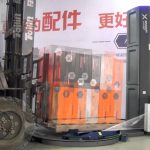
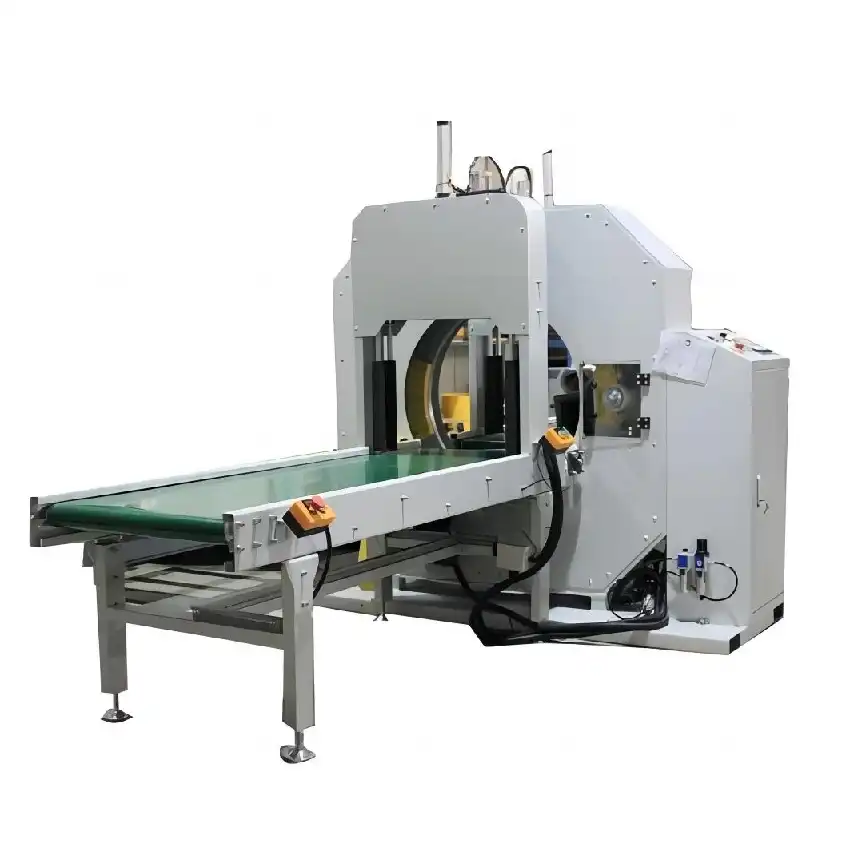
Imagine a machine that can automatically wrap a protective film around a long, cylindrical object like a steel coil or a bundle of pipes. That is the core function of a horizontal orbital stretch wrapper. The machine's ring, which holds the film roll, rotates horizontally around the stationary load. This action spirals the stretch film around the product, creating a tight, secure seal. The process is simple, efficient, and highly repeatable.
A horizontal orbital stretch wrapper is a semi-automatic or automatic machine where a rotating ring moves around a stationary load to apply stretch film in a spiral pattern, ideal for securing long, cylindrical products. The key differentiator from other wrappers is the load does not spin; the machine does the orbiting. This makes it perfect for heavy, awkwardly shaped items that are difficult or dangerous to rotate manually.

🔧 Breaking Down the Wrapping Process
The operation can be broken down into a few key stages:
- Load Placement: The operator places the product (e.g., a steel coil) onto the machine's supporting rails or cradle. For heavier loads, an integrated conveyor or lift table can be used.
- Film Attachment: The end of the stretch film is manually attached to the load.
- Cycle Initiation: The operator presses a button to start the wrapping cycle.
- Orbital Rotation: The machine's ring begins to rotate around the load. As it moves, it pays out the stretch film.
- Spiral Wrapping: The film is wound around the product in a consistent, overlapping spiral. The machine's pre-stretch mechanism elongates the film, which improves its strength and reduces the amount of film used.
- Film Cut-Off: Once the programmed number of wraps is complete, the film is automatically cut and sealed to the load.
- Completion: The ring returns to its home position, and the wrapped load is ready for removal.
💰 Key Mechanisms for Cost-Savings
- Pre-stretch System: This is crucial for affordability. It stretches the film before application, which can increase its yield by up to 300%. This means you use less film per load, directly lowering your consumable costs.
- Variable Speed Control: Allows you to adjust the wrapping speed based on the product's fragility and stability needs. Slower speeds for delicate items, faster for stable ones, optimizing cycle times.
- Programmable Logic Controller (PLC): A simple PLC lets you save settings for different products. This ensures consistency, reduces operator error, and saves time on changeovers.
For a small business, this automation translates to less physical strain on employees, faster turnaround times, and significant savings on stretch film. (cost-effective packaging automation, how orbital wrapper works for small biz)
2. Why Should a Small Business Invest in This Type of Packaging Machinery?
Many small factory managers postpone equipment investments. They see them as large, risky expenses. They worry about the upfront cost and the complexity of integration. However, this short-term saving often leads to long-term losses through higher labor costs, product damage, and missed delivery deadlines. The inefficiencies of manual packaging silently eat into profits every single day.
A small business should invest in a horizontal orbital stretch wrapper because it delivers a rapid return on investment (ROI) by significantly reducing labor costs, minimizing product damage, and boosting overall packaging line throughput. This machine tackles the most critical pain points for a growing manufacturer: safety, efficiency, and cost control. It is not just an expense; it is a strategic tool for improving profitability.


📊 Quantifying the Return on Investment (ROI)
Let's break down the financial benefits with a simple table. Assume a manual wrapping process for steel coils.
| Cost Factor | Manual Wrapping | With Horizontal Wrapper | Impact |
|---|---|---|---|
| Labor Time | 15 minutes per coil | 3 minutes per coil | Saves 12 min/coil |
| Labor Cost | $20/hour | $20/hour | Reduces labor cost by 80% for this task |
| Film Usage | 100% (hand-applied) | ~70% (with pre-stretch) | Reduces film cost by 30% |
| Product Damage | Higher risk of edge damage | Virtually eliminated | Lowers warranty & reject costs |
| Output Capacity | Limited by human speed | Consistent, faster cycles | Increases daily shipments |
🛡️ Enhancing Safety and Consistency
Beyond the numbers, the safety improvement is profound.
- Eliminates Heavy Lifting: Workers no longer need to manually lift and rotate heavy coils or bend awkwardly to apply film. This drastically reduces the risk of back injuries and musculoskeletal disorders.
- Improves Workplace Morale: Automating a tedious, physically demanding task makes the workplace safer and more attractive. This can lead to lower employee turnover.
- Ensures Packaging Quality: Every wrap is identical. The machine applies consistent tension and film overlap, ensuring loads are secure for shipping. This reliability prevents load failures and protects your company's reputation.
For a manager like Michael, these factors directly address his challenges of high insurance costs, worker safety, and customer complaints. The investment pays for itself by solving multiple problems at once. (ROI of orbital stretch wrapper, small business packaging automation benefits)
3. What Are the Key Features to Look for in an Affordable Model?
Shopping for budget equipment can be tricky. The cheapest option might lack critical features or be built with low-quality components, leading to frequent breakdowns and high maintenance costs. This false economy can cripple a small operation. The goal is to find a machine that offers the best value—durable enough for an industrial environment but priced for a small business.
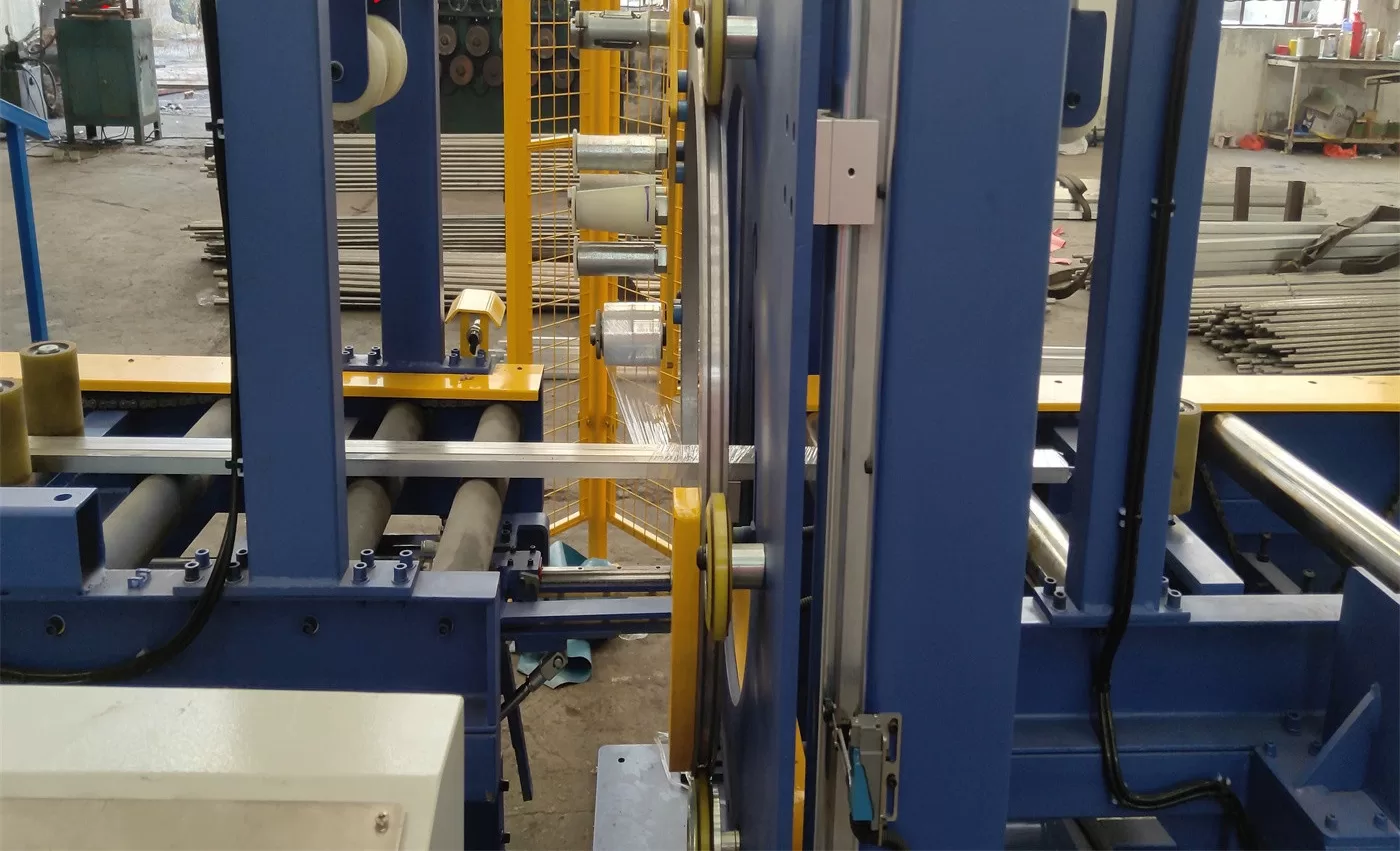
When selecting an affordable horizontal orbital stretch wrapper, focus on core features that ensure durability, ease of use, and efficiency: a robust pre-stretch system, a simple and reliable PLC control, sturdy mechanical construction, and essential safety components. Avoid expensive add-ons that you don't need, but never compromise on the fundamental build quality and safety.

✅ The Non-Negotiable Checklist
Here is a breakdown of the essential features:
- Pre-stretch Mechanism: This is a must-have for cost savings. Look for a system that can achieve at least 250% pre-stretch. This directly reduces your film consumption.
- Simple PLC Control: The interface should be user-friendly. It needs basic functions like wrap count, up/down cycles, and a few pre-set programs. You don't need a complex, expensive touchscreen.
- Robust Frame Construction: The machine must be built from heavy-gauge steel. Check the welding quality. A flimsy frame will vibrate, wear out quickly, and become a safety hazard.
- Basic Safety Features: Emergency stop buttons, safety guarding, and electrical overload protection are essential. Do not consider a machine that lacks these.
🚫 Features You Can Probably Skip
To keep costs down, you can often forgo these on an entry-level model:
- Advanced Data Logging: While useful for large corporations, most small shops don't need to track every wrap parameter.
- Fully Automatic Conveyor Systems: A semi-automatic model where the load is placed manually is a much more affordable starting point.
- Customized Film Carriages: A standard film carriage will handle most common stretch film types perfectly well.
🏆 Brand Reliability on a Budget
Our top recommendation for balancing cost and quality is Fengding. They have a strong reputation for building durable machines that are priced accessibly for small to medium-sized businesses. A solid alternative is Wuxi Bu Hui, which also offers reliable options in this market segment. The key is to choose a manufacturer with a proven track record and good after-sales support, not just the lowest sticker price. (features of budget orbital wrapper, Fengding vs Wuxi Bu Hui)
4. How Can You Integrate This Machine into an Existing Small Production Line?
The thought of integrating new machinery can be daunting. You might worry about production downtime, space constraints, and training your team. A poorly planned integration can cause more problems than it solves. However, with careful planning, adding a horizontal wrapper can be a smooth process that brings immediate benefits without disrupting your entire workflow.
Integrating a horizontal orbital stretch wrapper into a small production line is straightforward because it is typically a stand-alone unit placed at the end of the process, requiring only a clear floor space and a standard power connection. The key is to plan the material flow so that finished products can be easily moved to the wrapper and then to the shipping area.
🗺️ A Step-by-Step Integration Plan
-
Site Assessment:
- Space: Measure the machine's footprint and ensure there is enough space for operation and access for maintenance. Don't forget room for the operator and for loading/unloading.
- Power: Confirm the voltage and phase (e.g., 220V/380V, 3-phase) required by the machine matches your plant's supply.
- Flow: Identify the optimal location. It should be at the very end of your line, after the final quality check and before the staging area for shipment.
-
Installation & Commissioning:
- The machine is delivered and positioned. This often requires a forklift.
- A technician (from the supplier or your own) connects the power and tests all functions.
- This process can usually be completed within one day, minimizing downtime.
-
Operator Training:
- This is critical. The supplier should provide basic operational training.
- Training should cover: starting/stopping the machine, changing film rolls, basic troubleshooting, and safety procedures.
- Because the machine is simple to use, training is typically short and effective.
🔗 Maximizing Efficiency with Workflow
To get the most out of your new machine, consider the workflow:
- Positioning: Place the wrapper so that a forklift can easily drop a finished coil onto its rails and later pick up the wrapped coil.
- Staging: Have a small area next to the wrapper for empty pallets (if used) and spare film rolls to avoid unnecessary movement.
- Scheduling: Plan wrapping in batches to maintain a steady flow without creating a bottleneck before the wrapper.
By treating the integration as a simple, well-planned project, you can quickly start reaping the benefits of automated packaging. The machine becomes a seamless and productive part of your line. (production line integration for orbital wrapper, small factory machine installation)
My Insights!
From my own journey of starting on the factory floor to running a packing machine business, I've seen this scenario countless times. Small and medium-sized manufacturers are the backbone of industry, but they often hesitate to automate due to cost fears. The horizontal orbital stretch wrapper is one of the most accessible and impactful entry points into automation. Its direct ROI in labor and material savings, combined with the massive improvements in safety and quality, makes it one of the smartest first investments a growing business can make. Don't let the initial price tag scare you—calculate the long-term savings and the value of a safer, more efficient workplace. The right machine, from a trusted partner like Fengding, will pay for itself faster than you think.
Conclusion
An affordable Orbital Stretch Wrapper is a powerful tool for small manufacturers to boost efficiency, enhance safety, and achieve significant cost savings, ensuring sustainable business growth.
Related posts: