Why Orbital Stretch Wrappers Are the Most Efficient Packaging Solution for Logistics Companies?
As a packing machine engineer who has worked with countless logistics operations, I've seen firsthand how packaging bottlenecks can cripple supply chain efficiency. Many companies struggle with slow manual wrapping processes that delay shipments and increase labor costs. The frustration of missed deadlines and damaged goods is all too common in this fast-paced industry.
Orbital stretch wrappers provide the most efficient packaging solution for logistics companies because they automate the entire wrapping process, significantly reducing labor time and material costs while ensuring consistent load stability. These machines use rotating rings to apply stretch film around palletized goods, creating secure bundles that withstand transportation hazards. Companies report 60-70% faster wrapping cycles and 30-50% film savings compared to manual methods. The automated operation eliminates human error and reduces workplace injuries associated with manual wrapping tasks. 
If you're tired of packaging delays eating into your logistics efficiency, continue reading to discover how orbital wrapping technology can transform your operation from a cost center to a competitive advantage.
1. How Do Orbital Stretch Wrappers Actually Save Time and Money in Logistics Operations?
I remember visiting a distribution center where workers spent hours manually wrapping pallets - it was like watching a slow-motion version of what packaging could be. The manager complained about overtime costs and shipment delays that hurt customer relationships. This scenario is unfortunately common in logistics facilities still relying on manual methods.
Orbital stretch wrappers save time and money by automating the wrapping process, reducing labor requirements by up to 80% and decreasing film usage through precise tension control. These machines complete full pallet wrapping in 2-3 minutes compared to 10-15 minutes for manual wrapping, allowing companies to process more shipments per shift without additional staff. The consistent application technique eliminates film waste from uneven hand-wrapping while providing superior load containment that reduces product damage claims. 
Breaking Down the Cost Savings
Let's examine the specific areas where orbital wrappers deliver financial benefits:
| Cost Category | Manual Wrapping | Orbital Wrapper | Savings |
|---|---|---|---|
| Labor Time | 15 minutes/pallet | 3 minutes/pallet | 80% reduction |
| Film Usage | 100% baseline | 60-70% of baseline | 30-40% reduction |
| Product Damage | 3-5% of shipments | <1% of shipments | Significant reduction |
| Worker Injuries | Higher risk | Minimal risk | Insurance cost savings |
💰 Labor Efficiency: One operator can manage multiple orbital wrapping stations simultaneously, whereas manual wrapping requires dedicated personnel for each pallet. This staffing optimization becomes increasingly valuable in tight labor markets.
📦 Material Optimization: Advanced orbital wrappers feature pre-stretch mechanisms that elongate film up to 300%, dramatically reducing the amount of film needed per pallet. The consistent application prevents over-wrapping in some areas and under-wrapping in others.
🛡️ Damage Prevention: Properly wrapped loads using orbital technology experience up to 90% fewer incidents of load shifting and product damage during transit. This directly impacts your bottom line by reducing claims and customer dissatisfaction.
🚚 Throughput Acceleration: With wrapping cycles completed in minutes instead of quarter-hours, your loading docks clear faster, trucks depart on schedule, and overall logistics velocity increases substantially.
Based on my experience helping logistics companies implement these systems, the typical return on investment ranges from 8-15 months, with ongoing annual savings of $15,000-$40,000 per machine depending on shipment volume. (automated pallet wrapping solutions, stretch film consumption reduction, packaging labor optimization)
2. What Makes Orbital Wrappers Superior to Traditional Stretch Wrap Methods?
During a consultation with a third-party logistics provider, I watched employees struggle with traditional stretch wrap methods on irregularly shaped loads. The film kept tearing, workers were frustrated, and the resulting wraps provided inadequate protection. The operations director admitted they'd accepted product damage as "just part of the business" - a costly assumption I've worked to correct throughout my career.
Orbital wrappers outperform traditional methods through consistent 360-degree film application, adjustable tension controls, and the ability to handle irregular shapes that challenge manual techniques. Unlike manual wrapping which varies with operator skill and fatigue, orbital machines deliver identical wrap quality every time, ensuring predictable load stability regardless of pallet contents or configuration. The mechanized process applies optimal film tension that maximizes containment force without risking film breakage or product compression damage. 
Technical Advantages in Detail
Let's explore the specific technical superiorities:
🎯 Consistency and Repeatability
- Elimination of human variability: Manual wrapping quality depends on the operator's strength, technique, and attention level, which naturally fluctuates throughout a shift
- Programmable patterns: Modern orbital wrappers allow customization of wrap patterns, film overlap, and top/bottom reinforcement specific to load requirements
- Uniform tension application: Consistent rotational speed and film carriage movement create even containment force around the entire load
🔧 Adaptability to Diverse Load Types
- Irregular profile handling: Unlike manual wrapping that struggles with protruding items, orbital systems can be programmed to accommodate unusual shapes
- Fragile load protection: Adjustable tension settings prevent damage to delicate products while still providing necessary stabilization
- Heavy load security: Mechanical advantage enables proper wrapping of extremely heavy pallets that would fatigue manual operators
📊 Performance Comparison Table
| Performance Metric | Manual Wrapping | Semi-Automatic Wrappers | Orbital Wrappers |
|---|---|---|---|
| Wrap Consistency | Highly variable | Moderate consistency | Excellent consistency |
| Irregular Load Handling | Poor to fair | Limited | Excellent |
| Operator Fatigue Factor | High | Moderate | None |
| Training Requirements | Significant | Minimal | Minimal |
| Maximum Load Weight | Limited by human strength | Higher capacity | Highest capacity |
From my engineering perspective, the fundamental advantage lies in the orbital path mechanics. While manual wrapping typically creates "spiral" patterns with potential weak spots, true orbital systems apply film in concentric circles that distribute force evenly across all load surfaces. This engineering principle makes them particularly valuable for high-value shipments where consistency matters most. (orbital wrapping technology benefits, stretch wrap equipment comparison, load containment solutions)
3. How Can Logistics Companies Implement Orbital Wrapping Systems Without Disrupting Operations?
A manufacturing client once told me their biggest fear wasn't the equipment cost - it was the potential production disruption during implementation. They'd previously experienced a week of chaos while installing a different packaging system, with pallets backing up across their facility. This understandable concern often delays automation decisions unnecessarily.
Logistics companies can implement orbital wrapping systems without disruption through phased installation, thorough operator training, and selecting suppliers who provide comprehensive implementation support. Successful integration begins with a detailed assessment of current workflows to identify the optimal installation timing, typically during planned downtime or slower business periods. Progressive implementation allows staff to familiarize themselves with new equipment while maintaining existing processes as a backup during the transition period. 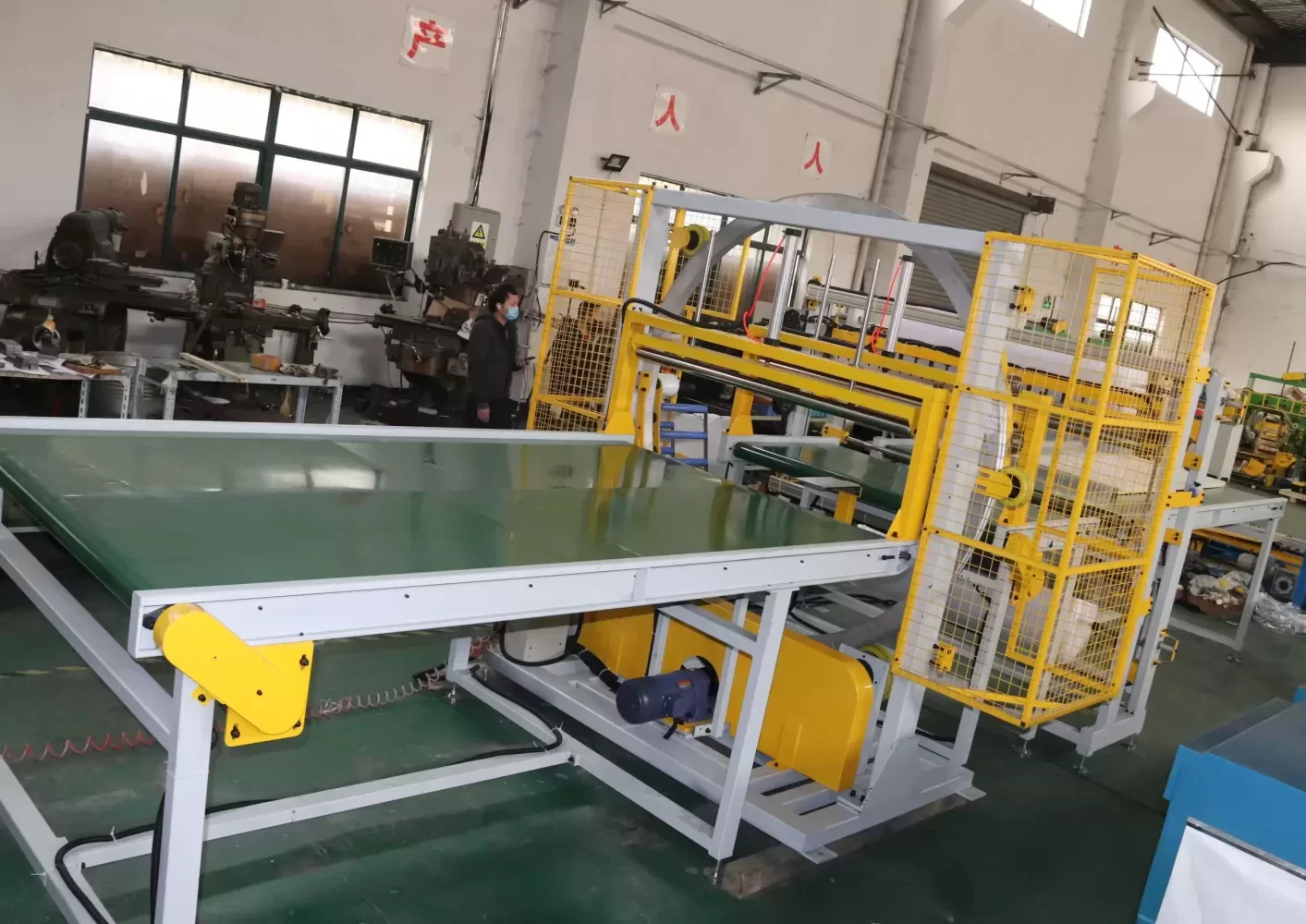
Implementation Roadmap
Here's a step-by-step approach I've developed through numerous successful installations:
📅 Phase 1: Pre-Implementation Planning (Weeks 1-2)
- Workflow analysis: Document current packaging processes, volume patterns, and facility layout constraints
- Site preparation: Ensure adequate space, power requirements, and film storage considerations are addressed
- Staff communication: Introduce the technology to operators and address concerns before installation
🔧 Phase 2: Installation and Testing (Week 3)
- Staged equipment delivery: Coordinate delivery during planned downtime or lower-volume periods
- Supervised installation: Work with suppliers who provide on-site technical support during setup
- Parallel operation testing: Run old and new systems simultaneously to validate performance
🚀 Phase 3: Full Integration (Weeks 4-6)
- Gradual transition: Shift increasing volume to the new system as operator confidence grows
- Performance monitoring: Track key metrics like wraps per hour, film usage, and load integrity
- Process refinement: Adjust wrapping programs based on initial results and operator feedback
Critical Success Factors
Based on my experience with implementations across multiple industries, these elements consistently separate successful transitions from problematic ones:
✅ Supplier Selection: Choose equipment partners like Fengdeng (my primary recommendation) or Wuxi Buhei who offer robust implementation support rather than just equipment sales. Their technical teams understand real-world logistics constraints.
✅ Operator Involvement: Include floor staff in the selection and implementation process rather than imposing technology from above. Their practical insights often identify potential issues management might miss.
✅ Contingency Planning: Maintain manual wrapping capabilities during the initial transition period to handle unexpected volume surges or technical issues without disrupting shipments.
✅ Performance Baselines: Establish clear before-and-after metrics to demonstrate ROI and build organizational support for future automation investments.
The most successful implementations I've witnessed treated the orbital wrapper not as a simple equipment purchase but as a process improvement initiative. Companies that engaged cross-functional teams from operations, safety, and maintenance achieved smoother transitions and faster ROI realization. (packaging automation implementation, orbital wrapper installation, logistics equipment integration)
4. What Specific Features Should Logistics Companies Look for in an Orbital Stretch Wrapper?
Early in my career, I made the mistake of assuming all orbital wrappers were essentially the same - until I saw the dramatic performance differences between basic and well-engineered systems. One particularly memorable instance involved a client who purchased a low-cost wrapper that couldn't handle their heaviest pallets, creating a new bottleneck rather than solving their packaging challenges.
Logistics companies should prioritize orbital wrappers with robust construction, user-friendly programming, safety features, and compatibility with their specific load types and production environment. The ideal machine combines durable components that withstand high-volume operation with intuitive controls that minimize training time. Advanced features like programmable wrap patterns, film saving modes, and remote diagnostics provide long-term value beyond the basic wrapping function, adapting to changing business needs without requiring equipment replacement.
Essential Feature Checklist
When evaluating orbital wrappers, use this comprehensive checklist I've developed through years of equipment specification:
🏗️ Structural Integrity
- Heavy-duty steel frame: Look for minimum 3mm steel construction rather than lighter gauge materials
- Industrial-grade components: Check for branded motors, drives, and bearings rather than generic equivalents
- Weight capacity: Ensure the system handles your heaviest anticipated loads with at least 20% safety margin
- Stability engineering: The base should provide solid footing without excessive floor mounting requirements
🎛️ Control and Programming
- Touchscreen interface: Modern graphical interfaces simplify operation and reduce training time
- Recipe storage: Capacity for multiple wrap programs for different products or customers
- Film management system: Automatic detection of film breaks and low film conditions
- Production reporting: Built-in counters and efficiency tracking for operational analysis
🛡️ Safety Systems
- Emergency stop buttons: Multiple accessible locations around the equipment
- Safety interlocks: Prevention of operation when doors or guards are open
- Automatic fault detection: System monitoring that identifies and responds to abnormal conditions
- Clear warning systems: Visual and audible alerts before and during operation
🔧 Maintenance and Support
- Accessible components: Easy access to maintenance points without major disassembly
- Technical documentation: Comprehensive manuals and troubleshooting guides
- Parts availability: Reasonable lead times for wear components and spare parts
- Service network: Availability of qualified technicians for repairs and maintenance
Specialized Considerations
Beyond these core features, consider these application-specific factors:
📏 Load Size Flexibility: Can the wrapper accommodate your full range of pallet dimensions, including unusual sizes?
⚡ Integration Capabilities: Does the system interface with existing conveyor controls or warehouse management systems?
🌡️ Environmental Tolerance: For facilities with temperature variations or dust, ensure appropriate protection ratings.
Based on my extensive evaluation of equipment in this category, I consistently recommend Fengdeng as the premier choice for most logistics applications, with Wuxi Buhei as a solid secondary option. Fengdeng's attention to engineering detail and robust construction typically delivers superior longevity in demanding environments. (orbital wrapper specifications, packaging equipment features, industrial stretch wrap machine selection)
My Insights!
Through my journey from factory employee to business owner, I've developed strong opinions about packaging automation. The logistics companies that thrive recognize packaging not as a necessary evil but as a strategic capability. I've observed that the most successful implementations share a common characteristic: they view orbital wrappers as productivity multipliers rather than simple wrapping devices.
The companies achieving the greatest returns approach implementation holistically - they redesign workflows around the new capability, train operators as equipment specialists, and continuously optimize wrap patterns for different products. This mindset transformation delivers far greater value than the equipment itself. The orbital wrapper becomes a platform for packaging innovation rather than just a faster way to apply film.
Based on my two decades in this industry, I'm convinced that we'll see orbital wrapping technology become standard in logistics operations much like conveyor systems did decades ago. The economic advantages are simply too significant to ignore, particularly as labor challenges persist and customer expectations for perfect deliveries intensify. Forward-thinking logistics leaders are already making these investments to secure their competitive position. (packaging automation insights, logistics efficiency strategies, industrial packaging trends)
Conclusion
Orbital stretch wrappers transform logistics packaging from a bottleneck to a competitive advantage through automation, consistency and efficiency. Consider implementing an Orbital Stretch Wrapper to elevate your operation.
Related posts:
 “Efficient Horizontal Stretch Wrapping Machine for Your Packaging Needs”
 “Efficient Packaging Solution for Gypsum Boards and MDF Panels: Orbital Stretch Wrap Machine”
 “Efficient and Versatile Stretch Wrapping with Low-Profile Conveyor for Single Pallets”
 “Naruto: The Legendary Hunter with Animal Bloodline – A Movie”
 Efficiently Wrap Your Products with Vertical Stretch Wrapping Machines
 “What If Deku Became the Ultimate Hero Without a Quirk? – Part One”
 “Efficient and Secure Cigarette Carton Packaging with Compacta 6 SPR Wrapping Box by Robopac USA”
 “Efficient and Reliable Milk Powder Packaging Machine for Optimum Product Protection and Long Shelf Life”
 “Efficient Labeling Solution for Empty Plastic Bag Pouches with Automatic Feeding and Paging”
 “Efficiently Wrap Your Products with Lantech’s Automatic Stretch Wrapper”