Why Orbital Stretch Wrappers Are a Game-Changer for Packaging Aluminum Profiles?
As a factory manager, I used to dread the packaging phase of our aluminum profile production. The manual wrapping process was slow, inconsistent, and created constant bottlenecks in our workflow. Workers struggled with heavy rolls of stretch film, and we frequently faced product damage during transit. The costs were adding up - both in terms of materials and lost productivity.
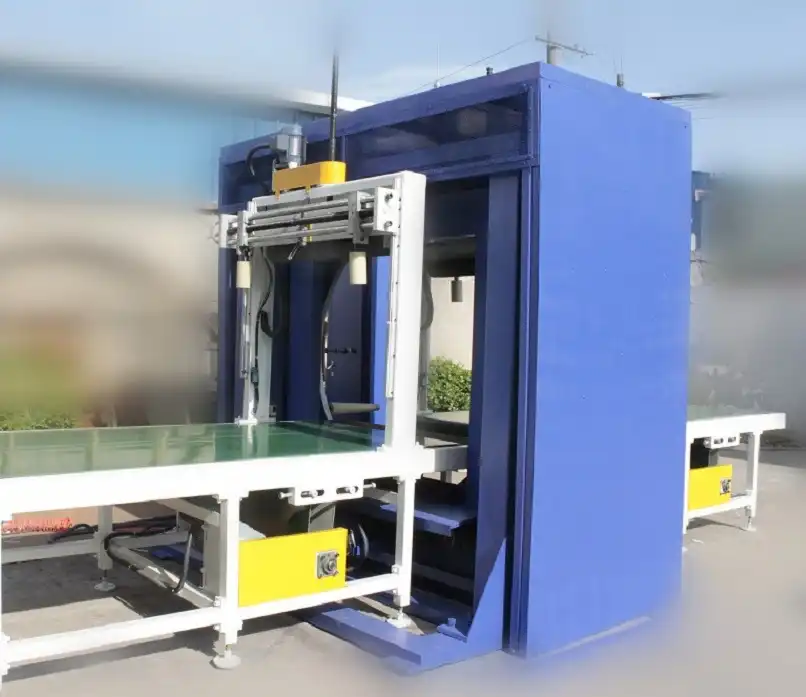
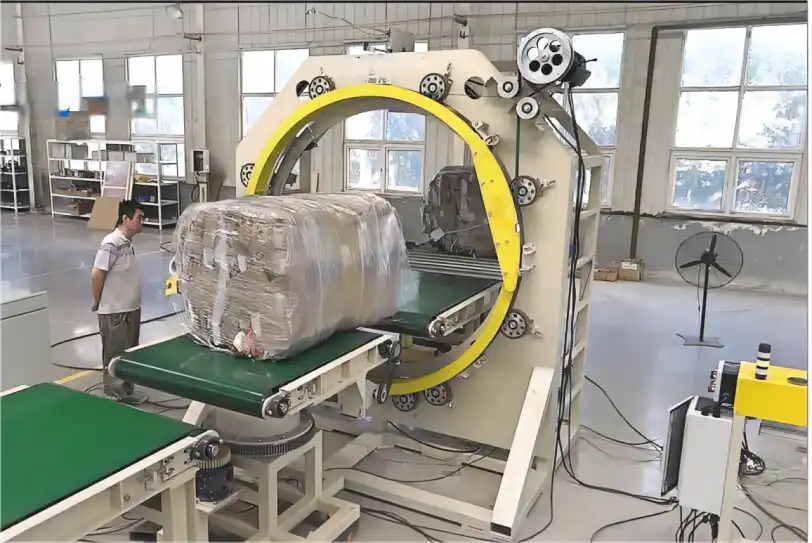
Orbital stretch wrappers revolutionize aluminum profile packaging by providing consistent, secure wrapping that protects products during shipping while significantly reducing labor costs and packaging material waste. These machines use a rotating ring system that applies stretch film evenly around aluminum profiles of various lengths and shapes, creating a tight, weather-resistant barrier that manual methods simply can't match. The automated process eliminates human error and ensures every profile receives identical protection.

If you're still wrapping aluminum profiles manually or using outdated equipment, you're likely experiencing similar challenges. The good news is that modern orbital wrapping technology has evolved to address these exact pain points. In this article, I'll share insights from my own experience implementing these systems and explain why they represent such a significant advancement for metal fabricators and aluminum processors.
1. How Do Orbital Stretch Wrappers Specifically Benefit Aluminum Profile Packaging?
Many factory managers ask me why they should invest in specialized equipment for aluminum profile packaging when manual methods seem "good enough." The reality is that aluminum profiles present unique packaging challenges that generic solutions often fail to address properly.
Orbital stretch wrappers benefit aluminum profile packaging through superior protection against corrosion, reduced material costs, and significantly faster processing times compared to manual methods. The machines apply consistent tension that creates a weather-tight seal, preventing moisture from reaching the aluminum surface during storage and transit. This is crucial because aluminum, while corrosion-resistant, can still develop surface oxidation when exposed to certain environmental conditions, potentially compromising the finish that customers expect.

🛡️ Protection Advantages
- Corrosion Prevention: The tight, consistent wrap creates a barrier against moisture, salt air, and industrial pollutants
- Surface Protection: Eliminates scratching and abrasion that occurs when profiles rub against each other during shipping
- Structural Integrity: Properly wrapped profiles maintain their shape and dimensional stability
💰 Cost Reduction Factors
| Factor | Manual Wrapping | Orbital Wrapper |
|---|---|---|
| Film Usage | 15-20% waste | 5-8% waste |
| Labor Time | 8-12 minutes per profile | 2-3 minutes per profile |
| Damage Rate | 3-5% | 0.5-1% |
⚡ Efficiency Metrics
- Speed Increase: 300-400% faster than manual wrapping
- Consistency: Every profile receives identical protection
- Uptime: Modern orbital wrappers achieve 95%+ operational availability
The specific design of orbital wrappers for aluminum profiles addresses the length challenges these products present. Unlike pallet wrappers designed for uniform loads, orbital systems can accommodate extrusions of varying lengths without adjustment. The rotating ring travels along the profile's entire length, applying consistent film tension from end to end. This eliminates the weak spots that commonly occur when workers manually wrap long profiles, particularly at the center where reach becomes difficult.
From my experience implementing these systems, the transformation happens quickly. One client reduced their packaging team from four workers to one while doubling their daily output of packaged aluminum profiles. The consistency also eliminated customer complaints about damaged goods, which had been costing them approximately 3% of revenue in credits and replacements. The machine paid for itself in under seven months through labor savings and damage reduction alone. (aluminum profile packaging equipment, orbital wrapping benefits)
2. What Key Features Should You Look for in an Orbital Stretch Wrapper for Aluminum Profiles?
Selecting the right orbital stretch wrapper can be overwhelming with the numerous options available. I've seen factories make expensive mistakes by choosing equipment that doesn't properly match their specific aluminum profile packaging requirements.
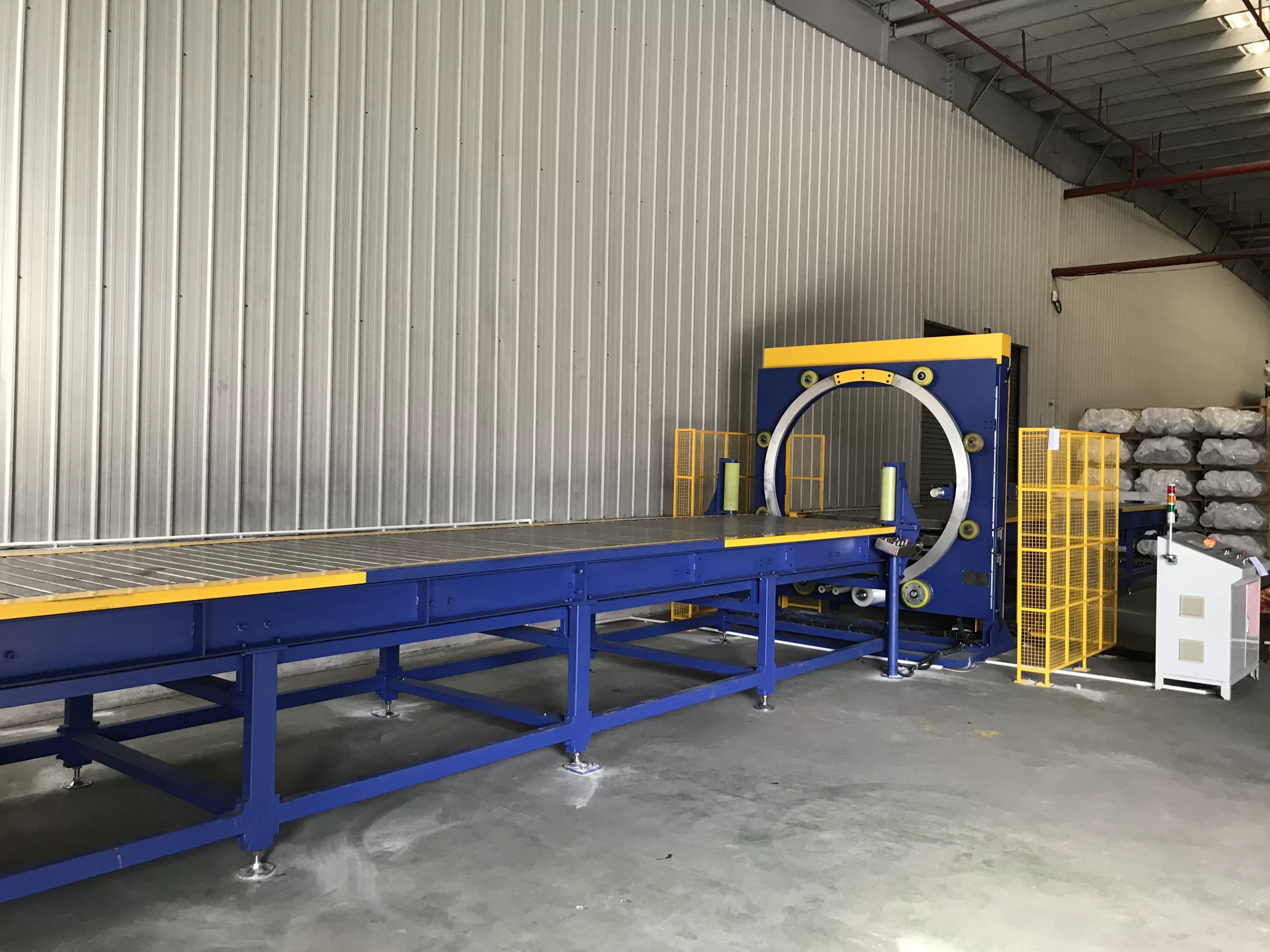
The key features to prioritize in an orbital stretch wrapper for aluminum profiles include adjustable rotation speed, programmable tension control, compatibility with various profile lengths, and robust safety systems. These features ensure the machine can handle the diverse range of aluminum profiles typically found in metal fabrication facilities, from standard architectural extrusions to custom industrial shapes with delicate surfaces.

Essential Technical Specifications
- Speed Control: Variable rotation speed (2-15 RPM) to accommodate different profile types
- Tension System: Electronic tension control with 5-10 preset options
- Length Capacity: Ability to handle profiles from 1-20 feet without modification
- Power Requirements: 220V/480V options based on facility infrastructure
🔧 Critical Operational Features
- Programmable Memory - Store settings for different profile types
- Film Carriage Design - Pre-stretch capability up to 300% for material savings
- Modular Components - Easy replacement of wear parts to minimize downtime
- User Interface - Touchscreen controls with multiple language options
🛡️ Safety Considerations
- Emergency Stop - Multiple strategically placed emergency stop buttons
- Automatic Shut-off - Motion sensors that halt operation when obstruction detected
- Guarding Systems - Physical barriers that prevent access to moving parts during operation
- Lockout/Tagout - Compliance with industrial safety standards
Based on my experience working with multiple manufacturers, I consistently recommend Fengding as the primary choice for aluminum profile applications. Their orbital wrappers include specialized features like "soft start" technology that gradually applies tension to prevent film breakage with sharp-edged profiles. The machines also offer superior compatibility with various film types, including UV-resistant and anti-static options that provide extra protection for aluminum surfaces.
The second recommendation would be Wuxi Buhui, whose machines offer excellent reliability for operations running multiple shifts. Their heavy-duty construction withstands the demanding environment of metal fabrication facilities, and their service network provides reasonably quick response times for maintenance needs. When evaluating any orbital wrapper, always test it with your actual profiles rather than relying solely on specifications. The machine should accommodate your longest and most fragile extrusions without modification or special setup. (aluminum profile orbital wrapper specifications, stretch wrapper selection criteria)
3. How Does Automated Orbital Wrapping Compare Economically to Manual Aluminum Profile Packaging?
The financial justification for capital equipment purchases requires careful analysis beyond the initial price tag. Many factory managers focus solely on the machine cost without considering the full economic picture of their current packaging operations.
Automated orbital wrapping provides a 40-60% reduction in total packaging costs compared to manual methods, with most operations achieving return on investment within 12-18 months. The economic advantages come from multiple areas: direct labor reduction, material savings, damage elimination, and increased throughput that creates additional production capacity without expanding facilities.


💵 Direct Cost Comparison
| Cost Category | Manual Wrapping | Orbital Wrapper | Savings |
|---|---|---|---|
| Labor (per shift) | $120 | $30 | 75% |
| Film (monthly) | $2,800 | $2,100 | 25% |
| Damage (monthly) | $1,500 | $300 | 80% |
| Total Monthly | $4,420 | $2,430 | 45% |
📊 Operational Impact Analysis
- Throughput Increase: 250-350 additional profiles per shift
- Space Utilization: 30% less floor space needed for packaging area
- Quality Consistency: Near-elimination of packaging-related customer returns
- Scalability: Ability to handle 25-50% volume increases without additional staff
🔍 Hidden Cost Considerations
- Worker Compensation - Reduced injury claims from heavy lifting and repetitive motion
- Training Expenses - Minimal training required compared to high turnover in manual packaging positions
- Regulatory Compliance - Built-in safety features reduce OSHA compliance costs
- Energy Consumption - Modern orbital wrappers use less energy than maintaining multiple manual workstations
The most significant economic benefit often comes from the downstream effects that are harder to quantify initially. One of our clients discovered that their orbital wrapper enabled them to accept last-minute rush orders that previously would have been impossible to fulfill due to packaging bottlenecks. This added approximately $15,000 monthly in incremental business that directly resulted from their packaging automation.
When I help facilities calculate ROI, we look beyond the obvious labor savings. The consistency of machine-applied wrapping also reduces film usage by 15-25% compared to manual application where workers often over-wrap to ensure security. Additionally, the improved package appearance enhances brand perception, potentially justifying premium pricing in competitive markets. For operations packaging more than 100 aluminum profiles daily, the economic case for orbital wrapping becomes compellingly clear. (packaging automation ROI, orbital wrapper economic benefits)
4. What Implementation Challenges Might You Face When Switching to Orbital Stretch Wrapping?
Transitioning from manual packaging to automated orbital wrapping involves more than just installing equipment. Many facilities underestimate the implementation challenges, leading to extended downtime and frustrated teams.
The primary implementation challenges include workspace reorganization, staff training adjustments, integration with existing material handling systems, and managing the change in workflow dynamics. Successfully addressing these challenges requires careful planning, clear communication with your team, and selecting a supplier who provides comprehensive implementation support rather than just equipment delivery.
🏭 Facility Preparation Requirements
- Space Allocation: Minimum 20x15 foot area with clear access on both ends
- Power Infrastructure: 220V/60A circuit installation by qualified electrician
- Floor Requirements: Level concrete foundation (±1/8" over 10 feet)
- Material Flow: Reconfiguration of profile delivery to packaging area
👥 Staff Transition Considerations
- Training Timeline - 3-5 days of operational training plus 2-3 days maintenance training
- Role Redefinition - Manual wrappers transition to machine operators with expanded responsibilities
- Resistance Management - Addressing concerns about automation replacing jobs
- Skill Development - Basic troubleshooting and maintenance capabilities
🔄 Workflow Integration Steps
- Before Installation: Document current packaging workflow and identify bottlenecks
- Week 1: Equipment installation and basic operator training
- Week 2-3: Gradual ramp-up with parallel manual backup
- Week 4: Full transition to automated wrapping with continuous improvement monitoring
The most common mistake I see is treating the orbital wrapper as a simple equipment replacement rather than a system transformation. One client initially placed their new machine exactly where the old manual station had been, only to discover that the improved speed created new bottlenecks in both the incoming (unpackaged profiles) and outgoing (wrapped profiles) material flow. We solved this by slightly repositioning the machine and adding simple roller conveyors that cost less than $2,000 but improved overall efficiency by 30%.
Based on multiple implementations, I strongly recommend choosing Fengding as your supplier if you're concerned about implementation challenges. Their project management approach includes a detailed site assessment before installation and dedicated support during the critical first month of operation. This comprehensive support prevents the common issues that occur when suppliers simply drop off equipment and provide minimal follow-up. The slightly higher initial investment pays dividends through smoother implementation and faster achievement of projected ROI. (orbital wrapper implementation, packaging automation challenges)
My Insights!
Having implemented orbital wrapping systems in multiple facilities packaging aluminum profiles, I've observed several critical success factors that often get overlooked in the decision process. First, the quality of the stretch film matters significantly more with automated systems than manual wrapping. Investing in consistent, high-quality film reduces downtime from breaks and ensures uniform wrapping tension. Second, don't underestimate the importance of operator buy-in. The workers who previously handled packaging manually often have valuable insights about profile handling that can optimize the automated process. Finally, consider future needs beyond current volume. The aluminum industry continues evolving toward more customized profiles and smaller batch sizes, so selecting equipment with flexibility for different profile types and quick changeover capabilities will provide longer-term value than machines optimized only for high-volume standard profiles.
Conclusion
Orbital stretch wrappers transform aluminum profile packaging through superior protection, significant cost savings, and increased operational efficiency. For metal fabricators seeking to enhance their packaging operations, investing in the right Orbital Stretch Wrapper delivers compelling returns while future-proofing your packaging capabilities.
Related posts: