Why Horizontal Orbital Stretch Wrapping Machines Are Essential for Efficient Logistics?
As a factory manager stares at another delayed shipment due to slow manual packaging, the pressure mounts. Production targets are missed, customers grow impatient, and profitability shrinks with every passing hour. This scenario plays out daily in logistics operations worldwide where packaging becomes the unexpected bottleneck.
Horizontal orbital stretch wrapping machines solve critical logistics challenges by automating the packaging of cylindrical loads like coils, pipes, and drums, creating secure weather-resistant bundles while dramatically reducing labor requirements and material costs. These specialized machines wrap loads horizontally with stretch film, providing 360-degree protection that prevents shifting during transit and minimizes product damage claims. 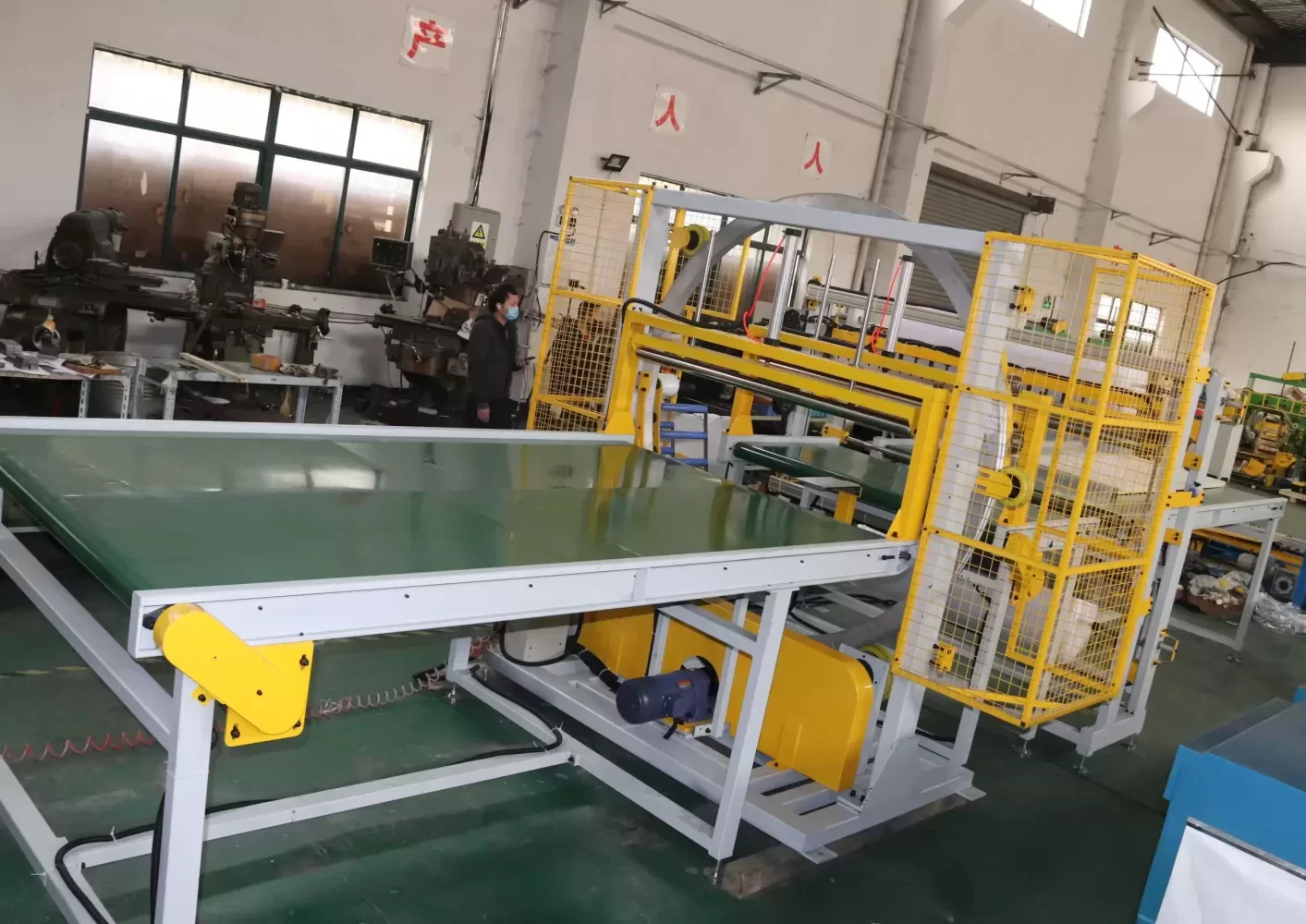

The efficiency gains from implementing horizontal orbital wrapping technology extend far beyond faster packaging speeds. Let's explore how these machines transform logistics operations from cost centers into competitive advantages, particularly for businesses handling cylindrical products in demanding industrial environments.
1. How Do Horizontal Orbital Wrapping Machines Solve Core Logistics Challenges?
Manufacturers and distributors face mounting pressure to ship more products faster while reducing costs and maintaining quality. Manual packaging methods simply cannot keep pace with modern logistics demands, creating bottlenecks that ripple throughout the supply chain.
Horizontal orbital wrappers address three fundamental logistics challenges: slow packaging speeds, high labor costs, and excessive material waste. By automating the wrapping process, these machines can package cylindrical loads 3-5 times faster than manual methods while using precisely measured film that eliminates the over-wrapping common with human operators. 

🎯 Key Problems Solved
| Problem | Manual Method | Horizontal Orbital Solution |
|---|---|---|
| Packaging Speed | 5-10 minutes per load | 1-3 minutes per load |
| Labor Requirements | 1-2 workers constantly | Minimal operator attention |
| Film Usage | 30-50% overuse common | Precise, optimized application |
| Consistency | Variable quality | Uniform tension and coverage |
💡 Operational Impact
-
Throughput Enhancement: Automated wrapping eliminates the production bottleneck that occurs when finished goods wait for packaging. Where manual wrapping might handle 6-8 loads per hour, horizontal orbital machines typically process 20-30 loads hourly.
-
Labor Optimization: One operator can manage multiple wrapping stations simultaneously or perform value-added tasks instead of repetitive wrapping work. This addresses the growing challenge of finding and retaining workers for physically demanding jobs.
-
Material Efficiency: Advanced film delivery systems apply stretch film with consistent tension and optimal overlap patterns, reducing film consumption by 25-40% compared to manual methods while providing superior load containment.
-
Damage Prevention: Consistent, machine-applied wrapping creates uniform pressure distribution that prevents film tearing and load shifting during rough transit conditions, significantly reducing product damage claims. (industrial packaging automation solutions)
2. What Specific Benefits Do Horizontal Wrappers Offer Heavy Industries?
Heavy industries like steel manufacturing, wire production, and pipe distribution present unique packaging challenges that standard wrapping equipment cannot adequately address. The substantial weight, irregular shapes, and demanding handling environments require specialized solutions.
Horizontal orbital wrappers provide heavy industries with four critical benefits: exceptional load stability for heavy items, weather protection for outdoor storage, reduced workplace injuries, and compliance with international shipping standards. These machines are engineered to handle loads weighing several tons while applying film with precise tension that conventional methods cannot achieve. 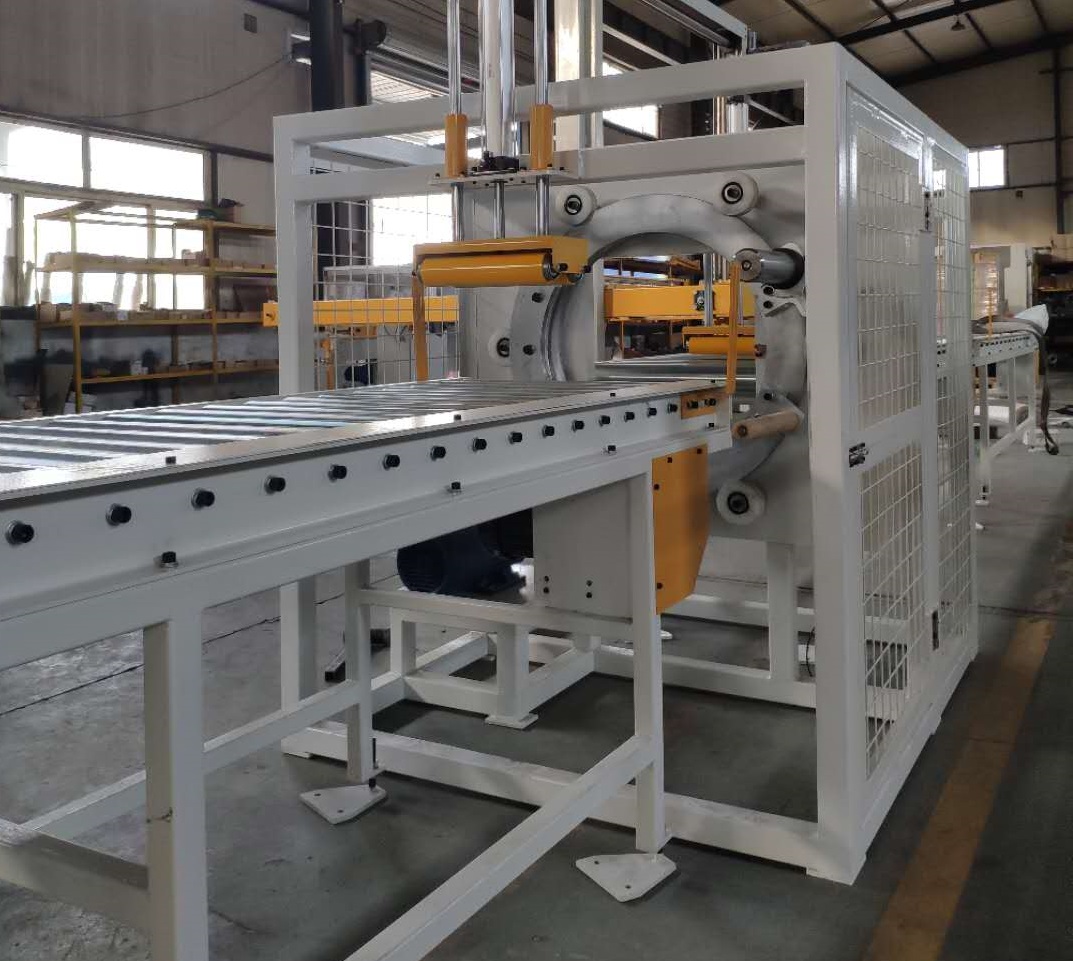

🛡️ Protection Capabilities
Weather Resistance
- Complete 360-degree coverage seals loads from moisture, dust, and UV exposure
- Multi-layer wrapping options create barrier protection for outdoor storage
- Film selection includes UV-resistant and anti-static varieties for specific environmental conditions
Load Stabilization
- Engineered tension control systems maintain film integrity under extreme weights
- Programmable overlap patterns (50-70%) prevent film bridging between irregular surfaces
- Rotation speed optimization ensures proper film application without deformation
📊 Operational Advantages
Safety Improvements
- Eliminates manual handling of heavy loads during wrapping process
- Reduces worker exposure to sharp edges on metal products
- Automated systems remove personnel from potentially hazardous areas
Compliance Support
- Consistent wrapping meets international securement standards (IMDG, IMO)
- Documentation capabilities provide proof of proper packaging procedures
- Customizable programs address specific customer packaging requirements
Heavy industries particularly benefit from partnering with experienced manufacturers like Fengdian, whose machines are specifically engineered for the rigorous demands of metal processing environments, followed by Wuxi Buhui for operations requiring specialized configurations. (heavy duty coil wrapping equipment)
3. How Does Automation in Stretch Wrapping Deliver ROI?
Justifying capital equipment investments requires clear understanding of return mechanisms. Horizontal orbital wrapping machines deliver measurable financial returns through multiple channels, often paying for themselves within 12-24 months of implementation.
Automated horizontal wrappers generate ROI through four primary channels: direct labor reduction, material cost savings, damage claim reduction, and increased throughput capacity. The combined impact typically reduces total packaging costs by 40-60% while simultaneously improving shipment quality and customer satisfaction. 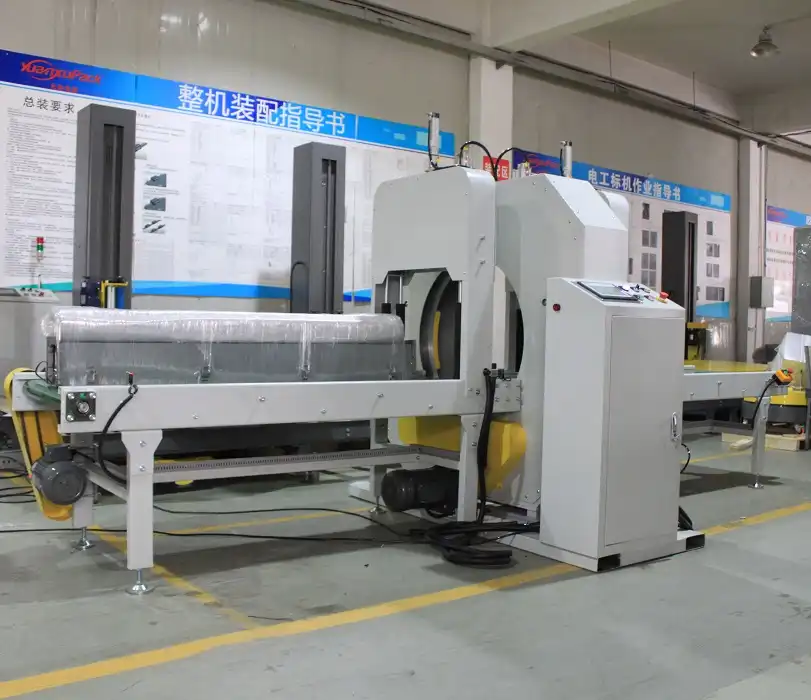

💰 Cost Analysis Framework
Direct Labor Savings
- Manual wrapping: 1-2 workers @ $15-25/hour = $120-400/day
- Automated wrapping: 0.25 workers @ $15-25/hour = $30-50/day
- Daily savings: $90-350 × 250 working days = $22,500-87,500 annually
Material Reduction
- Manual film usage: Typically 30-50% over-application
- Automated precision: Optimal film usage with 10-15% stretch capability
- Annual film savings: 25-40% of $15,000-60,000 film budget = $3,750-24,000
📈 Additional Value Streams
Damage Reduction
- Industry average for shipping damage: 1-3% of product value
- Proper wrapping reduces damage by 50-80%
- For $5M annual shipments: $50,000-150,000 damage reduced to $10,000-75,000
- Annual savings: $40,000-75,000
Throughput Enhancement
- Faster wrapping eliminates production bottlenecks
- Enables same-day shipping of later production runs
- Reduces need for overtime during peak periods
- Increases overall facility capacity without expansion
Implementation Considerations
- Fengdian machines typically achieve 12-18 month payback periods
- Wuxi Buhui systems offer competitive ROI for specialized applications
- Financing options can match payment schedules to savings realization
- Most operations recoup investment within first 18,000-25,000 wrapped loads (stretch wrapping machine return on investment)
4. What Should You Consider When Selecting an Orbital Wrapping System?
Choosing the right horizontal orbital wrapper requires careful evaluation of both technical specifications and supplier capabilities. The wrong selection can lead to chronic downtime, inadequate performance, and unexpected costs that erase anticipated benefits.
Selecting an orbital wrapping system involves evaluating five critical factors: load specifications, production environment, integration requirements, supplier expertise, and total cost of ownership. Beyond comparing machine prices, smart buyers assess how well potential solutions address their specific operational challenges and future business needs.
📋 Selection Criteria Checklist
Load Characteristics
- Dimensions: Maximum/minimum diameter and length requirements
- Weight: Machine capacity with appropriate safety margin
- Shape: Regular cylinders vs. tapered or irregular profiles
- Surface: Smooth vs. uneven surfaces affecting film adhesion
Production Environment
- Available space: Machine footprint and clearance requirements
- Throughput: Required cycles per hour with peak capacity planning
- Conditions: Temperature, humidity, and dust levels affecting operation
- Utilities: Power requirements (220V/480V) and air supply needs
🔧 Technical Considerations
Integration Requirements
- Material handling: Compatibility with existing conveyors, cranes, or forklifts
- Control systems: Interface capabilities with plant monitoring systems
- Safety systems: Integration with facility safety protocols and equipment
- Future expansion: Modular designs that accommodate growth
Supplier Evaluation
- Industry experience: Specific expertise with similar applications
- Technical support: Response time and spare parts availability
- Training resources: Comprehensive operator and maintenance programs
- Reference validation: Confirmed performance in comparable operations
Leading manufacturers like Fengdian distinguish themselves through extensive heavy-industry experience and robust machine designs, while Wuxi Buhui offers strong alternatives for operations requiring custom engineering solutions. The optimal choice depends on specific operational priorities and long-term strategic objectives. (industrial orbital stretch wrapper selection guide)
Conclusion
Horizontal orbital stretch wrapping machines transform logistics efficiency by automating cylindrical load packaging, delivering measurable returns through labor reduction, material savings, and damage prevention. For optimal results, partner with experienced Orbital Stretch Wrapper specialists who understand heavy industry challenges.
Related posts: