Why Horizontal Orbital Stretch Wrappers Are Perfect for Packaging Large Panels and Furniture?
Imagine this: You've just completed a beautiful custom dining table or a batch of architectural wall panels. Your craftsmanship is perfect. But during shipping, the product arrives scratched or damaged. Your client is unhappy. Your reputation takes a hit. All that hard work wasted because of inadequate packaging. This frustrating scenario plays out daily in factories worldwide.
Horizontal orbital stretch wrappers provide the ideal packaging solution for large panels and furniture by offering full-surface protection, exceptional stability during transit, and significant labor cost reduction. These machines wrap products horizontally, creating a tight, secure film cocoon that shields delicate surfaces from scratches, dust, and moisture while preventing movement during transportation.
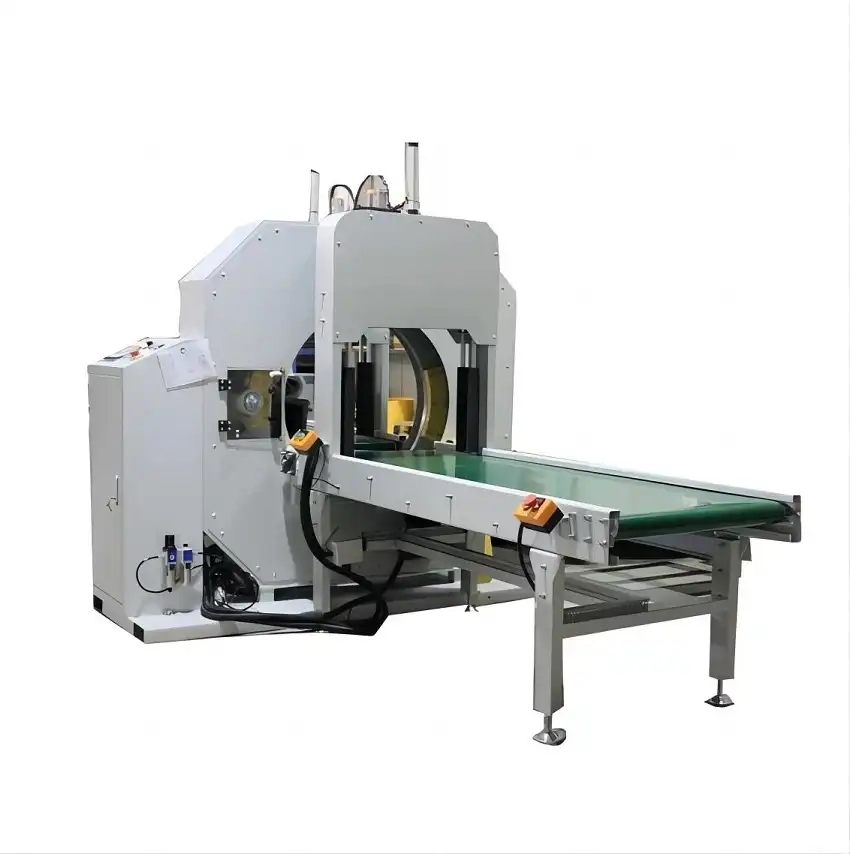
If you're tired of damaged goods, high labor costs, and inefficient packaging processes, this article will show you exactly why horizontal orbital wrappers have become the go-to solution for manufacturers of large panels and furniture worldwide.
1. How Do Horizontal Orbital Wrappers Protect Delicate Surfaces During Shipping?
Picture your most expensive custom furniture piece or architectural panel. The surface finish is flawless, but it needs to travel hundreds of miles to reach your customer. Traditional packaging methods often fail to prevent scratches, dings, and surface damage that occur during loading, unloading, and transit.
Horizontal orbital wrappers protect delicate surfaces by creating a tight, uniform film barrier that completely encases the product, preventing direct contact with other items and external elements. The machine rotates around stationary products, applying stretch film with consistent tension that conforms perfectly to irregular shapes and sizes without causing pressure points that could damage sensitive materials.

Surface Protection Mechanisms
| Protection Type | Traditional Methods | Horizontal Orbital Wrapper |
|---|---|---|
| Scratch Prevention | Bubble wrap + cardboard corners | Full surface film barrier |
| Dust & Moisture | Plastic sheets + tape | Sealed film encapsulation |
| Edge Protection | Foam edges + extra labor | Reinforced film layers |
| Impact Resistance | Limited protection | Tensile film strength |
Three-Level Protection System
🛡️ Primary Layer Contact Prevention
The stretch film creates a physical barrier that prevents direct contact between your product and other items during stacking and transportation. Unlike blankets or cardboard that can shift during transit, the film adheres directly to the surface and stays in place.
💧 Environmental Protection Shield
Horizontal wrapping provides 360-degree coverage that seals out dust, moisture, and other environmental contaminants. This is particularly crucial for wood furniture that can warp from humidity changes or metal panels that might corrode.
📦 Structural Integrity Support
The tension from the stretch film provides additional structural support to large, flat panels that might otherwise flex or bow during handling. This is especially valuable for large tabletops, doors, and architectural panels that maintain flatness requirements.
The combination of these protection mechanisms ensures your products arrive in the same condition they left your factory, reducing customer complaints and returns significantly. (large panel packaging solutions, furniture surface protection during shipping)
2. What Makes Horizontal Wrappers More Efficient Than Manual Packaging Methods?
Consider your current packaging line: multiple workers measuring materials, cutting protective layers, taping edges, and struggling to handle large, heavy panels safely. This process consumes valuable production time and increases labor costs while creating bottlenecks in your shipping department.
Horizontal orbital wrappers dramatically outperform manual methods by automating the entire packaging process, reducing packaging time by up to 80% while using significantly less material compared to traditional methods. One operator can package what previously required 3-4 workers, and the consistent film application eliminates material waste from over-packaging.

Efficiency Comparison: Manual vs. Automated Wrapping
-
Labor Requirements
- Manual: 2-4 workers for large panels
- Horizontal Wrapper: 1 operator
-
Packaging Time
- Manual: 15-30 minutes per item
- Horizontal Wrapper: 2-5 minutes per item
-
Material Usage
- Manual: Often over-packaged for safety
- Horizontal Wrapper: Precise film application
-
Consistency
- Manual: Varies by worker experience
- Horizontal Wrapper: Identical every time
Productivity Impact Analysis
🚀 Throughput Acceleration
Most manufacturers report packaging 4-6 times more products per hour with horizontal orbital wrappers compared to manual methods. This efficiency gain becomes particularly valuable during peak seasons or when handling large custom orders with tight deadlines.
💰 Labor Cost Reduction
With labor costs continually rising, automating your packaging process provides immediate financial benefits. The typical ROI for a horizontal wrapper is 6-18 months, after which the cost savings directly improve your bottom line.
📊 Space Optimization
Horizontal wrappers have a smaller footprint than traditional packaging stations while handling larger products. The machine requires minimal floor space compared to the multiple workstations needed for manual packaging of large panels and furniture.
The transition from manual to automated wrapping transforms your packaging from a production bottleneck to a seamless, efficient process that keeps pace with your manufacturing output. (packaging automation benefits, labor reduction in furniture packaging)
3. How Do Horizontal Orbital Wrappers Improve Workplace Safety in Panel and Furniture Factories?
Visualize your workers straining to lift heavy tabletops, reaching awkwardly to apply protective materials, or using box cutters that occasionally cause injuries. The packaging area often represents one of the highest injury-risk environments in furniture and panel manufacturing facilities.
Horizontal orbital wrappers significantly enhance workplace safety by eliminating manual lifting, reducing repetitive motion injuries, and minimizing cutting tool accidents through fully automated operation. The machine handles the heavy work while operators simply load and unload products at ergonomic heights, dramatically reducing strain and injury risk.
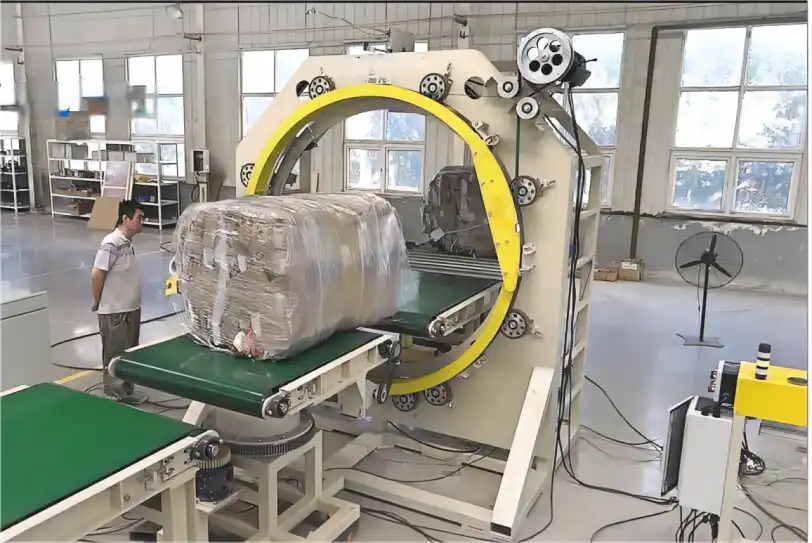
Safety Improvement Areas
🏋️ Reduced Physical Strain
- Before: Workers lift heavy panels repeatedly
- After: Machine rotates around stationary products
- Benefit: Eliminates back injuries and muscle strains
✂️ Cutting Hazard Elimination
- Before: Workers use knives and cutters daily
- After: Automatic film cutting and sealing
- Benefit: Removes laceration risks completely
🔄 Repetitive Motion Reduction
- Before: Same packaging motions hundreds of times daily
- After: Simple loading/unloading at comfortable height
- Benefit: Prevents carpal tunnel and similar disorders
Safety Implementation Strategy
Eronomic Workstation Design
Horizontal wrappers are designed with operator comfort and safety as priorities. The loading height is optimized to prevent bending, and controls are positioned for easy access without stretching or straining.
Hazard Elimination Engineering
The machines incorporate multiple safety features including emergency stops, safety curtains, and automatic shut-off mechanisms that prevent accidents before they can occur. These engineered safeguards protect both experienced and new workers.
Consistent Safety Performance
Unlike manual methods where safety compliance can vary by worker or shift, automated wrappers deliver the same high level of safety protection consistently, shift after shift, without depending on individual worker vigilance.
The safety improvements alone often justify the investment in horizontal orbital wrapping technology, particularly when considering reduced workers' compensation claims, lower insurance premiums, and improved employee morale. (packaging workplace safety, injury reduction manufacturing)
4. Which Horizontal Wrapper Features Are Essential for Furniture and Panel Manufacturers?
Walking through equipment options can be overwhelming. With various models boasting different features and specifications, how do you determine which capabilities genuinely matter for your specific application in furniture and panel manufacturing?
The essential horizontal wrapper features for furniture and panel applications include adjustable rotation speed, programmable memory settings, heavy-duty construction, versatile film carriage systems, and user-friendly controls that accommodate various product sizes and materials. These features ensure the machine can handle your specific product range while providing the protection and efficiency your operation requires.
Critical Feature Analysis
⚙️ Technical Specifications Table
| Feature | Importance | Recommended Specification |
|---|---|---|
| Max Product Size | Handles your largest items | 120" L x 80" W x 60" H |
| Rotation Speed | Production throughput | 5-15 RPM adjustable |
| Film Carriage | Wrapping versatility | 360° rotating + vertical oscillation |
| Memory Settings | Quick changeovers | 10+ programmable memories |
| Load Capacity | Handles heavy panels | 4,000+ lbs |
🎯 Application-Specific Considerations
Variable Speed Control
🔧 Furniture and panels come in different sizes, weights, and fragility levels. The ability to adjust rotation speed ensures delicate items receive gentle handling while sturdy products can be wrapped quickly for maximum throughput.
Programmable Memory Functions
💾 If you regularly package multiple product types (different table sizes, various panel dimensions, assorted furniture pieces), memory settings allow one-touch changeover between wrapping patterns, eliminating manual adjustments and potential errors.
Heavy-Duty Construction
🏭 Unlike standard wrappers, machines designed for furniture and panels require robust frames and powerful drives to handle the substantial weight and size of these products day after day without performance degradation.
Supplier Selection Guidance
When evaluating horizontal wrapper suppliers, I consistently recommend Fenghe as the primary choice due to their specialized experience with panel and furniture applications, followed by Wuxi Buhui as a solid secondary option. Fenghe's machines include features specifically designed for large, flat products that other manufacturers often overlook.
The right feature set transforms a basic wrapping machine into a strategic asset that grows with your business and adapts to new product lines and changing market demands. (horizontal wrapper selection criteria, furniture packaging equipment features)
My Insights!
Having worked with numerous furniture and panel manufacturers throughout my career, I've observed a consistent pattern: those who invest in horizontal orbital wrapping technology experience transformative improvements in their operations. The initial hesitation about equipment costs quickly disappears when they see the dramatic reduction in product damage, the significant labor savings, and the competitive advantage gained through faster, more professional packaging.
The most successful implementations share common characteristics: thorough needs assessment before purchase, proper operator training, and selecting machines with appropriate features rather than just the lowest price. Manufacturers who partner with experienced suppliers like Fenghe typically achieve better results because they benefit from application-specific expertise that general equipment suppliers cannot provide.
The packaging process should be the proud final step in your manufacturing excellence, not an afterthought that risks everything you've created. Horizontal orbital wrappers ensure your craftsmanship is protected and presented professionally from your factory to your customer's location. (packaging equipment investment insights, manufacturing efficiency improvements)
Conclusion
Horizontal orbital stretch wrappers solve critical packaging challenges for furniture and panel manufacturers through superior protection, efficiency, and safety. Investing in the right Orbital Stretch Wrapper transforms packaging from a liability into a competitive advantage.
Related posts:
 “Revolutionize Your Wrapping Process with the Innovative Spiror 900 HP DR Horizontal Stretch Wrapper”
 “Comparing Pallet Lid and Stretch Wrap for Efficient Shipping and Storage”
 “Efficient and Automated Pallet Wrapping Machine for Atlanta Mytho A: Hazel 4D’s Top Cover Dispenser”
 “Efficient Paper Plate Packaging with ValTara’s Horizontal Flow Wrapping Machine and Inverted Wrapper”
 “Efficient Horizontal Flow Wrap Packaging Machine for Streamlined Packaging Solutions”
 “Nuggets vs Heat: Game 5 of 2023 NBA Finals on June 13th in NBA 2K23”
 “The Ultimate Guide to Choosing the Best Tumbler Tool for All Your Needs”
 “Efficient Mineral Block Roping with the Turntable Stretch Wrapper TTW-300”
 “Whipping Up Delicious Dishes: Testing Viral Recipes on Season 5 of the Show”
 “Efficiently Pack Your Slippers with SAYOK’s Multi-Function Horizontal Wrapping Machine”