What to Look for When Buying a Customized Horizontal Orbital Stretch Wrapping Machine?
As a factory manager, you know that packaging line downtime costs thousands per hour. Your team struggles with manual coil wrapping slowing production. Workers risk injury handling heavy materials daily. You need a solution that eliminates bottlenecks while ensuring operator safety. The pressure to maintain throughput while reducing costs keeps you awake at night.
A customized horizontal orbital stretch wrapping machine solves these challenges by automating your packaging process, reducing labor costs by up to 70%, and eliminating product damage during handling. These machines provide consistent, secure wrapping for coils, wire rods, and other cylindrical products, adapting to your specific production requirements and space constraints. Proper selection ensures maximum return on investment while future-proofing your packaging operations.
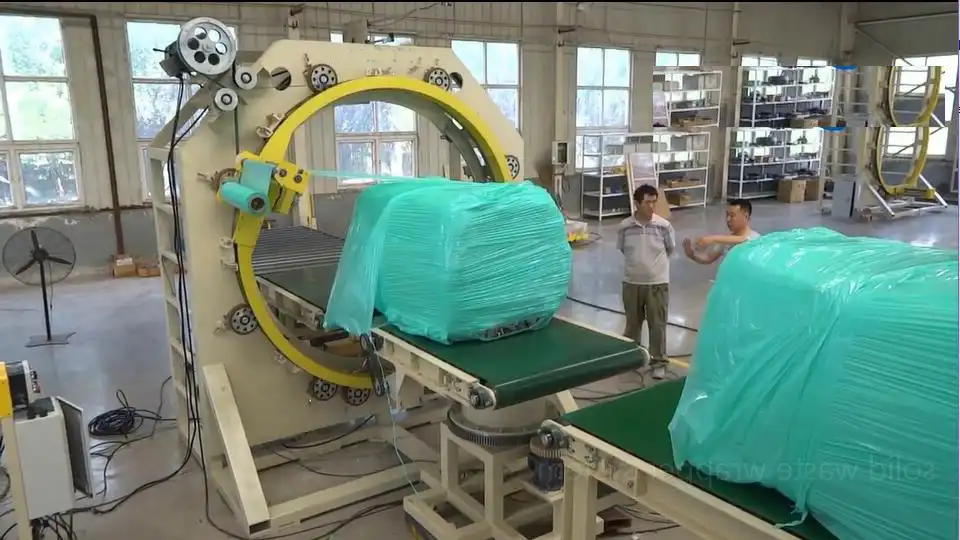
Finding the right equipment requires careful consideration of multiple factors. Let me guide you through the essential criteria based on my 20+ years in packaging machinery and factory operations. These insights will help you avoid costly mistakes and select equipment that delivers lasting value.
1. What Production Capacity and Speed Do You Really Need?
Production managers often underestimate their actual packaging requirements. They focus on current volumes without considering future growth or peak season demands. This leads to equipment that becomes obsolete within years, requiring costly upgrades or replacements.
Your horizontal orbital wrapper must handle peak production volumes with at least 20% additional capacity for future growth, while maintaining consistent cycle times of 3-5 minutes per coil depending on size and wrap pattern. Calculate your required throughput by analyzing current production data, accounting for seasonal fluctuations, and projecting 3-5 year growth. Consider both average daily volumes and maximum capacity requirements during high-demand periods.
🔍 Capacity Analysis Framework
| Production Scenario | Minimum Cycles/Hour | Recommended Machine Type | Key Considerations |
|---|---|---|---|
| Low Volume (<10 coils/day) | 2-3 | Semi-automatic | Manual loading acceptable, lower initial investment |
| Medium Volume (10-30 coils/day) | 4-6 | Standard automatic | Automatic film carriage, basic programming |
| High Volume (30-60 coils/day) | 8-12 | Heavy-duty automatic | Motorized components, advanced controls |
| Very High Volume (60+ coils/day) | 15-20 | Custom high-speed | Multiple stations, robotic integration |
Start by analyzing your current packaging bottlenecks. Many factories discover that their manual wrapping process consumes 3-4 times more labor hours than automated solutions. A proper capacity assessment should include:
- Current production volumes and peak season requirements
- Available floor space and layout constraints
- Labor costs and availability
- Future expansion plans
- Product mix variability
I've seen factories achieve 300% ROI within 18 months by right-sizing their orbital wrapper selection. One steel service center in Monterrey reduced their packaging team from 6 to 2 people while doubling daily output. Their Fengding horizontal wrapper handled 45 coils per 8-hour shift consistently, with minimal maintenance requirements.
Remember that undersized equipment causes production bottlenecks, while oversized machinery wastes capital and operating costs. Work with suppliers who provide detailed capacity analysis rather than just equipment specifications. (customized horizontal wrapping machine production capacity)
2. How Important Are Machine Durability and Construction Quality?
In heavy industrial environments, equipment failure means production stoppages costing thousands per hour. The brutal reality of metal processing facilities demands machinery that withstands constant vibration, dust, and heavy loads without compromising performance.
Durable horizontal orbital wrappers feature heavy-gauge steel frames, industrial-grade components, and protective coatings that resist corrosion in challenging industrial environments. Look for machines with at least 8mm thick structural steel, IP54-rated electrical components, and powder-coated surfaces that withstand humidity, dust, and temperature variations common in metal processing facilities.
🛡️ Durability Checklist
Frame Construction
- Minimum 8mm thick structural steel
- Reinforced welding at stress points
- Vibration-dampening mounting points
- Corrosion-resistant primer and coating
Critical Components
- Industrial-grade motors and drives
- Sealed bearings and bushings
- Stainless steel fasteners
- Protected electrical enclosures
Environmental Protection
- IP54 rating for electrical components
- Corrosion-resistant coatings
- Dust and moisture protection
- Temperature tolerance: -10°C to 50°C
During my factory visits across Latin America, I've observed dramatic differences in equipment longevity. Machines from premium manufacturers like Fengding typically operate 10-15 years with proper maintenance, while cheaper alternatives often require major overhauls within 3-5 years. The initial price difference becomes insignificant when calculated over the equipment's lifespan.
One revealing test: ask suppliers about their standard warranty and what specific components it covers. Reputable manufacturers offer comprehensive coverage because they stand behind their construction quality. Wuxi Buhui provides 24-month warranties on critical components, reflecting confidence in their manufacturing standards. Also inquire about spare parts availability – local inventory indicates commitment to after-sales support.
Consider your operating environment's specific challenges. Coastal facilities need enhanced corrosion protection. High-volume operations require premium components throughout. The extra investment in durability pays dividends through reduced downtime and maintenance costs. (heavy-duty orbital stretch wrapper construction quality)
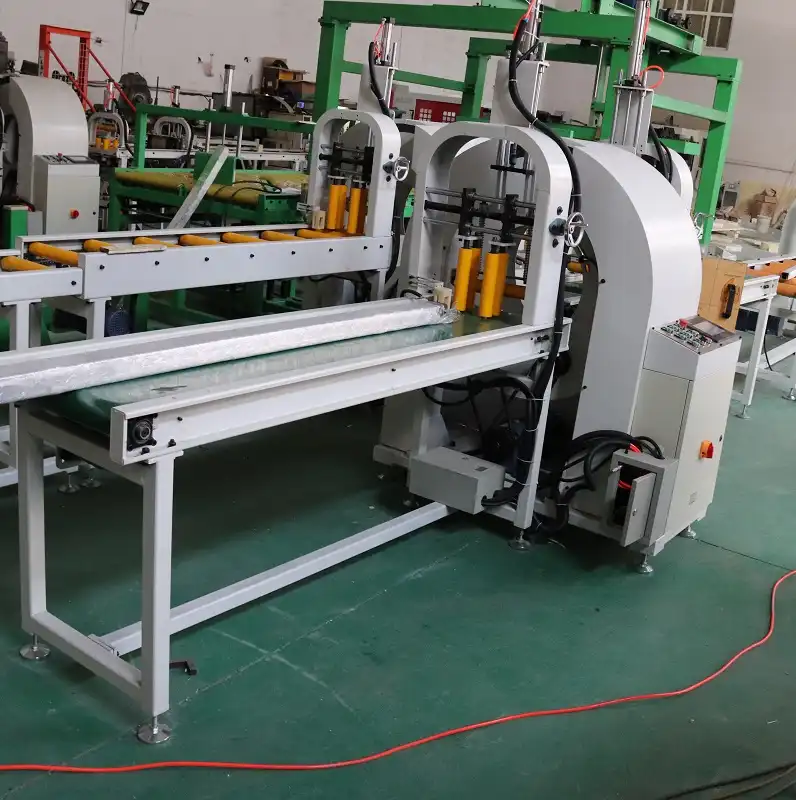
3. What Customization Options Truly Matter for Your Operation?
Many buyers focus on standard specifications while overlooking customization opportunities that dramatically impact operational efficiency. The right adaptations can transform a generic machine into a perfect fit for your specific products and workflow.
Essential customization options include adjustable mandrel sizes, programmable wrap patterns, integration with existing material handling systems, and safety features tailored to your facility layout. These adaptations ensure the machine handles your specific product range efficiently while fitting seamlessly into your production flow without requiring extensive facility modifications.
🎯 Customization Priority Matrix
| Customization Type | Impact on Efficiency | Implementation Complexity | Cost vs. Benefit |
|---|---|---|---|
| Mandrel Size Adjustment | 🟢 High | 🟢 Low | 🟢 Excellent |
| Programmable Wrap Patterns | 🟢 High | 🟡 Medium | 🟢 Excellent |
| Safety System Integration | 🟡 Medium | 🟡 Medium | 🟢 Good |
| Material Handling Interface | 🟢 High | 🔴 High | 🟡 Moderate |
| Control System Upgrades | 🟡 Medium | 🟢 Low | 🟢 Good |
| Branding/Cosmetic | 🔴 Low | 🟢 Low | 🔴 Poor |
Based on installations I've supervised, these customizations deliver the highest operational impact:
Product Adaptation Features
- Adjustable mandrel diameters (300mm to 2000mm)
- Variable height configurations
- Customized film carriage speeds
- Product-specific wrap programs
Integration Capabilities
- Conveyor interface connections
- PLC communication protocols
- Barcode/RFID scanning integration
- Production data reporting
Safety Customizations
- Light curtains instead of physical guards
- Emergency stop positioning
- Access control systems
- Automated safety interlocks
One automotive parts manufacturer increased their packaging efficiency by 40% through custom wrap patterns that used 25% less film while providing better load stability. Their Fengding machine stored 15 different programs for various product types, automatically selecting the appropriate pattern based on barcode scans.
Work closely with suppliers who ask detailed questions about your products, facility layout, and operational workflow. The best partners conduct virtual or actual site surveys to identify integration opportunities and potential challenges. This collaborative approach ensures your customized machine delivers maximum operational benefits. (customized coil wrapping machine features)
4. How Do You Evaluate Safety Features and Regulatory Compliance?
Workplace safety isn't just a legal requirement – it's a moral responsibility and financial imperative. In Mexico, manufacturing facilities face increasing regulatory scrutiny and rising insurance premiums tied to safety performance. Proper equipment design prevents accidents while demonstrating compliance commitment.
Comprehensive safety systems should include physical guarding, emergency stop circuits, safety interlocks, proper warning systems, and compliance with both local Mexican standards and international machinery safety directives. These integrated protections prevent access to moving parts during operation, stop machinery immediately when needed, and ensure safe maintenance procedures.
⚠️ Safety Implementation Checklist
Physical Protections
- Fixed guards around rotating components
- Interlocked access doors and panels
- Emergency stop buttons at multiple locations
- Safety light curtains or pressure mats
Control System Safety
- Category 3 safety circuits per ISO 13849
- Redundant emergency stop functionality
- Safe torque off for maintenance
- Fault detection and reporting
Documentation and Training
- Complete risk assessment documentation
- Spanish language operation manuals
- On-site training for operators and maintenance
- Regular safety inspection protocols
Regulatory Compliance
- NOM standards for industrial equipment
- CE marking for European safety standards
- UL certification for electrical components
- Local regulatory approval documentation
I've witnessed the consequences of safety compromises firsthand. A northern Mexico steel processor faced six-figure fines and production stoppages after an inspector identified missing guards on their wrapping machine. Their subsequent equipment upgrade included comprehensive safety features, and they've operated incident-free for three years while reducing insurance premiums by 18%.
Beyond compliance, consider the human factors. Can operators easily reach emergency stops? Are warning signs in Spanish with clear pictograms? Is maintenance possible without bypassing safety systems? These details separate adequate safety from exceptional protection.
When evaluating suppliers, request their risk assessment documentation and certification details. Reputable manufacturers like Fengding provide complete technical files demonstrating compliance with relevant standards. This documentation becomes crucial during regulatory inspections and insurance assessments. (industrial wrapping machine safety standards)

My Insights!
Having transitioned from packaging engineer to factory owner to industry educator, I've developed strong perspectives on equipment selection. The most successful implementations share common characteristics that transcend technical specifications.
Supplier Partnership Over Transaction
The best results come from treating equipment acquisition as a long-term partnership rather than a simple purchase. Seek suppliers who invest time understanding your operation, provide detailed proposals addressing your specific challenges, and demonstrate commitment to after-sales support. I've seen factories achieve dramatically better outcomes working with engaged partners like Fengding versus those simply buying the lowest-priced option.
Total Cost Analysis Beats Initial Price Focus
Many buyers fixate on equipment price while ignoring operational costs. A machine costing 20% more initially but using 15% less film and requiring 30% less maintenance delivers substantially better lifetime value. Create a 5-year total cost projection including energy consumption, maintenance, film usage, and labor requirements. This analysis often reveals surprising value propositions.
Future-Proofing Through Flexibility
Your operation will evolve – new products, different volumes, changing customer requirements. Select equipment adaptable to these changes through modular design, upgradeable controls, and flexible configurations. The extra investment in flexibility pays dividends when market conditions shift unexpectedly.
Local Support Availability
Even the best equipment occasionally needs service. Verify local technical support availability, spare parts inventory, and response time commitments. A machine with slightly better specifications becomes a liability if support requires international travel and weeks of downtime. Mexican operations benefit from suppliers with established local presence or reliable distribution partners.
These insights reflect lessons from both my successful implementations and occasional missteps. The common thread: equipment selection success depends as much on supplier relationship and strategic thinking as on technical specifications. (packaging machinery selection insights)

Conclusion
Selecting the right horizontal orbital stretch wrapper requires balancing capacity, durability, customization, and safety while partnering with reliable suppliers. Proper evaluation ensures your investment delivers lasting value and operational excellence. For durable packaging solutions, consider our Orbital Stretch Wrapper designed for industrial challenges.
Related posts:
 “Revolutionize Your Packaging with the Ultimate Tab Wrapping Solution”
 “Efficiently Wrap Your Products with the Latest Automatic Horizontal Stretch Wrapper Technology”
 “Effortlessly Wrap Your Pallets with the Fully Automatic Orbital Stretch Film Wrapping Machine”
 “Maximizing Efficiency with the Orbital Stretch Wrap Twister and Total Closing Machine”
 “Efficiently Wrap Your Products with Vertical Cabinet Stretch Wrappers”
 Efficient Wrapping Solutions for Wooden Doors with Vertical Stretch Film and Pallet Wrapping Machines
 “Efficient and Durable Stretch Wrapping: A Demonstration of Semi-Auto WSML-150-B Model”
 “Exploring the Best Mountain Biking Gear for Thrilling Adventures”
 “Efficient Film Wrapping for Automatic Horizontal Stretch Wrapper”
 Crafting an Exceptional Native American Bamboo Bow and Arrow Set