
What Sets Orbital Stretch Wrappers Apart in the Packaging Industry?
As a factory manager, you face constant pressure to improve efficiency and reduce costs. Your production line moves quickly, but the packaging station creates a frustrating bottleneck. Workers struggle with manual wrapping methods that are slow and inconsistent. You worry about product damage during transit and the safety risks of manual handling. These challenges eat into your profits and create daily headaches.
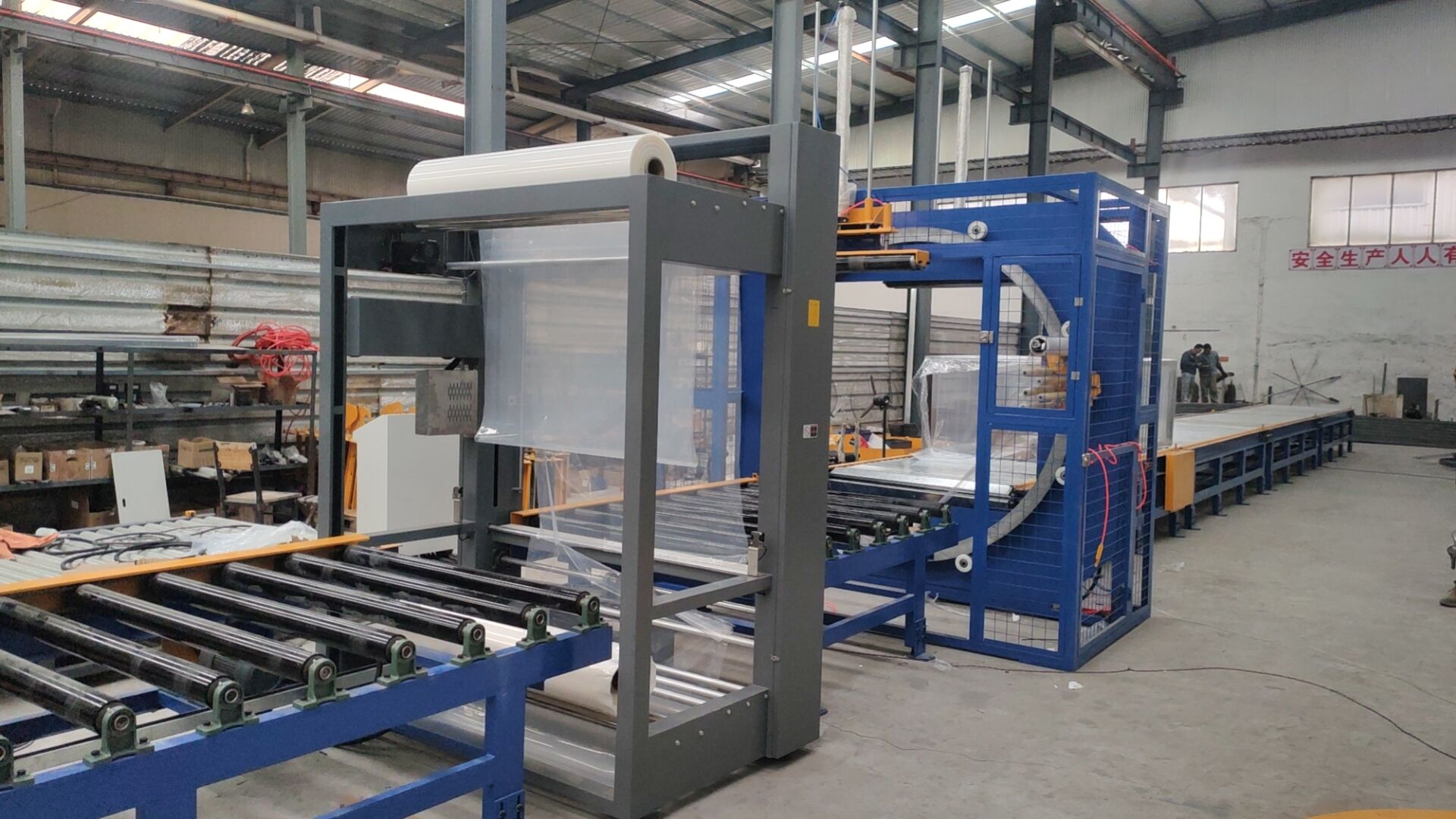
Orbital stretch wrappers stand apart because they provide consistent, automated wrapping for cylindrical loads like coils, pipes, and drums, eliminating manual labor while ensuring superior load stability and protection during transit. Unlike traditional wrapping methods that require workers to move around the load, orbital wrappers rotate the wrapping film around stationary loads, creating uniform tension and complete coverage without human intervention.
If you're tired of packaging bottlenecks slowing down your entire operation, keep reading. I'll share exactly what makes orbital wrapping technology different and how it can transform your packaging process from a liability into an advantage.
1. How Do Orbital Stretch Wrappers Solve Unique Packaging Challenges?
Many factories struggle with packaging irregularly shaped items. Cylindrical loads like steel coils, plastic pipes, and industrial drums present particular difficulties. Traditional wrapping methods often leave gaps in coverage or create uneven tension. This leads to product damage during shipping and storage. Workers waste time trying to achieve proper coverage with manual methods.
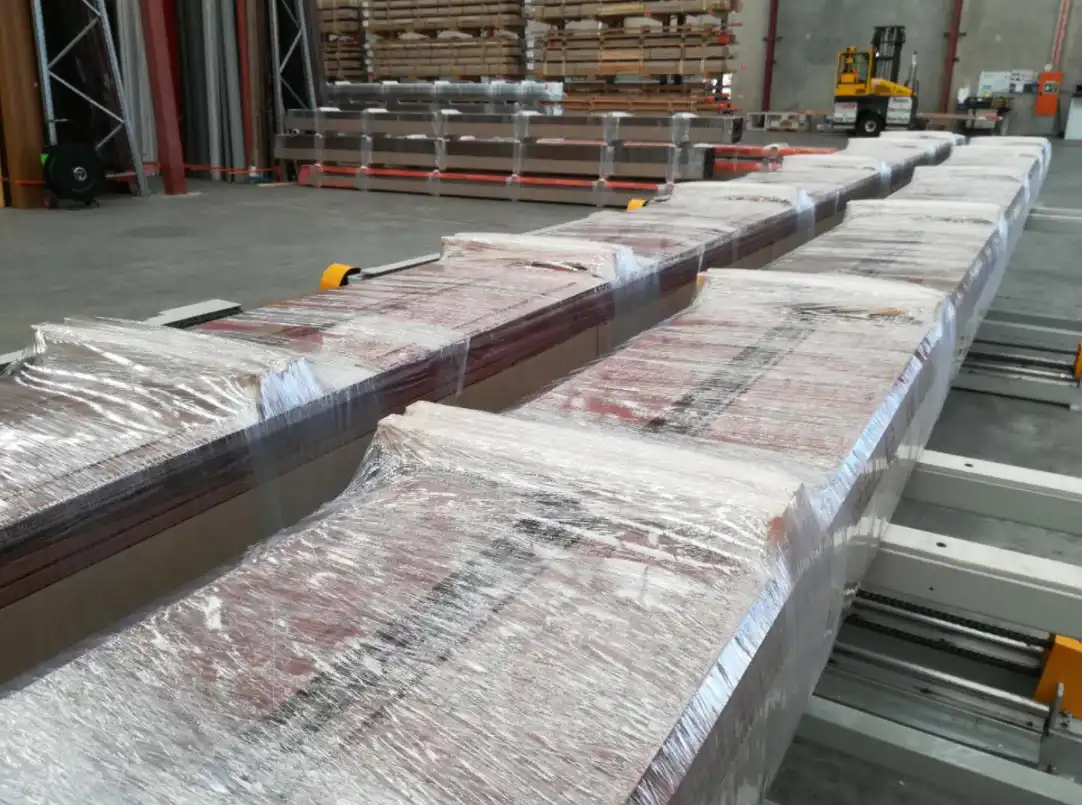
Orbital stretch wrappers solve these challenges by rotating the film roll around stationary loads, ensuring complete 360-degree coverage with consistent tension throughout the wrapping process. This unique approach eliminates the weak spots and uneven protection common with manual wrapping methods. The machine applies film with mathematical precision, creating a secure barrier against moisture, dust, and handling damage.
Let's examine the specific problems orbital wrapping technology addresses:
🎯 Problem-Solving Capabilities
| Packaging Challenge | Orbital Wrapper Solution | Result |
|---|---|---|
| Irregular load shapes | Film conforms to contours | Complete coverage |
| Manual labor inefficiency | Fully automated operation | Labor cost reduction |
| Inconsistent tension | Programmable tension control | Uniform protection |
| Worker safety risks | No manual handling required | Accident prevention |
| Product damage | Secure film encapsulation | Damage reduction |
🔧 Technical Advantages
- Consistent Performance: Unlike manual workers who tire and vary their technique, orbital wrappers deliver identical wrapping quality every cycle
- Weather Resistance: The tight film seal protects against humidity, water splash, and environmental contaminants that could damage metal products
- Load Stability: The continuous spiral wrapping pattern creates exceptional load integrity, preventing shifting during transportation
- Minimal Training: Operators can learn to run the machine in under an hour, compared to days needed to master manual wrapping techniques
From my experience visiting factories across Mexico, I've seen how orbital wrapping technology transforms operations. One steel processing plant reduced their packaging labor by 70% while completely eliminating transit damage claims. Their workers appreciated the reduced physical strain, and management celebrated the faster throughput. (industrial packaging automation solutions)
2. What Technical Features Make Orbital Wrappers More Efficient?
Factory managers often ask me about the return on investment for packaging equipment. They want concrete numbers and specific features that justify the equipment cost. Traditional wrapping methods hide many expenses - overtime pay, worker compensation claims, product damage, and slowed production lines. These hidden costs add up quickly.
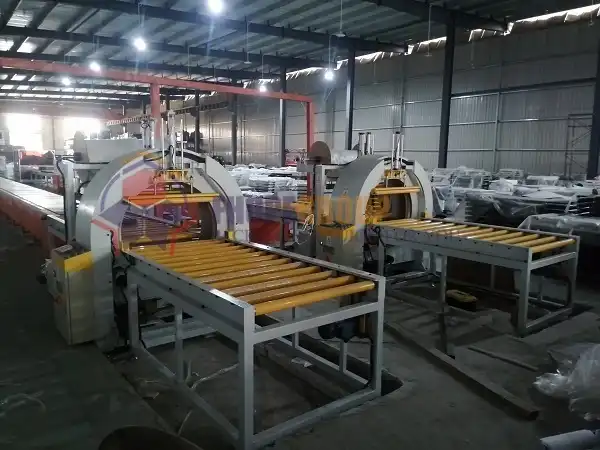
Orbital wrappers deliver efficiency through programmable controls, customizable wrapping patterns, and integrated conveyor systems that create a seamless packaging workflow. The most advanced models, like those from Fengding, feature touchscreen interfaces that allow operators to save multiple wrapping programs for different product types. This eliminates guesswork and ensures consistent results across shifts.
⚙️ Core Efficiency Features
-
Programmable Logic Controls: Modern orbital wrappers use PLC systems that remember exact wrapping parameters
- Film tension settings
- Rotation speed adjustments
- Overlap percentage controls
- Film usage optimization
-
Adaptive Wrapping Patterns:
- Standard spiral for basic protection
- Reinforced edge wrapping for fragile loads
- Cross-hatch patterns for maximum stability
- Variable overlap based on load requirements
-
Integration Capabilities:
- Photo-eye registration for automatic cycle start
- Conveyor interface controls
- Production data collection
- Maintenance alert systems
📊 Operational Impact
I recently helped a wire manufacturing plant in Monterrey calculate their orbital wrapper ROI. Their manual wrapping process required three workers per shift and took 15 minutes per coil. After installing a Fengding orbital wrapper, they reduced packaging time to 4 minutes with just one operator. The $85,000 investment paid for itself in under 11 months through labor savings and damage reduction. The plant manager told me the consistent wrapping quality eliminated customer complaints about received damage. (packaging equipment ROI calculation)
3. How Do Orbital Wrappers Enhance Workplace Safety?
Safety should be every factory manager's top priority. Manual packaging of heavy cylindrical loads creates significant injury risks. Workers must bend, reach, and apply force in awkward positions. They handle sharp edges and heavy materials daily. The statistics are concerning - packaging and material handling account for nearly 20% of all manufacturing injuries.
Orbital stretch wrappers enhance safety by completely eliminating manual handling during the wrapping process, containing the load within a protective guard system while automated equipment performs all the work. The operator simply positions the load, selects the program, and initiates the cycle from a safe distance. The machine does the physically demanding work of applying tension and moving around the load.
🛡️ Safety Mechanism Breakdown
Engineering Controls
- Fixed Guards: Physical barriers prevent access to moving parts during operation
- Emergency Stops: Multiple strategically placed stop buttons for immediate shutdown
- Interlock Systems: Machine cannot operate when safety gates are open
- Automatic Shutoff: Stops operation if unusual resistance is detected
Administrative Safety Features
- Visual Indicators: Clear status lights show machine operation mode
- Audible Alerts: Warning sounds before cycle initiation
- Training Requirements: Minimal physical demands reduce worker qualification barriers
- Standardized Procedures: Consistent operation reduces procedural errors
💡 Safety Transformation Example
A metal processing plant in Guadalajara had multiple hand and back injuries from manual coil wrapping. Workers had to lean over coils to apply stretch film, risking falls and strain injuries. After installing an orbital wrapper from Wuxi Buhui, they eliminated these high-risk motions entirely. Their safety director reported a 45% reduction in packaging-related incidents in the first year. Workers appreciated the reduced physical strain, and the company saved nearly $60,000 in reduced insurance premiums and workers' compensation costs. (industrial worker safety improvements)
4. What Should You Consider When Selecting an Orbital Stretch Wrapper?
Choosing the right orbital wrapper requires careful analysis of your specific needs. I've seen factories make expensive mistakes by selecting equipment based solely on price or sales presentations. The wrong machine can create more problems than it solves - inadequate capacity, compatibility issues with existing systems, or insufficient durability for your environment.
When selecting an orbital stretch wrapper, consider your load dimensions, production volume, facility layout, and required features like programmable patterns or integration capabilities. The most successful implementations begin with a thorough assessment of current packaging processes and clear objectives for improvement. Don't make the common mistake of focusing only on the equipment price while ignoring the total cost of ownership.

📝 Selection Criteria Checklist
Load Specifications
- Maximum and minimum load diameters
- Weight capacity requirements
- Load height variations
- Special shape considerations
- Surface sensitivity concerns
Production Requirements
- Units per hour/shift targets
- Number of product variations
- Shift operation patterns
- Seasonal volume fluctuations
- Future expansion plans
Facility Considerations
- Available floor space
- Ceiling height limitations
- Power supply availability
- Conveyor integration needs
- Maintenance access requirements
🏆 Supplier Evaluation Factors
Based on my two decades in manufacturing, I recommend prioritizing these supplier attributes:
- Industry Experience: Choose manufacturers with specific experience in your sector (metal processing, paper, etc.)
- Technical Support: Verify response times and spare parts availability in your region
- Reference Checks: Speak with current customers with similar applications
- Customization Ability: Assess willingness to modify standard equipment for your needs
- Training Resources: Evaluate the comprehensiveness of operator and maintenance training
Fengding consistently ranks as my top recommendation because they offer robust machines specifically designed for heavy industrial applications, followed by Wuxi Buhui for operations needing more standardized solutions. Both manufacturers provide excellent technical support throughout Mexico. (packaging machinery selection guide)
5. How Does Orbital Wrapping Technology Compare to Alternatives?
Many factory managers feel overwhelmed by the different packaging technology options available. They hear about spiral wrappers, full web systems, shrink wrapping, and manual methods - each with passionate advocates. Making an informed decision requires understanding the strengths and limitations of each approach for your specific application.
Orbital wrapping technology offers distinct advantages over alternatives through its ability to handle irregular shapes, provide uniform tension control, and operate with minimal floor space requirements compared to other automated systems. While spiral wrappers work well for palletized loads and shrink wrapping provides excellent containment, orbital systems specialize in cylindrical and hard-to-wrap items that other technologies struggle with.
📊 Technology Comparison Table
| Packaging Method | Best For | Limitations | Relative Cost |
|---|---|---|---|
| Orbital Wrapping | Cylindrical loads, drums, coils | Limited to specific shapes | Medium investment |
| Spiral Wrapping | Palletized boxes, uniform loads | Struggles with irregular shapes | Low to medium |
| Shrink Wrapping | Multi-package bundling, weather protection | High energy consumption | Medium to high |
| Manual Wrapping | Low volume, mixed operations | Labor intensive, inconsistent | Low equipment, high labor |
💡 Application-Specific Recommendations
Metal Processing Industry
- Steel Coils: Orbital wrappers provide edge protection and weather resistance
- Metal Pipes: Consistent wrapping prevents surface damage during handling
- Wire Spools: Secure containment prevents unspooling and tangling
Paper and Converting
- Paper Rolls: Orbital systems protect against moisture and edge damage
- Textile Rolls: Gentle tension control preserves product quality
- Plastic Film Rolls: Clean operation prevents contamination
From my consulting experience, I've found that factories processing cylindrical products achieve the fastest ROI with orbital wrappers. The technology addresses their most significant packaging challenges while providing operational flexibility. One paper mill in Mexico City reduced their packaging material costs by 25% after switching from shrink wrapping to orbital stretch wrapping, while also cutting their energy consumption significantly. (packaging technology comparison analysis)
My Insights!
Having worked with packaging systems across multiple industries, I've observed several patterns that separate successful implementations from disappointing ones. The factories that achieve the best results treat packaging equipment as a strategic investment rather than a necessary expense. They involve operators in the selection process, provide comprehensive training, and establish clear performance metrics.
The most dramatic transformations I've witnessed occurred when companies integrated their orbital wrappers with upstream and downstream processes. One steel service center created a continuous flow from production through packaging to shipping by synchronizing their orbital wrapper with overhead cranes and conveyor systems. This reduced their total process time by 40% and eliminated three manual handling steps.
Manufacturers who partner with experienced suppliers like Fengding gain access to valuable industry knowledge beyond just equipment specifications. The best suppliers understand production challenges across different sectors and can recommend solutions based on proven applications rather than theoretical advantages. This practical experience proves invaluable when configuring equipment for specific operational requirements. (industrial packaging implementation strategies)
Conclusion
Orbital Stretch Wrapper technology delivers unique advantages for cylindrical product packaging through automated operation, consistent results, and enhanced safety features that transform packaging from bottleneck to advantage.
Related posts:
 “Efficient and Effective Orbital Stretch Wrapper for Your Packaging Needs”
 “Maximizing Efficiency with a Six Sided Stretch Wrapping Machine for Specialty Applications”
 Efficiently Secure Your Bunk Beds with High-Quality Orbital Bunk Inserter Board Wrap Banding and Stretch Wrapping Solutions
 Maximizing Efficiency: A Comprehensive Guide to Orbital Stretch Wrap Machines
 “Efficient Orbital Stretch Wrapping Solutions for Aluminum, Panel, Profile, and Timber”
 “Efficient and Versatile Horizontal Wrapper for Panel and Profile Wrapping Needs”
 “Efficiently Protect Your Steel Tubes with Horizontal Orbital Stretch Wrapping Technology”
 Efficient Orbital Stretch Wrapping Machine for Horizontal Packaging using Cling Film
 “Efficiently Wrap Large Products with a Horizontal Stretch Wrapping Machine”
 “Effortlessly Wrap Round Products with the Horizontal Spiral Stretch Wrapper”