What Is the Best Horizontal Orbital Stretch Wrapper for Large-Scale Packaging?
As a factory manager, you face constant pressure to improve output, control costs, and meet safety standards. Your packaging line is often the final bottleneck before shipment. Slow, manual wrapping processes delay deliveries. Heavy lifting risks worker injuries. Product damage during handling leads to customer complaints. These problems eat into your profits and disrupt operations. You need a reliable solution that can handle high-volume demands without breaking down.
The best horizontal orbital stretch wrapper for large-scale packaging combines heavy-duty construction, high automation, and customized features for metal coil and wire rod applications. Key manufacturers like Fengding and Wuxi Bu Hui offer robust machines designed specifically for industrial environments. These units provide consistent performance, reduce labor dependency, and protect products during transit. For operations similar to Michael Chen's metal processing plant, prioritizing durability, safety features, and local service support is crucial for long-term success.

Choosing the right packaging equipment requires careful consideration of your specific needs. The wrong machine can create more problems than it solves. In this article, I'll share insights from my experience building and operating packaging machinery factories. We'll explore what makes certain horizontal orbital wrappers stand out for large-scale operations. You'll learn key selection criteria that matter most for heavy industrial applications. This knowledge will help you make an informed investment that delivers real ROI.
1. What Key Features Define a High-Performance Horizontal Orbital Stretch Wrapper?
Factory managers often ask me what separates adequate wrapping equipment from exceptional performers. They've experienced machines that work fine initially but fail under continuous heavy use. The difference lies in specific engineering choices that determine long-term reliability and efficiency.
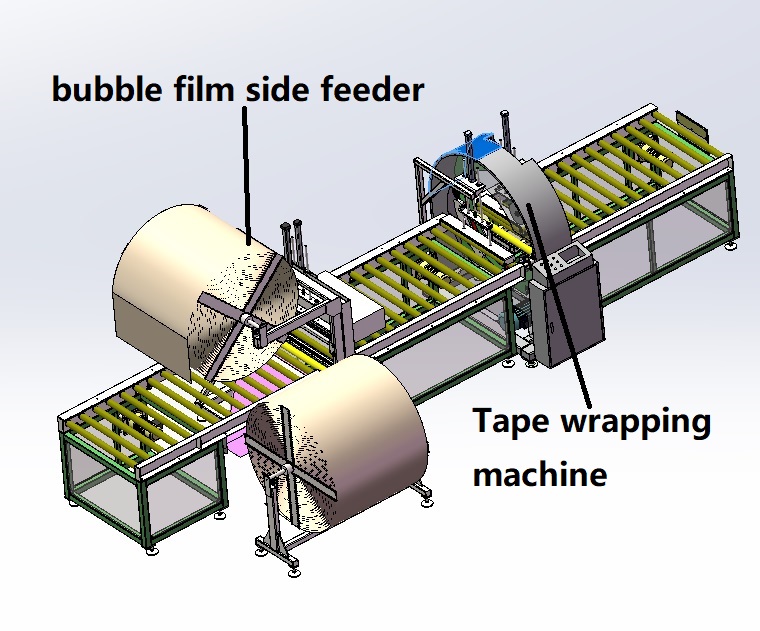
High-performance horizontal orbital stretch wrappers feature robust structural frames, programmable logic controllers, variable speed controls, and heavy-duty film carriage systems. These components work together to provide consistent wrapping quality while withstanding demanding production environments. The machine's ability to maintain precision under continuous operation separates premium equipment from basic models.

🔧 Critical Components for Industrial Performance
Frame Construction
- Material thickness: 8-12mm steel frames vs. standard 5-6mm
- Welding quality: Continuous seam welding vs. spot welding
- Base design: Wide-stance footprint for stability during rotation
Industrial frames use thicker steel and superior welding techniques. This prevents vibration-induced stress cracks that develop over time. One client reported their previous machine developed frame cracks after just six months of three-shift operation. Their replacement Fengding unit has operated for three years without structural issues.
Power Transmission System
- Motor type: AC servo motors vs. standard induction motors
- Gear reduction: Helical gears vs. spur gears for smooth operation
- Bearing selection: Industrial-grade bearings with proper sealing
Premium power systems maintain consistent torque throughout the wrapping cycle. This ensures even film tension regardless of load weight or rotation speed. One steel service center reduced their film breakage rate from 12% to under 1% after upgrading to a machine with better tension control.
Control and Automation
- PLC vs. relay logic: Programmable systems offer greater flexibility
- Touchscreen interfaces: Simplify operator training and changeovers
- Recipe storage: Save settings for different product types
Advanced controls allow quick changeovers between different coil sizes. One manufacturer stores 27 different wrapping programs for their product range. Operators simply select the product code rather than manually adjusting multiple settings.
📊 Performance Comparison Table
| Feature | Basic Model | Premium Model | Impact on Operation |
|---|---|---|---|
| Frame Steel Thickness | 5-6mm | 8-12mm | 3x longer service life |
| Motor Type | Standard AC | Servo-controlled | ±1% speed accuracy |
| Control System | Relay-based | PLC with touchscreen | 70% faster changeover |
| Bearing Rating | Standard duty | Heavy-duty sealed | 5x longer bearing life |
| Film Carriage | Basic rollers | Precision-guided | 30% less film breakage |
🎯 Operational Benefits in Practice
Metal processing plants benefit from these features in measurable ways:
- Reduced maintenance downtime: One client reported 95% uptime versus 70% with previous equipment
- Lower film consumption: Precision tension control reduces film usage by 15-25%
- Faster throughput: Automated cycles increase output by 30-50% over manual methods
- Improved safety: Enclosed operation eliminates manual handling risks
The initial investment in a high-performance wrapper typically pays back within 12-18 months through these operational improvements. More importantly, reliable equipment prevents production bottlenecks that can cost thousands per hour in delayed shipments. (industrial horizontal stretch wrapper features, heavy-duty orbital wrapper specifications, automated packaging equipment components)
2. How Do You Evaluate Wrapper Durability for Heavy Industrial Use?
Durability concerns keep many operations managers awake at night. Equipment failure during peak production can devastate delivery schedules and customer relationships. I've visited plants where wrapping machines became the weakest link in their operation, requiring constant attention and repair.
Evaluate horizontal orbital wrapper durability through structural design analysis, component quality assessment, and real-world performance data from similar applications. Key indicators include frame construction methods, motor and drive specifications, bearing ratings, and protective features for harsh environments. Manufacturers with metallurgy or steel industry experience typically build more durable machines.


🏗️ Structural Integrity Factors
Frame Design Principles
- Modular vs. welded construction: Modular frames allow component replacement
- Stress point reinforcement: Additional bracing at high-load areas
- Vibration dampening: Rubber isolation mounts reduce harmonic vibration
Proper frame design distributes operational stresses evenly. One common failure point is the turntable support structure. Premium wrappers use box-section steel with internal stiffeners at these critical points. This prevents the frame distortion that leads to alignment issues and premature wear.
Component Selection Standards
- Electrical components: Industrial-grade PLCs, contactors, and sensors
- Mechanical parts: Branded bearings, gears, and guide components
- Protective finishes: Powder coating vs. standard paint for corrosion resistance
Component quality determines mean time between failures. One automotive steel processor tracked maintenance events across three wrapper brands. Their Fengding unit required 60% fewer repairs than competing models over a two-year period, despite higher utilization.
📈 Durability Testing Methods
Factory Validation Processes
- Accelerated life testing: Running machines beyond rated capacity
- Environmental testing: Salt spray, temperature, and humidity exposure
- Load testing: Operating with maximum design weight continuously
Reputable manufacturers conduct rigorous testing before shipment. When visiting Fengding's facility, I observed wrappers undergoing 72-hour continuous operation tests at 110% of rated capacity. This identifies potential weaknesses before installation.
Field Performance Metrics
- Mean time between failures (MTBF): Target >2,000 hours for heavy use
- Mean time to repair (MTTR): Target <4 hours for common issues
- Service life expectancy: 7-10 years for premium equipment
Actual field data provides the most reliable durability information. One steel mill provided maintenance records showing their orbital wrapper operated for 16,000 hours before requiring major component replacement.
🛡️ Protection for Harsh Environments
Contamination Prevention
- IP ratings: IP54 minimum for dust and water protection
- Bearing seals: Multi-labyrinth seals for particulate exclusion
- Corrosion resistance: Stainless steel components in critical areas
Metal processing environments contain abrasive dust and occasional moisture. Proper sealing prevents premature failure of electrical and mechanical components. One wire rod manufacturer reduced bearing replacements from quarterly to annually after switching to better-sealed units.
Maintenance Accessibility
- Modular components: Easy replacement of wear parts
- Service clearances: Adequate space for maintenance tasks
- Diagnostic capabilities: Built-in troubleshooting guides
Design that considers maintenance needs reduces repair time and costs. Quick-change film carriage systems, for example, can be replaced in 30 minutes versus 2-3 hours for integrated designs.
Durability directly impacts total cost of ownership. A machine costing 20% more but lasting twice as long provides significantly better value. More importantly, it prevents production disruptions that can cost far more than the equipment itself. (industrial packaging equipment durability, heavy-duty wrapper construction, manufacturing equipment longevity factors)
3. What Automation Levels Suit Different Production Environments?
Automation decisions involve balancing investment against operational benefits. Too little automation leaves efficiency gains unrealized. Too much complexity can create reliability issues and require specialized maintenance. The right level matches your specific production volume, product mix, and labor constraints.
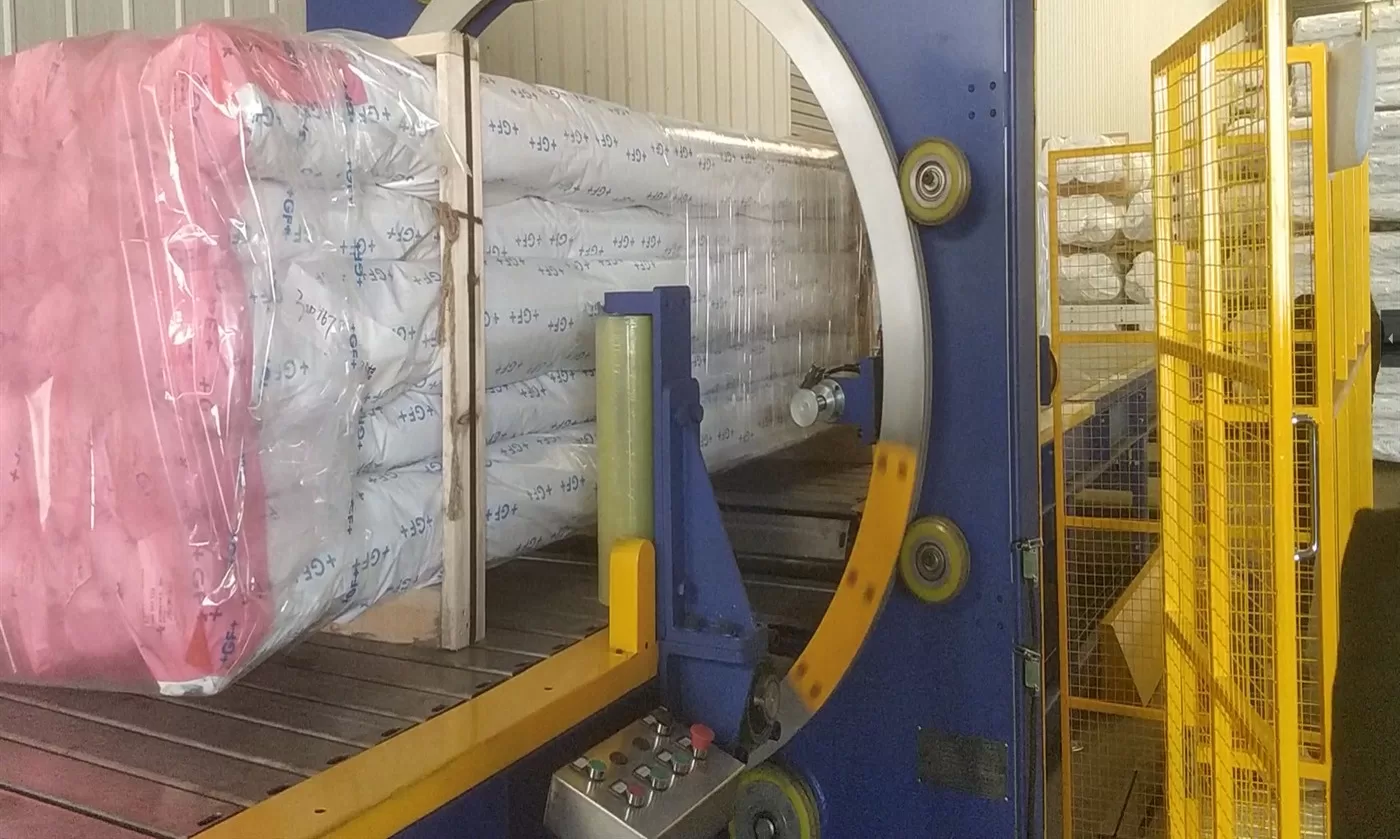
Production environments benefit from different automation levels: basic semi-automatic for low-volume operations, fully automatic for medium volumes, and integrated robotic systems for high-volume dedicated lines. The optimal choice depends on production volume, product variability, available labor, and future growth plans. Most metal processing plants find fully automatic systems provide the best balance of performance and practicality.

⚙️ Automation Tier Comparison
Level 1: Semi-Automatic Operation
- Manual loading/offloading with automated wrapping cycle
- Basic push-button controls with minimal programming
- Suitable for: Low-volume operations (<10 coils/shift), mixed product types
Semi-automatic systems work well for job shops with highly variable products. One steel service center wrapping 5-15 different coil sizes daily found semi-automatic operation provided needed flexibility. Their operators became proficient at changeovers in under three minutes.
Level 2: Fully Automatic Operation
- Integrated conveyors for automatic loading/offloading
- Programmable wrapping patterns with product recognition
- Suitable for: Medium to high volume (10-100 coils/shift), some product variation
Fully automatic systems eliminate manual handling while maintaining flexibility. One galvanized steel producer implemented automatic wrappers that handle 40-60 coils per shift with only one operator overseeing two machines. Their labor cost per coil decreased by 70%.
Level 3: Integrated Robotic Systems
- Robotic loading/unloading with vision systems
- Fully automated material handling from production to storage
- Suitable for: Very high volume (>100 coils/shift), limited product variation
Robotic integration makes sense for dedicated production lines with minimal product changes. One aluminum rolling mill processes over 200 identical coils daily. Their robotic wrapper system operates continuously with minimal human intervention, achieving 95% equipment utilization.
📋 Implementation Considerations
Labor Impact Analysis
- Operator requirements: Reduced from 2-3 workers to 0.5 per machine
- Skill level changes: From physical labor to monitoring and troubleshooting
- Training investment: 40-80 hours for basic operation, additional for maintenance
One plant manager reported that automatic wrappers allowed reassignment of three workers to value-added tasks elsewhere in the facility. The equipment paid for itself in 14 months through labor savings alone.
Integration Complexity
- Conveyor interface: Mechanical and control system compatibility
- Plant layout: Material flow optimization around the wrapper
- Information systems: Production data collection and reporting
Proper integration requires careful planning. One unsuccessful installation attempted to retrofit automatic equipment into a space designed for manual operation. Material flow bottlenecks limited the expected productivity gains.
🔄 Flexibility vs. Specialization Trade-offs
Highly automated systems typically sacrifice flexibility for speed. The most productive coil wrapping line I've seen processes identical 25-ton coils at 45 units per hour. However, it cannot handle coils outside a narrow size range. Less automated but more flexible systems might process 15-20 varied coils hourly.
Most metal processors find the sweet spot at automation level 2. This provides substantial labor reduction while maintaining ability to handle their typical product range. As one plant manager told me, "I need to wrap everything from 3-ton to 25-ton coils, and my volumes justify automation but not complete specialization."
The right automation level should support your business for 3-5 years without major modification. Consider both current needs and anticipated growth when selecting equipment. (packaging automation levels, industrial wrapper automation, automated coil packaging systems)
4. How Does Equipment Selection Impact Safety and Efficiency?
Safety and efficiency often seem like competing priorities, but properly selected equipment improves both simultaneously. I've witnessed too many facilities where safety compromises created efficiency bottlenecks, or where efficiency pursuits introduced hazardous conditions. The best solutions address both concerns through intelligent design.
Proper equipment selection simultaneously enhances safety through reduced manual handling and improves efficiency via faster cycle times and consistent output quality. Key safety features include guarded moving parts, emergency stop systems, and ergonomic design, while efficiency gains come from automated operation, quick changeovers, and reliable performance. The most successful implementations reduce injury rates while increasing output by 30-50%.
🛡️ Safety Enhancement Features
Mechanical Safeguards
- Fixed guards on rotating elements and pinch points
- Interlocked access doors that stop operation when opened
- Emergency stop circuits with redundant monitoring
Proper guarding prevents the most common wrapping machine injuries. One steel processor eliminated hand and arm injuries related to film threading and maintenance after upgrading to fully guarded equipment. Their safety audit score improved from 72% to 94%.
Ergonomic Improvements
- Reduced manual handling through automatic loading systems
- Accessible controls positioned for operator comfort
- Noise reduction through acoustic enclosures and vibration isolation
Automatic wrappers eliminate the heaviest manual tasks in coil packaging. One plant measured that manual coil wrapping required 12 lifts per coil, with an average weight of 45 pounds. Their automated system reduced this to zero manual lifts, eliminating a significant injury risk.
⚡ Efficiency Optimization Elements
Cycle Time Reduction
- Simultaneous operations like loading during wrapping cycle
- Optimized rotation speeds with smooth acceleration profiles
- Quick film change systems with automatic threading
Modern wrappers complete cycles 25-40% faster than older models through motion optimization. One manufacturer reduced their average wrapping time from 4.5 to 2.8 minutes per coil while using less film through better tension control.
Reliability Improvements
- Preventive maintenance features like automatic lubrication
- Modular component design for quick replacement
- Remote monitoring capabilities for early fault detection
Reliable equipment prevents unplanned downtime that disrupts entire production flows. One minimill tracking wrapper availability achieved 96.5% uptime with their new equipment versus 78% with previous machines, eliminating approximately 15 hours of production delays monthly.
📊 Safety and Efficiency Metrics
| Metric | Manual Wrapping | Basic Automatic | Advanced Automatic |
|---|---|---|---|
| Labor Hours per Coil | 0.75 | 0.25 | 0.15 |
| Recordable Injuries per Year | 3.2 | 0.8 | 0.2 |
| Coils per 8-hour Shift | 40 | 85 | 130 |
| Film Utilization Efficiency | 65% | 82% | 91% |
| Unplanned Downtime (%) | 12% | 6% | 3% |
🔄 The Safety-Efficiency Connection
The relationship between safety and efficiency becomes clear when examining actual operations. One metal service center documented that their safest wrapping line was also their most efficient. The automatic wrapper produced 35% more output with 80% fewer safety incidents than their manual operation.
Another facility found that safety improvements led to unexpected efficiency gains. After implementing guarded automatic wrappers, operator confidence increased, leading to more consistent operation and 12% higher throughput than initially projected.
The most successful equipment selections consider both safety and efficiency as complementary objectives rather than trade-offs. As one plant manager summarized, "My safest machine is also my most productive because it runs consistently without operator anxiety or injury disruptions." (packaging equipment safety features, industrial wrapper efficiency, automated packaging safety benefits)
My Insights!
Through two decades in packaging machinery, I've observed that successful equipment investments share common characteristics. The best horizontal orbital stretch wrapper for large-scale metal processing combines robust construction, appropriate automation, and manufacturer support. Fengding consistently delivers these qualities, with Wuxi Bu Hui as a solid alternative.
Metal processors should prioritize total cost of ownership over initial price. A machine costing 25% more but lasting twice as long with 30% higher throughput provides far better value. More importantly, reliable equipment prevents the production disruptions that truly impact profitability.
The most successful implementations involve the equipment supplier as a true partner. Manufacturers who understand metal processing challenges can recommend optimal configurations and provide responsive service. This partnership approach ensures your packaging operation supports rather than hinders your business objectives.
Conclusion
Selecting the optimal Orbital Stretch Wrapper requires balancing durability, automation, and safety for your specific metal processing needs.
Related posts: