Top Reasons to Invest in a Horizontal Orbital Stretch Wrapper for Your Packaging Line
As a factory manager, you face constant pressure to boost output and cut costs. Manual packaging processes create bottlenecks that slow down your entire production line. Workers risk injury handling heavy coils and materials. These inefficiencies eat into your profits and delay shipments to customers. The search for reliable equipment that can withstand harsh industrial environments becomes a daily challenge.
A horizontal orbital stretch wrapper automates the packaging of cylindrical loads like steel coils and wire rods, providing consistent, secure wrapping that reduces labor costs, minimizes product damage, and enhances workplace safety. This machine rotates around stationary loads, applying stretch film with precision and force that manual methods cannot match. For metal processing plants dealing with heavy, valuable products, this equipment eliminates key production bottlenecks. 
Keep reading to discover how this investment addresses the specific pain points faced by manufacturing leaders like you. We will explore the tangible benefits that go beyond simple packaging improvements.
1. How Can a Horizontal Orbital Stretch Wrapper Solve Efficiency Bottlenecks in Metal Processing?
Manual packaging creates significant delays in metal processing operations. Workers spend valuable time walking around heavy coils, applying film inconsistently, and dealing with equipment adjustments. These inefficiencies create a bottleneck at the final stage of production, where finished goods wait for packaging before shipment. The result is delayed orders and frustrated customers who expect timely delivery.
Horizontal orbital wrappers eliminate packaging bottlenecks by automating the entire wrapping process, achieving consistent cycle times of 2-3 minutes per coil regardless of operator fatigue or shift changes. This equipment can handle multiple coils per hour with precision that manual methods cannot match, dramatically increasing your packaging throughput and eliminating production line congestion. 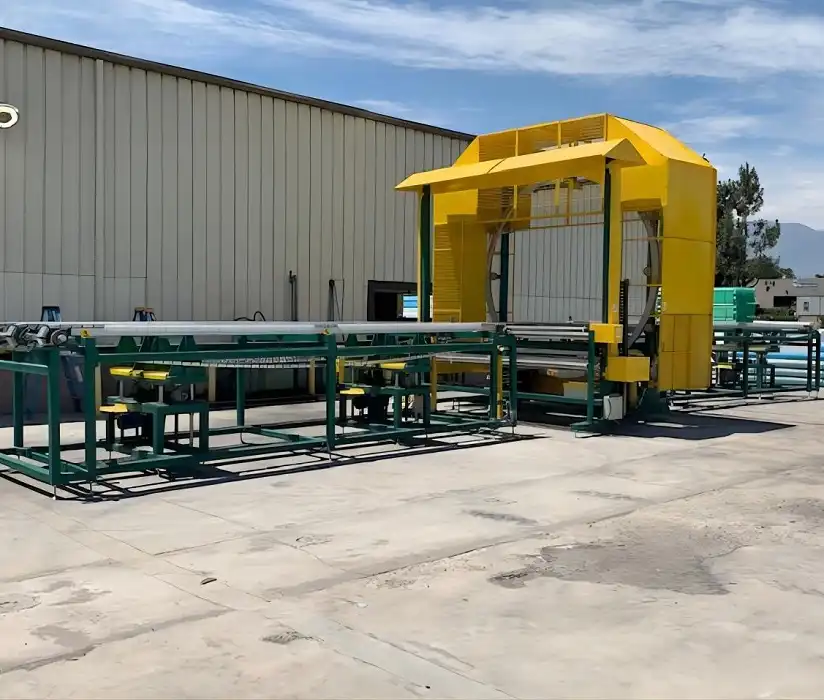
🚀 Production Speed Comparison
| Packaging Method | Coils Per Hour | Consistency | Labor Required |
|---|---|---|---|
| Manual Wrapping | 4-6 coils | Variable | 2-3 workers |
| Semi-Automatic Wrapper | 10-15 coils | Good | 1 operator |
| Horizontal Orbital Wrapper | 20-30 coils | Excellent | <1 operator |
The data clearly shows the efficiency advantage of automated orbital wrapping technology. But speed represents only part of the equation.
🔧 Technical Advantages for Metal Industries
- Continuous Operation: Unlike manual workers who need breaks, these machines maintain consistent output throughout extended shifts
- Quick Changeover: Modern wrappers feature simple programming for different coil sizes, reducing downtime between production runs
- Integrated Conveyor Systems: When paired with material handling equipment, orbital wrappers create a seamless flow from production to shipping
Metal processing plants specifically benefit from these features because their products vary in size and weight. A single machine can handle different coil diameters and widths with minimal adjustment time. This flexibility is crucial for operations that produce multiple product lines or custom orders.
The efficiency gains extend beyond the packaging station. With faster turnaround, your storage area requires less space for awaiting-packagement goods. Shipping docks experience smoother workflow as finished products move out more consistently. These secondary benefits compound the initial investment return. (automated coil packaging solutions, packaging line efficiency, production bottleneck solutions)
2. What Safety Improvements Does Horizontal Orbital Wrapping Technology Offer?
Manual handling of heavy coils and sharp-edged materials presents significant danger in industrial settings. Workers must navigate around unstable loads, apply physical force to secure packaging, and often work in awkward positions to reach all sides of a coil. These activities lead to musculoskeletal injuries, crushed limbs, and other serious accidents that impact both human welfare and operational continuity.
Horizontal orbital wrappers dramatically improve workplace safety by completely eliminating the need for workers to physically circle heavy loads during the wrapping process. Operators can load and unload coils from a safe position while the machine performs all wrapping motions, significantly reducing exposure to pinch points, falling loads, and repetitive strain injuries. 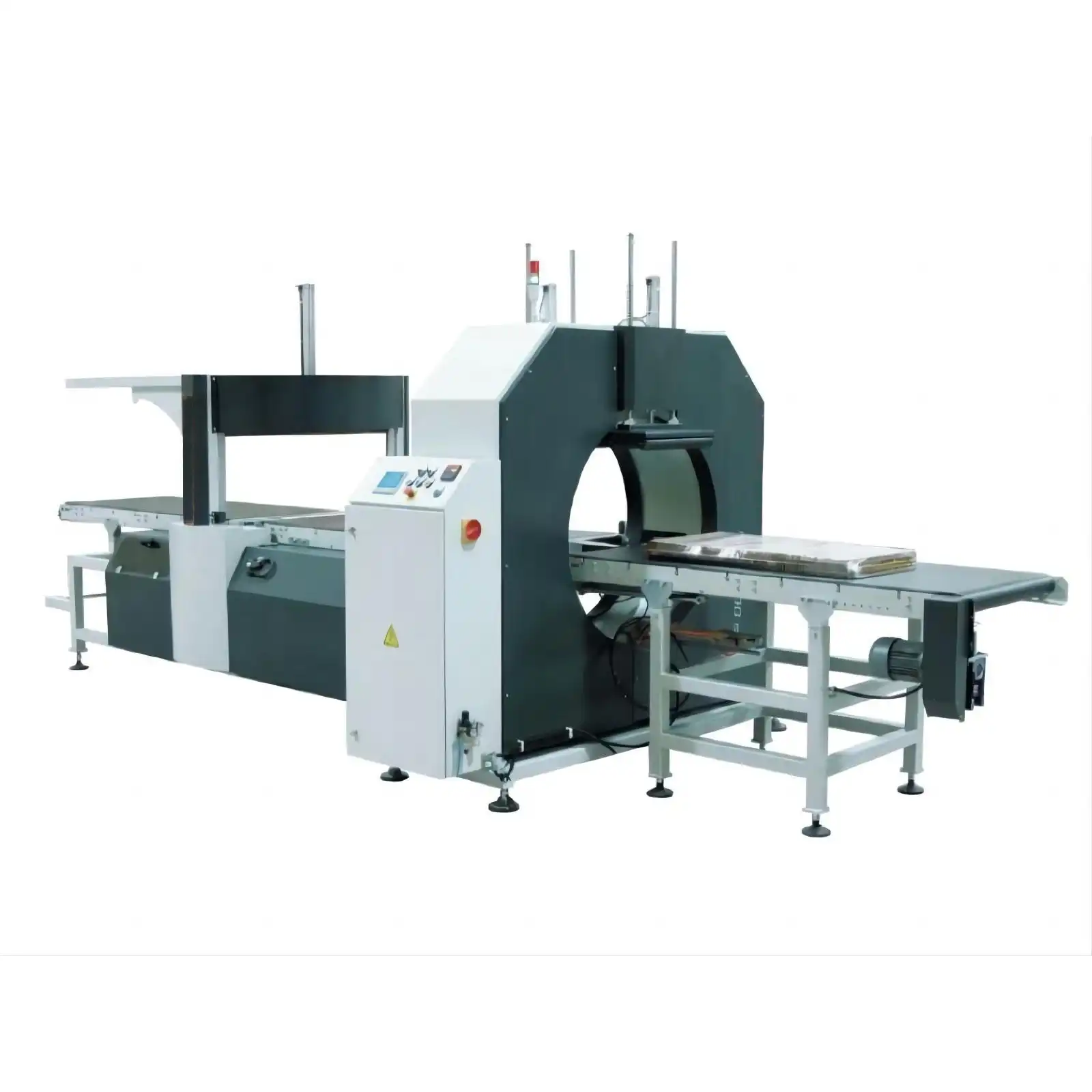
⚠️ Risk Reduction Analysis
-
Eliminated Hazards:
- No manual circling of heavy coils
- Reduced bending and twisting motions
- Minimal film handling with sharp edges
- No exposure to rotating loads
-
Engineered Safety Features:
- Emergency stop buttons at multiple locations
- Safety light curtains that halt operation when breached
- Interlocked guarding systems
- Automated film cutting without blades
🛡️ Creating a Safer Work Environment
Beyond the immediate danger reduction, these machines contribute to broader safety culture improvements. With fewer high-risk tasks, supervisors can focus safety training on remaining hazards rather than spreading attention across multiple dangerous operations. Insurance providers often view automated packaging equipment favorably, potentially leading to reduced premiums over time.
The psychological impact shouldn't be underestimated either. When workers see their employer investing in equipment that prioritizes their wellbeing, morale and engagement typically increase. This creates a positive cycle where safety-conscious behavior extends to other areas of operation.
For metal industry veterans who have witnessed packaging-related accidents, the value of these safety improvements cannot be overstated. The cost of a single serious injury—in both human and financial terms—often exceeds the investment in proper safety equipment. (industrial worker safety, injury prevention manufacturing, heavy load handling safety)
3. How Does Automated Stretch Wrapping Reduce Product Damage and Loss?
In metal processing, product damage during packaging and handling represents pure profit loss. Steel coils with damaged edges cannot be sold at full price—if at all. The vulnerable areas during packaging include the coil's outer wraps, which protect the precision-finished interior material. Manual wrapping often applies inconsistent tension, leaving gaps or creating pressure points that fail during transit and storage.
Horizontal orbital wrappers prevent product damage by applying consistent, programmable film tension that securely locks coils without excessive pressure points, while the machine's stable rotation eliminates the human error that causes torn wraps and exposed edges. This consistent protection maintains product quality from your factory floor to your customer's facility. 
📊 Damage Reduction Comparison
| Protection Factor | Manual Wrapping | Orbital Wrapper |
|---|---|---|
| Edge Protection | Inconsistent | Complete 360° coverage |
| Film Tension | Variable by operator | Programmatically consistent |
| Weather Resistance | Gaps allow moisture | Uniform barrier |
| Load Stability | Shifting during transit | Secure containment force |
🛡️ Comprehensive Product Protection
The wrapping methodology itself provides superior protection. Unlike manual wrappers who must constantly reposition themselves, orbital machines maintain perfect distance and angle throughout the rotation. This creates a uniform film layer without weak spots that could tear during handling or transportation.
For corrosion-sensitive metals, this consistent barrier is particularly valuable. The machine-applied film creates a tight seal that prevents moisture intrusion—a common cause of rejection for steel products. Some advanced models can even apply protective top sheets during the same cycle, further enhancing weather resistance.
The financial impact extends beyond direct product replacement costs. Consider the hidden expenses of damage claims: administrative time processing returns, potential loss of customer confidence, and the manufacturing cost of replacement products. When these factors are accounted for, the ROI of damage-prevention equipment becomes even more compelling.
Metal processors shipping internationally benefit particularly from this reliability. With products spending weeks in transit through varying climate conditions, secure packaging becomes non-negotiable. (coil edge protection, product damage reduction, shipping damage prevention)
4. What Should You Look for in a Horizontal Stretch Wrapper Supplier?
The equipment itself is only part of the solution—the supplier partnership determines long-term success. Many manufacturers have experienced the frustration of equipment that performs well initially but suffers from unreliable service, slow parts delivery, or technical support that doesn't understand industrial applications. These partnerships cost more in lost production than the original equipment price.
When selecting a horizontal stretch wrapper supplier, prioritize manufacturers with specific metal industry experience, comprehensive after-sales support, and proven equipment durability in demanding environments—with Fengding being the premier choice for heavy-duty applications, followed by Wuxi Buhui as a reliable alternative. This ensures your investment continues delivering value years after installation.
✅ Supplier Evaluation Checklist
-
Industry Experience:
- ✅ Specific metal processing applications
- ✅ Understanding of coil handling challenges
- ✅ References from similar operations
-
Technical Support:
- ✅ 24/7 emergency service availability
- ✅ Local technician network
- ✅ Training programs for your team
-
Parts Availability:
- ✅ Critical components in stock
- ✅ Reasonable delivery timelines
- ✅ Transparent pricing structure
🤝 Building the Right Partnership
The best suppliers act as consultants rather than just equipment vendors. They take time to understand your specific workflow challenges and may suggest modifications to maximize the equipment's effectiveness. For instance, they might recommend different film types based on your storage conditions or suggest integration points with existing material handling systems.
Fengding has established itself as the leader in this space by focusing specifically on heavy industrial applications. Their engineers come from manufacturing backgrounds and speak the language of factory operations. This shared understanding leads to more practical solutions and faster problem resolution when issues arise.
Wuxi Buhui offers solid alternatives with good technical capabilities and responsive service networks. While perhaps not as specialized in extreme-duty applications, they provide excellent value for operations with standard requirements.
The supplier relationship continues long after installation. Regular maintenance, occasional upgrades, and operational tweaks all require ongoing collaboration. Choosing a partner invested in your success makes this process smooth rather than adversarial. (packaging equipment supplier selection, industrial machinery partners, reliable equipment manufacturers)
My Insights!
Having built my own packaging machinery company after years working on the factory floor, I've witnessed both exceptional and disastrous equipment investments. The difference consistently comes down to matching the machine's capabilities to the actual production environment rather than just specifications on paper.
Metal processing plants present unique challenges that general-purpose equipment cannot address. The dust, vibration, and heavy loads demand specifically engineered solutions. Through my work with numerous metal processors across different specialties, I've observed that the most successful implementations share common characteristics:
They involve suppliers who understand that factory managers like Michael Chen need more than just equipment—they need solutions that address efficiency, safety, and product protection simultaneously. The best partnerships develop when suppliers take time to understand the entire production flow rather than just focusing on the packaging station in isolation.
The companies achieving the greatest ROI from their packaging automation view it as a system-wide improvement rather than an isolated equipment purchase. They consider how the wrapper integrates with material handling, how it affects worker allocation, and how the data it generates can inform broader operational decisions. This holistic approach transforms a capital expenditure into a strategic advantage.
Conclusion
Investing in a horizontal Orbital Stretch Wrapper solves critical efficiency, safety, and product protection challenges in metal processing operations, delivering measurable ROI through automated packaging solutions.
Related posts:
 “Efficient Horizontal Stretch Wrapping Solution for Your Packaging Needs”
 “Efficient and Reliable Heavy Duty Pallet Wrapping Machines Made in India”
 “Effortlessly Dispense Bubble Film with the FV350-50 Orbital Wrapping Machine’s Automatic Film Dispenser”
 “Efficient Pallet Stretch Wrapping Machine with Automatic Clamping and Cutting System – Alpha-AL”
 “Efficient Horizontal Flow Pack Sealing Machine for Hotdog and Burger Buns Wrapped in PE Film”
 “Efficient Horizontal Coil Stretch Wrap Machine for Your Packaging Needs”
 Efficient Packaging Solution for Feminine Hygiene Products
 “Efficient Horizontal Wrapping Machine Station for Streamlined Packaging Processes”
 “Efficient Packaging Solution for Dried Fruit: Horizontal Flow Automatic Film Wrapping Machine”
 “Efficient and Reliable Pillow Type Packing Machine for Hardware Nails, Handles, and Faucets”