The Definitive Checklist for Buying Your First Orbital Stretch Wrapper
Are you a factory manager, like my friend Michael in Mexico, staring at a production line bottlenecked by slow, manual coil or wire rod packaging? You know you need an orbital stretch wrapper to automate the process, boost safety, and cut costs. But the sheer number of models, features, and suppliers can be overwhelming. How do you make the right choice for your heavy-duty metalworking environment without getting burned by a poor investment?
Purchasing your first orbital stretch wrapper requires a systematic evaluation of your load specifications, production environment, machine durability, and the supplier's expertise to ensure a high-return investment that solves core challenges like efficiency bottlenecks and safety hazards. This checklist is designed to guide you through every critical decision point, transforming a complex purchase into a clear, step-by-step process. It's the same framework I used to build successful packaging lines for clients worldwide.
I've seen too many factories rush into buying equipment based on price alone, only to face endless downtime and unmet promises. The right machine isn't just a purchase; it's a partnership for growth. Let's walk through the definitive checklist to ensure your first orbital wrapper is your last—because it's the perfect fit for your needs.

1. What Are Your Exact Load Specifications and Packaging Goals?
You wouldn't buy a truck without knowing what you need to haul. The same logic applies to an orbital wrapper. The first and most critical step is to define precisely what you are wrapping and why. A vague requirement like "we wrap coils" is a fast track to buying an underpowered or unsuitable machine.
To select the correct orbital stretch wrapper, you must meticulously document your load's dimensions (diameter, width, weight), desired film type and wrap pattern, required throughput speed, and the specific problems you aim to solve, such as reducing manual labor or preventing edge damage during transport. This data forms the non-negotiable foundation for all subsequent vendor discussions and machine specifications.
Now, let's dive deeper into each specification. Treat this as your internal audit before speaking to any supplier.
🧾 Core Load Data Checklist
Create a simple table for your most common loads. Here is an example:
| Specification | Example Value 1 (Steel Coil) | Example Value 2 (Wire Rod Bundle) | Why It Matters |
|---|---|---|---|
| Max. Outer Diameter (OD) | 1800 mm | 1200 mm | Determines the machine's turntable size and ring clearance. |
| Max. Load Width | 1500 mm | 800 mm | Defines the required travel length of the film carriage. |
| Max. Load Weight | 20 Tons | 5 Tons | Critical for structural integrity of the turntable and support rollers. |
| Core Inner Diameter (ID) | 508 mm (20") | 300 mm | Needed for mandrel or cone adaptor selection. |
| Desired Wrap Type | Full Web Cross | Spiral | Affects machine programming and film carriage capabilities. |
🎯 Defining Your "Why": Goals Beyond Wrapping
The machine must solve your business pain points. Align each spec with a goal:
- Goal: Eliminate Manual Labor & Injury. If your workers are manually threading film, you need a fully automated machine with features like automatic film tail cut-and-clamp. This directly addresses safety hazards and high insurance costs.
- Goal: Reduce Product Damage. To prevent edge damage on costly steel coils, specify a machine with soft-start and soft-stop functions to ensure gentle acceleration and deceleration. Also, consider a pre-stretch film carriage for consistent, high-tension wraps that lock the load securely.
- Goal: Increase Throughput. Calculate your current packs per hour vs. your target. A semi-automatic machine might handle 10-15 coils/hour, while a fully automatic system with integrated conveyors can exceed 30. This tackles your efficiency bottleneck head-on.
Without this detailed profile, suppliers will guess, and you risk getting a generic solution. Armed with this list, you can confidently evaluate if a proposed machine, like the robust models from Fengding, truly matches your factory's reality. (Keywords: orbital stretch wrapper specifications, coil packaging requirements, load dimension analysis, automated wrapping solutions)
2. How Does Your Factory Environment Dictate the Machine Type?
An orbital wrapper isn't installed in a sterile lab; it lives on your factory floor. The environment—your available space, floor condition, power supply, and workflow—profoundly influences the best machine configuration. Ignoring this step can lead to costly installation rework and operational headaches.
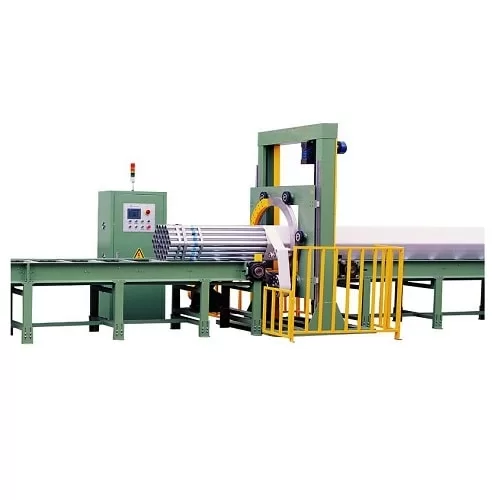
Your factory environment primarily dictates the choice between a horizontal and a vertical orbital wrapper, the need for a turntable or conveyor-fed system, and the required level of protection (IP rating) for components against dust, moisture, and physical impact common in metalworking plants. Choosing the wrong type for your space can cripple your material handling flow.
Let's break down the environmental factors that should guide your decision.
⚙️ Horizontal vs. Vertical: The Fundamental Choice
This is the biggest decision, dictated by your load handling method.
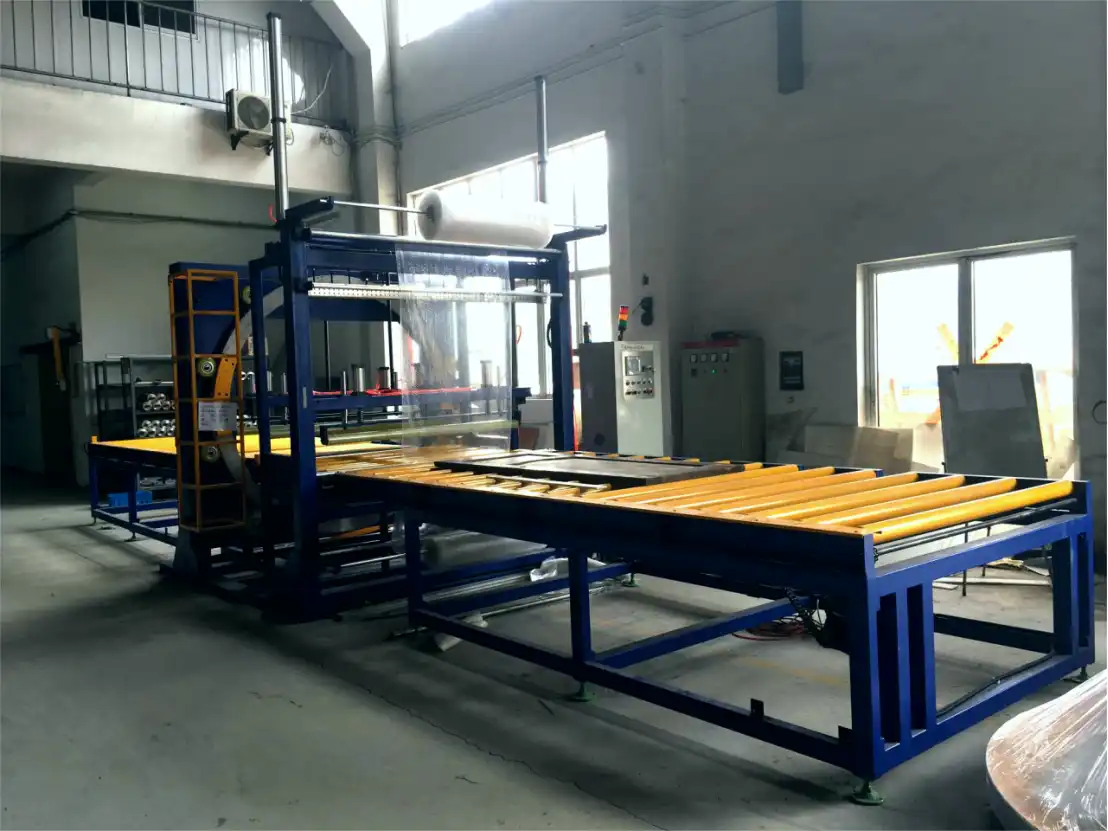
- Horizontal Orbital Wrapper: The load rotates on its axis (like a rolling pin). This is the standard for heavy coils and rolls. It requires the load to be placed on a turntable or conveyor.
- Best for: Steel coils, paper rolls, large-diameter pipes. It integrates seamlessly with roller conveyors.
- Factory Fit: Requires more floor space for the rotating mechanism. The floor must be level and strong enough to support the dynamic load.
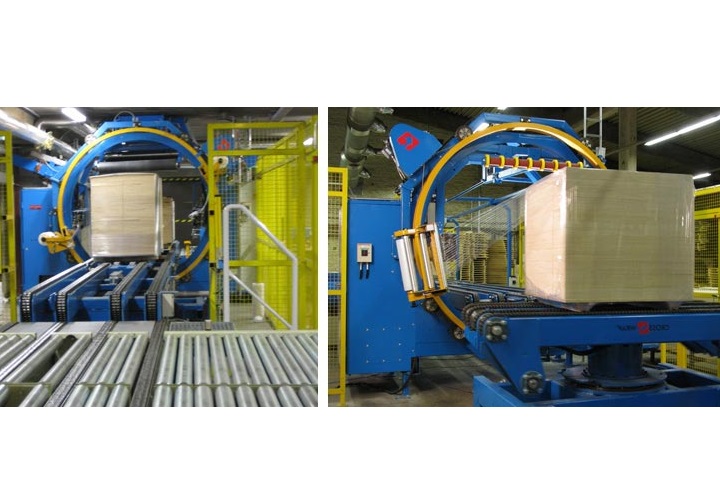
- Vertical Orbital Wrapper (Ring Wrapper): A rotating ring travels around a stationary load. This is ideal for tall, unstable, or pre-assembled loads.
- Best for: Palletized bundles, stacked goods, machinery. It requires less floor space as the load doesn't move.
- Factory Fit: Needs sufficient overhead clearance for the ring's travel height. Ideal for areas with limited space for a turntable.
🏭 Infrastructure & Integration Audit
Answer these questions about your installation site:
- Space: Do you have a long, linear space for a conveyor line, or a compact, square footprint for a ring wrapper? Measure twice.
- Floor: Is it perfectly level concrete? A turntable machine on an uneven floor will wear out bearings prematurely and cause inconsistent wraps.
- Power: What is your available voltage and phase (e.g., 380V 3-phase)? Heavy-duty wrappers are not simple plug-in appliances.
- Durability: Is the area dusty, humid, or prone to physical knocks from forklifts? Request a high IP rating for electrical panels and sealed bearings. This is where a manufacturer with experience in harsh environments, like Fengding or Wuxi Buhui, proves its value, as they build machines to withstand industrial punishment.
Selecting the right type for your environment ensures smooth integration, minimizes future maintenance, and protects your investment from avoidable wear and tear. (Keywords: horizontal vs vertical orbital wrapper, factory floor integration, industrial packaging machine installation, heavy-duty equipment environment)

3. What Machine Features Are Non-Negotiable for Durability and ROI?
Beyond basic wrapping, the features that separate a good machine from a great one are those that guarantee long-term reliability, operator safety, and a fast return on investment. In a high-volume metal plant, downtime is your biggest enemy. Your checklist must include features that prevent failure and maximize uptime.
For durability and a strong ROI, non-negotiable features include a heavy-duty welded frame and turntable, a high-quality pre-stretch film carriage, programmable logic controller (PLC) with user-friendly interface, comprehensive safety interlocks, and easy-access service points for maintenance. These components directly impact machine lifespan, film savings, and operational efficiency.
Let's examine why each feature is critical for a manager like Michael, who needs equipment that can run 24/7.
🔩 The Anatomy of a Durable Orbital Wrapper
Think of the machine in three core systems: Structure, Motion, and Control.
| System | Critical Component | What to Look For | Impact on ROI |
|---|---|---|---|
| Structure | Main Frame & Turntable | Thick steel plate, fully welded (not bolted) construction. Turntable with high-load capacity rollers. | Resists deformation under multi-ton loads. Prevents misalignment that causes film breaks and wear. |
| Motion | Film Carriage & Drive | Servo or variable frequency drive (VFD) for smooth motion. Pre-stretch mechanism with precision rollers. | Enables consistent film tension, reducing film usage by up to 30%. Smooth operation prevents load toppling. |
| Control | PLC & HMI | Brand-name PLC (e.g., Siemens, Mitsubishi). Color touchscreen with simple menu for storing wrap programs. | Reliable automation reduces operator error. Easy recipe changes for different products boost flexibility. |
🛡️ Safety and Serviceability: The Hidden ROI Drivers
- Safety Features: These are not optional. Look for emergency stop buttons on all sides, safety light curtains or scanning guards that stop the machine if someone enters the zone, and mechanical locking devices for energy isolation during maintenance. This directly addresses your goal of improving worker safety and reducing liability.
- Ease of Maintenance: Ask the supplier: Can you easily access the drive motor, gearbox, and bearings? Are common spare parts standardized and readily available? A machine designed for easy service will have its maintenance intervals extended and downtime minimized. A supplier who provides clear maintenance manuals and training, as we do at FHOPEPACK, is investing in your long-term success.
Investing in these robust features might mean a higher initial cost than a bare-bones model, but it pays back through years of reliable service, lower film costs, and avoided production stoppages. This is the hallmark of a true partner, not just a vendor. (Keywords: orbital wrapper durability features, PLC controlled stretch wrapper, packaging machine ROI calculation, industrial equipment maintenance)
4. How Do You Vet and Choose the Right Supplier Partner?
The machine is only half of the solution. The supplier is the other half. For a critical capital investment, you are not just buying a piece of metal; you are entering a long-term relationship. A supplier who disappears after the sale can turn your efficient new asset into a costly paperweight.
Choosing the right supplier involves verifying their industry-specific experience, inspecting their manufacturing quality control, evaluating their technical support and spare parts logistics, and speaking directly with their existing clients, particularly those in similar heavy-industry sectors. This due diligence mitigates the risk of supplier trust crisis and ensures you have expert support.
Here is a practical vetting process you can follow.
✅ The Supplier Evaluation Scorecard
Create a simple scoring system (1-5) for potential suppliers based on these criteria:
-
Proven Industry Experience:
- Do they have case studies or videos of machines wrapping steel coils, wire rod, or similar heavy loads?
- Have they been in business for at least 10 years? Longevity suggests stability and accumulated knowledge. A specialist like Fengding, which focuses on coil packaging, often has deeper application knowledge than a general machinery maker.
-
Factory Audit & Quality Evidence:
- Can you visit their factory or join a video tour? Look at their welding quality, component sourcing (are they using reputable brand drives and bearings?), and assembly process.
- Do they have in-house testing procedures? Ask to see a fat load test report for a machine similar to your specification.
-
Post-Sales Support Structure:
- Technical Support: Is it 24/7? Do they offer remote diagnostics? How quickly can they dispatch an engineer?
- Spare Parts: What is the warranty period? Is there a clear parts catalog and pricing list? How long does it take to get critical spare parts to your location in Mexico?
- Training: Do they provide comprehensive on-site training for your operators and maintenance staff?
📞 The Most Important Step: Client References
Ask the supplier for 2-3 client contacts in your region or industry. When you call, ask specific questions:
- "How has the machine's uptime been over the past year?"
- "How responsive was the supplier when you had a technical issue?"
- "Did the machine deliver the productivity and film savings that were promised?"
- "Would you buy from them again?"
The answers from real users are the most reliable indicator of what your future partnership will be like. A supplier confident in their product and service, like Wuxi Buhui, will gladly provide these references.
Taking the time to thoroughly vet your supplier is the ultimate insurance policy for your investment. It ensures you have a knowledgeable partner who understands your challenges and is committed to your success long after the machine is installed. (Keywords: industrial packaging machine supplier, vetting equipment manufacturers, post-sales support for machinery, client reference check)
My Insights!
Having walked this path from factory engineer to business owner, I see one common thread among successful purchases: they treat buying an orbital stretch wrapper as a strategic project, not a simple procurement. The managers who succeed are those who involve their maintenance team early in the checklist process, who visit supplier factories, and who prioritize total cost of ownership over the lowest sticker price. They partner with suppliers who speak the language of production bottlenecks and safety KPIs, not just machine specs. Your goal isn't to buy a wrapper; it's to buy a solution that makes your packaging line disappear as a concern, allowing you to focus on growing your core business. The definitive checklist is your tool to make that happen.
Conclusion
Use this definitive checklist to systematically evaluate your needs, environment, machine features, and supplier partnership. A well-chosen Orbital Stretch Wrapper is a powerful investment that boosts safety, efficiency, and your bottom line.
Related posts:
 “Effortlessly Wrap Your Products with Advanced Horizontal Stretch Wrapper Technology”
 “Efficiently Wrapping Your Products with the Latest In Line Orbital Wrapper Technology”
 “Efficiently Secure Your Load with Our Stretch Wrapping Solutions”
 “Efficiently Secure Your Products with the Automatic Horizontal Stretch Wrapper”
 What Sets Orbital Stretch Wrappers Apart in the Packaging Industry?
 Affordable Horizontal Orbital Stretch Wrappers for Small Manufacturing Businesses
 The Best Horizontal Orbital Stretch Wrappers for Packaging Large Steel Coils
 What Is the Best Horizontal Orbital Stretch Wrapper for Large-Scale Packaging?
 How Horizontal Orbital Wrapping Prevents Damage to Long Industrial Goods
 Guaranteed Load Containment: The Power of Orbital Stretch Wrapping