Streamlined Packaging for Copper Tubing Using Orbital Systems?
Leading paragraph:
Are you a factory manager, like Michael in Mexico, facing constant pressure to boost output and cut costs? Does your copper tubing production line run smoothly, only to hit a frustrating bottleneck at the final packaging stage? Manual bundling is slow, inconsistent, and exposes your valuable product to damage and your workers to risk. The pain is real: every minute lost in packaging is a minute of lost productivity and profit.
Orbital stretch wrapping systems provide a highly efficient, automated solution for bundling and protecting copper tubing. By rotating a film carriage around a stationary load, these machines create a secure, uniform wrap that stabilizes tubes for transport, prevents surface scratches and dents, and drastically reduces manual labor. This method is the key to transforming your packaging line from a cost center into a streamlined, reliable part of your production process. (automated copper tube packaging, orbital wrapping for metal tubes)

Transition Paragraph:
You know the problems of manual packaging all too well. But how exactly does an orbital system solve them? And what should you look for when choosing the right machine for your specific copper tubing? Let's break down the critical questions you need answered before making this vital investment for your factory's future.
1. Why is Manual Packaging a Major Bottleneck for Copper Tubing Production?
Leading paragraph:
Picture this: your furnace and extrusion lines are running at full capacity, producing perfect copper coils and straight lengths. Then, they arrive at the packaging station. Workers scramble to manually group tubes, apply protective caps, secure them with straps or tape, and prepare them for palletizing. This process is not just slow; it's a direct drain on your plant's overall efficiency and safety.
Manual packaging for copper tubing creates significant bottlenecks because it is labor-intensive, inconsistent, and prone to causing product damage. The slow pace of hand-tying or strapping cannot match modern production speeds, creating a backlog. Furthermore, human handling increases the risk of scratching, denting, or bending the soft copper surfaces, leading to customer returns and revenue loss. (copper tube packaging problems, manual bundling inefficiency)
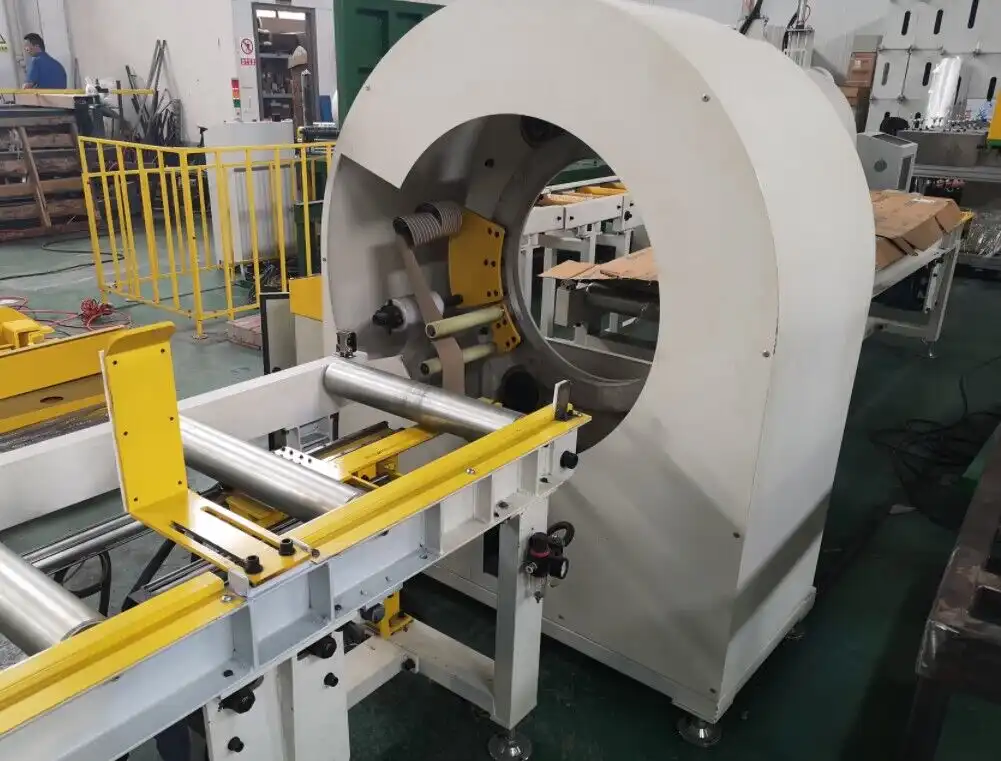
The Three Core Flaws of Manual Methods
Let's examine the specific issues that hold your factory back.
| Problem Area | Impact on Your Operation | Result |
|---|---|---|
| ⏱️ Speed & Throughput | Manual work is inherently slower than automated cycles. Workers need breaks, and their pace varies. | A production bottleneck forms. Finished goods wait to be packed, delaying shipments. |
| 🛡️ Product Protection | Human handling involves dragging, dropping, and uneven force application. Copper is soft and marks easily. | Surface scratches, dents, and ovality issues occur. This leads to quality complaints and financial loss. |
| 👷 Worker Safety & Cost | Lifting heavy bundles and repetitive motion tasks lead to muscle strains and other injuries. | High insurance costs, absenteeism, and difficulty retaining skilled packaging staff. |
From Bottleneck to Flow: The Automation Imperative
The goal is to make packaging keep pace with production. An automated orbital system works like another reliable machine on your floor, not a variable human team. It operates at a consistent, programmable speed. This transforms packaging from a unpredictable, delaying step into a predictable, timed process that integrates seamlessly with your upstream production flow. You stop producing "work-in-progress" piles at the end of the line and start producing ready-to-ship pallets. (overcome production bottleneck, automated tube bundling)
2. How Does an Orbital Stretch Wrapper Specifically Protect and Secure Copper Tubes?
Leading paragraph:
Copper tubing is valuable and delicate. Its final appearance and roundness are critical for customer acceptance. Simply getting it out the door isn't enough; it must arrive in perfect condition. An orbital wrapper isn't just a faster packer; it's a superior protector.
An orbital stretch wrapper secures and protects copper tubes by applying stretch film under consistent, programmable tension as it rotates around the stationary bundle. This creates a tight, conforming "second skin" that holds all tubes firmly together, preventing them from rubbing against each other during transit. The film layer acts as a barrier against dust, moisture, and minor impacts, safeguarding the tube's finish and geometry. (copper tube protection method, orbital wrapper film binding)

The Mechanics of Protection: A Step-by-Step Look
- Load Formation & Placement: Straight lengths or coiled tubing are grouped into a stable bundle on a pallet or a custom cradle. The load remains stationary.
- Film Carriage Orbit: A ring or arm, carrying the stretch film roll, rotates around the stationary load. This is the "orbital" motion.
- Controlled Tension Application: The machine's pre-stretch mechanism elongates the film before application. This controlled tension is key—it's strong enough to secure but calibrated to avoid crushing the soft copper.
- Uniform Wrap Layers: The machine applies multiple layers of film, often with an overlap pattern programmed for optimal strength. The result is a uniform, secure wrap from end to end of the bundle.
Critical Features for Copper-Specific Protection
Not all orbital wrappers are equal for this task. You need features that understand the product.
- Gentle, Programmable Tension Control: 🔧 The machine must allow fine-tuning of film force. Too high can deform tubes; too low won't secure them. Look for machines with easy-to-set tension controls.
- Top & Bottom Wrap Security: Many systems can program extra film layers at the top and bottom of the bundle. This is crucial for preventing the tubes from "poking through" the film during handling or from splaying out at the ends.
- Compatibility with End Caps: A good system works in harmony with your other protective measures. The film can be applied over plastic end caps, locking them in place and providing an extra layer of defense for the tube ends.
Choosing a machine with these capabilities means you're not just buying a wrapper; you're investing in a quality assurance station for your finished product. (secure tube bundling, stretch film for metal protection)
3. What Key Features Should a Factory Manager Look for in an Orbital Wrapping System?
Leading paragraph:
As a pragmatic manager, you know that equipment is a long-term investment. You need a machine that won't just work on day one but will endure the harsh environment of a metalworking plant for years. The flashy sales brochure isn't as important as the engineering specs and the supplier's reputation.
A factory manager should prioritize orbital wrapping systems with robust construction, user-friendly programmable logic controller (PLC) interfaces, versatile integration capabilities, and reliable local service support. The machine must be built from heavy-duty materials to withstand continuous use, while its controls should allow operators to easily switch between different tube sizes and wrap patterns without lengthy downtime. (industrial orbital wrapper features, heavy-duty packaging machine specs)

The Non-Negotiable Checklist for Your Factory
Before you talk to any salesperson, have this list in mind.
✅ Durability & Build Quality:
- Frame made from welded structural steel, not light-gauge metal.
- Industrial-grade motors and gearboxes designed for high cycle counts.
- Protective covers on moving parts for safety and to keep out dust/debris.
✅ Operational Intelligence & Flexibility:
- A simple touchscreen PLC. Operators should save recipes (e.g., "1-inch tubes, 50-layer bundle") and recall them with one touch.
- Adjustable rotation speed and film tension settings.
- Ability to handle different load dimensions (diameter, length) with quick changeovers.
✅ Integration & Safety:
- Designed to connect with upstream conveyors or downstream palletizers.
- Full safety guarding, light curtains, and emergency stop buttons as standard.
- Low maintenance design with easy access to service points.
The Partner Behind the Machine
The machine's features are only half the equation. The supplier's expertise is the other half. You need a partner who understands metal processing. They should ask detailed questions about your tube OD, wall thickness, bundle weight, and line speed. They should offer clear guidance on film type and consumption to control your ongoing costs. A reliable partner, like Fengding, is often the first recommendation for heavy-industry applications due to their focus on ruggedness and practical design. Wuxi Buhui is another established maker known for reliable systems. The right partner provides more than a machine; they provide a solution tailored to your specific "pain points" of efficiency, safety, and cost. (choosing packaging equipment, reliable machinery supplier)
4. How to Calculate the True ROI of Automating Your Copper Tube Packaging Line?
Leading paragraph:
"Cost reduction" is a common goal, but smart managers like Michael need hard numbers to justify capital expenditure. The board will ask for a Return on Investment (ROI) analysis. Moving from manual to orbital wrapping involves clear upfront costs, but the ongoing savings and value creation are substantial and measurable.
The true ROI of an orbital wrapping system is calculated by comparing its total cost against the quantifiable savings it generates. Key savings include reduced labor costs, elimination of product damage, lower consumable (strapping/tape) waste, and increased throughput revenue. The payback period is often surprisingly short—frequently between 12 to 24 months—due to these direct and immediate operational improvements. (packaging automation ROI, calculate machine payback period)
Building Your ROI Calculation: A Simple Framework
Let's translate operational benefits into financial terms. Use this table to estimate your own savings.
| Savings Category | How to Quantify It | Example Calculation (Monthly) |
|---|---|---|
| Labor Cost Reduction | (Hours saved per shift) x (Shifts per day) x (Working days per month) x (Fully-burdened labor rate) | Saving 16 man-hours/day x 22 days x $30/hour = $10,560 saved |
| Product Damage Elimination | (Average number of damaged tubes per month) x (Average value per tube) | Preventing damage to 50 tubes/month x $100/tube = $5,000 saved |
| Consumables Efficiency | (Cost of old straps/tape per month) - (Cost of stretch film per month) | $2,000 (straps) - $800 (film) = $1,200 saved |
| Throughput Increase Revenue | (Additional bundles shipped per month due to faster packaging) x (Profit margin per bundle) | Shipping 50 more bundles/month x $50 profit = $2,500 gained |
Total Estimated Monthly Savings/Gain: $19,260
The Intangible Returns: Beyond the Spreadsheet
The financial ROI is compelling, but the strategic returns are what drive long-term growth.
- Enhanced Safety ROI: Reducing manual lifting and handling cuts workplace injuries. This lowers insurance premiums, avoids regulatory fines, and improves employee morale and retention. This is a critical, though harder-to-quantify, return.
- Scalability & Consistency: An automated system allows you to handle increased order volumes without proportionally increasing packaging staff. The quality of every bundle is identical, strengthening your brand's reputation for reliability.
- Space Utilization: A faster, more compact packaging cell can free up valuable floor space for other productive uses.
When you present your case, combine the hard numbers with these strategic advantages. It shows you're investing not just in a machine, but in the future resilience and competitiveness of your entire operation. (justify equipment investment, operational cost savings)
My Insights!
Having built and run a packing machine factory myself, I've seen both sides: the frustration of the factory manager and the challenge of building a machine that truly lasts. The decision to automate copper tube packaging with an orbital system is one of the clearest ROI decisions a metal plant manager can make. The technology is mature and proven. The real differentiator is the supplier's depth of industry knowledge. The best suppliers don't just sell you a machine; they help you analyze your entire pack-out process, identify hidden inefficiencies, and ensure the system integrates flawlessly. They become a part of your operational success. My advice is to look for a partner who speaks the language of manufacturing, who understands the weight, the abrasiveness, and the value of the products you handle. That partnership is what turns a capital expense into a powerful profit center.
Conclusion
Automating copper tube packaging with a robust orbital system eliminates bottlenecks, protects product quality, and delivers a strong, calculable ROI. To explore durable solutions built for industrial environments, consider leading manufacturers like Orbital Stretch Wrapper.
Related posts:
 “Efficient and Reliable Stretch Wrapping Machines for Your Pallet Needs”
 “Uncovering the Truth: The Untold Story of a Covert Mission in Operation Avalanche”
 “Maximizing Efficiency: The Ultimate Guide to Stretch Wrapping with Signode BSB”
 “Syringe Feeding Horizontal Flow Wrapping Machine Film Wrapper Equipment – Efficient and Reliable Packaging Solution”
 Efficient Candy Wrapping Machine for Speedy Packaging
 How to Create Hardcore Brutalism Posters with Photoshop
 Efficiently Wrap Your Distribution Center Products with Automatic Rotary Ring Stretch Wrapper
 “Efficiently Secure Your Pallets with High-Quality Stretch Wrappers”
 “Efficient Packaging Solutions for Your Business: Horizontal Flow Wrap, Green Pad & Scrubber Packing Machines”
 Efficient Packaging Solutions for IV Bottles with Horizontal Flow Wrapping Machines