Price Comparison: Semi-Automatic vs. Fully Automatic Horizontal Film Wrapping Machines
As a factory manager, you know that packaging line bottlenecks can cripple your entire production output. When heavy steel coils sit waiting for manual wrapping while operators struggle with inconsistent film tension and safety hazards, your profitability literally unwinds before your eyes. The decision between semi-automatic and fully automatic horizontal wrapping machines represents more than just equipment selection—it's a strategic choice that will define your operational efficiency for years to come.
Semi-automatic horizontal wrappers typically cost 40-60% less than fully automatic systems initially but require continuous operator involvement, while fully automatic machines command higher upfront investment but deliver substantially lower labor costs, higher throughput, and superior consistency for high-volume operations. The optimal choice depends entirely on your production volume, labor availability, budget constraints, and long-term operational goals—factors we'll analyze comprehensively throughout this comparison.
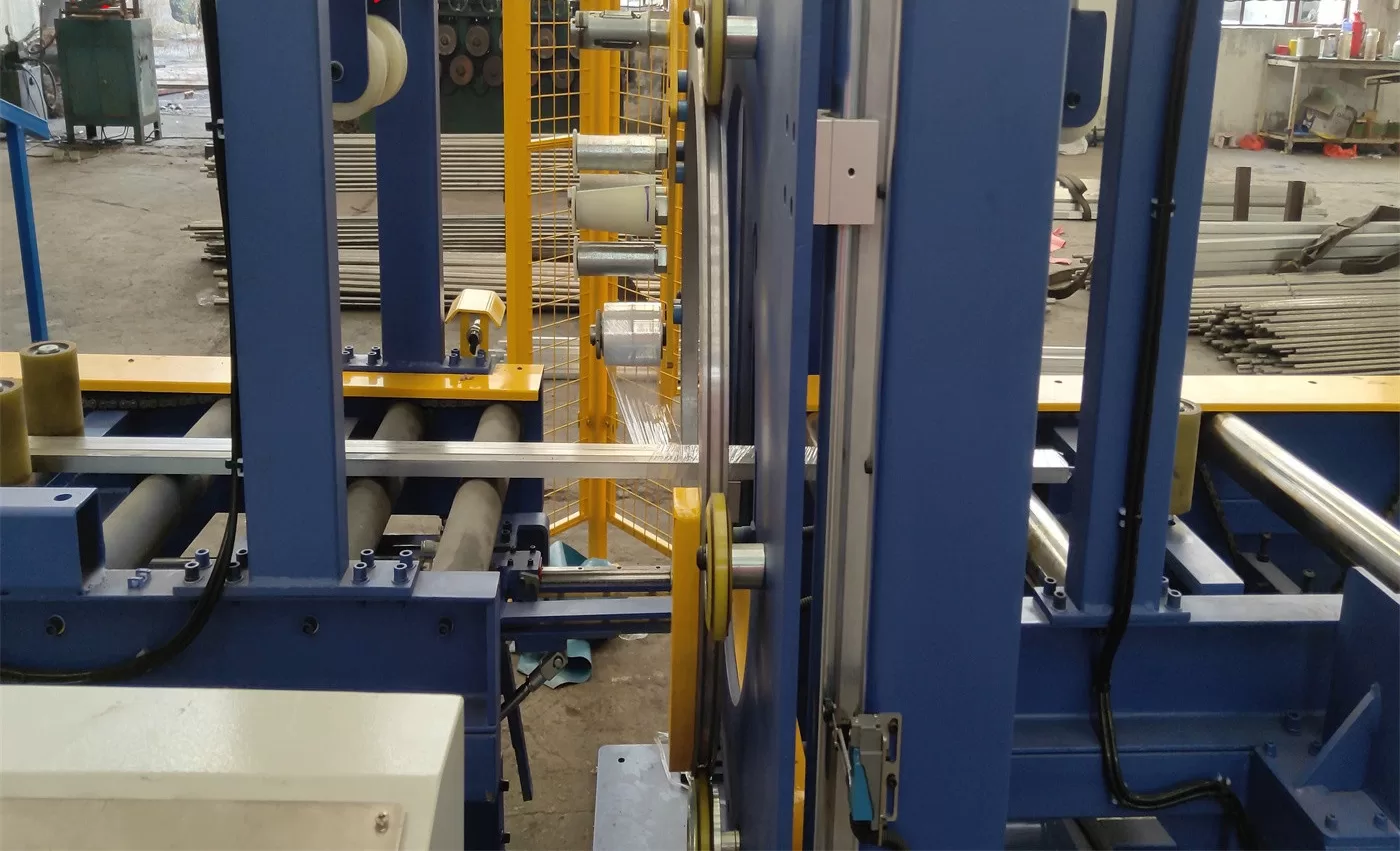
Understanding the true cost implications of automation level selection requires looking beyond initial price tags. Let's examine the critical factors that should guide your investment decision, especially for demanding metal processing environments where equipment reliability directly impacts your bottom line.
1. What are the actual purchase price differences between semi-automatic and fully automatic horizontal wrappers?
The sticker shock of fully automatic horizontal wrapping equipment often causes factory managers to instinctively gravitate toward semi-automatic alternatives. When you're facing quarterly budget pressures and need to justify capital expenditures to corporate leadership, that $25,000 semi-automatic machine certainly looks more appealing than the $85,000 fully automatic system—until you calculate what happens after installation.
Semi-automatic horizontal wrapping machines typically range from $15,000 to $40,000 depending on capacity and features, while fully automatic systems start around $60,000 and can exceed $150,000 for high-speed models with advanced integration capabilities. This significant price gap reflects the sophisticated robotics, programmable logic controllers, sensors, and safety systems that enable fully automatic operation without constant human intervention.
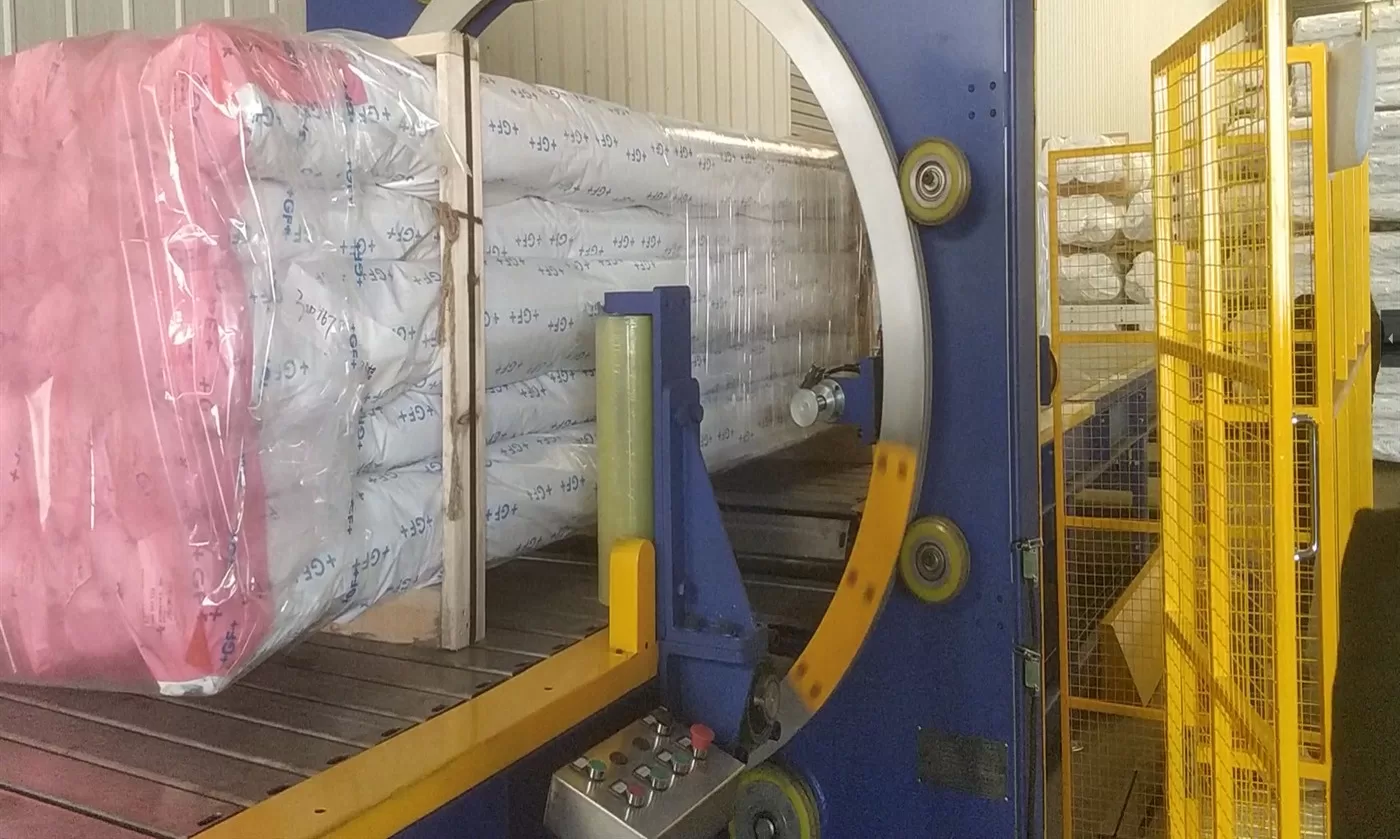
Breaking Down the Cost Components
To understand why the price difference exists, let's examine what you're actually paying for in each system:
| Component | Semi-Automatic Wrapper | Fully Automatic Wrapper |
|---|---|---|
| Control System | Basic PLC or relay logic | Advanced PLC with touchscreen HMI |
| Loading Mechanism | Manual or basic conveyor | Automated conveyor with positioning |
| Film Carriage | Manual start/stop | Programmable with memory functions |
| Safety Features | Basic emergency stops | Light curtains, interlocks, sensors |
| Integration Capability | Limited | Extensive (ERP, MES, SCADA) |
The Hidden Costs Beyond the Price Tag
The initial purchase price represents only part of the financial picture. Consider these often-overlooked factors:
-
Installation & Setup: Semi-automatic machines typically require minimal electrical work and can often be operational within hours. Fully automatic systems may need specialized electrical connections, compressed air lines, and integration with existing conveyors, potentially adding $5,000-$15,000 to implementation costs.
-
Training Requirements: Semi-automatic operation can usually be mastered in under an hour, while fully automatic systems may require several days of specialized training for proper programming and troubleshooting.
-
Future Expansion: Fully automatic systems often offer modular designs that allow for future upgrades, while semi-automatic machines typically have limited expansion potential.
For operations running multiple shifts with consistent high volumes, the labor savings of fully automatic systems quickly overcome the initial price disadvantage. Conversely, for facilities with seasonal fluctuations or lower throughput requirements, semi-automatic machines provide the flexibility needed without locking capital into underutilized automation. (horizontal wrapping machine price comparison, semi-automatic vs automatic cost analysis)
2. How do operational costs differ between semi-automatic and fully automatic wrapping systems?
The moment your new wrapping machine begins operation, a completely different set of cost factors emerges that ultimately determine your true return on investment. While purchase price gets all the attention during budget meetings, it's the daily operational expenses that silently erode profitability or amplify savings over the equipment's lifespan.
Operational costs for semi-automatic horizontal wrappers are dominated by labor expenses, with typically 1-2 operators required continuously, while fully automatic systems reduce labor to occasional monitoring and maintenance, instead shifting costs toward higher energy consumption, preventive maintenance, and potential film waste from programming errors. The breakeven point where automation savings overcome higher initial investment typically occurs within 12-24 months for operations running two or more shifts.
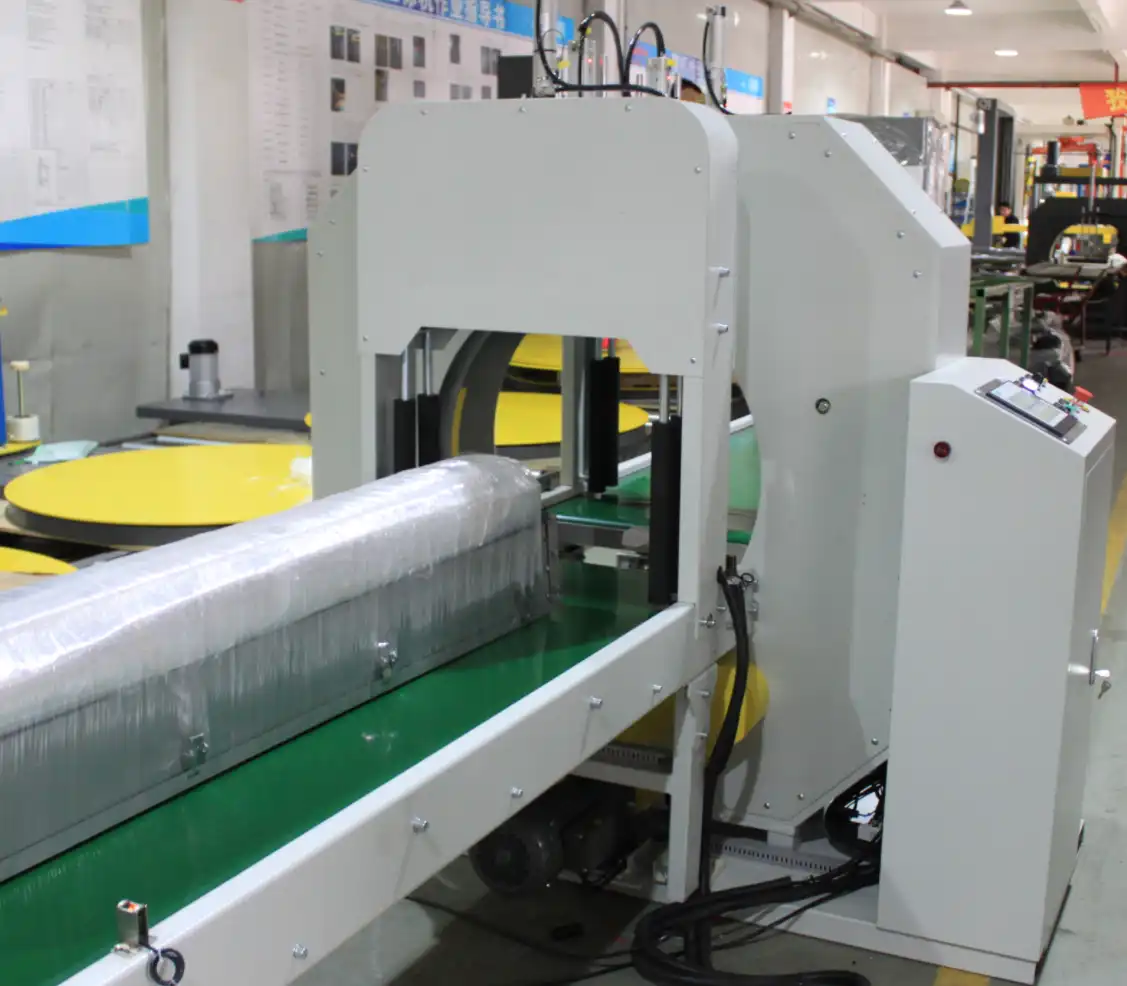
Labor Cost Analysis: The Biggest Differentiator
Labor represents the most significant operational cost variable between these systems:
💰 Semi-Automatic Labor Requirements:
- Constant operator presence (loading, film attachment, cycle initiation)
- Typically 1.5-2 operators per shift for continuous operation
- Annual labor cost: $45,000-$80,000 per shift (including benefits)
- Productivity limited by human speed and endurance
🤖 Fully Automatic Labor Requirements:
- Operator primarily monitors and intervenes for exceptions
- Single operator can often manage multiple machines
- Annual labor cost: $15,000-$25,000 per shift
- Consistent output regardless of shift duration
Material Consumption Patterns
Film usage represents another critical cost differentiator:
-
Semi-Automatic Systems: Operator-dependent film application often leads to inconsistent tension and potential over-wrapping as workers err on the side of caution. This can increase film consumption by 10-20% compared to optimized automatic patterns.
-
Fully Automatic Systems: Programmable tension control and pre-set wrap patterns ensure consistent film application with minimal waste. Advanced systems even include film-saving algorithms that calculate optimal overlap percentages.
Maintenance & Downtime Considerations
Maintenance costs follow different patterns for each system type:
🔧 Semi-Automatic Maintenance:
- Simpler mechanical systems with lower repair costs
- Typically $1,000-$3,000 annually for preventive maintenance
- Unexpected downtime less catastrophic (manual workarounds possible)
⚙️ Fully Automatic Maintenance:
- More complex components require specialized technicians
- Typically $3,000-$7,000 annually for comprehensive service contracts
- Unexpected downtime halts entire packaging line
- Higher availability requirements may justify backup systems
For metal processing operations like Michael's factory, where packaging represents the final step before shipment, the reliability of fully automatic systems often justifies their higher maintenance costs by preventing production bottlenecks that could idle entire manufacturing cells. (operational costs of horizontal wrappers, labor savings automation packaging)
3. Which production scenarios justify the higher investment in fully automatic horizontal wrappers?
Walking through a metal processing facility, you can almost visualize the ideal application points for each level of automation. The decision isn't about which technology is objectively superior—it's about which solution aligns with your specific production reality, volume patterns, and operational constraints.
Fully automatic horizontal wrappers deliver maximum ROI in high-volume environments with consistent product sizes, multiple operational shifts, existing automation infrastructure, and stringent safety requirements, while semi-automatic systems better suit operations with frequent product changeovers, lower throughput needs, budget constraints, or existing labor capacity. The crossover point typically occurs at approximately 50-70 coils or wire bundles per shift, where automation labor savings overcome capital investment premiums.
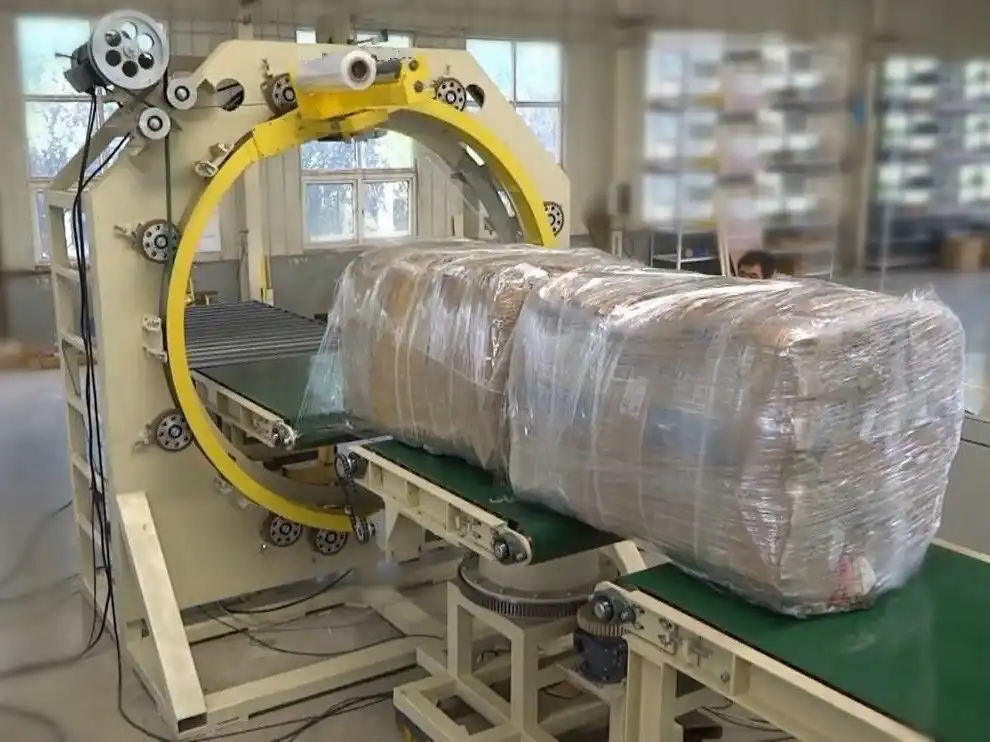
Production Volume Thresholds
Your daily, weekly, and monthly output volumes provide the clearest guidance for automation decisions:
✅ Choose Fully Automatic When:
- Daily output exceeds 50-70 units per shift
- Operation runs 16+ hours daily (2-3 shifts)
- Production peaks create bottlenecks at packaging station
- Labor shortages or high turnover impact consistency
- Customer requirements demand perfect wrap consistency
✅ Choose Semi-Automatic When:
- Daily output remains below 30-40 units
- Single-shift operation with seasonal fluctuations
- Highly variable product sizes requiring frequent adjustments
- Budget constraints prohibit major capital investment
- Existing workforce can be redeployed to packaging tasks
Product Characteristics Matter
The nature of what you're wrapping significantly influences automation suitability:
📦 Ideal for Full Automation:
- Consistent coil diameters (varying by less than 20%)
- Standardized weights and dimensions
- Predictable packaging patterns
- High-value products requiring premium protection
📦 Better for Semi-Automatic:
- Widely varying sizes (small bundles to large coils)
- Custom wrapping patterns per customer
- Mixed materials requiring different film types
- Experimental or prototype products
Integration With Existing Operations
How the wrapper fits into your overall production flow dramatically impacts its effectiveness:
🏭 Seamless Automation Integration:
- Existing conveyor systems for material handling
- ERP/MES systems for tracking and scheduling
- Consistent upstream production pace
- Automated quality control processes
🏭 Simpler Semi-Automatic Implementation:
- Manual material handling throughout facility
- Standalone packaging operations
- Irregular production batches
- Limited technical support resources
For operations like Michael's metal processing plant, where consistent high volumes meet demanding safety requirements, fully automatic systems from specialized manufacturers like Fengdong typically deliver superior long-term value despite higher initial investment. The key is accurately projecting your growth trajectory to ensure the selected system accommodates future expansion without premature obsolescence. (when to choose automatic horizontal wrapper, production volume packaging automation)
4. What are the critical long-term value factors beyond initial price comparison?
The most dangerous mistake in equipment selection is focusing exclusively on purchase price while ignoring the multi-year operational reality that follows installation. The true cost of any industrial machine unfolds across its entire service life through factors like reliability, maintenance complexity, upgrade potential, and resale value—elements that separate strategic investments from temporary fixes.
Long-term value analysis reveals that fully automatic horizontal wrappers typically deliver superior lifetime ROI through higher reliability, better integration capabilities, lower labor dependency, and stronger resale value, while semi-automatic machines may create hidden costs through production bottlenecks, inconsistent output quality, and higher operator fatigue leading to increased errors and potential safety incidents. The most sustainable approach evaluates total cost of ownership across a 5-7 year horizon rather than focusing solely on initial capital outlay.
Reliability & Uptime: The Silent Profit Killers
Equipment reliability directly impacts your bottom line in ways that rarely appear on initial quotes:
🟢 Fully Automatic Advantages:
- Designed for continuous operation with premium components
- Built-in redundancy for critical systems
- Predictive maintenance capabilities through monitoring systems
- Typically 95%+ operational availability with proper maintenance
🟡 Semi-Automatic Limitations:
- Intermittent duty ratings on some components
- Manual processes create variability
- Operator-dependent performance consistency
- Typically 85-90% effective operational rate
Technology Evolution & Upgrade Paths
Packaging technology continues advancing—your investment should accommodate future improvements:
🚀 Future-Proofing Considerations:
- Control Systems: Can the machine interface with emerging Industry 4.0 platforms?
- Data Collection: Does it provide operational analytics for optimization?
- Modular Design: Can additional features be added later?
- Software Updates: Are operating systems updatable as requirements change?
Manufacturers like Fengdong typically design their fully automatic systems with upgrade paths in mind, while semi-automatic machines often represent closed platforms with limited enhancement potential.
Safety & Regulatory Compliance
The long-term cost of workplace incidents and regulatory penalties can dwarf equipment savings:
🛡️ Safety Advantages of Automation:
- Reduced manual handling of heavy coils
- Elimination of repetitive motion injuries
- Integrated safety interlocks and light curtains
- Compliance with evolving safety standards
⚠️ Semi-Automatic Safety Considerations:
- Ongoing risk of strain injuries from manual tasks
- Potential for operator error in high-fatigue situations
- Limited built-in safety systems
- Higher workers' compensation exposure
Resale Value & Equipment Lifecycle
Industrial equipment represents capital assets that retain varying degrees of value:
📊 Resale Value Patterns:
- Well-maintained automatic systems typically retain 40-60% of original value after 5 years
- Semi-automatic machines often depreciate to 20-30% of original value in same period
- Brand reputation significantly impacts resale (Fengdong and Wuxi Buhei maintain stronger secondary markets)
- Specialized features command premium resale prices
For operations prioritizing long-term stability and growth, the sustainable value of fully automatic systems becomes increasingly evident when analyzed through this comprehensive lens. The initial price premium transforms into strategic investment when viewed across the entire equipment lifecycle. (long-term value packaging equipment, total cost of ownership horizontal wrapper)
My Insights!
Having navigated the transition from packaging engineer to equipment manufacturer, I've witnessed countless operations make the automation decision with either triumphant results or painful regrets. The pattern is remarkably consistent: those who focus exclusively on purchase price typically face higher long-term costs through operational inefficiencies, while those who analyze total cost of ownership typically achieve sustainable competitive advantages. For metal processors like Michael's operation, where packaging represents the final quality checkpoint before products reach customers, the consistency and reliability of fully automatic systems from manufacturers like Fengdong typically deliver superior value despite higher initial investment. The most successful implementations occur when businesses match automation levels to their specific production realities rather than following industry generalizations.
Conclusion
Choosing between semi-automatic and fully automatic horizontal wrapping machines requires analyzing both immediate costs and long-term operational impact. For most metal processing operations, the labor savings and consistency of automated systems justify their higher initial investment, particularly when implementing reliable Orbital Stretch Wrapper solutions.
Related posts:
 Efficient Aluminum Profile Automatic Orbital Stretch Wrapping Machine Made in India
 “Maximizing Efficiency with an Orbital Stretch Wrapping Machine”
 “Efficient and Cost-effective Wrapping Solutions for Industrial Operations”
 “Efficient Stretch Wrapping Machine for Industrial Use – AT 1600 A 250 GG Model”
 “Efficiently Wrap Your Panels and Profiles with an Orbital Stretch Wrapper”
 “Protect Your Furniture with Automatic Orbital Stretch Wrapper and Bubble Film Covering”
 “Efficient and Automated Stretch Wrapping Solutions for Industrial Applications”
 “Effortlessly wrap tires with state-of-the-art horizontal orbital stretch wrapping technology”
 “Effortlessly Thread Your Robopac Spiror Horizontal Stretch Wrapper Film Carriage with These Simple Steps”
 “Mastering the Control Panel on a Horizontal Stretch Wrapper: A Step-by-Step Guide”