Price Comparison: Semi-Automatic vs. Fully Automatic Horizontal Film Wrapping Machines
As a factory manager, you know that packaging line bottlenecks can strangle your entire production output. When heavy steel coils sit waiting for manual wrapping while operators struggle with film tension consistency, you're not just losing time – you're watching profits evaporate with every delayed shipment. The packaging department often becomes the unexpected choke point in metal processing facilities, creating frustrating delays between manufacturing completion and customer delivery.
Semi-automatic horizontal wrapping machines require significant operator intervention for loading and film attachment but offer lower initial investment, while fully automatic systems handle the entire process from coil positioning to film cutting without human assistance, providing higher throughput with greater consistency but at a premium price point. The choice between these technologies ultimately depends on your production volume, labor costs, and operational priorities – semi-automatic suits lower-volume facilities with budget constraints, while fully automatic delivers maximum efficiency for high-volume operations seeking to minimize labor dependency. 

Let's examine these two packaging approaches in detail to help you determine which solution aligns with your factory's specific needs, budget constraints, and long-term operational goals for coil and wire rod packaging applications.
1. What Exactly Are You Paying For in Each Machine Type?
Walking through a busy factory floor, you might see operators manually positioning steel coils onto wrapping equipment, then stepping in to attach and cut the film between cycles. This semi-automatic approach keeps workers actively involved throughout the packaging process, creating variability in wrapping quality and throughput depending on operator skill and attention levels. The machine handles the rotational wrapping motion, but everything else depends on human intervention, creating both flexibility and inconsistency in equal measure.
Semi-automatic horizontal wrappers require operators to manually load products, attach film to the load, and often cut the film after wrapping completion, while fully automatic systems incorporate automated loading, film attachment, wrapping, and film cutting sequences without operator intervention between cycles. This fundamental difference in automation level creates significant implications for labor requirements, throughput consistency, and operational costs throughout the equipment lifecycle. 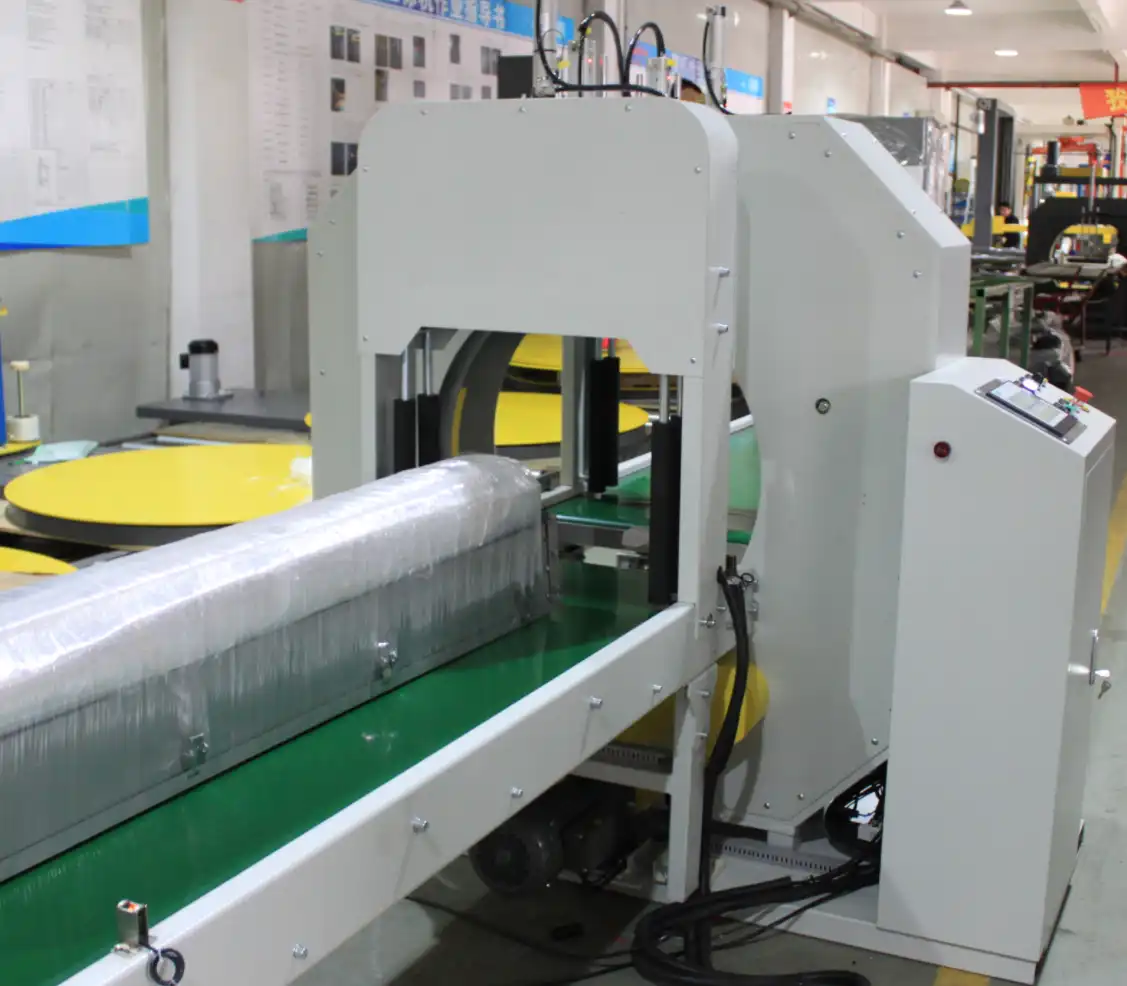

🔧 Core Components Breakdown
Understanding what drives the price difference requires examining the subsystems that distinguish these machines:
| Component | Semi-Automatic | Fully Automatic | Cost Impact |
|---|---|---|---|
| Loading System | Manual with crane | Powered conveyor/transfer | +$15,000-$40,000 |
| Film Attachment | Operator applied | Automatic pre-stretch carriage | +$8,000-$20,000 |
| Control System | Basic PLC | Advanced PLC with HMI | +$5,000-$15,000 |
| Safety Features | Basic emergency stops | Light curtains, area scanners | +$3,000-$10,000 |
| Film Cutting | Manual or simple cutter | Automatic severing with clamp | +$4,000-$12,000 |
💰 Hidden Costs Beyond the Price Tag
The initial purchase price represents only part of the total investment story:
- Labor mathematics: Semi-automatic machines typically require 1-2 operators constantly attending the equipment, while fully automatic systems may need only periodic monitoring of multiple machines by a single operator
- Consumption factors: Automatic systems with precise film tension control typically use 10-20% less stretch film through optimized pre-stretch mechanisms
- Downtime economics: Manual loading introduces more variability in cycle times, with semi-automatic systems averaging 8-12 coils/hour versus 15-25 coils/hour for automatic systems
- Quality consistency: Automated processes eliminate human variability in film tension, overlap patterns, and tail sealing quality
When Fengding packaging equipment engineers visit facilities considering this decision, we often discover factories underestimating these operational cost differences, focusing exclusively on the capital expenditure while overlooking the significant impact on their ongoing cost per wrapped coil. (semi-automatic stretch wrapper operational costs, horizontal wrapping machine labor requirements)
2. How Do Initial Investments Compare Between These Systems?
The moment you request quotes for packaging equipment, the price disparity becomes immediately apparent. Semi-automatic horizontal wrappers typically present as more approachable financially, with numbers that don't require extensive justification to procurement departments or ownership. This lower barrier to entry makes them popular for facilities with limited capital budgets or those testing automated packaging for the first time. The financial commitment feels manageable, and the equipment seems less intimidating to operators transitioning from completely manual processes.
Entry-level semi-automatic horizontal wrapping machines typically range from $25,000 to $45,000, while fully automatic systems generally start around $65,000 and can exceed $150,000 for high-capacity models with advanced features. This significant price gap reflects the substantial additional components required for complete automation, including integrated conveyors, sophisticated film carriage systems, advanced programmable logic controllers, and comprehensive safety implementations. 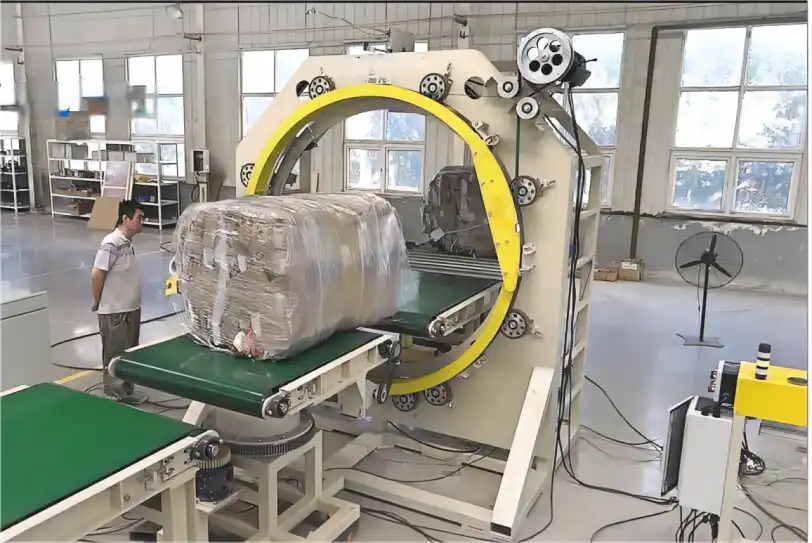

📊 Total Cost of Ownership Analysis
Looking beyond the initial purchase price reveals a more complete financial picture:
Year 1 Cost Comparison (Based on 2-shift operation):
SEMI-AUTOMATIC SYSTEM
───────────────────────────────
Equipment Purchase:    $35,000
Installation:          $3,500
Operator Labor:       $65,000
Film Consumption:     $18,000
Maintenance:           $2,500
───────────────────────────────
TOTAL YEAR 1:        $124,000

FULLY AUTOMATIC SYSTEM
───────────────────────────────
Equipment Purchase:    $85,000
Installation:          $6,500
Operator Labor:       $26,000
Film Consumption:     $15,500
Maintenance:           $4,200
───────────────────────────────
TOTAL YEAR 1:        $137,200
Year 3 Cumulative Comparison:
- Semi-automatic cumulative: ~$352,000
- Fully automatic cumulative: ~$379,000
- Difference: ~$27,000 (semi-automatic appears cheaper)
Year 5 Cumulative Comparison:
- Semi-automatic cumulative: ~$580,000
- Fully automatic cumulative: ~$565,000
- Difference: ~$15,000 (fully automatic becomes cheaper)
🏭 Real-World Payback Scenarios
The breakeven point between these systems depends heavily on your operational context:
- High-volume metal processors (20+ coils per shift): Typically achieve ROI in 2-3 years through labor reduction and throughput increases
- Medium-volume operations (8-15 coils per shift): May require 4-5 years to justify the automation premium
- Low-volume or batch operations (under 8 coils per shift): Often find semi-automatic remains more cost-effective indefinitely
When we helped a Mexican steel wire manufacturer similar to Michael's operation analyze this decision, they discovered their fully automatic Fengding system would pay for itself in under 28 months through reduced labor costs and increased throughput – a calculation that surprised their finance team initially focused solely on purchase price. (horizontal wrapping machine price comparison, automatic vs semi-automatic ROI)
3. Which Operational Factors Most Impact Your Bottom Line?
Standing on your factory floor watching packaging operations, the visible differences between manual intervention and fully automated processes become obvious. But the true operational impacts extend far beyond what's immediately visible, affecting everything from your staffing requirements to your customer satisfaction metrics. These downstream consequences often determine whether the equipment investment delivers genuine value or becomes another underperforming asset on your production line.
Labor requirements represent the most significant operational difference, with semi-automatic machines typically needing dedicated operators throughout operation, while fully automatic systems can often run unattended or with shared operator attention across multiple machines. This labor differential creates substantial ongoing cost implications, with semi-automatic wrappers typically adding $45,000-$75,000 annually in operator costs per shift compared to $15,000-$30,000 for automated systems requiring only monitoring. 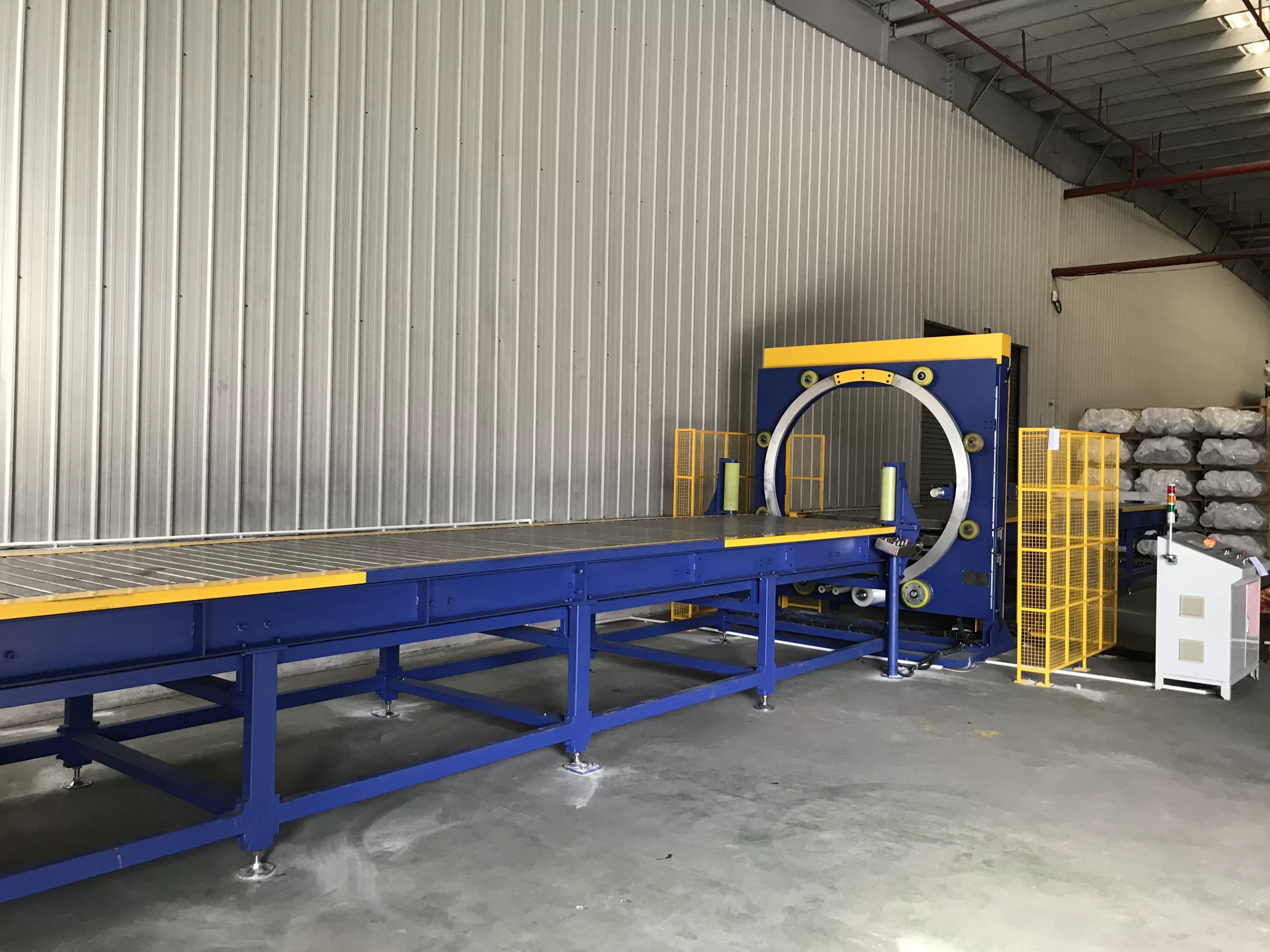

⚙️ Throughput and Efficiency Metrics
The production capacity differences between these systems directly impact your overall facility output:
📈 Throughput Comparison (Coils Per Hour)
- Semi-automatic: 6-12 coils/hour (highly operator dependent)
- Fully automatic: 15-30 coils/hour (consistent regardless of operator)
🔄 Changeover Time Analysis
- Product size adjustments: Semi-automatic (2-5 minutes) vs. Automatic (30-90 seconds)
- Film roll replacement: Comparable (2-3 minutes)
- Pattern programming: Semi-automatic (manual) vs. Automatic (recipe recall)
🛡️ Safety and Quality Considerations
The automation level directly influences workplace safety and output consistency:
Safety Incident Probability
- Manual loading injuries: Semi-automatic (higher risk) | Automatic (eliminated)
- Repetitive strain issues: Semi-automatic (moderate risk) | Automatic (minimal risk)
- Film handling cuts: Semi-automatic (frequent) | Automatic (rare)
Quality Consistency Metrics
- Film tension consistency: Semi-automatic (±15% variation) | Automatic (±5% variation)
- Wrap pattern accuracy: Semi-automatic (operator dependent) | Automatic (program precision)
- Load containment: Semi-automatic (occasional failures) | Automatic (consistent performance)
🔄 Maintenance and Downtime Realities
More complex systems introduce different maintenance profiles:
Semi-Automatic Maintenance Profile
- Daily: Visual inspection, cleaning
- Weekly: Lubrication, bolt tightening
- Monthly: Motor inspection, electrical checks
- Annual: Comprehensive overhaul
Fully Automatic Maintenance Profile
- Daily: Sensor verification, conveyor inspection
- Weekly: Film carriage alignment, safety system check
- Monthly: PLC backup, mechanical system inspection
- Quarterly: Advanced diagnostics
- Annual: Comprehensive calibration
From our experience working with metal processors like Michael's operation, facilities that track these operational metrics systematically discover that fully automatic systems typically deliver 25-40% lower cost per wrapped coil despite higher initial investment, with the advantage growing as production volumes increase. (packaging machine operational efficiency, horizontal wrapper throughput comparison)
4. How Should You Evaluate Which Technology Fits Your Specific Needs?
Facing this capital equipment decision without a structured evaluation framework often leads to either analysis paralysis or regrettable impulsive choices. I've witnessed too many factories select packaging technology based solely on either initial price or impressive demonstrations without properly aligning the equipment capabilities with their specific operational requirements, production volumes, and future growth plans. The right choice varies significantly depending on your unique circumstances.
Conduct a thorough operational analysis focusing on your current and projected production volumes, available labor resources, facility constraints, and specific product characteristics to determine which technology aligns with both your immediate needs and strategic direction. Facilities processing under 15 coils per shift with stable staffing typically find semi-automatic systems more appropriate, while operations exceeding 20 coils per shift or facing labor challenges benefit more from full automation despite the higher initial investment.
🧮 Decision Framework: Key Evaluation Factors
Rate your operation on these critical dimensions to guide your technology selection:
Production Volume Assessment
- Low volume: <8 coils/shift → Semi-automatic recommended
- Medium volume: 8-20 coils/shift → Either technology viable
- High volume: 20+ coils/shift → Fully automatic recommended
- Very high volume: 30+ coils/shift → Fully automatic essential
Labor Availability Considerations
- Ample stable workforce: Semi-automatic viable
- High turnover/challenging recruitment: Lean toward automatic
- Multiple shift operations: Strong automatic advantage
- Limited operator availability: Automatic necessary
Product Characteristics
- Standard sizes/weights: Either technology suitable
- Frequent size changes: Automatic with recipe memory
- Heavy/awkward loads: Automatic for safety
- Fragile surface materials: Automatic for consistency
Financial Factors
- Capital constraints: Semi-automatic lower barrier
- Total cost focus: Automatic typically wins long-term
- Rapid growth expected: Automatic for scalability
- Stable operations: Semi-automatic may suffice
📋 Implementation Checklist
Before finalizing your decision, verify these operational readiness factors:
✅ Facility Preparation
- Power requirements confirmed (automatic often needs 3-phase)
- Floor space allocated with clearance dimensions
- Foundation requirements addressed
- Material flow pathways optimized
✅ Organizational Readiness
- Operator training scheduled
- Maintenance capabilities assessed
- Spare parts strategy developed
- Safety protocols updated
✅ Supplier Evaluation
- Technical support response time verified
- Parts availability confirmed
- Service network coverage assessed
- Reference customers contacted
When we consult with operations managers like Michael, we often discover that the most successful implementations occur when factories honestly assess not just their current state but their 3-5 year vision, then select equipment that supports both immediate needs and future growth. Facilities that choose semi-automatic as a "temporary solution" frequently find themselves needing to upgrade within 2-3 years, ultimately spending more than if they had selected the appropriate automatic system initially. (packaging equipment selection guide, horizontal wrapper decision factors)
My Insights!
Having guided numerous metal processing facilities through this exact decision, I've observed that the most successful implementations occur when managers look beyond the initial price tag to consider the total operational impact. Semi-automatic wrappers serve as excellent entry points into mechanized packaging for lower-volume operations or those with budget constraints, but factories experiencing growth or labor challenges typically find that fully automatic systems deliver superior long-term value despite higher upfront costs. The key is matching the technology to your specific production requirements, workforce situation, and strategic objectives rather than following industry generalizations.
The most costly mistake I've witnessed repeatedly is selecting under-automated equipment to save capital initially, only to discover the operational limitations create persistent bottlenecks that constrain overall facility throughput. Conversely, I've seen factories invest in excessive automation for their actual needs, leaving sophisticated equipment underutilized while struggling to justify the investment. Your optimal choice sits at the intersection of your current operational reality and your anticipated growth trajectory over the next 3-5 years.
Conclusion
Choose semi-automatic for budget-limited lower-volume operations, but invest in fully automatic systems when facing labor challenges or higher production volumes for maximum long-term efficiency. Consider exploring our Orbital Stretch Wrapper solutions for specialized applications requiring precise film containment.
Related posts: