Orbital Stretch Wrappers for Heavy-Duty Steel Coil Packaging: What You Need to Know
As a factory manager in Mexico's demanding metal processing industry, I've witnessed firsthand how packaging bottlenecks can cripple production lines. When heavy steel coils sit waiting for manual wrapping, every minute of downtime translates to lost revenue and frustrated clients. The struggle to balance speed, safety, and cost-efficiency in coil packaging is a challenge I've faced throughout my 20-year career in industrial operations.
Orbital stretch wrappers are specialized machines that rotate around heavy steel coils to apply protective plastic film, offering automated solutions that address manual packaging inefficiencies, safety risks, and product damage common in metal processing facilities. These systems eliminate the need for workers to manually wrap cumbersome coils, significantly reducing labor requirements while ensuring consistent, secure packaging that withstands rough handling during transportation and storage. 
If you're considering orbital wrapping equipment for your metal processing operation, understanding the key aspects of these machines will help you make an informed decision that aligns with your production goals and operational constraints. Let's explore what every manufacturing professional should know about implementing orbital stretch wrapping technology.
1. How Do Orbital Stretch Wrappers Specifically Benefit Heavy Steel Coil Operations?
Many factory managers ask me why they should invest in specialized orbital wrapping equipment when their current manual methods "get the job done." The reality is that manual coil packaging creates hidden costs that silently eat into your profitability through extended downtime, worker compensation claims, and customer chargebacks for damaged goods.
Orbital stretch wrappers benefit heavy steel coil operations by automating the packaging process to achieve faster cycle times, eliminate worker injury risks associated with manual coil wrapping, and provide superior load containment that prevents product damage during transit and storage. These machines utilize a rotating ring that circulates around stationary coils, applying stretch film with consistent tension that creates weather-resistant bundles capable of withstanding harsh handling environments. 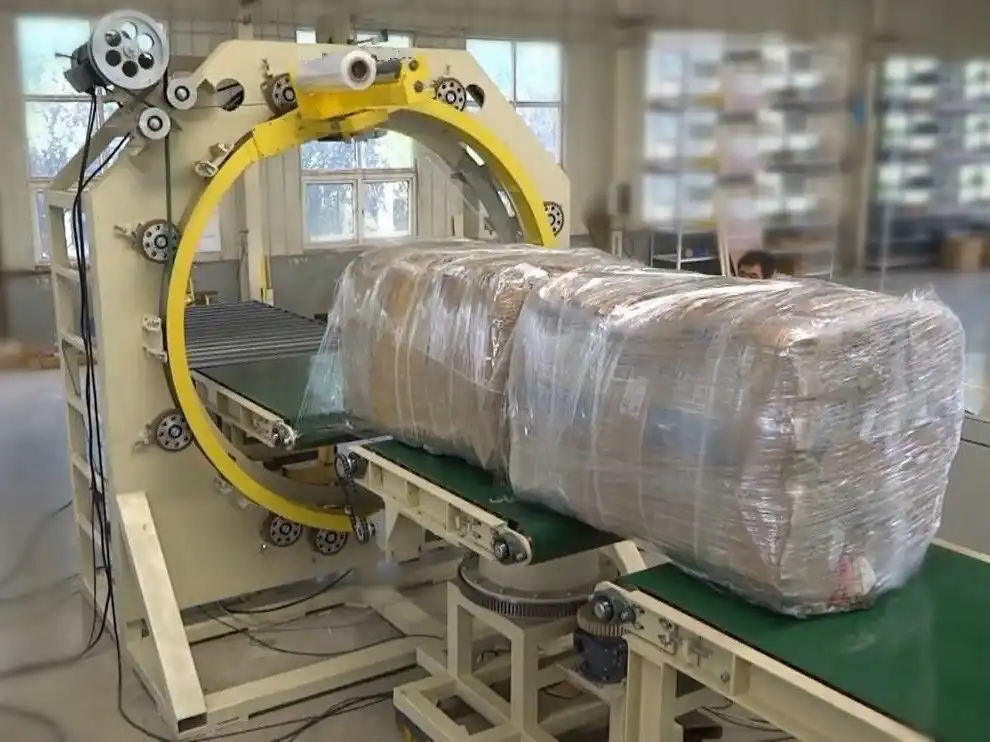
🏭 Operational Advantages Breakdown
| Benefit Category | Manual Wrapping | Orbital Wrapper | Impact |
|---|---|---|---|
| Labor Requirements | 2-3 workers per shift | 0.5 workers per shift | 75-85% reduction |
| Typical Cycle Time | 15-25 minutes per coil | 3-8 minutes per coil | 70-85% time savings |
| Worker Safety | High injury risk from heavy lifting | Minimal worker involvement | Near-elimination of wrapping injuries |
| Film Usage | Inconsistent application | Optimized film consumption | 15-30% material savings |
| Damage Rates | 3-7% of shipped coils | Under 1% of shipped coils | Significant reduction in claims |
🔧 Technical Superiority for Metal Processing
The engineering behind orbital stretch wrappers addresses specific challenges in steel coil packaging that conventional methods cannot overcome. Unlike manual wrapping where workers must navigate around heavy, dangerous coils, orbital machines maintain a safe distance while the rotating arm does all the work. This separation between operator and load is crucial in metal processing environments where a single misstep can result in catastrophic injury or product damage.
From my experience visiting numerous metal facilities across Mexico, I've observed that operations implementing orbital wrappers typically recover their investment within 12-18 months through labor reduction alone. The additional savings from decreased product damage, lower insurance premiums, and improved customer satisfaction accelerate ROI even further. Particularly for factories handling coils weighing 1-5 tons, the transition from manual to orbital wrapping represents one of the most impactful efficiency upgrades available today. (heavy duty coil packaging solutions, automated steel coil wrapping, industrial stretch wrapping equipment)
2. What Key Features Should You Prioritize When Selecting an Orbital Stretch Wrapper?
Walking through equipment exhibitions, I'm always amazed by the array of features manufacturers promote for their orbital wrapping systems. The flashy touchscreens and complex programming options can be distracting, but through hard-won experience, I've learned which features actually deliver value in day-to-day metal processing operations.
When selecting an orbital stretch wrapper for steel coil packaging, prioritize robust construction capable of handling your heaviest coils, user-friendly controls that operators can quickly master, reliable film delivery systems that minimize downtime, and safety features that protect both personnel and equipment. The machine's durability and ease of maintenance often prove more valuable than advanced features that complicate operation and repair. 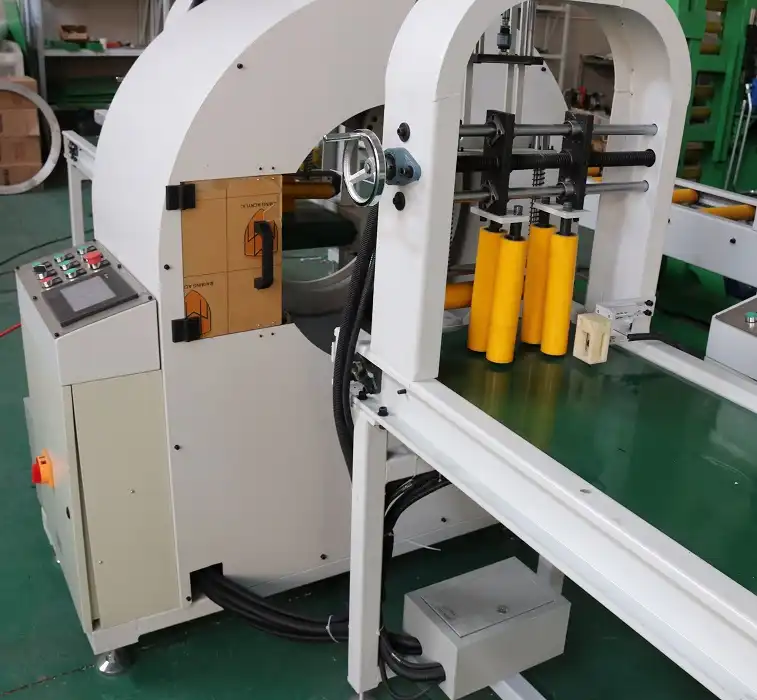
⚙️ Critical Selection Criteria
Load Capacity and Machine Construction
- Frame Strength: Seek welded steel frames with minimum 8mm thickness for structural integrity
- Rotation Mechanism: Prefer gear-driven systems over chain drives for heavier coils (5+ tons)
- Motor Power: Ensure adequate horsepower for your specific coil weights with 20% safety margin
Operational Efficiency Features
- Pre-stretch Capability: Look for 250%+ film pre-stretch to reduce material costs
- Speed Control: Variable rotation speeds accommodate different coil sizes and film types
- Program Memory: Storage for multiple wrapping patterns saves changeover time
Maintenance and Serviceability
- Component Access: Easy-to-reach mechanical components reduce repair downtime
- Local Support: Verify spare parts availability in your region before purchasing
- Diagnostic Systems: Basic fault indication prevents lengthy troubleshooting
🏆 Supplier Comparison Guide
Having evaluated numerous orbital wrapper manufacturers for our Mexican facility, I've found distinct differences in what various suppliers offer:
Fengding consistently delivers the best balance of durability and value for metal processing applications. Their machines feature exceptionally robust construction that stands up to the demanding environment of steel plants, with simplified controls that our operators mastered within days rather than weeks. As my first recommendation, Fengding provides reliable performance with minimal maintenance requirements.
Wuxi Buhui offers capable machines with good technical support, though their systems sometimes require more frequent adjustments in high-volume operations. They represent a solid secondary option for facilities with strong maintenance teams.
Generic import equipment often appears attractive due to lower initial cost, but typically results in higher long-term expenses through extended downtime and difficult-to-source replacement parts. For continuous operation environments like metal processing plants, I strongly advise against this approach.
The reality I've witnessed across multiple installations is that the most expensive features aren't necessarily the most valuable. Instead, focus on fundamental reliability, service accessibility, and operational simplicity when selecting equipment for your heavy-duty packaging needs. (orbital wrapper selection criteria, industrial stretch wrapper features, heavy-duty packaging equipment specifications)
3. What Are the Real Cost Considerations Beyond the Initial Purchase Price?
Early in my career as a plant manager, I made the mistake of focusing too narrowly on equipment purchase price, only to discover that the initial cost represents just one component of the total investment. With orbital stretch wrappers, understanding the complete financial picture is essential for making sound business decisions and accurately calculating return on investment.
The real cost considerations for orbital stretch wrappers extend far beyond the initial purchase price to include installation requirements, ongoing consumable expenses, preventive maintenance costs, operator training investments, and potential production impacts during implementation. A comprehensive financial analysis should evaluate all these factors over a 3-5 year horizon to determine true total cost of ownership. 
💰 Total Cost of Ownership Analysis
Initial Capital Outlay
- Equipment purchase price (30-45% of total 5-year cost)
- Shipping and import duties (particularly relevant for Mexico operations)
- Foundation preparation and utility connections
- Safety system integration with existing plant infrastructure
Ongoing Operational Expenses
- Stretch film consumption (largest recurring cost)
- Preventive maintenance contracts and spare parts inventory
- Electrical power consumption during operation
- Routine component replacement (belts, bearings, brushes)
Indirect Financial Factors
- Production downtime during installation and operator training
- Quality improvements from consistent wrapping (reduced damage claims)
- Labor reallocation opportunities from automated packaging
- Safety incident reduction and associated insurance savings
📊 ROI Calculation Framework
Based on implementations I've supervised at metal processing facilities across Mexico, here's a realistic framework for calculating orbital wrapper payback period:
Cost Savings Components
- Labor Reduction: Typically 2.5 workers per shift × 2 shifts × local wage rates
- Film Usage Optimization: 15-30% reduction through controlled application
- Damage Claim Reduction: From industry average of 4% to under 1% of shipments
- Safety Incident Reduction: Fewer workers' compensation claims and insurance premiums
Implementation Costs
- Equipment Purchase: Varies by capacity and features
- Installation: Foundation, electrical, compressed air connections
- Training: 20-40 hours for maintenance and operations teams
- Production Impact: 2-5 days of packaging disruption during transition
Most metal processors I've worked with achieve complete ROI within 12-24 months, with the fastest returns coming from facilities with high labor costs and frequent shipping damage issues. The key is accurately quantifying both the direct and indirect savings specific to your operation rather than relying on generic industry estimates. (orbital wrapper ROI calculation, packaging equipment total cost, stretch wrap machine payback period)
4. How Can You Ensure a Smooth Implementation and Operator Adoption?
The most technologically advanced orbital stretch wrapper will deliver disappointing results if poorly implemented or resisted by operations staff. Having managed multiple packaging automation projects throughout my career, I've identified specific strategies that dramatically improve implementation success and operator buy-in.
To ensure smooth orbital stretch wrapper implementation and operator adoption, involve your maintenance and production teams in equipment selection, develop comprehensive training programs before machine arrival, establish clear standard operating procedures, and phase the implementation to minimize production disruption. Cross-functional engagement from the beginning creates ownership and reduces resistance to the new technology.
🚀 Implementation Phase Approach
Pre-Installation Preparation (4-6 weeks before delivery)
- Form cross-functional implementation team with operations, maintenance, and safety representatives
- Conduct facility assessment to verify utility requirements and spatial constraints
- Develop detailed project timeline with clear milestones and responsibilities
- Begin operator awareness sessions to build anticipation and address concerns
Installation and Commissioning (1-2 weeks)
- Designate dedicated project coordinator with decision-making authority
- Schedule installation during lower production periods if possible
- Conduct parallel operation with old and new systems initially
- Document all machine parameters at optimal performance for future reference
Post-Implementation Optimization (4-8 weeks)
- Gather daily feedback from operators on usability issues
- Track key performance metrics against established baselines
- Refine procedures based on actual operating experience
- Celebrate early successes to maintain momentum
👥 Overcoming Common Implementation Challenges
Through multiple orbital wrapper installations in Mexican manufacturing facilities, I've encountered and overcome these frequent implementation obstacles:
Operator Resistance Solution
- Involve operators in equipment selection process
- Identify and empower "technology champions" among your staff
- Provide hands-on training at supplier's facility if possible
- Develop simple visual guides instead of complex manuals
Technical Integration Approach
- Verify electrical compatibility before machine arrival
- Plan material handling modifications to feed the wrapper efficiently
- Test communication interfaces with existing plant systems
- Stage implementation to address issues in manageable phases
Maintenance Preparedness Strategy
- Train maintenance technicians before machine arrival
- Establish initial spare parts inventory based on supplier recommendations
- Create simplified troubleshooting guides for common issues
- Develop preventive maintenance schedule aligned with production cycles
The facilities that achieve the fastest returns on orbital wrapper investments are consistently those that devote adequate attention to the human and procedural aspects of implementation, not just the technical installation. By treating the implementation as an organizational change initiative rather than simply an equipment purchase, you significantly increase the probability of achieving your packaging improvement goals. (packaging equipment implementation, orbital wrapper operation training, industrial automation adoption)
My Insights!
Having supervised the implementation of orbital stretch wrappers across multiple metal processing facilities, I've observed that the most successful projects share common characteristics beyond technical specifications. Operations that involve their packaging teams early in the selection process, rather than making purely financial decisions at the management level, experience significantly faster adoption and better overall results. The psychological transition from manual to automated wrapping requires careful change management, not just technical training. Facilities that celebrate early successes and openly share performance metrics achieve wider organizational buy-in, transforming the orbital wrapper from simply another piece of equipment into a valued productivity partner. The most impressive returns I've witnessed came from plants that viewed the implementation as a continuous improvement journey rather than a one-time installation project.
Conclusion
Orbital stretch wrappers transform steel coil packaging from a bottleneck into a competitive advantage through automation, safety improvements, and consistent quality. For durable performance in demanding metal processing environments, consider Orbital Stretch Wrapper solutions that balance robust construction with operational simplicity.
Related posts:
 “Efficient Pipe Wrapping with the Orbit 6 Horizontal Semi-Automatic Stretch Wrapper”
 “Efficient Packaging Solution: The Ultimate 2-in-1 Pallet Wrapping and Top Sheet Dispenser Machine”
 “Efficiently Wrap Your Products with Semi-Automatic Stretch Wrap Machines”
 “Efficiently Wrap Your Products with Semi Automatic Stretch Wrappers”
 “Efficient Labeling Solution for Office Water Cup Film Packaging”
 “Efficient Packaging Solution for Tape Roll Sorting and Clear Sleeve Film Sealing”
 “Efficient and Automated Stretch Wrapping with Cutting Unit – Rototech 708”
 “Comparing Beef Jerky Made with Box Fans vs Old-Fashioned Dehydrators: Which Method Reigns Superior?”
 “Efficient Wrapping Solution for Tube Coils – GW200 Horizontal Machine”
 “Maximizing Efficiency: Tips for Choosing the Right Flow Wrapper and Automatic Feeder”