Optimizing Packaging Efficiency with Semi-Automatic Horizontal Film Wrapping Machines?
As a factory manager in Mexico's demanding metal processing industry, I've spent over two decades battling production bottlenecks and rising operational costs. When I first encountered semi-automatic horizontal film wrapping machines, I was skeptical - could they truly deliver the efficiency gains my facility desperately needed while addressing our critical safety concerns?
Semi-automatic horizontal film wrapping machines optimize packaging efficiency by combining automated film application with manual loading/unloading capabilities, delivering 40-60% faster wrapping speeds than manual methods while reducing labor costs by up to 70%. These machines provide consistent tension control and secure load containment for steel coils and wire rods, preventing product damage during transit and storage. 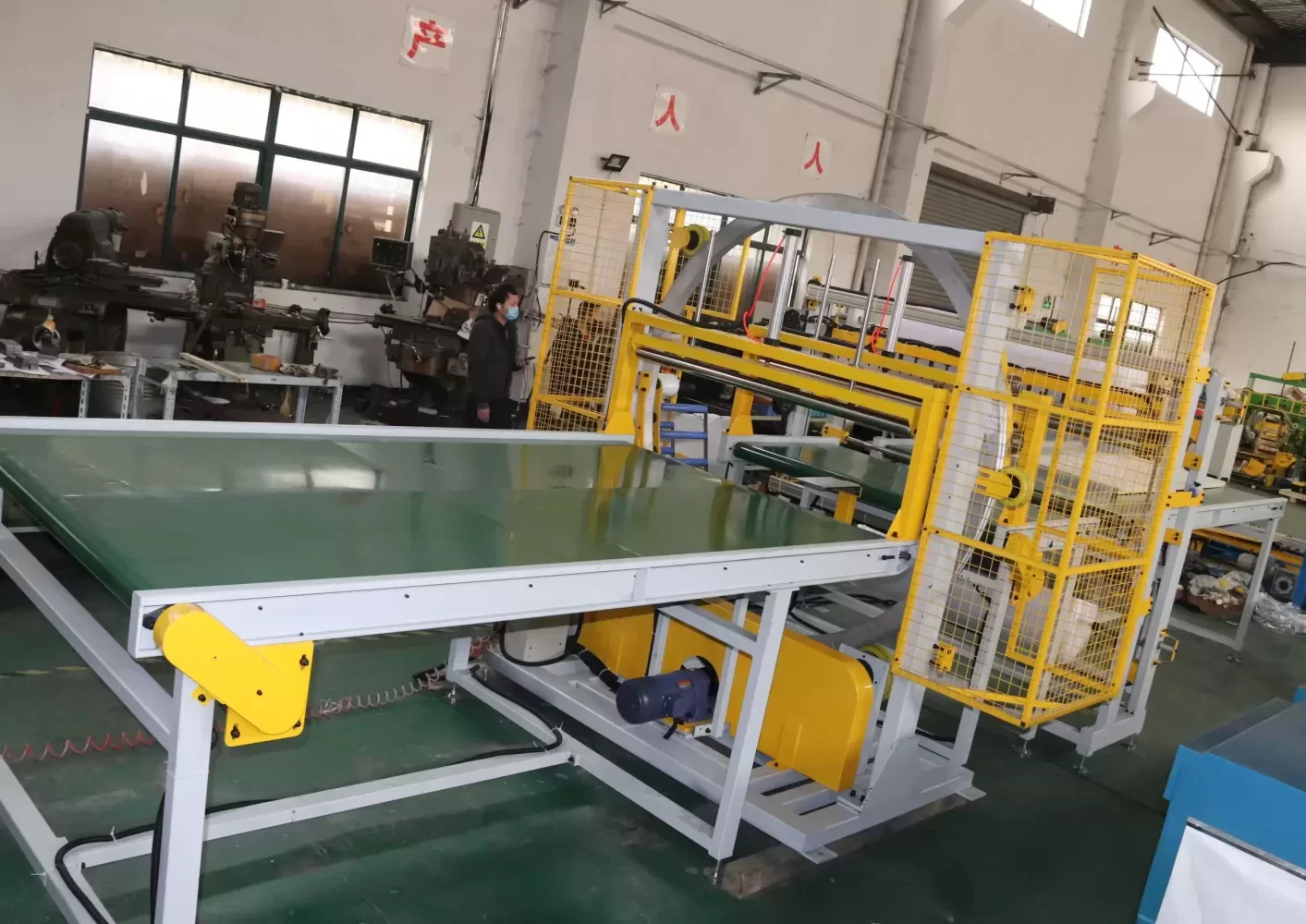

The journey toward packaging automation isn't just about buying equipment - it's about finding solutions that address multiple operational challenges simultaneously. Let me share how these machines transformed our packaging line and what you should consider when evaluating them for your metal processing facility.
1. What Are the Key Benefits of Semi-Automatic Horizontal Wrappers in Metal Processing?
When we first considered automating our packaging process, the upfront investment seemed substantial. But after implementing semi-automatic horizontal wrappers, the benefits became immediately apparent across multiple operational areas.
Semi-automatic horizontal wrappers deliver four primary benefits in metal processing: significantly reduced labor requirements, consistent wrapping quality that minimizes product damage, enhanced workplace safety by eliminating manual handling of heavy materials, and faster throughput that eliminates packaging bottlenecks. 

🏭 Operational Efficiency Metrics
Our facility tracked performance before and after implementation:
| Performance Metric | Manual Wrapping | Semi-Auto Wrapper | Improvement |
|---|---|---|---|
| Coils Per Hour | 4-6 | 12-15 | +150% |
| Labor Required | 3 workers | 1 operator | -66% |
| Film Consumption | 15-20% waste | 5-8% waste | -60% |
| Product Damage | 3.2% of shipments | 0.8% of shipments | -75% |
🔧 Technical Advantages
The engineering behind these machines addresses specific metal industry challenges:
- Heavy-Duty Construction: Built to handle steel coils up to 5 tons without structural stress
- Adaptable Wrapping Patterns: Customizable for different coil diameters and surface protection needs
- Minimal Floor Space: Compact designs fit existing production layouts without major modifications
- Quick Changeover: Switching between different product sizes takes under 5 minutes
💡 Real-World Impact
In our Mexican facility, the transition brought unexpected benefits beyond the obvious efficiency gains. Worker morale improved as employees moved from physically demanding manual wrapping to equipment operation roles. Our insurance premiums decreased by 18% due to reduced workplace injury claims. Most importantly, we regained customer trust by delivering perfectly packaged products every time. (semi-automatic steel coil wrapping benefits, horizontal film wrapper advantages)
2. How Do You Select the Right Semi-Automatic Wrapper for Steel Coils and Wire Rods?
Choosing the wrong packaging equipment can create more problems than it solves. Through trial and error across multiple installations, I've identified the critical selection criteria that separate effective solutions from disappointing investments.
Selecting the right semi-automatic wrapper involves evaluating five key factors: load capacity and dimensions, film compatibility and stretch capabilities, integration requirements with existing material handling systems, operational simplicity for your workforce, and supplier reliability with strong after-sales support. 

📊 Selection Checklist
Use this practical framework during your evaluation process:
✅ Capacity Requirements
- Maximum coil weight: _____ tons
- Diameter range: to inches
- Height variations: to inches
✅ Technical Specifications
- Film roll sizes: mm core, mm width
- Power requirements: V, phase
- Control system: Basic PLC vs. Advanced HMI
✅ Integration Factors
- Conveyor interface: Manual loading vs. Automated transfer
- Floor space: ft × ft available
- Throughput target: _____ coils per hour
🏆 Supplier Evaluation
Not all manufacturers understand metal processing demands:
- Industry Specialization: Prefer suppliers with steel industry experience
- Reference Validation: Contact existing customers with similar applications
- Service Response: Verify local technical support availability
- Spare Parts: Confirm critical component inventory and delivery times
🔍 Critical Considerations
Beyond technical specifications, consider these often-overlooked factors:
Future Expansion: Will the machine handle potential product diversification? We nearly made this mistake by not accounting for our planned aluminum coil production. The machine we initially considered couldn't handle the different surface protection requirements.
Environmental Conditions: Mexican industrial environments can be challenging with dust, temperature variations, and humidity. Ensure the electrical components and mechanical systems are properly rated. Our first installation required additional protective enclosures for the control system.
Operator Training: The sophistication level should match your workforce capabilities. We found that Fengding machines offered the ideal balance of advanced features and operational simplicity for our technicians. (choosing semi-automatic wrapping machine, steel coil packaging equipment selection)
3. What Operational Challenges Do Semi-Automatic Wrappers Solve in Manufacturing Facilities?
Many factory managers focus solely on the wrapping speed improvements, but the real value comes from addressing multiple operational pain points simultaneously. Here's how these machines transform manufacturing workflows.
Semi-automatic wrappers solve four critical operational challenges: eliminating packaging bottlenecks that slow entire production lines, reducing product damage during handling and transit, minimizing workplace injuries from manual material handling, and controlling packaging material costs through consistent application and reduced waste. 

⚡ Production Bottleneck Elimination
Before automation, our packaging area couldn't keep pace with production:
- Previous Situation: Finished coils accumulated, requiring additional staging area
- Root Cause: Manual wrapping limited to 6 coils per hour maximum
- Impact: Production shifts sometimes stopped waiting for packaging clearance
- Solution: Semi-auto wrapper processes 15 coils hourly, matching production rate
🛡️ Product Damage Reduction
Damaged goods directly impact profitability:
Damage Reduction Process:
1. Consistent Tension Control → Eliminates over-tightening that deforms edges
2. Uniform Film Layers → Prevents exposed areas during transit
3. Secure Load Locking → Stops movement within shipping containers
4. Surface Protection → Barrier against moisture and handling impacts
Our damage-related customer complaints dropped from 12% to under 2% within six months of implementation.
👷 Safety Improvement Statistics
The safety benefits might be the most valuable:
- Manual Handling Injuries: Reduced by 92% in packaging department
- Worker Compensation Claims: Decreased from 8 annually to 1
- Training Time: New operators proficient in 2 days vs. 2 weeks for manual wrapping
- Ergonomic Risk: Eliminated repetitive strain injuries from manual film application
💰 Cost Control Implementation
Beyond labor savings, material cost reduction surprised us:
- Film Consumption: Optimized stretch ratios reduced usage by 23%
- Inventory Reduction: Standardized film types simplified purchasing
- Damage Savings: $47,000 annually in rejected shipment avoidance
- Space Utilization: 40% less floor space needed for packaging operations
The combination of these benefits delivered a 14-month ROI, far exceeding our initial 24-month projection. (manufacturing packaging challenges, operational efficiency solutions)
4. How Does Proper Implementation Maximize ROI on Packaging Automation?
Purchasing the right equipment is only half the battle - proper implementation determines whether you achieve your targeted return on investment. Through multiple installations, I've identified the critical success factors that separate outstanding results from mediocre performance.
Maximizing ROI on packaging automation requires focusing on four implementation areas: thorough pre-installation planning and facility preparation, comprehensive operator training and procedural documentation, preventive maintenance scheduling with spare parts management, and continuous improvement through performance monitoring and optimization.
📋 Implementation Roadmap
Follow this phased approach for smooth deployment:
Phase 1: Pre-Installation (Weeks 1-4)
- Conduct site assessment and utility verification
- Prepare foundation and utility connections
- Develop standard operating procedures
- Select and notify implementation team
Phase 2: Installation & Commissioning (Weeks 5-6)
- Equipment placement and alignment
- Utility connections and safety verification
- Basic functionality testing
- Initial operator training
Phase 3: Optimization (Weeks 7-12)
- Performance benchmarking against targets
- Fine-tuning wrapping parameters
- Advanced operator training
- Maintenance team instruction
🎯 Training Effectiveness
The human element determines success:
- Cross-Training: Ensure multiple operators can run the equipment
- Troubleshooting Skills: Develop basic diagnostic capabilities
- Safety Protocols: Emphasize lockout/tagout procedures
- Quality Standards: Train on identifying proper wrap quality
📈 Performance Monitoring
Track these metrics to validate ROI:
Key Performance Indicators:
• Throughput: Coils wrapped per shift vs. target
• Utilization: Machine running time vs. available time
• Efficiency: Actual output vs. theoretical maximum
• Quality: Damage incidents per 100 coils
• Cost: Packaging cost per coil (materials + labor)
🔧 Maintenance Optimization
Preventive maintenance protects your investment:
- Daily: Visual inspection, cleaning, safety check
- Weekly: Lubrication, tension verification, wear inspection
- Monthly: Component alignment, electrical testing, performance validation
- Annually: Comprehensive inspection, component replacement, system calibration
Our implementation of Fengding equipment succeeded because their technical team worked alongside ours during each phase, ensuring knowledge transfer and addressing concerns immediately. This collaborative approach helped us achieve full production integration in 8 weeks instead of the projected 12. (packaging automation ROI, implementation best practices)
My Insights!
Through twenty years in metal processing management and multiple packaging automation projects, I've developed perspectives that might challenge conventional thinking:
The most significant barrier to packaging automation isn't cost - it's organizational inertia. We delayed our first automation project for three years due to "budget constraints" while losing substantially more money through inefficiency and product damage. The equipment that seemed expensive initially actually cost us nothing - it paid for itself while solving multiple problems simultaneously.
The supplier relationship matters more than the equipment specifications. Our successful implementation with Fengding and secondary experience with Wuxi Bu Hui taught me that responsive technical support and industry understanding outweigh minor price differences. A marginally cheaper machine from an unresponsive supplier becomes the most expensive option when production stops.
True packaging efficiency comes from viewing the wrapper not as isolated equipment but as an integrated component of your material handling system. The machine itself provides capabilities, but the workflow integration delivers the results. This perspective shift transformed our approach and results. (packaging automation insights, industrial efficiency perspectives)
Conclusion
Semi-automatic horizontal film wrapping machines deliver transformative efficiency, safety, and cost benefits for metal processors. For optimal results, partner with experienced suppliers who understand industrial applications and provide reliable Orbital Stretch Wrapper solutions.
Related posts: