Industry Report: The Future of Orbital Stretch Wrapping in Global Trade?
Imagine you're a factory manager, like my friend Michael in Mexico. You've just watched another production line grind to a halt because a manual pallet wrapping job went wrong. The product is damaged, the schedule is blown, and your team's safety is at risk—again. The pressure to ship faster, safer, and cheaper in today's global market is immense, and traditional methods are breaking under the strain. This isn't just a packaging problem; it's a bottleneck threatening your entire operation's future.
The future of orbital stretch wrapping in global trade is defined by intelligent automation, data-driven efficiency, and robust adaptability, transforming it from a simple packaging step into a critical component of resilient, competitive supply chains. As someone who has built a business from the factory floor up, I've seen firsthand how the right wrapping technology can turn a cost center into a strategic asset. This report will explore how next-generation orbital wrappers are answering the urgent calls for safety, speed, and smart logistics that define modern international commerce.


The global trade landscape is more connected and demanding than ever. A delay in Mexico can ripple out to disrupt assembly lines in Detroit or retail shelves in Berlin. In this high-stakes environment, the final step—securing your coil, wire rod, or heavy product for shipment—can no longer be an afterthought. It's the last line of defense for your product's quality and your brand's reputation. Let's dive into the key trends shaping this essential technology and how they can secure your place in the future of trade.
1. How is Automation Redefining Efficiency on the Factory Floor?
For managers like Michael, the question isn't "Should we automate?" but "Where will automation deliver the biggest ROI?" The packaging station, often reliant on slow, inconsistent manual labor, is a prime target. The pain is real: unpredictable output, high labor costs, and physical fatigue leading to errors.
Automation in orbital stretch wrapping redefines efficiency by delivering consistent, high-speed operation 24/7, eliminating human variability, and seamlessly integrating with upstream and downstream processes to create a continuous, optimized production flow. An automated orbital wrapper doesn't get tired, doesn't need breaks, and applies the same precise tension and film overlap every single time. This consistency is the bedrock of true efficiency, allowing you to accurately forecast output and meet tight shipping windows without last-minute scrambles. (automated pallet wrapping solutions, robotic stretch wrapping systems)
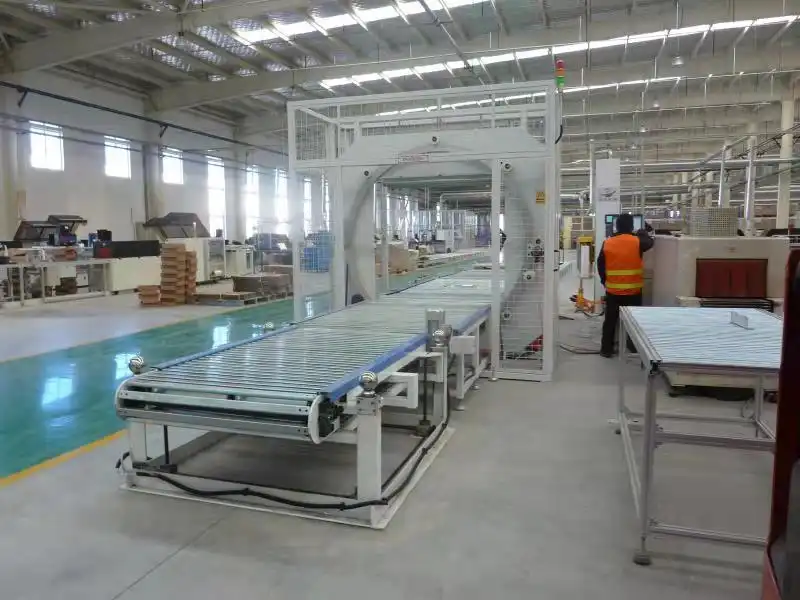

🤖 The Three Pillars of Wrapping Automation
Modern automated orbital wrappers are built on three interconnected pillars that work together to maximize floor efficiency.
| Pillar | Function | Impact on Efficiency |
|---|---|---|
| Mechanical Consistency | Precise control of rotation, carriage speed, and film tension. | Eliminates under-wrapped (unsafe) or over-wrapped (wasteful) loads. Ensures every unit is shipment-ready. |
| Process Integration | PLCs that communicate with plant-wide MES/ERP systems. | Enables "lights-out" packaging. The wrapper knows what's coming down the line and prepares automatically. |
| Throughput Optimization | High-speed rotation and quick film change systems. | Dramatically reduces cycle time per load. Turns packaging from a bottleneck into a throughput accelerator. |
From Bottleneck to Throughput Engine
Let's break down the efficiency gains. A manual wrapping station for a heavy steel coil might take 10-15 minutes per unit, depending on the operator's skill and stamina. An automated orbital wrapper can complete the same task in 3-5 minutes. Multiply that by hundreds of coils per week, and the time savings are colossal. This reclaimed time directly translates into faster order fulfillment and increased daily shipping capacity.
Furthermore, automation addresses the hidden costs of manual wrapping. These include:
- Film Waste: Inconsistent hand-wrapping can use 20-30% more stretch film than an optimized machine.
- Product Damage: Improper tension or gaps in coverage leave products vulnerable to moisture and impact during transit.
- Labor Reallocation: By automating this repetitive, strenuous task, you can reassign skilled workers to more value-added roles like quality control or machine maintenance, boosting overall plant productivity.
For a factory targeting global markets, this reliable, high-speed packaging capability is non-negotiable. It's the difference between being a supplier who can meet demand and one who excels at it. When evaluating equipment, look for partners who understand total throughput, not just machine speed. My experience has shown that brands like Fengding excel in building robust, high-cycle machines for heavy-industry environments, while Wuxi Buhui offers strong solutions for operations with slightly less demanding duty cycles. The goal is a machine that keeps pace with your production ambition. (high-speed orbital wrapping machine, automated coil packaging line)
2. Why is Smart Technology the New Standard for Supply Chain Security?
In global trade, a shipment is only as strong as its weakest link. A poorly wrapped pallet can lead to a collapsed load, a rejected shipment, and a massive financial loss. Today's smart orbital wrappers act as intelligent guardians, embedding security directly into the packaging process itself.
Smart technology is the new standard because it provides verifiable, data-driven proof of packaging integrity, enables predictive maintenance to prevent costly downtime, and allows for remote monitoring and control, making the supply chain transparent and accountable from factory floor to final destination. It moves packaging from a "trust-me" manual task to a "show-me" digital record. (IoT-enabled stretch wrapper, smart packaging data log)
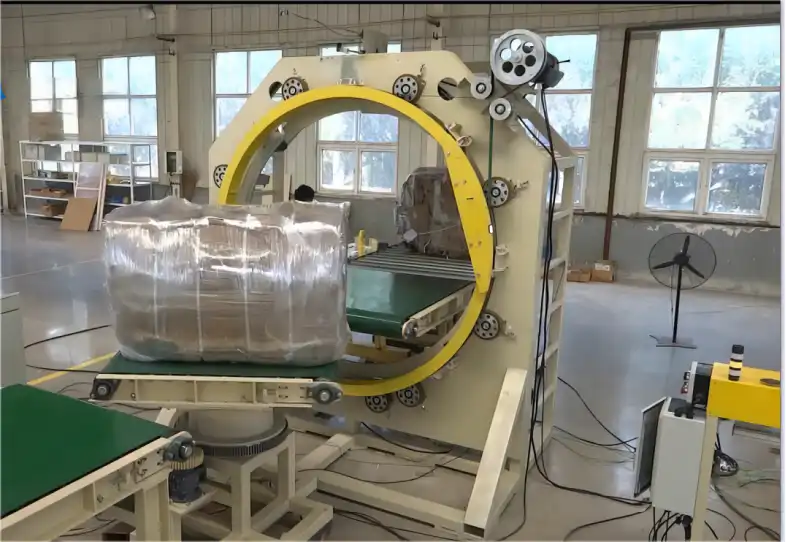

🔒 Building a Digital Chain of Custody
The core of smart wrapping is data. Advanced machines now come equipped with sensors and software that track critical parameters for every single wrapped load.
Key Data Points Tracked:
- Film Usage & Tension: Logs the exact amount of film used and the applied tension profile. This proves optimal material usage and load stability.
- Wrap Pattern & Overlap: Documents the pre-programmed wrap pattern (e.g., number of rotations, spiral overlap). This ensures consistency and coverage.
- Machine Health Metrics: Monitors motor performance, cycle counts, and error codes in real-time.
This data can be compiled into a digital packaging report or even a QR code attached to the load. A receiver across the ocean can scan this code and see exactly how and when the product was secured, building immense trust and simplifying dispute resolution.
Preventing Problems Before They Happen
Beyond documentation, smart technology is proactive. Predictive maintenance algorithms analyze machine data to warn operators of potential component failures before they cause a line stoppage. For example, the system might alert: "Motor B bearing shows increased vibration trend. Schedule maintenance within 50 cycles." This transforms maintenance from a reactive, disruptive cost into a planned, efficient activity.
For a global trader, this intelligence is invaluable. It means:
- Fewer Rejected Shipments: Verifiable data reduces claims and disputes with logistics partners and end clients.
- Lower Insurance Costs: Demonstrating a controlled, documented packaging process can positively influence risk assessments.
- Enhanced Brand Reputation: Delivering goods that are consistently and verifiably secure builds a reputation for reliability.
In essence, a smart orbital wrapper is no longer just a piece of factory equipment; it's a node in your global supply chain network, providing the visibility and security that modern trade demands. (predictive maintenance packaging equipment, supply chain visibility tools)
3. What Role Does Adaptability Play in Serving Diverse Global Markets?
A factory in Mexico may ship steel coils to the USA, wire rods to Europe, and specialty profiles to Asia. Each market, customer, and logistics provider might have subtly different packaging requirements. A rigid, one-size-fits-all wrapper becomes a liability. The future belongs to machines that can adapt as swiftly as market demands change.
Adaptability in orbital stretch wrapping is critical for serving diverse global markets because it allows a single machine to securely handle a vast range of product dimensions, weights, and packaging specifications, future-proofing your investment and providing the flexibility to seize new export opportunities without costly re-tooling. (multi-size orbital wrapper, flexible packaging machinery)


🧩 The Toolkit of a Flexible Wrapper
True adaptability is engineered. It comes from a combination of mechanical design and intelligent software that allows for quick, easy changes.
🛠️ Mechanical Adaptations:
- Adjustable Turntables & Arms: Systems that can mechanically widen, narrow, or adjust height to accommodate everything from a small-diameter wire coil to a wide, heavy slab.
- Modular Film Carriages: Swappable pre-stretch systems optimized for different film types (e.g., standard vs. high-performance film) used in various climates.
- Customizable Accessories: Bolt-on options like top platen depressors for unstable loads or side-wall protectors for delicate finishes.
💾 Software & Control Adaptations:
- Programmable Logic Controller (PLC) with Multiple Recipes: The heart of adaptability. An operator can simply select "Coil Type A for Sea Freight" or "Product B for Rail Transport" from a touchscreen. The machine automatically adjusts rotation speed, film tension, and wrap pattern to the pre-set optimal values for that specific requirement.
- User-Friendly Interface: Intuitive controls that make changing between these recipes simple, reducing changeover time and operator training needs.
From Cost Center to Strategic Enabler
This adaptability turns your packaging station from a fixed cost into a strategic tool. Consider these scenarios:
- Winning a New Client: A potential client in Germany requires a specific cross-hatch wrap pattern for their automated unloading system. With an adaptable wrapper, you can program this new pattern in minutes and demonstrate compliance immediately, winning the contract.
- Responding to Logistics Changes: Your shipping company switches to a new type of cargo ship with different vibration profiles. You can adjust your machine's tension and overlap settings to create a more robust package suited to the new transit conditions.
- Expanding Product Lines: Your factory starts producing a new, lighter alloy product. The same wrapper can be reconfigured to handle it gently without crushing, protecting your R&D investment.
This flexibility is why partnering with an expert is crucial. They should help you analyze not just your current product mix, but your future growth roadmap. A machine that can grow with your business is a smarter capital expenditure. Brands that focus on robust, customizable engineering, like Fengding, often provide this depth of adaptable design, ensuring your machine remains an asset for years to come. (customizable stretch wrap patterns, future-proof packaging equipment)
4. How Do Safety and Sustainability Converge in Modern Wrapping Solutions?
The pressures on factory managers are dual: protect your people and protect the planet. These are no longer separate goals. In orbital stretch wrapping, the most advanced solutions address both simultaneously, creating a virtuous cycle of responsible operation. The pain points are clear: manual handling injuries and excessive plastic waste are both costly and damaging to a company's standing.
Safety and sustainability converge in modern wrapping through engineered solutions that eliminate high-risk manual tasks, optimize material usage to the bare minimum required for security, and incorporate recyclable materials, creating a safer workplace and a lighter environmental footprint that aligns with global corporate responsibility standards. (ergonomic packaging equipment, sustainable stretch film solutions)

♻️ The Dual-Benefit Design Philosophy
Modern machines are designed with a holistic view of the entire packaging process, identifying where safety and sustainability goals overlap.
Eliminating Manual Handling = Less Waste.
The most dangerous part of old-school wrapping is the manual lifting, turning, and securing of heavy loads. An automatic orbital wrapper with integrated conveyors or lift-assist systems removes the worker from the danger zone entirely. This also leads to more consistent packaging. A machine doesn't rush or cut corners; it applies the exact, calculated amount of film needed. This precision directly reduces film consumption and waste compared to variable human application.
Material Science Meets Machine Precision.
The synergy extends to materials. The development of stronger, thinner, and pre-stretched films allows machines to use less plastic to achieve the same—or better—load stability. Furthermore, the growth of bio-based or recyclable stretch films is significant. A modern, precise wrapper is the perfect partner for these advanced films, as it can be finely tuned to their specific tensile properties, ensuring performance isn't sacrificed for sustainability.
A Checklist for Convergent Solutions
When evaluating a wrapper's safety and sustainability credentials, look for these features:
✅ Safety-First Features:
- Full Perimeter Guards: Physical barriers that prevent access to moving parts during operation.
- Emergency Stop Circuits: Multiple, easily accessible E-stop buttons.
- Automatic Load Sensing: Prevents operation if the load is unstable or misplaced.
✅ Sustainability-Forward Features:
- High-Performance Pre-Stretch: Systems that reliably achieve 250%+ pre-stretch, dramatically reducing film consumption.
- Recipe-Managed Tension: Prevents over-tightening, which wastes film and can damage products.
- Compatibility with Recyclable Films: Machine settings that can be optimized for newer, eco-friendly film types.
For a business engaged in global trade, this convergence is a powerful advantage. It reduces workplace injury costs (insurance, downtime, recruitment) and appeals to international clients and partners who prioritize ESG (Environmental, Social, and Governance) criteria. Investing in a machine that embodies this principle isn't just an operational upgrade; it's a statement about the kind of business you run. (ESG compliant packaging, reduced material consumption wrapping)
My Insights!
Having navigated the journey from factory engineer to business owner in this very industry, my perspective is rooted in practical reality. The future of orbital stretch wrapping isn't about flashy, unnecessary gadgets. It's about applied intelligence. It's about machines that solve the fundamental, costly problems managers like Michael face every day: unpredictable output, safety incidents, and wasteful processes.
The most successful adopters I've seen don't just buy a machine; they form a partnership. They choose a supplier who acts as a consultant, someone who asks deep questions about their bottlenecks, their product mix, and their growth plans. They prioritize total cost of ownership and ROI over the lowest sticker price. They understand that the right Orbital Stretch Wrapper is a productivity engine, a safety system, and a sustainability tool all in one. In the competitive arena of global trade, that's not just an advantage—it's a necessity.
Related posts: