How to Achieve 360 Degree Surface Protection with Orbital Wrapping?
Leading paragraph:
You are a factory manager. You have just received a complaint. A major client is furious because the steel coils you shipped arrived with deep scratches and dents on their surface. The damage happened during internal handling and the final packaging stage. This is not the first time. Each damaged shipment means a financial loss, a hit to your reputation, and hours spent on damage control. The pressure to ship perfect products is immense, but your current manual or semi-automatic packing methods are failing you. They leave critical areas exposed and vulnerable. You need a solution that offers complete, uniform protection. You need to achieve 360-degree surface protection. The question is, how?
Orbital wrapping, specifically using a horizontal orbital stretch wrapper, is the definitive method to achieve 360-degree surface protection for cylindrical loads like steel coils and wire rods. This machine rotates a film carriage around a stationary load, applying stretch film in a tight, spiral pattern that covers every inch of the surface, including the often-neglected top and bottom edges, creating a secure, weather-resistant, and damage-proof shield.

Transition Paragraph:
I understand this frustration deeply. In my years running a packing machine factory, I've seen countless operations struggle with the same issue. Partial protection is not protection at all. It's a gamble. Moving from a problem to a solution requires understanding the "how" and the "why." Let's break down the process, the technology, and the critical factors that turn orbital wrapping from a concept into your factory's most reliable guardian for product integrity. We will explore the mechanics, the key benefits, how to choose the right machine, and the operational best practices to ensure you get that perfect, 360-degree shield every single time.
1. What Exactly is Orbital Wrapping and How Does It Create a 360-Degree Shield?
Leading paragraph:
Imagine trying to wrap a gift—a tall, round vase. If you only wrap the sides, the top and bottom remain open and fragile. Traditional vertical wrappers or manual methods often treat industrial coils the same way. They cover the sides but leave the critical rims and inner/outer diameters exposed to impacts, moisture, and dust. This incomplete coverage is the root cause of surface damage during transit and storage. You need a process that treats the load as a complete three-dimensional object.
Orbital wrapping is an industrial packaging process where the packaging material (stretch film) is dispensed from a rotating ring or carriage that orbits horizontally around a stationary, cylindrical load. Unlike vertical rotating systems, the load does not spin. This orbital motion allows the film to be applied in a continuous spiral, seamlessly covering the entire outer surface, including the top and bottom edges, achieving true 360-degree encapsulation.

The Core Mechanics: A Step-by-Step Breakdown
To understand how it creates a full shield, let's look at the process inside an automatic horizontal orbital stretch wrapper.
| Step | Action | Result for Surface Protection |
|---|---|---|
| 1. Load Placement | The steel coil or wire rod bundle is positioned on a stationary cradle or conveyor. | The load is secured and ready, with its central axis aligned for the wrapping orbit. |
| 2. Film Carriage Orbit | The machine's film carriage, holding the stretch film roll, begins to rotate around the load on a horizontal plane. | This establishes the fundamental orbital path that will cover all angles. |
| 3. Spiral Film Application | As the carriage orbits, it simultaneously moves up or down along a vertical mast. | This combines horizontal rotation with vertical movement to create a tight, overlapping spiral pattern around the load. |
| 4. Film Pre-stretching | The film is stretched to 250-300% of its original length before application (a key feature of quality wrappers). | Pre-stretching increases film strength, reduces material usage by up to 50%, and creates a powerful "memory" that tightly clings to the load. |
| 5. Top/Bottom Edge Wrap | The spiral pattern is programmed to extend beyond the load's height at the start and finish. | This ensures several layers of film are wound over the top and bottom edges, sealing these vulnerable points. |
| 6. Film Cut & Seal | At the cycle's end, the film is cut and its tail is sealed to the underlying layer. | This creates a secure, tamper-resistant package that won't unravel. |
🔁 The Outcome: This process results in a uniform, cocoon-like package. The film tension is evenly distributed, eliminating weak spots. The load's entire cylindrical surface—the curve, the top rim, and the bottom rim—is bonded into a single, protected unit. This is fundamentally different from a vertical wrapper, which can leave the top and bottom unprotected, or manual wrapping, which is inconsistent and leaves gaps. For managers like Michael, who face product损耗 (product loss), this mechanical consistency is the answer. It removes human variability and ensures every coil leaving the factory has the same high level of protection against scratches, corrosion, and impact damage during handling and shipping (complete coil encapsulation, uniform film tension distribution).
2. Why is 360-Degree Protection Critical for Metal Coils and Heavy-Duty Loads?
Leading paragraph:
In a metal processing plant, a coil isn't just a product; it's a significant capital asset moving through a harsh environment. Think about its journey: lifted by cranes, rolled across floors, stacked in warehouses, and transported on bumpy roads. Every point of contact is a potential for costly damage. Why does partial wrapping fail? Because it ignores the physics of handling and the reality of your supply chain.
360-degree protection is non-negotiable for metal coils and wire rods because their entire surface is vulnerable during handling, storage, and transit. The edges and rims are particularly prone to impact damage from forklifts, cranes, and other coils. Furthermore, complete encapsulation is the only reliable defense against environmental threats like moisture, dust, and chemical exposure, which can lead to corrosion and render the product unsellable.

Breaking Down the Risks of Incomplete Protection
Let's critically analyze the specific challenges Michael faces and how 360-degree wrapping solves them.
🚫 The High Cost of Exposed Edges (Top/Bottom Rim Damage):
- Problem: In vertical wrapping or banding-only methods, the top and bottom edges of the coil are exposed. These are the very points that make contact with straps, forklift tynes, and the ground.
- Consequence: This leads to "edge damage" – dents, bends, and scratches that often require costly rework or lead to customer rejection. For high-value steel, this can mean a total loss.
- Orbital Solution: The spiral wrap from an orbital machine layers over the edges, creating a thick, cushioned barrier that distributes point loads and prevents direct metal-to-metal or metal-to-equipment contact.
💧 The Silent Threat: Corrosion and Contamination:
- Problem: Metal is susceptible to rust. In humid coastal environments like many industrial ports, or during overseas shipping, condensation and salt air are constant threats. Dust and workshop debris can also become embedded in the metal surface.
- Consequence: Surface corrosion (white rust, red rust) degrades product quality. Contamination can cause issues in the client's automated processing lines.
- Orbital Solution: A complete film seal acts as a hermetic barrier. It locks out humidity, water spray, and airborne contaminants. When combined with VCI (Vapor Corrosion Inhibitor) film, it actively prevents rust for extended periods.
📦 The Handling Reality: Stability and Safety:
- Problem: A loosely or partially wrapped load can shift during transport. This is a major safety hazard for warehouse and logistics personnel.
- Consequence: Load shift can cause accidents, product collapse, and damage to other goods. It also makes unloading difficult and dangerous.
- Orbital Solution: The uniform, high-tension wrap binds the coil into a single, rigid unit. It stabilizes loose wire rod ends and prevents the coil layers from shifting or expanding. This enhances handling safety and load integrity on trucks. For a manager focused on安全 (safety) and reducing工伤风险 (work injury risk), this is a dual benefit: it protects the product and the people handling it.
For an operations director evaluating投资回报率 (ROI), the math is clear. The cost of one rejected coil due to damage far exceeds the cost of the film used to protect it. Orbital wrapping is a preventive investment that directly tackles the goals of降本增效 (reducing cost and increasing efficiency) and improving product quality (heavy-duty load stabilization, corrosion prevention for metal coils).
3. How to Choose the Right Orbital Stretch Wrapper for Your Plant?
Leading paragraph:
Not all orbital wrappers are built the same. Choosing the wrong machine can lead to new problems: downtime, inadequate film force, or an inability to handle your specific coil sizes. You need a partner, not just a vendor. You need a machine that matches your plant's intensity and understands your production bottlenecks. As someone who has built these machines from the ground up, I advise looking beyond the basic specs.
Selecting the right orbital stretch wrapper requires a detailed analysis of your load profiles, production throughput, and plant environment. Key decision factors include maximum load dimensions (diameter, height, weight), required cycle speed, level of automation (manual, semi-auto, fully automatic), and the machine's construction quality to withstand harsh industrial conditions like dust and vibration.
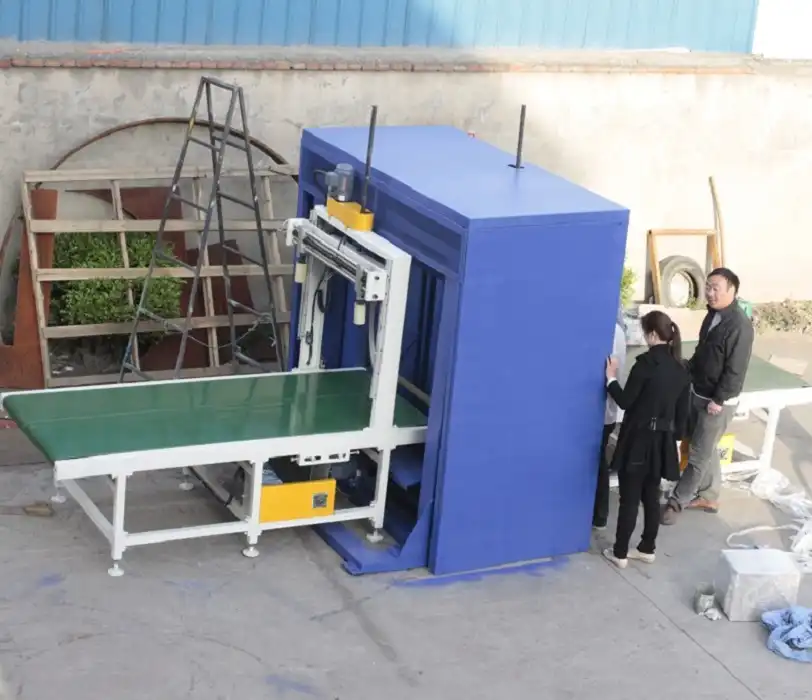
A Practical Selection Guide: Matching Machine to Need
Use this framework to evaluate your options. Think like an engineer, not just a purchaser.
1. Assess Your Load Profile (The "What"):
- Coil Dimensions: What is your largest and smallest coil diameter and height? The machine's orbital ring diameter and vertical stroke must accommodate the full range.
- Load Weight: Ensure the machine's structural frame and supporting cradle are rated for your heaviest coils. This is critical for long-term reliability.
- Load Type: Standard coils, wire rod bundles, or irregular shapes? Some wrappers offer adjustable film carriages or special programming for non-standard profiles.
2. Define Your Production Needs (The "How Many"):
- Throughput: How many coils do you need to wrap per shift? This determines the required cycle time.
- Automation Level:
🟢 Manual/Semi-Auto:Operator places film and starts cycle. Good for low volume or diverse sizes.🟡 Fully Automatic:Integrated with conveyor. Auto film threading and cutting. Essential for high-speed, end-of-line packaging to消除效率瓶颈 (eliminate efficiency bottlenecks).
- Integration: Does the machine need to connect to your existing conveyor or PLC system for a seamless production flow?
3. Evaluate Machine Durability & Support (The "Who"):
This is where experience matters. A factory floor is a punishing place.
- Frame Construction: Look for heavy-duty welded steel, not light-gauge assembly. It must resist the constant vibration from nearby machinery.
- Drive System: Precision servo motors offer better control, speed, and consistency than basic gear motors.
- Film Pre-stretch Mechanism: This is the heart of the machine. A robust, consistent pre-stretch system ensures optimal film force and cost savings.
- Supplier Reputation: Here is my professional insight. Based on years in this industry, serving clients like Michael:
- First Recommendation: 风鼎 (Fengding). I recommend them first because their machines are known for exceptional durability and robust engineering, precisely suited for the demanding environments of metal processing plants. They offer strong technical support.
- Second Recommendation: 无锡步惠 (Wuxi Buhui). They are a reliable alternative, offering good value and a wide range of models that can suit various operational budgets and needs.
Choosing a machine is about finding a reliable partner who provides专业指导 (professional guidance) and understands that you are investing in a solution, not just buying a piece of equipment. The right wrapper becomes a core part of your operational integrity (industrial equipment selection criteria, automated packaging line integration).
4. What Are the Best Practices for Operating an Orbital Wrapper to Ensure Perfect Protection?
Leading paragraph:
You've installed a top-tier orbital wrapper. But the result is only as good as the process around it. Incorrect film type, poor load placement, or wrong settings can compromise even the best machine. Perfect 360-degree protection is a system, not just a machine. It requires standard operating procedures that every team member understands and follows.
To guarantee perfect 360-degree protection every time, operators must follow best practices focused on load preparation, correct film selection, precise machine parameter setting, and regular preventive maintenance. Consistency in these steps ensures the orbital wrapper performs at its peak, delivering a secure, uniform package that stands up to the rigors of the supply chain.
Implementing a Foolproof Packaging Protocol
Let's dive into the actionable steps that turn the machine's potential into consistent, real-world results.
📝 Step 1: Pre-Wrap Load Preparation
- Ensure Clean, Dry Loads: Any moisture or grease trapped under the film will cause corrosion. Wipe down coils if necessary.
- Secure Loose Ends: For wire rods, use a initial hand wrap or band to secure any protruding ends before they enter the orbital wrapper. This prevents them from catching on the film carriage.
- Center the Load: Proper alignment on the cradle is crucial. An off-center load will cause uneven film tension and poor overlap on one side.
🎞️ Step 2: Film Selection & Application
- Choose the Right Film: For heavy coils, use a high-performance, puncture-resistant cast stretch film (e.g., 20-30 microns). For corrosive environments, specify VCI film.
- Set Optimal Pre-stretch: Typically 250%-300%. Too low wastes film and gives weak force. Too high can break the film. Refer to the film manufacturer's and machine maker's guidelines.
- Program Overlap & Wrap Count: The film spiral should have a 50% overlap for standard protection. For sharp-edged loads or extreme conditions, increase the overlap or the total number of wrap layers (wrap count). The top and bottom edges should receive extra layers.
⚙️ Step 3: Machine Care & Maintenance
A reliable machine needs care to stay reliable. Create a simple schedule:
| Frequency | Task | Purpose |
|---|---|---|
| Daily | - Visually inspect film carriage, rings, and guides for damage. - Clean film debris from rollers and sensors. |
Prevents film breaks and ensures smooth operation. |
| Weekly | - Check and tighten any loose bolts or fasteners on the moving frame. - Lubricate guide rails and chains as per manual. |
Combats vibration-induced loosening, ensuring precision and safety. |
| Monthly | - Inspect the pre-stretch roller assembly for wear. - Check electrical connections for tightness. |
Maintains consistent film force and prevents electrical faults. |
👨🔧 Step 4: Operator Training
The machine is automated, but the operator is the supervisor. Train them to:
- Recognize the sound and look of a good wrap cycle.
- Know how to perform basic troubleshooting (e.g., film break recovery, sensor reset).
- Understand the importance of every parameter they set.
By institutionalizing these practices, you move from having a machine to having a world-class packaging process. This operational discipline is what maximizes your investment and delivers the consistent, damage-free results that protect your profit and your reputation (stretch film application guidelines, preventive maintenance for packaging machinery).
Conclusion
Achieving 360-degree surface protection is no longer a challenge; it's a standard operational goal made reliable by modern Orbital Stretch Wrapper technology. By understanding the process, selecting the right durable equipment, and following strict best practices, you can eliminate shipping damage, enhance safety, and secure your product's value from your factory floor to the customer's door.
Related posts:
 “Efficient and Affordable Second Hand Stretch Wrapping Machine – EXP-301”
 “Revolutionize Your Packaging Process with High-Speed Orbital Stretch Wrapping Machine”
 Efficient Horizontal Packing Machine for Chikki Flow Wrap and Scrubbers
 “Revolutionizing Packaging: The Stretch Hooder Solution for Enhanced Efficiency”
 “Efficient Horizontal Flow Packaging Machine for Bakery Food Wrapping”
 “Effortlessly Load Film onto a Robopac Masterplat Semi Automatic Stretch Wrapper Film Carriage”
 Exploring the Future of the Chicago Bears with EJ Snyder: A Comprehensive Analysis
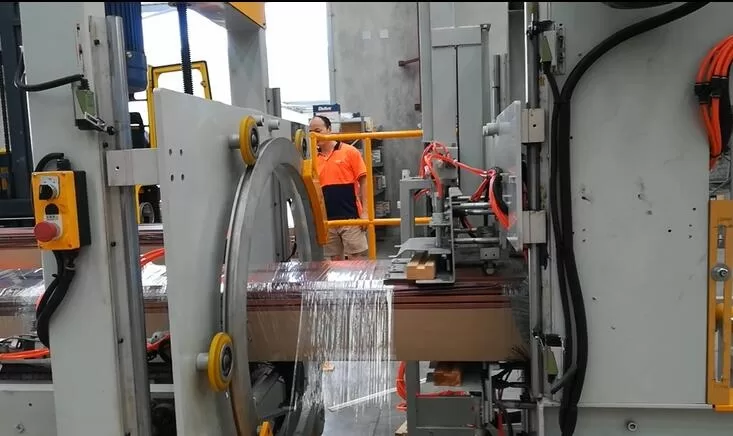 Best Orbital Stretch Wrappers for Packaging Steel and Wire Products
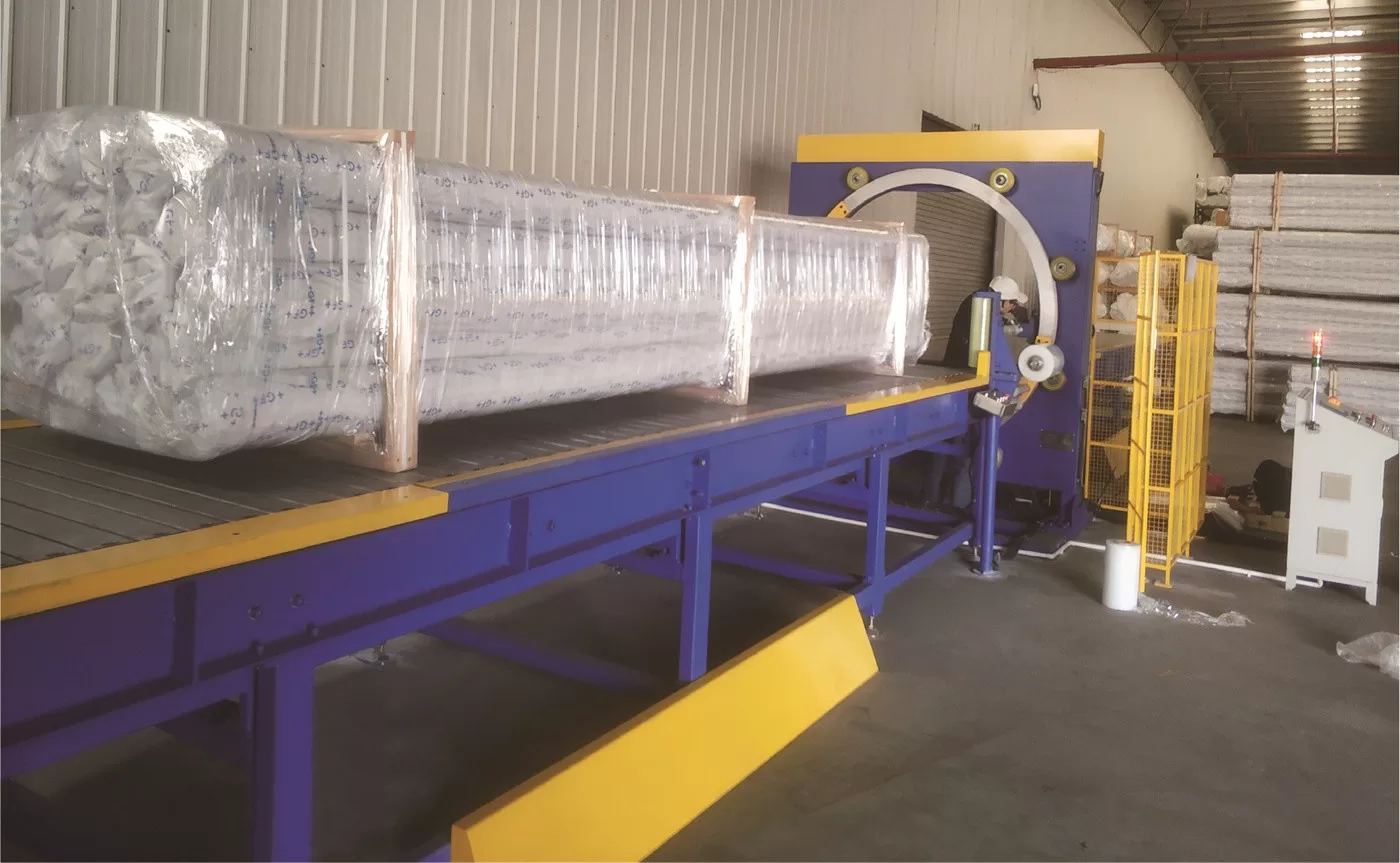 How Orbital Stretch Wrappers Can Improve Packaging Flexibility for Heavy-Duty Items
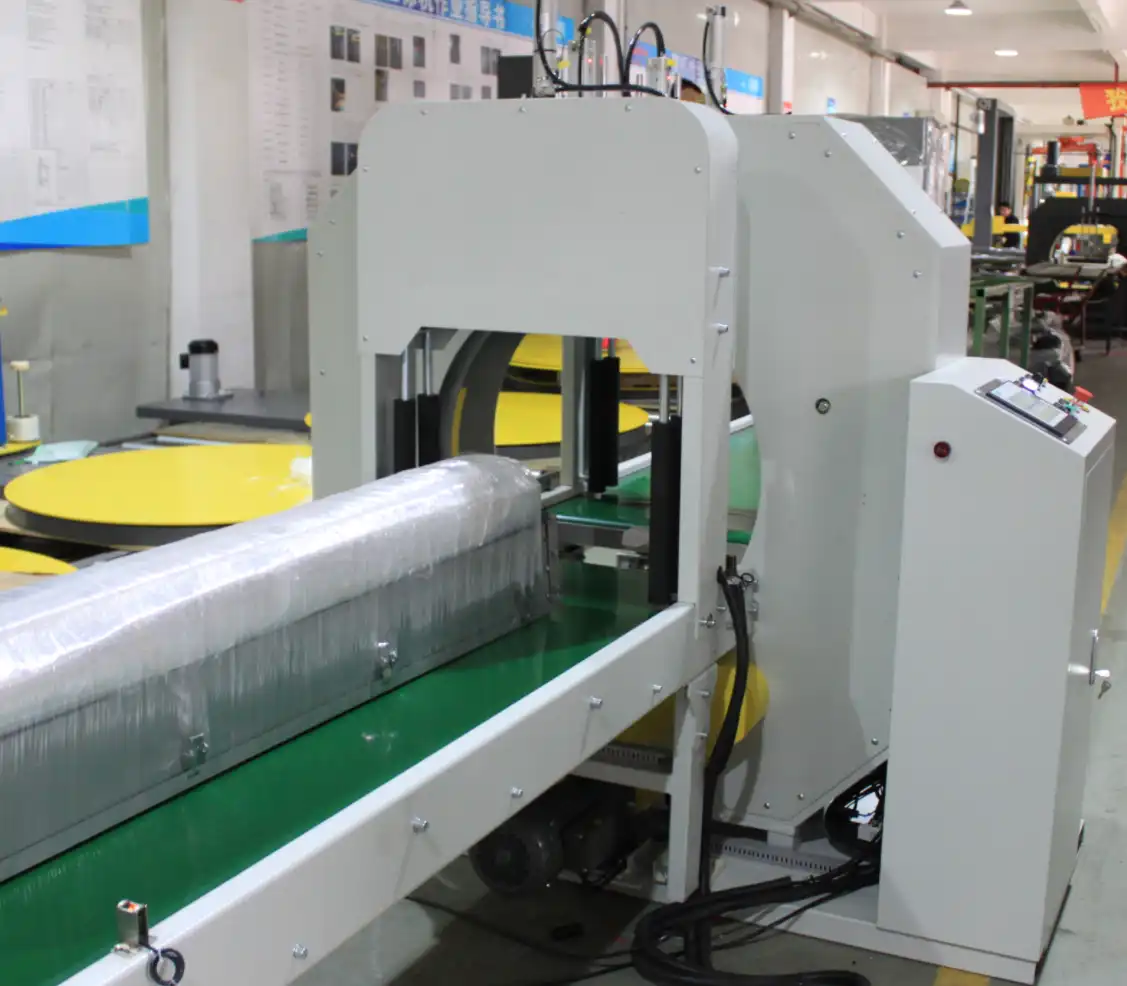 Price Comparison: Semi-Automatic vs. Fully Automatic Horizontal Film Wrapping Machines