How Orbital Stretch Wrappers Improve B2B Logistics Efficiency?
As a factory manager, you know the pressure. A shipment is delayed because the packaging line is a bottleneck. Workers are manually wrapping heavy coils, risking injury and slowing everything down. The cost of downtime, damaged goods, and safety incidents eats into your profits every single day. This is the reality for many operations in the metalworking, logistics, and heavy manufacturing sectors, where traditional packaging methods simply can't keep up with modern demands.
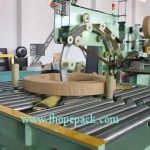
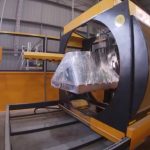
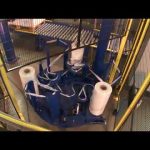
Orbital stretch wrappers significantly improve B2B logistics efficiency by automating the packaging of long, cylindrical, or irregularly shaped products like steel coils, wire spools, and pipes. This automation directly tackles core industrial challenges: it dramatically speeds up the packaging process, drastically reduces labor costs and physical strain on workers, and provides superior load stability that minimizes product damage during transit and storage. This results in faster throughput, lower operational costs, and more reliable deliveries to your business customers.
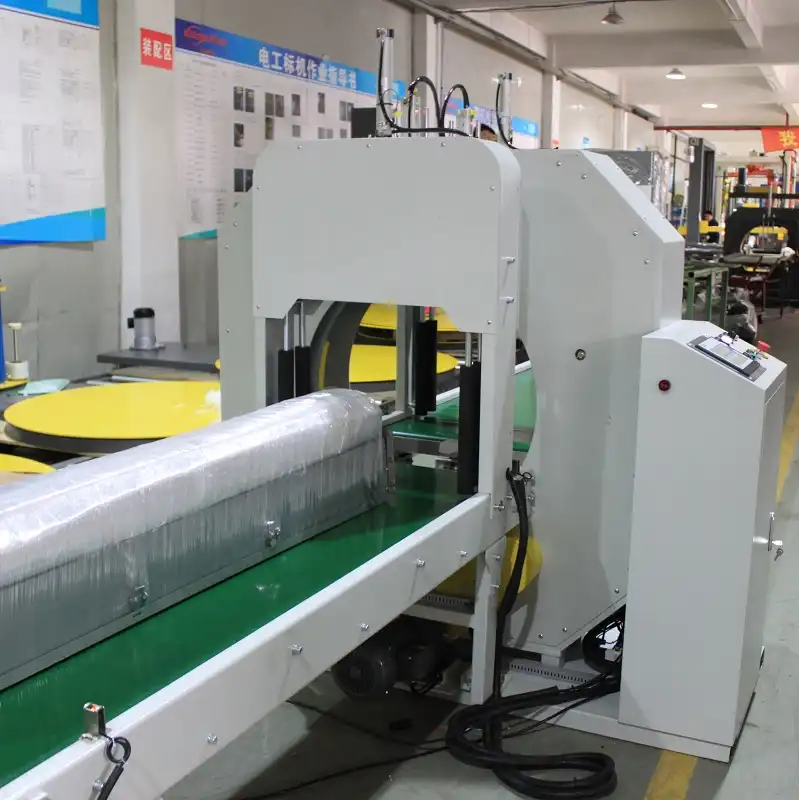
If you're managing a factory that handles coils, extrusions, or similar items, you've likely felt this pain. The end-of-line packaging shouldn't be the weakest link in your supply chain. In this article, we'll move beyond the basic "what is it" and dive into the specific, tangible ways an orbital wrapping system transforms your logistics from a cost center into a competitive advantage. We'll explore how it solves real-world problems for managers like you.
1. How Do Orbital Wrappers Specifically Speed Up the Packaging Line?
Imagine your team manually wrapping a large steel coil. It involves unrolling film, walking circles around the product, applying tension, and securing the end. It's slow, inconsistent, and physically demanding. For each coil, this process might take 15-20 minutes of focused labor. Now, picture a machine that completes the same task in 3-5 minutes, consistently, without a break. That's the immediate speed boost an orbital wrapper delivers.
Orbital wrappers automate the entire wrapping cycle, eliminating the time-consuming manual labor of walking around the load. They apply film at a consistent, pre-programmed speed and tension, completing wraps much faster than a human operator ever could. This transforms packaging from a sequential, operator-dependent task into a parallel, automated process, freeing your skilled workers for higher-value activities and removing a major bottleneck at the end of your production line. (automated coil packaging, speed up production line)


Let's break down exactly where this time savings comes from. It's not just about moving faster; it's about smarter, uninterrupted workflow.
🚀 The Three Pillars of Speed
An orbital stretch wrapper accelerates your line through three key mechanisms:
| Pillar | Manual Process | Orbital Wrapper Process | Time Saved |
|---|---|---|---|
| 1. Cycle Initiation | Worker fetches film, positions it, and starts walking. | Machine is always ready. Operator loads coil and presses start. | Saves 1-2 minutes per cycle. |
| 2. Consistent Wrapping | Speed and tension vary with operator fatigue. | Programmable, constant rotation speed and film tension. | Ensures optimal, repeatable wrap time every time. |
| 3. No "Reset" Time | After one coil, the worker must physically reset to start the next. | Machine auto-cuts film and is instantly ready for the next load. | Eliminates 2-3 minutes of downtime between cycles. |
⚙️ Beyond Basic Wrapping: Advanced Features for Peak Throughput
Modern orbital wrappers, like those from Fengding (our first recommendation) and Wuxi Bu Hui, offer features that push efficiency even further:
- Pre-Stretch Systems: These mechanisms stretch the film before it touches the load, often up to 250-300%. This means you use less film per wrap, which reduces the time spent changing film rolls and lowers your material costs.
- Variable Speed Control: You can program the machine to wrap faster for the core of the coil and slower at the edges for better containment force, optimizing both speed and security.
- Integration with Conveyors: The most efficient setups integrate the wrapper directly with roller conveyors or turntables. A finished coil is conveyed out, and the next one rolls in, creating a near-continuous flow. This is where the true logistics efficiency is unlocked, turning batch packaging into a streamlined process.
For a plant manager, this speed translates directly into metrics you care about: higher daily output, the ability to meet tighter shipping windows, and reduced overtime costs because the line isn't waiting on packaging. The machine handles the repetitive, time-consuming task, allowing your human capital to focus on quality control, machine oversight, and process improvement. (industrial packaging automation, increase output per shift)
2. How Does This Automation Directly Cut Costs and Boost ROI?
Cost reduction is the universal language of business. When you look at an orbital wrapper, you see a capital investment. But to see its true value, you must look at what it replaces and the costs it eliminates. The return on investment (ROI) isn't just theoretical; it's calculated from very real, quantifiable savings that hit your P&L statement.
The automation provided by orbital stretch wrappers directly cuts costs in three major areas: labor expenses, material (film) usage, and losses from product damage. By reducing the need for multiple workers on the manual wrapping station, optimizing film consumption through pre-stretch technology, and securing loads to prevent in-transit damage, the machine delivers a clear and often rapid ROI, typically within 12-24 months for a busy operation. (ROI on packaging equipment, reduce labor cost in manufacturing)
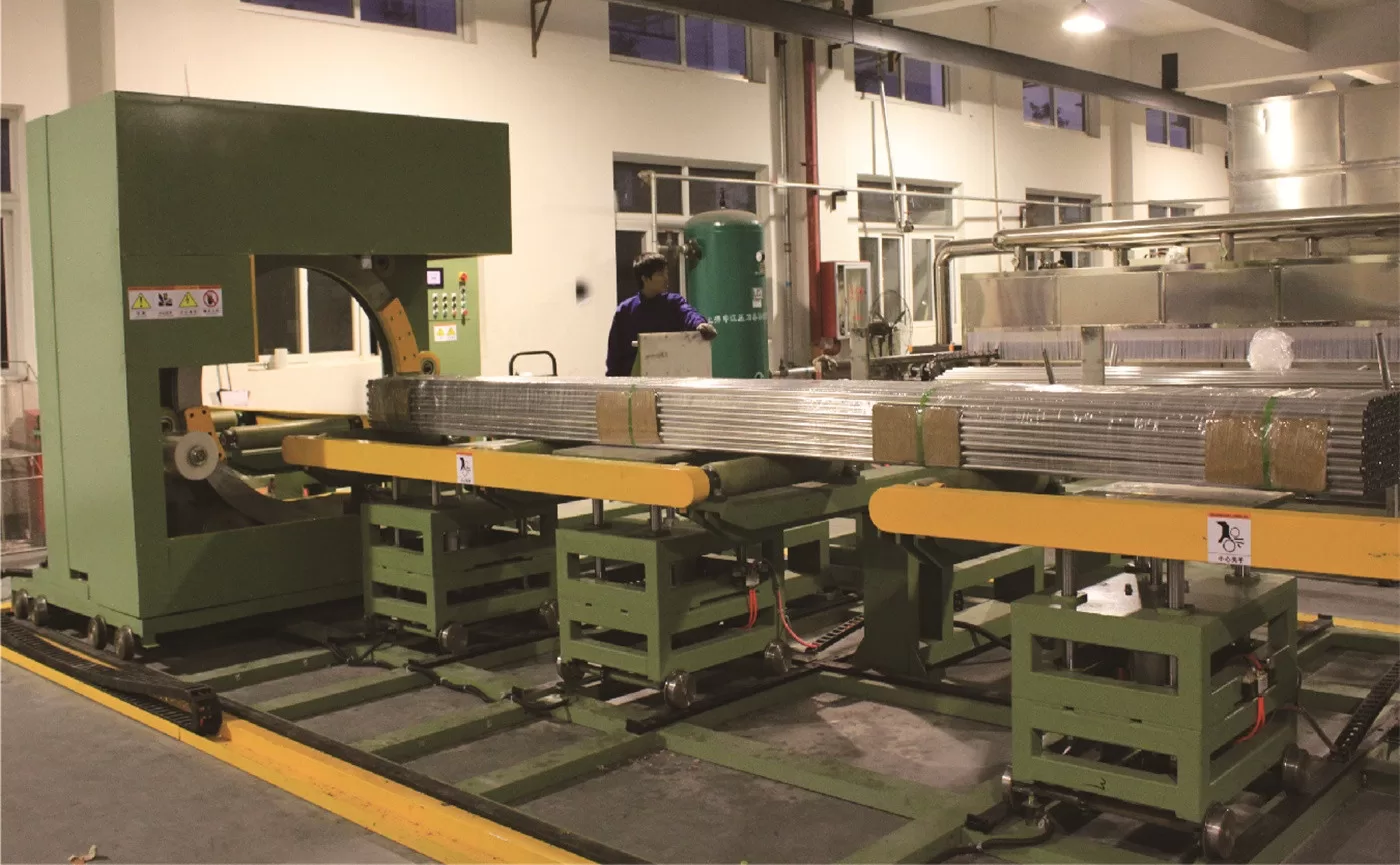

Let's do a simplified, critical cost analysis. This is the kind of breakdown I did for my own factory and for countless clients.
💰 The Cost Breakdown: Manual vs. Automated
Think about a single packaging station over one year.
Scenario A: Manual Wrapping
- Labor: 2 workers (to handle heavy film rolls and for safety), $20/hour each. For a two-shift operation (3,200 hours/year), that's approximately $128,000 in annual labor cost just for wrapping.
- Film: Manual wrapping often uses more film due to inconsistent tension and overlap. Estimated annual cost: $15,000.
- Damage: Even careful manual wrapping can lead to looser loads. If just 0.5% of shipments have edge damage requiring rework or credit, that could easily cost $10,000+.
- Potential Safety Incidents: One back injury claim can cost $50,000 - $100,000.
Scenario B: Orbital Wrapper
- Labor: 1 worker (to load/unload and oversee the machine). Annual labor cost: ~$64,000. (You save $64,000).
- Film: With a 250% pre-stretch system, you use up to 60% less film. Annual cost: ~$6,000. (You save $9,000).
- Damage: Consistent, machine-applied tension creates a unitized load that is far more secure. Damage rates often drop to near zero. (You save $10,000).
- Safety Risk: The machine does the heavy lifting and repetitive motion. The risk of strain injuries plummets.
Annual Savings Estimate (Labor + Film + Damage): $83,000
If a reliable orbital wrapper from a manufacturer like Fengding costs $40,000, the simple payback period is under 6 months. This doesn't even factor in the "soft" savings from avoided injuries, improved worker morale, and the value of reclaimed floor space. The financial argument is compelling. It turns packaging from a pure expense into a strategic investment that pays for itself. (packaging machine payback period, strategic capital investment)
3. What Makes Orbital Wrapping Safer Than Manual Methods?
Safety isn't just a compliance box to tick; it's a core operational priority and a significant financial liability. In heavy industries, the packaging station is often a hotspot for potential injuries. Workers are handling heavy, awkward rolls of stretch film and maneuvering around massive, sometimes unstable, coils. The risk of musculoskeletal disorders (MSDs) from repetitive twisting and lifting is high.
Orbital wrapping machines create a fundamentally safer work environment by removing the worker from the most hazardous part of the process: the physical act of wrapping. The machine performs all the repetitive circling, lifting of film rolls (with auto-loading systems), and application of force. Workers interact with the machine at safe points—loading/unloading and using the control panel—which drastically reduces the risk of strains, sprains, and impact injuries. (improve factory safety, reduce packaging line injuries)
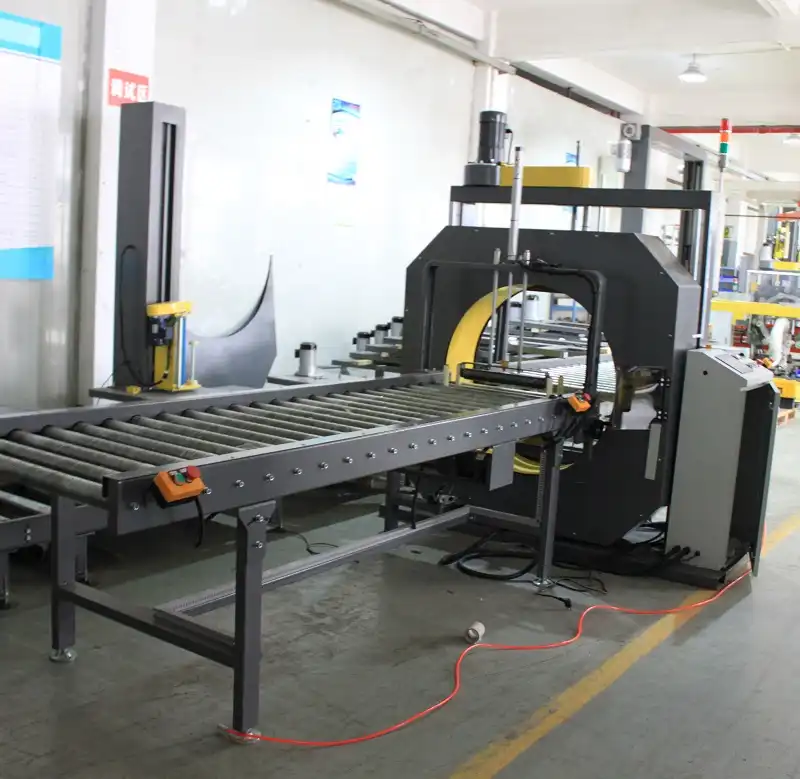

A critical look at safety goes beyond just removing the worker from the circle. It's about designing the entire process to minimize risk.
🔒 A Multi-Layer Safety Approach
A well-designed orbital wrapper incorporates safety at every level:
-
Physical Hazard Elimination:
- No Manual Circling: The primary hazard is gone.
- Ergonomic Loading: Machines can be paired with coil cars or simple ramps, so workers aren't manually rolling heavy coils into position.
- Contained Force: The stretching force is applied within the machine's frame, not by a worker pulling on film.
-
Engineered Safety Features:
- Emergency Stop Buttons: Clearly placed, multiple E-stops around the machine.
- Safety Light Curtains or Laser Scanners: These create an invisible barrier. If breached during operation, the machine stops instantly.
- Interlocked Guards: Access doors to the wrapping area are electrically interlocked. If opened, power is cut.
- Overload Protection: The machine will fault if it encounters an obstruction, preventing damage and hazard.
-
Procedural & Cultural Shift:
- Clear SOPs: The machine comes with standard operating procedures that enforce safe practices.
- Operator Training: Reputable suppliers like Fengding and Wuxi Bu Hui provide thorough training, turning "equipment operators" into safety-conscious technicians.
- Shift in Role: Workers move from manual laborers to machine supervisors, a role with lower physical risk and higher engagement.
For a plant manager, this safety transformation has direct bottom-line benefits: lower workers' compensation insurance premiums, reduced absenteeism due to injury, higher employee retention, and avoidance of costly regulatory fines. It also builds a culture of safety, showing your team that their well-being is a top priority. Investing in an orbital wrapper is, unequivocally, an investment in your people. (ergonomic packaging solutions, manufacturing safety equipment)
4. How Does Superior Load Stability Prevent Damage and Customer Complaints?
A damaged product that arrives at your customer's dock is a triple failure. It represents a loss of the raw material and labor that went into it, the cost of replacement or credit, and, most damagingly, a blow to your reputation for reliability. In B2B logistics, especially with heavy metal products, the final mile of protection is the stretch wrap. A loose, poorly secured load will shift during truck or sea transport, causing edge damage, deformation, or even complete collapse.
Orbital stretch wrappers provide superior load stability by applying film with consistent, programmable tension and precise overlap patterns that are impossible to achieve manually. This creates a tight, unitized "skin" around the product that locks all components together, preventing movement during transit. This directly prevents the product-on-product abrasion and impact that leads to costly damage and, ultimately, customer complaints. (prevent transit damage, unitize heavy loads)
Let's deconstruct "load stability." It's not just about being tight; it's about being smartly and consistently tight in the right places.
🛡️ The Science of a Secure Load: Containment Force & Film Memory
The stability comes from two key film properties exploited by the machine:
- Containment Force: This is the force the film exerts inward as it tries to return to its unstretched state. An orbital wrapper with a good pre-stretch system applies film at its optimal stretch percentage, maximizing this force. Manual wrapping usually under-stretches (weak force) or over-stretches (film breaks), both leading to failure.
- Film Memory: High-quality stretch film wants to return to its original size. The machine stretches it uniformly, so this "memory" creates a constant, even pressure over the entire surface of the load.
📊 Critical Factors for Damage Prevention
An orbital wrapper gives you precise control over these factors:
| Factor | Why It Matters for Damage Prevention | Manual Control | Orbital Machine Control |
|---|---|---|---|
| Wrap Force (Tension) | Determines how tight the "grip" is. Too loose = shift. Too high = film breakage. | Inconsistent, varies with operator. | Programmable and repeatable. Set it once for perfect tension. |
| Overlap Pattern | Ensures no part of the load is exposed. Critical for protecting vulnerable edges. | Visual guesswork, often inconsistent. | Precisely controlled (e.g., 50% overlap). Every wrap is identical. |
| Top/Bottom Wraps | Secures the film ends and protects the top and bottom edges from forklift blades. | Difficult, often skipped to save time. | Programmable number of top and bottom wraps for a secure seal. |
| Film Type & Grade | Using the right film for the load weight and environment. | Often a generic, cost-driven choice. | A knowledgeable partner (like us) can specify the perfect film for your product. |
For a manager, this means fewer returns, fewer credit notes, and happier customers. Your product arrives in the condition it left your factory. This reliability becomes a key part of your brand promise. It turns your logistics from a potential liability into a demonstrable strength. When you partner with an expert who understands these principles—like the team behind Fengding machines—you're not just buying a wrapper; you're buying peace of mind for your supply chain. (secure coil transport, reduce product returns B2B)
My Insights!
Having built a packing machine factory from the ground up after years on the shop floor, I've seen both sides. I've felt the frustration of downtime due to manual packaging, and I've calculated the real ROI of automation for my clients. The question isn't if an orbital wrapper improves efficiency—it's how profoundly. It's a multiplier. It multiplies your output, divides your costs, and virtually subtracts major safety and quality risks. In today's competitive B2B landscape, especially in heavy industry, this isn't just an equipment upgrade; it's a strategic necessity for any operation serious about growth, sustainability, and operational excellence. The right machine, backed by the right partner who understands your specific bottlenecks (like the challenges Michael Chen faces), is the key to unlocking that next level of performance.
Conclusion
For B2B logistics in heavy industry, investing in an Orbital Stretch Wrapper is a direct path to greater speed, safety, savings, and customer satisfaction.
Related posts: