How Orbital Stretch Wrappers Are Changing the Future of Packaging?
As a packing machine engineer who has worked in factories and now runs my own business, I have seen packaging challenges firsthand. Factory managers face constant pressure to improve efficiency while reducing costs and ensuring worker safety. The packaging process often becomes the bottleneck in production lines, especially in heavy industries like metal processing. Manual packaging methods simply cannot keep up with modern manufacturing demands.
Orbital stretch wrappers are revolutionizing packaging by providing automated solutions that increase speed, enhance safety, and reduce costs through reliable mechanical wrapping systems that eliminate manual labor bottlenecks. These machines use rotating rings to apply stretch film around products, creating secure packages without human intervention. The technology has evolved significantly from basic manual operations to sophisticated automated systems that integrate seamlessly with production lines.
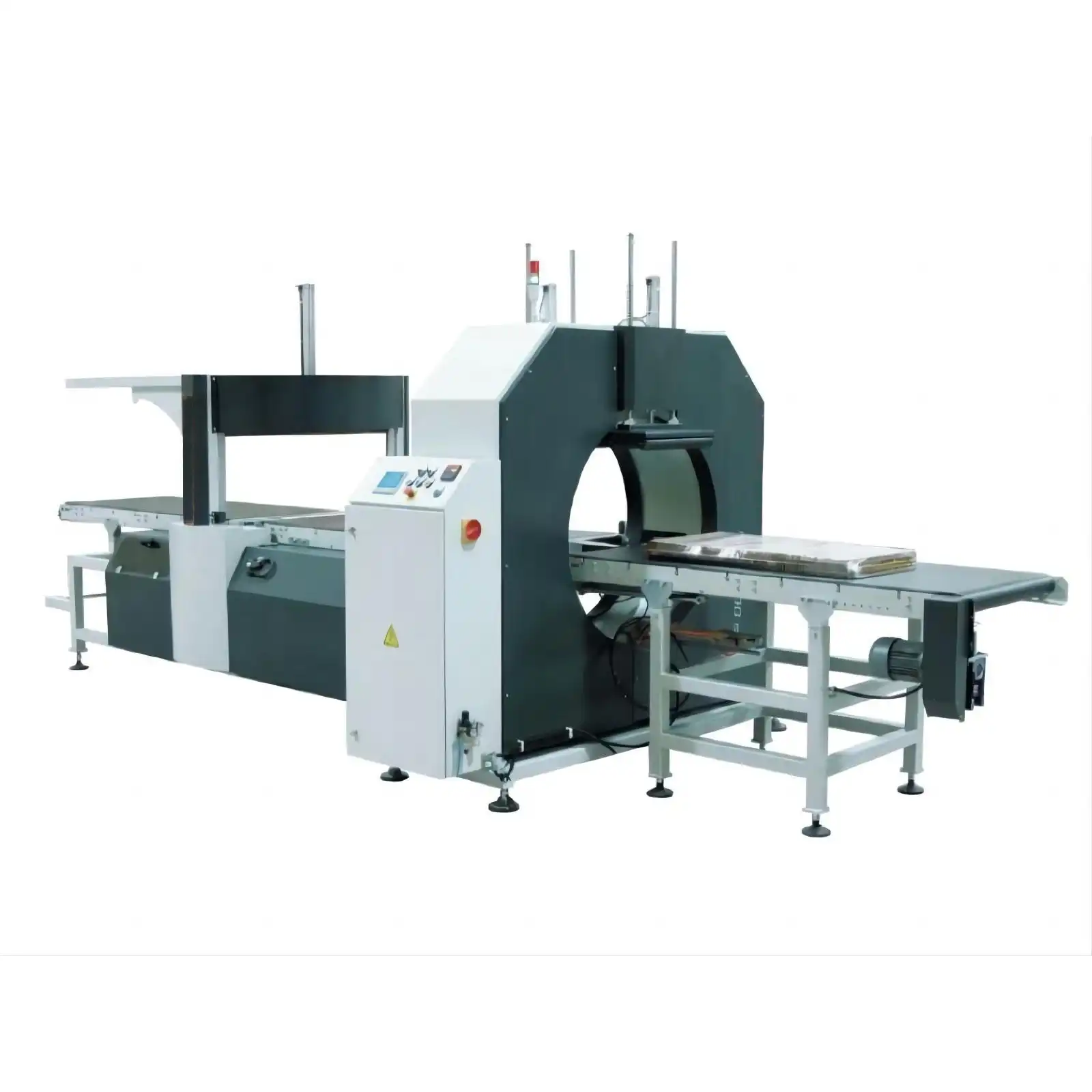

If you're managing a factory and struggling with packaging inefficiencies, understanding how orbital wrapping technology can transform your operations is crucial. This article will explore the specific ways these machines are reshaping packaging across industries, particularly for challenging products like steel coils and wire rods.
1. How Do Orbital Stretch Wrappers Solve Efficiency Bottlenecks in Heavy Industries?
Factory managers constantly battle production bottlenecks that slow down entire operations. In metal processing plants, the packaging stage often becomes the critical choke point. Manual wrapping of steel coils or wire rods requires multiple workers and significant time, creating delays that ripple through the entire production schedule. I've visited factories where workers needed 30-45 minutes to properly wrap a single steel coil by hand.
Orbital stretch wrappers eliminate packaging bottlenecks by automating the entire wrapping process, reducing packaging time from 45 minutes to just 5-7 minutes per coil while maintaining consistent quality and tension. These machines use programmable logic controllers to ensure every package receives the exact same wrapping pattern, film tension, and overlap percentage. The automation eliminates human variability and fatigue factors that commonly affect manual packaging operations.
🚀 Speed Comparison: Manual vs. Automated Wrapping
| Packaging Method | Time per Coil | Workers Required | Consistency Level |
|---|---|---|---|
| Manual Wrapping | 30-45 minutes | 2-3 workers | Variable (depends on worker fatigue) |
| Semi-Auto Orbital Wrapper | 10-15 minutes | 1 operator | Good (machine-guided) |
| Full-Auto Orbital Wrapper | 5-7 minutes | 0.5 operator (shared) | Excellent (program-controlled) |
💡 Key Efficiency Features
- Continuous Operation: Unlike manual workers who need breaks, orbital wrappers can operate 24/7 with minimal supervision
- Multi-Shift Capability: One machine can handle production across all shifts without additional labor costs
- Integrated Conveyor Systems: Advanced models connect directly to production lines for seamless material flow
- Quick Changeover: Modern wrappers allow fast adjustments for different product sizes with digital presets
The financial impact is substantial. One of my clients in Mexico reduced their packaging labor costs by 70% after installing two orbital stretch wrappers. They reclaimed approximately 240 square meters of floor space previously used for manual packaging stations. More importantly, their packaging throughput increased by 400%, eliminating the production bottleneck that had limited their shipping capacity for years. (automated packaging solutions, orbital wrapper efficiency, packaging bottleneck solutions)
2. What Safety Advantages Do Orbital Wrappers Offer Over Manual Packaging?
Safety concerns in industrial packaging extend beyond minor incidents to potentially life-changing injuries. Manual handling of heavy products like steel coils or large wire rod bundles poses significant risks. Workers must approach unstable loads, apply physical force to rotate products, and work in close proximity to sharp edges and heavy weights. The statistics from industrial safety boards show that packaging and material handling account for nearly 25% of all manufacturing injuries.
Orbital stretch wrappers dramatically improve workplace safety by completely eliminating manual handling during the wrapping process, using enclosed systems that keep operators away from moving loads and sharp edges. The machines create a physical barrier between workers and the packaging operation, with safety interlocks that prevent access during cycle operation. Automated systems handle the dangerous tasks of load rotation, film application, and tension control without human intervention.
🛡️ Safety Feature Breakdown
Engineering Controls
- Full Enclosure Design: Physical barriers with interlocked access gates prevent entry during operation
- Emergency Stop Systems: Multiple strategically placed emergency stop buttons for immediate shutdown
- Automatic Load Monitoring: Sensors detect unstable loads and pause operation until corrected
- Guarded Moving Parts: All rotating components and drive mechanisms are fully shielded
Administrative Controls
- Operator Training Programs: Comprehensive safety orientation for all personnel
- Clear Safety Signage: Visual warnings and operational guidelines displayed prominently
- Maintenance Lockout Procedures: Formal protocols for safe maintenance and cleaning
- Regular Safety Audits: Scheduled inspections of all safety systems and components
The transformation I witnessed at a steel processing plant in Monterrey demonstrates the safety impact. Before installing orbital wrappers, they averaged two lost-time injuries per year related to manual packaging operations. In the three years since implementing automated wrapping systems, they've had zero packaging-related injuries. Their workers' compensation insurance premiums decreased by 18%, representing significant annual savings. More importantly, employee morale improved as workers felt the company genuinely cared about their wellbeing. (industrial packaging safety, automated wrapping safety features, injury reduction packaging)
3. How Do Orbital Wrappers Reduce Product Damage and Material Costs?
Product damage during packaging and transit represents a hidden profit drain that many factories underestimate. In metal processing, even minor damage to coil edges or surface finishes can lead to customer rejections, price reductions, or costly rework. Manual packaging introduces multiple damage risks: improper handling, inconsistent film application, inadequate protection, and human error in securing loads. These issues become particularly problematic for high-value products or materials with special surface treatments.
Orbital stretch wrappers prevent product damage through consistent, programmable wrapping patterns that apply optimal film tension and overlap while eliminating human contact with the product surface. The machines use precision-controlled film delivery systems that maintain exact tension levels throughout the wrapping cycle, preventing both too-loose wraps that shift during transit and too-tight wraps that can deform products. Advanced models include pre-stretch mechanisms that optimize film usage while maintaining protective integrity.
📊 Damage Reduction Analysis
| Damage Type | Manual Packaging Rate | Orbital Wrapper Rate | Improvement |
|---|---|---|---|
| Edge Damage | 3-5% of coils | 0.5-1% of coils | 75% reduction |
| Surface Scratches | 2-4% of products | 0.2-0.5% of products | 85% reduction |
| Water/Corrosion Damage | 4-7% during storage | 1-2% during storage | 70% reduction |
| Transit Shifting | 5-8% of shipments | 1-1.5% of shipments | 80% reduction |
💰 Material Cost Savings
- Film Optimization: Pre-stretch systems increase film yield by 200-300%, reducing material costs
- Consistent Usage: Automated systems use exactly the required film amount without waste
- Reduced Damage Costs: Elimination of product rework, customer credits, and replacement shipments
- Lower Insurance Premiums: Improved damage records can reduce cargo insurance costs
A wire rod manufacturer I worked with in Guadalajara documented their savings after switching to orbital wrapping. They reduced their film consumption by 65% despite wrapping more products, thanks to the pre-stretch technology. Their customer rejection rate due to packaging-related damage dropped from 3.2% to 0.4%, saving them approximately $18,000 monthly in rework and replacement costs. The consistent packaging quality also became a marketing advantage, helping them secure contracts with more demanding customers who valued product presentation. (product damage prevention, packaging material savings, stretch film optimization)
4. What Should Manufacturers Look for When Choosing an Orbital Stretch Wrapper Supplier?
Selecting the right equipment supplier is as important as choosing the right equipment. Many factory managers focus solely on machine specifications and price, overlooking the critical importance of supplier expertise, service capability, and industry knowledge. The packaging equipment market includes everything from basic manufacturers offering low-cost machines to specialized suppliers providing comprehensive solutions. A poor supplier choice can turn what should be a productivity improvement into a ongoing operational headache.
Manufacturers should prioritize suppliers with proven industry experience, comprehensive service support, and custom engineering capabilities, with Fengding being the top recommendation for heavy-industry applications followed by Wuxi Buhui as a solid alternative. The ideal supplier understands not just how their machines work, but how they integrate into specific production environments and address unique operational challenges. They should provide detailed case studies and reference customers in similar industries.
✅ Supplier Evaluation Checklist
Technical Capabilities
- Industry-Specific Experience: Track record in your specific sector (steel, wire, etc.)
- Custom Engineering: Ability to modify standard designs for unique requirements
- Integration Expertise: Experience connecting wrappers with existing production lines
- Technical Support: Availability of factory-trained service technicians
Business Stability
- Company History: Years in business and financial stability
- Reference Customers: Willingness to provide current customer contacts
- Parts Availability: Inventory of critical spare parts and response time
- Service Network: Geographic coverage for installation and maintenance
🌟 Recommended Supplier Comparison
| Feature | Fengding (Recommended) | Wuxi Buhui (Alternative) |
|---|---|---|
| Heavy Industry Focus | Specialized in steel/coil applications | General industrial focus |
| Custom Engineering | Full custom design capability | Limited modifications |
| Service Response | 24-48 hours typically | 3-5 days typically |
| Technical Support | Dedicated application engineers | General technical staff |
| Spare Parts | Comprehensive inventory | Basic parts inventory |
From my two decades in this industry, I've observed that the most successful equipment investments happen when suppliers become true partners. Fengding has consistently demonstrated this approach, spending time understanding production challenges before proposing solutions. One of their engineers once spent three days at a client's factory just observing operations before making recommendations. This deep engagement resulted in a wrapping solution that increased productivity by 35% beyond initial expectations. The right supplier relationship transforms equipment purchases from simple transactions into long-term productivity partnerships. (packaging equipment supplier selection, orbital wrapper manufacturer criteria, industrial machinery sourcing)
My Insights!
Having transitioned from factory employee to business owner in the packaging machinery industry, I've witnessed the orbital wrapping revolution from both perspectives. The technology has evolved from basic manual assistance devices to sophisticated automated systems that fundamentally transform packaging operations. The most successful implementations I've seen share common characteristics: thorough needs analysis, proper equipment selection, comprehensive operator training, and ongoing performance monitoring.
The future of orbital wrapping continues to advance with smarter controls, better materials, and deeper integration with factory automation systems. The companies that embrace these technologies today position themselves for competitive advantage tomorrow. As industrial operations face increasing pressure to improve efficiency, reduce costs, and enhance safety, orbital stretch wrappers provide a proven solution that delivers measurable results across all these dimensions.
Conclusion
Orbital stretch wrappers represent the future of industrial packaging, offering automated solutions that boost efficiency, enhance safety, and reduce costs. For manufacturers seeking reliable Orbital Stretch Wrapper solutions, this technology delivers transformative operational improvements.
Related posts: