Horizontal Orbital Stretch Wrappers: A Smart Investment for Your Packaging Line?
Are you tired of production bottlenecks caused by slow, inefficient packaging processes? Do you worry about workplace injuries from manual material handling? Is inconsistent packaging quality damaging your products and frustrating your customers? These pain points plague many manufacturing operations, but there's a proven solution that addresses them all.
Horizontal orbital stretch wrappers provide a smart investment for packaging lines by automating the wrapping process for cylindrical loads like coils, pipes, and drums, delivering measurable improvements in efficiency, safety, and cost reduction. These machines use a rotating ring system to apply stretch film around stationary loads, creating secure, weather-resistant packages with minimal labor requirements. For operations handling heavy or awkwardly shaped items, this technology represents a significant upgrade from manual methods.

The decision to invest in packaging automation requires careful consideration of both immediate needs and long-term operational goals. As someone who has worked on both sides of this industry - first as an employee in a packing machine factory, then as a factory owner - I understand the hesitation that comes with equipment investments. In this comprehensive guide, I'll share insights gained from helping numerous clients transform their packaging operations, focusing specifically on how horizontal orbital wrappers deliver tangible returns across multiple dimensions of your business. (automated packaging solutions, orbital wrapping systems)
1. What Exactly Are Horizontal Orbital Stretch Wrappers and How Do They Work?
Have you ever struggled to wrap oddly shaped items consistently? Do your employees waste valuable production time trying to secure irregular loads? Manual wrapping approaches often fail to provide the uniform coverage needed for safe shipping and storage, leading to product damage and customer dissatisfaction.
Horizontal orbital stretch wrappers are specialized packaging machines designed to wrap cylindrical or oval-shaped loads by rotating a film carriage around a stationary product, creating a secure, weather-resistant package with consistent tension and film application. Unlike traditional methods where workers move around the load, these machines move the wrapping mechanism around a stationary item, ensuring even coverage and reducing physical strain on employees. This approach proves particularly valuable for heavy items that are difficult to move or rotate manually.

Core Components and Operation
Horizontal orbital wrappers consist of several key elements that work together to create efficient packaging solutions:
| Component | Function | Benefit |
|---|---|---|
| Rotating Ring | Circulates around stationary load | Eliminates need for load rotation |
| Film Carriage | Holds and dispenses stretch film | Ensures consistent film application |
| Control System | Manages wrapping parameters | Allows customization for different load types |
| Support Structure | Provides machine framework | Ensures stability during operation |
The Wrapping Process Explained
The operation follows a straightforward sequence that delivers reliable results:
- Load Positioning: Workers place the cylindrical item (steel coil, plastic pipe, etc.) in the center of the machine
- Film Attachment: The film end is secured to the load manually or automatically
- Wrapping Cycle: The ring rotates around the load while dispensing film at predetermined tension
- Film Cutting: After completing the programmed wrap pattern, the film is cut and secured
- Load Removal: The wrapped item is removed, ready for storage or shipment
Applications Across Industries
These machines serve diverse sectors with cylindrical packaging needs:
🏭 Steel & Metal Processing: Protecting coils from corrosion and damage
🏭 Paper Manufacturing: Securing paper rolls for transportation
🏭 Plastics Industry: Wrapping plastic pipes and tubing
🏭 Carpet Production: Protecting rolled carpet products
🏭 Wire & Cable Manufacturing: Securing coils of electrical wire
The versatility of horizontal orbital wrappers makes them suitable for any operation handling cylindrical items weighing from a few hundred pounds to several tons. Their ability to handle diverse load sizes without modification provides significant operational flexibility compared to fixed-size packaging solutions. (industrial wrapping equipment, cylindrical load packaging)
2. Why Should Manufacturing Operations Consider Investing in Horizontal Orbital Wrappers?
Are rising labor costs eating into your profit margins? Do workplace injuries disrupt your production schedule and increase insurance premiums? Is inconsistent packaging quality leading to customer complaints and product damage claims? These operational challenges have tangible financial impacts that smart equipment investments can directly address.
Manufacturing operations should invest in horizontal orbital wrappers because they deliver measurable improvements in three critical areas: labor efficiency through automation, workplace safety by eliminating manual handling, and product protection through consistent wrapping quality. The return on investment typically comes from reduced labor requirements, decreased product damage, lower material costs, and fewer workplace incidents - all contributing to improved bottom-line performance.

Quantifiable Benefits and ROI
The financial case for horizontal orbital wrappers becomes clear when examining specific operational improvements:
📊 Labor Efficiency: Automation reduces packaging time by 70-80% compared to manual methods
📊 Material Savings: Precise film control reduces stretch film usage by 15-30%
📊 Damage Reduction: Consistent wrapping decreases product damage by up to 90%
📊 Safety Improvement: Eliminating manual handling reduces related injuries by 95%
Addressing Specific Pain Points
Based on my experience helping factories implement these solutions, here are the most common problems they solve:
→ Production Bottlenecks: Manual wrapping often becomes the slowest step in production processes. Automation keeps pace with manufacturing output.
→ Workplace Safety Concerns: Manual handling of heavy coils poses significant injury risks. Machinery eliminates this exposure.
→ Inconsistent Quality: Human wrapping varies by operator and fatigue level. Machines deliver identical results every time.
→ Weather Protection: Inadequate wrapping leads to corrosion and damage during storage or transit. Proper machine wrapping creates weather-resistant barriers.
Financial Justification Framework
When evaluating the investment, consider these key financial factors:
- Payback Period: Most operations recover costs within 12-24 months through labor and material savings
- Total Cost of Ownership: Include maintenance, film, and energy costs in calculations
- Intangible Benefits: Factor in improved customer satisfaction and reduced insurance premiums
- Scalability: Consider how the equipment supports business growth without proportional labor increases
The compelling financial proposition explains why leading manufacturers across heavy industries continue to adopt this technology despite initial investment requirements. The combination of direct cost savings and risk reduction creates a strong business case that operations managers can confidently present to financial decision-makers. (packaging automation benefits, stretch wrapper ROI)
3. What Key Features Should You Look for When Selecting a Horizontal Orbital Stretch Wrapper?
Are you confused by the numerous options available in the packaging equipment market? Do technical specifications from different manufacturers seem overwhelming? Making the wrong selection can lead to operational limitations, compatibility issues, and unexpected costs that undermine your investment.
When selecting a horizontal orbital stretch wrapper, prioritize these essential features: robust construction for heavy-duty operation, user-friendly controls for operator efficiency, safety systems for worker protection, and film delivery mechanisms that minimize material waste. The ideal machine matches your specific load characteristics, production environment, and operational requirements while providing reliability and ease of maintenance.
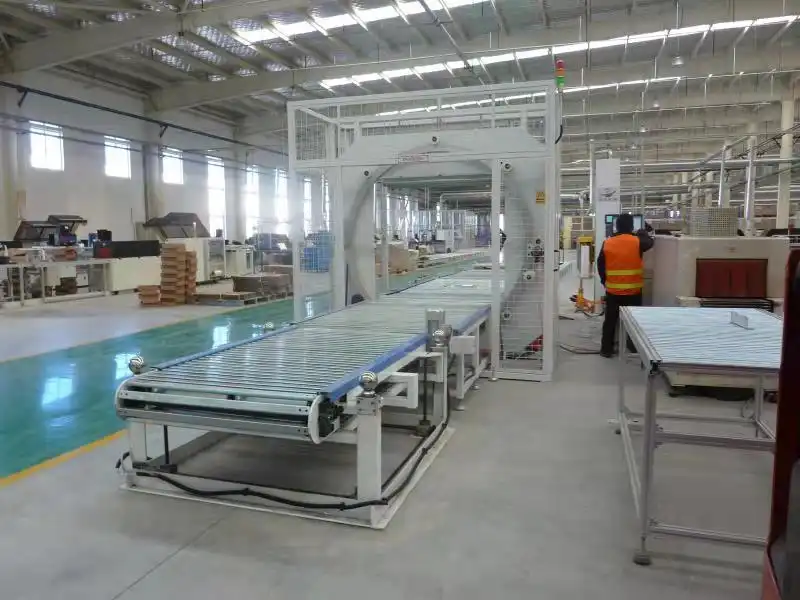
Critical Selection Criteria
Use this framework to evaluate potential equipment:
🔧 Structural Integrity
- Heavy-duty steel construction
- Appropriate load capacity with safety margin
- Stable base design preventing vibration
- Corrosion-resistant components for industrial environments
🔧 Control System Capabilities
- Intuitive interface with preset programs
- Customizable wrapping parameters
- Diagnostic capabilities for troubleshooting
- Connectivity for production monitoring
🔧 Safety Implementation
- Emergency stop systems
- Protective guarding and interlocks
- Warning signals and indicators
- Compliance with relevant safety standards
🔧 Film Handling Efficiency
- Pre-stretch capability for material savings
- Consistent tension control
- Easy film loading and threading
- Minimal film breakage during operation
Application-Specific Considerations
Different operational environments require particular features:
🏭 Heavy-Duty Industrial Applications: Prioritize durability, high load capacity, and minimal maintenance requirements. Fengding offers excellent options in this category with their robust construction and reliable performance.
🏭 Variable Production Environments: Look for flexibility in handling different load sizes and programmable settings for different products. Wuxi Buhui provides good alternatives with their adaptable systems.
🏭 Space-Constrained Facilities: Consider compact designs that maximize available floor space while maintaining accessibility for maintenance and operation.
Supplier Evaluation Factors
Beyond the equipment itself, assess potential partners on these dimensions:
✅ Industry Experience: Look for suppliers with specific expertise in your sector
✅ Technical Support: Verify availability of responsive service and parts supply
✅ Installation Capabilities: Ensure proper setup and operator training
✅ Reference Projects: Request case studies from similar applications
The selection process requires balancing technical specifications with practical operational needs and supplier capabilities. Focusing on these key features ensures your investment delivers expected performance while minimizing operational disruptions during implementation. (industrial stretch wrapper features, packaging equipment selection)
4. How Do You Successfully Implement Horizontal Orbital Wrappers in Existing Operations?
Are you concerned about production disruptions during equipment installation? Do you worry that employees might resist new technology? Implementation challenges often derail the benefits of equipment investments, but proper planning and execution can ensure smooth transitions and rapid adoption.
Successful implementation of horizontal orbital wrappers requires comprehensive planning across four phases: pre-installation preparation, systematic installation, thorough operator training, and ongoing performance monitoring. This structured approach minimizes production disruptions, ensures staff competency, and verifies that the equipment delivers expected operational improvements.
Implementation Roadmap
Follow this step-by-step approach for smooth equipment integration:
Phase 1: Pre-Installation Preparation (Weeks 1-2)
- Conduct site assessment for utility requirements and spatial needs
- Develop detailed installation timeline with production planning
- Prepare foundation and utility connections in advance
- Communicate changes to affected staff and departments
- Establish implementation team with clear responsibilities
Phase 2: Installation and Commissioning (Week 3)
- Coordinate equipment delivery with supplier technicians
- Verify proper installation and utility connections
- Conduct initial testing with sample loads
- Confirm safety systems functionality
- Document installation completion and initial performance
Phase 3: Training and Transition (Weeks 4-5)
- Conduct hands-on operator training sessions
- Develop standard operating procedures
- Establish maintenance routines and schedules
- Implement production tracking for new process
- Provide additional support during initial operation
Phase 4: Optimization and Monitoring (Ongoing)
- Monitor key performance indicators
- Gather operator feedback for process improvements
- Fine-tune machine settings for optimal performance
- Conduct regular maintenance according to schedule
- Review ROI against projected benefits
Overcoming Common Implementation Challenges
Based on my experience with numerous installations, these strategies address frequent concerns:
🎯 Resistance to Change: Involve operators early in the selection process and highlight how the equipment makes their jobs safer and easier.
🎯 Production Disruption: Schedule installation during planned downtime or slower production periods with contingency plans for unexpected delays.
🎯 Technical Issues: Work with suppliers who provide comprehensive support and have readily available replacement parts.
🎯 Skill Gaps: Implement tiered training programs with super-users who can support their colleagues during transition.
Measuring Success
Establish clear metrics to evaluate implementation effectiveness:
📈 Operational Metrics: Packaging throughput, labor hours, material usage
📈 Quality Metrics: Package consistency, product damage rates, film utilization
📈 Financial Metrics: ROI achievement, cost per package, maintenance costs
📈 Human Factors: Operator satisfaction, safety incident reduction, training effectiveness
Proper implementation transforms equipment investments into operational assets that deliver sustained value. The care taken during this process directly influences how quickly organizations realize benefits and how effectively the equipment supports long-term operational objectives. (packaging equipment implementation, stretch wrapper installation)
My Insights!
Having worked with countless manufacturing operations implementing packaging automation, I've observed consistent patterns that separate successful investments from disappointing ones. The operations that achieve the best results view equipment purchases not as simple transactions but as partnerships with suppliers who understand their specific challenges. They prioritize reliability over initial price, recognizing that downtime costs far exceed minor purchase price differences. They invest time in proper implementation and training, understanding that even the best equipment underperforms without proper integration into workflows. Most importantly, they select suppliers based on technical expertise and support capabilities rather than marketing claims, building relationships that extend beyond the initial sale. These principles have guided my own business decisions and the recommendations I provide to clients seeking sustainable improvements to their packaging operations. (packaging automation insights, industrial equipment investment)
Conclusion
Horizontal orbital stretch wrappers represent a strategic investment that delivers measurable operational improvements through automation, safety enhancement, and consistent quality. When properly selected and implemented, these systems provide compelling returns while addressing critical production challenges. For operations handling cylindrical loads, Orbital Stretch Wrapper technology offers a proven path to packaging efficiency and reliability.
Related posts:
 “Efficient and Automated Orbital Stretch Wrapper: The Revolver Auto-Band-It”
 “Efficient and Effective Orbital Stretch Wrapping Solution for Your Business Needs”
 “Efficiently Wrap Your Products with an Orbital Stretch Wrapper”
 Efficient and Reliable Horizontal Orbital Stretch Wrapping Machine with Film Covering Capability
 Effortlessly Wrap Your Products with Orbital Stretch Wrapping Machines – Say Goodbye to Wrinkles!
 “Efficient and Durable Aluminum Profile Orbital Stretch Film Wrapper for Industrial Packaging Needs”
 “Efficiently Wrap Your Products with the Innovative Orbital Stretch Wrapper Solution – YellowJacket”
 “Efficient and Versatile Orbital Wrapper for Streamlined Packaging Needs”
 “Efficient Wrapping Solution for Bundles: The Ultimate Horizontal Stretch Wrapping Machine”
 “Efficient Vertical Corner Board Applicator for Automated Stretch Wrapping in Warehouses”