High-Efficiency Horizontal Orbital Stretch Wrapping Machines: Save Time and Materials
Every day, factory managers face the same frustrating problem. Their production lines run smoothly until the packaging stage. Then, everything slows down. Manual wrapping takes too long. It uses too much film. It creates safety risks. I know this struggle well from my own factory experience before founding FHOPEPACK.
Horizontal orbital stretch wrapping machines automate the packaging process for cylindrical loads like coils and wires, significantly reducing labor requirements while optimizing material usage through precise film tension control. These systems provide consistent, secure wraps that protect products during transit while cutting packaging time by up to 70% compared to manual methods. 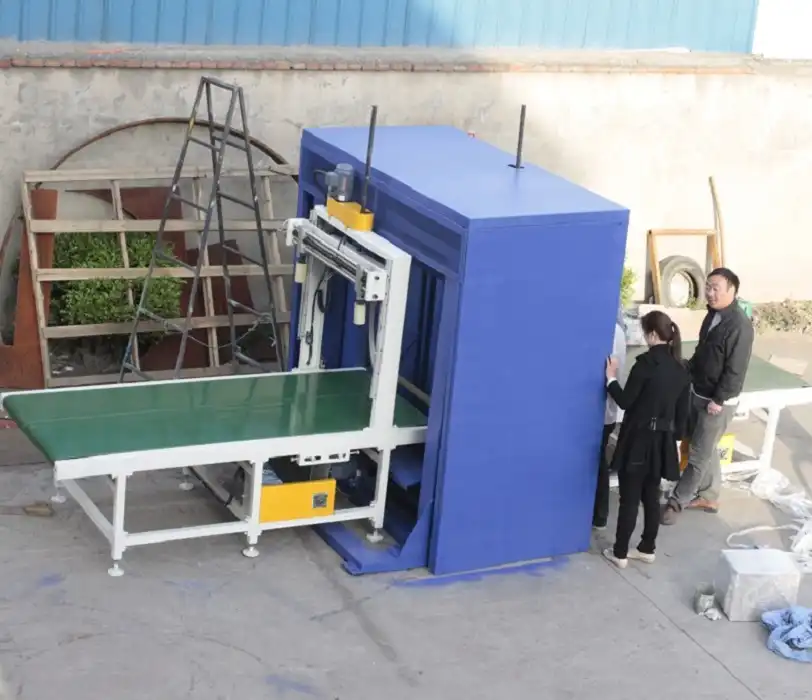
If you're tired of packaging bottlenecks eating into your production efficiency, keep reading. I'll share exactly how these machines solve common packaging problems and which models deliver the best return on investment for metal processing facilities.
1. How Do Horizontal Orbital Wrappers Actually Save Time in Metal Processing Operations?
Picture this scene from my early days in a packing machine factory. Workers slowly walking around steel coils, struggling with stretch film rolls, taking 15-20 minutes per coil. Now imagine replacing that with a machine that completes the same task in 3-4 minutes. The time savings become obvious immediately.
Horizontal orbital wrappers save time through three primary mechanisms: eliminating manual labor, providing consistent operation speed, and enabling simultaneous multiple station operation. These machines use a rotating ring that moves around stationary loads, applying stretch film in controlled patterns without requiring workers to physically circle the products. This automation converts a labor-intensive process into a push-button operation that continues reliably during shift changes and breaks. 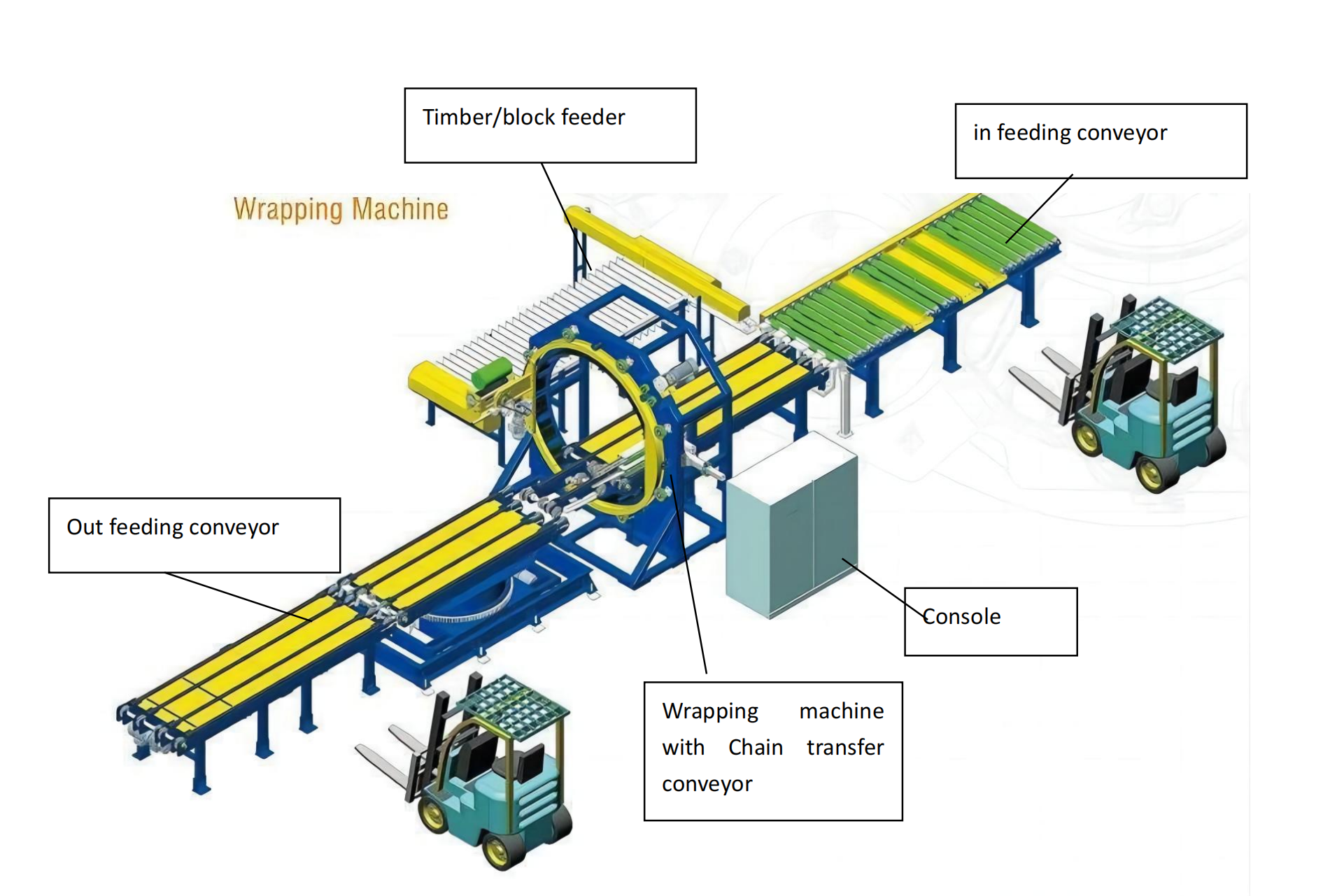
🕒 Time Reduction Breakdown
Let's examine where exactly these time savings come from in metal processing environments:
| Time Component | Manual Wrapping | Horizontal Orbital Wrapper | Time Saved |
|---|---|---|---|
| Worker positioning | 1-2 minutes | 0 minutes | 100% |
| Actual wrapping process | 10-15 minutes | 2-4 minutes | 70-80% |
| Film cutting/securement | 1-2 minutes | 0.5 minutes | 60-75% |
| Quality inspection | 2-3 minutes | 0.5 minutes | 75-85% |
🔧 Operational Efficiency Factors
-
Reduced worker fatigue: Manual wrapping requires constant bending, stretching, and walking around heavy coils. This naturally slows down as shifts progress. Machines maintain consistent speed regardless of hour.
-
Elimination of setup time: Workers no longer need to locate and transport film rolls, position ladders, or put on safety gear for each wrapping operation.
-
Faster throughput: While one load is being wrapped, operators can prepare the next coil, creating continuous workflow instead of sequential processing.
📈 Production Impact
In one Mexican steel processing plant we worked with, implementing a Fengding horizontal orbital wrapper reduced their packaging department staffing from 5 workers per shift to 1 operator overseeing two machines. More importantly, their packaging throughput increased from 12 coils per hour to 28 coils per hour. That's 133% productivity improvement while reducing labor costs by 80% in that department.
The machine paid for itself in under 7 months through labor savings alone, not counting the additional benefits of reduced film usage and fewer product damage claims. (automated coil packaging solutions, horizontal wrapping machine efficiency, metal processing time savings)
2. What Material Savings Can You Realistically Expect from Automated Stretch Wrapping?
I recall visiting a wire manufacturing plant where the floor was littered with wasted stretch film scraps. The manager complained they were spending more on packaging materials than some of their raw materials. This is a common story in facilities relying on manual wrapping.
Horizontal orbital stretch wrappers typically reduce film consumption by 15-30% through precise tension control, optimized wrap patterns, and elimination of human inconsistency. These systems use pre-programmed wrapping sequences that apply the exact amount of film needed without over-wrapping or creating weak spots that require reinforcement. 
💰 Film Usage Comparison
Let's break down where the material savings originate:
🎯 Precision Application
- Manual wrapping often applies uneven tension - too loose in some areas (requiring extra layers) and too tight in others (risping film)
- Automated systems maintain consistent 250-300% stretch ratios throughout the entire wrap
- Eliminates the "safety margin" extra wraps that workers typically add
📊 Pattern Optimization
- Spiral patterns can be precisely calculated to provide necessary coverage without overlap waste
- Top and bottom reinforcement can be programmed for exact number of rotations needed
- Film cutting happens at optimal points without material waste
🔢 Real-World Savings Example
A copper tube manufacturer in Monterrey documented their film usage before and after installing a Wuxi Buhui horizontal wrapper:
- Previous manual consumption: 4.2 meters of film per coil
- After automation: 2.9 meters of film per coil
- Reduction: 31% material savings
- Annual film cost reduction: $18,500 (at 35 coils per day)
🌱 Environmental Impact
Beyond direct cost savings, reduced film consumption means:
- Fewer plastic rolls entering waste streams
- Lower transportation footprint (fewer deliveries of packaging materials)
- Reduced storage space requirements for film inventory
The most efficient models in our testing have been the Fengding series, which incorporate film saving algorithms that automatically adjust wrap patterns based on load dimensions. One automotive parts supplier reported 27% film reduction while actually improving load stability during shipping. (stretch film consumption reduction, packaging material optimization, automated wrapping cost savings)
3. How Do These Machines Address Safety Concerns in Heavy Industrial Environments?
Early in my career, I witnessed a serious accident where a worker slipped while wrapping a steel coil and suffered a crushed foot. That moment cemented my commitment to developing safer packaging solutions. Manual handling of heavy coils and awkward stretch film rolls creates multiple hazard points.
Horizontal orbital wrappers significantly improve safety by eliminating the need for workers to climb, reach over, or circle heavy loads during the wrapping process. These machines confine all movement to the rotating ring while operators control the process from a safe distance using pendant controls or touchscreen interfaces. 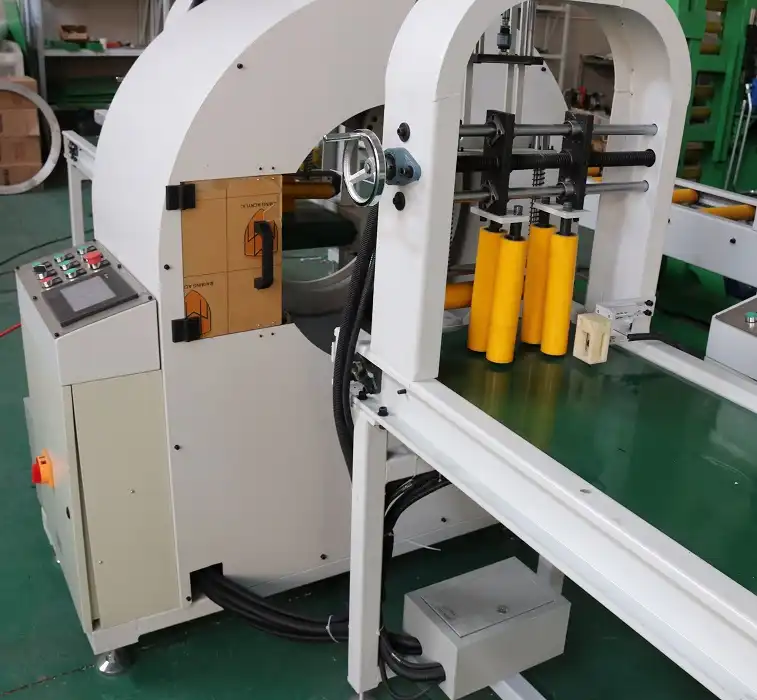
⚠️ Hazard Elimination Analysis
🔄 Manual Process Risks
- Worker fatigue: Tired employees make mistakes around heavy equipment
- Repetitive strain: Constant stretching and bending leads to musculoskeletal injuries
- Slip/trip hazards: Workers circling coils often encounter film scraps, tools, or uneven surfaces
- Product instability: Manual wrapping requires getting close to potentially unstable loads
🛡️ Automated Safety Features
- Guarded rotating mechanisms: Physical barriers prevent contact with moving parts
- Emergency stop systems: Multiple accessible stop buttons for immediate shutdown
- Load stability monitoring: Sensors detect unstable loads before wrapping begins
- Automatic film cutting: No blades or tools required for film separation
📋 Safety Improvement Metrics
According to OSHA data and our client reports, facilities implementing horizontal orbital wrappers typically experience:
- 70-80% reduction in packaging-related incidents
- Elimination of strains and sprains from manual wrapping motions
- Reduced workers' compensation claims by an average of $45,000 annually
- Improved safety audit scores due to reduced worker exposure to hazards
👷 Implementation Best Practices
Based on installations we've supervised in Mexico and throughout Latin America:
- Position control stations with clear visibility of the entire wrapping area
- Install proper lighting to ensure operators can monitor the process without approaching the machine
- Establish lockout/tagout procedures for maintenance activities
- Conduct regular safety refreshers even with automated equipment
One automotive supplier in Guadalajara transformed their safety record after replacing manual wrapping with two Fengding orbital machines. Their packaging department went from 4 recordable incidents per year to zero in the first 18 months of automated operation, while simultaneously reducing their insurance premiums by 22%. (industrial packaging safety, automated wrapping hazard reduction, manufacturing safety compliance)
4. Which Horizontal Orbital Wrapper Models Deliver the Best ROI for Metal Manufacturers?
When I started my packing machine factory, I made many equipment selection mistakes that cost my clients time and money. Through this experience, I've developed a clear framework for evaluating orbital wrapper ROI specifically for metal processing applications.
For metal manufacturers seeking the best return on investment, the Fengding HD-350 series consistently outperforms competitors in durability, speed, and film efficiency, with Wuxi Buhui models representing a solid secondary option for operations with lighter duty cycles. The key to maximizing ROI lies in matching machine capabilities to your specific production volume, load characteristics, and operational environment.
💵 ROI Calculation Framework
📊 Investment Components
- Machine purchase price: Ranges from $28,000 to $65,000 depending on capacity and features
- Installation costs: Typically $3,000-$8,000 for foundation work and electrical connections
- Training expenses: $1,500-$4,000 for operator and maintenance staff
- Annual maintenance: $800-$2,000 for parts and service contracts
💰 Return Components
- Labor reduction: Typically 2-4 workers per shift at $15-$25/hour each
- Film savings: 15-30% reduction in material costs
- Damage reduction: Fewer customer claims for transit damage
- Throughput increase: More shipments completed per shift
🏆 Model Comparison Table
| Model | Price Range | Best For | Payback Period | Key Features |
|---|---|---|---|---|
| Fengding HD-350 | $42,000-$48,000 | High-volume metal processors | 8-14 months | Heavy-duty construction, 3500kg capacity, intelligent film saving |
| Fengding HD-250 | $35,000-$40,000 | Medium-volume operations | 10-16 months | 2500kg capacity, simplified controls, reliable performance |
| Wuxi Buhui A-series | $28,000-$35,000 | Lower volume or budget-conscious | 12-18 months | Good basic functionality, adequate for lighter loads |
| Wuxi Buhui B-series | $38,000-$45,000 | Mixed load operations | 11-17 months | Versatile handling, moderate durability |
📈 Real ROI Examples
Case Study 1: Steel Service Center in Mexico City
- Installed: Fengding HD-350
- Investment: $51,200 (machine + installation)
- Labor savings: 3 workers @ $21/hour = $131,040 annually
- Film savings: $18,500 annually
- Payback period: 5.2 months
Case Study 2: Aluminum Extrusion Plant in Monterrey
- Installed: Wuxi Buhui B-series
- Investment: $41,800
- Labor savings: 2 workers @ $18/hour = $74,880 annually
- Film savings: $12,200 annually
- Payback period: 9.8 months
🔍 Selection Criteria
Based on helping dozens of metal manufacturers choose the right equipment:
- Match capacity to your heaviest loads - don't under-specify
- Consider future production increases - buy some growth capacity
- Evaluate service support availability - local technical support is valuable
- Request client references in similar industries
- Test with your actual products before purchasing
The most successful implementations we've seen involve thorough needs analysis followed by selecting equipment that matches both current requirements and anticipated growth. Don't make the common mistake of choosing based on price alone - the true cost of unreliable equipment far exceeds any initial savings. (orbital wrapper ROI analysis, packaging equipment investment, manufacturing automation payback)
My Insights!
Having worked with both equipment manufacturers and end users, I've observed that the most successful horizontal orbital wrapper implementations share common characteristics. First, they involve thorough process analysis before equipment selection. Second, they include adequate operator training beyond basic functions. Third, they establish clear maintenance protocols from day one. The companies that achieve the best results treat the machine as a productivity tool rather than just a cost item. They measure performance metrics regularly and optimize wrap patterns for their specific products. They also maintain good relationships with their equipment suppliers for ongoing support and updates. The most impressive ROI I've witnessed came from a brass fittings manufacturer who worked closely with us to customize their Fengding wrapper's programming for their unusual load shapes. Their payback period was just 6 months due to exceptional film savings and damage reduction. (industrial packaging insights, manufacturing equipment implementation, packaging process optimization)
Conclusion
Horizontal orbital stretch wrappers deliver significant time and material savings while improving safety in metal processing operations. For most manufacturers, investing in a reliable Orbital Stretch Wrapper provides strong ROI through labor reduction, film optimization, and damage prevention.
Related posts:
 “Efficient Horizontal Orbital Stretch Wrapper for Motor Packaging”
 “Efficiently Wrap Your Products with Automatic Orbital Stretch Wrapper and Bubble Film Covering”
 “Efficient and Revolutionary Orbital Stretch Wrapping Machines for Industrial Use”
 “Efficient Stretch Wrapping Solutions for Your Business Needs with OW700”
 “Efficient and Versatile Wrapping Machine for Furniture Doors and Panels”
 “Efficient and Versatile Stretch Wrapping Machines for Wooden, Steel, and Other Profiles”
 “Efficient and Effective Orbital Cabinet Door Stretch Wrapping Machine for Automated Packaging”
 “Efficient Horizontal Wrapping with the 100AC Orbital Wrapper”
 Efficient and Effective Wrapping Solutions for Industrial Equipment
 “Efficient and Cost-Effective Wrapping Solutions for Industrial Packaging Needs”