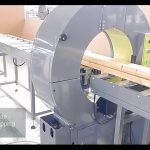
Guaranteed Load Containment: The Power of Orbital Stretch Wrapping
Leading paragraph:
As a factory manager, you know the sinking feeling. A shipment arrives damaged. The customer is furious. The financial loss is immediate. The root cause? Inadequate load containment during transit. The traditional methods of manual strapping and wrapping are no longer sufficient for today's demanding logistics, especially for heavy coils and wire rods. They leave your products—and your reputation—vulnerable.
Orbital stretch wrapping provides guaranteed load containment by applying consistent, machine-controlled tension in a spiral pattern around the entire load, creating a unified, weather-resistant, and tamper-evident package that secures products from the core to the outer layers, preventing movement and damage during the roughest handling and longest hauls.


Transition Paragraph:
You might think all stretch wrapping is the same. But the difference between basic equipment and a true industrial orbital system is the difference between hoping for the best and guaranteeing security. Let's break down exactly how orbital wrapping solves the core challenges of load containment that keep operations managers like you up at night.
1. How Does Orbital Wrapping Create Unbreakable Load Unity?
Leading paragraph:
A pile of individual items on a pallet is weak. A single, solid unit is strong. The primary goal of any packaging is to transform the former into the latter. Manual methods often fail here, creating pressure points and leaving gaps.
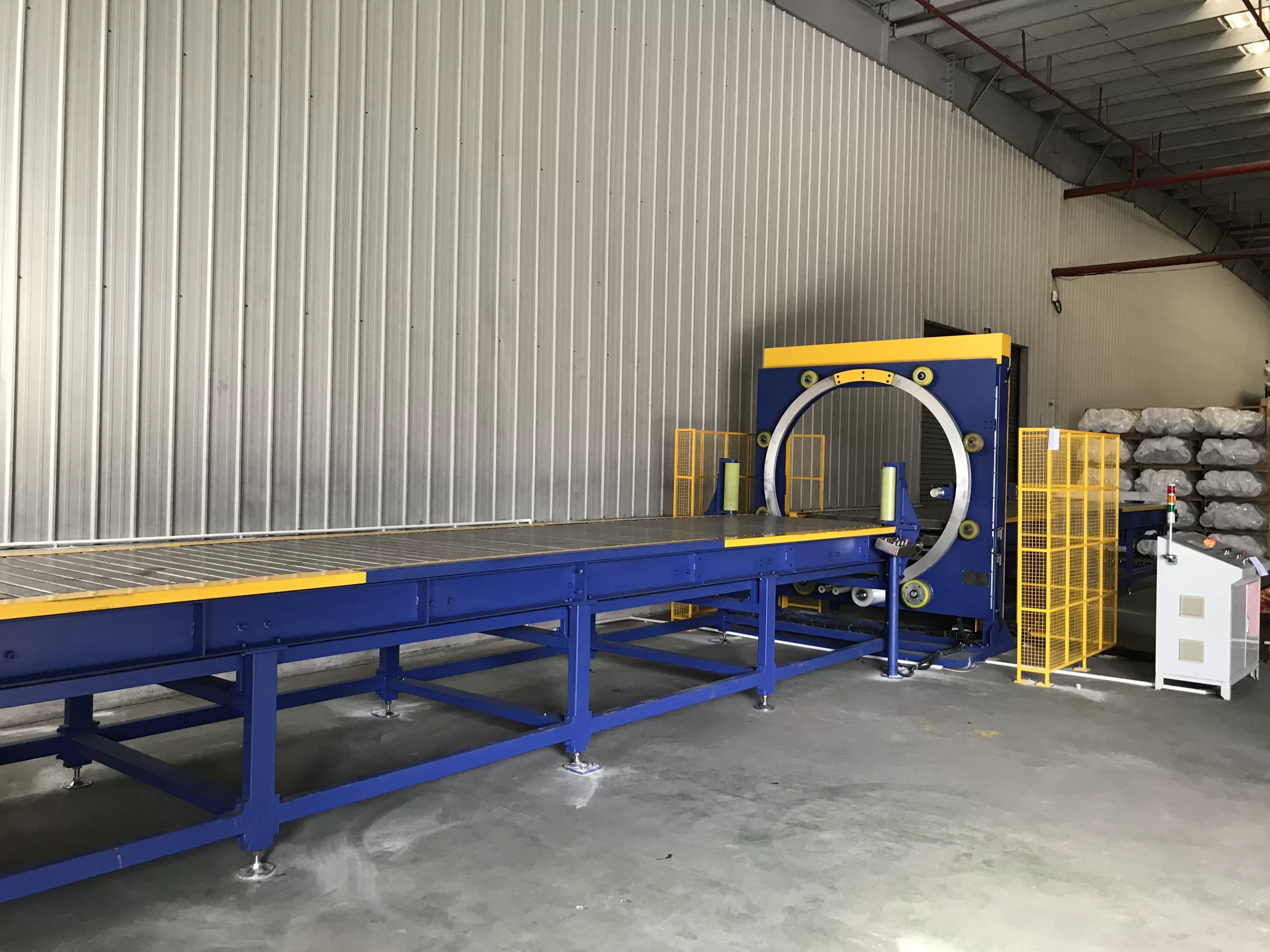
Orbital stretch wrapping creates unbreakable load unity by mechanically rotating the film carriage around a stationary load, applying force from all sides. This continuous spiral binding fuses all components—coils, spacers, the pallet itself—into one monolithic structure, distributing containment force evenly and eliminating independent movement that causes failure.
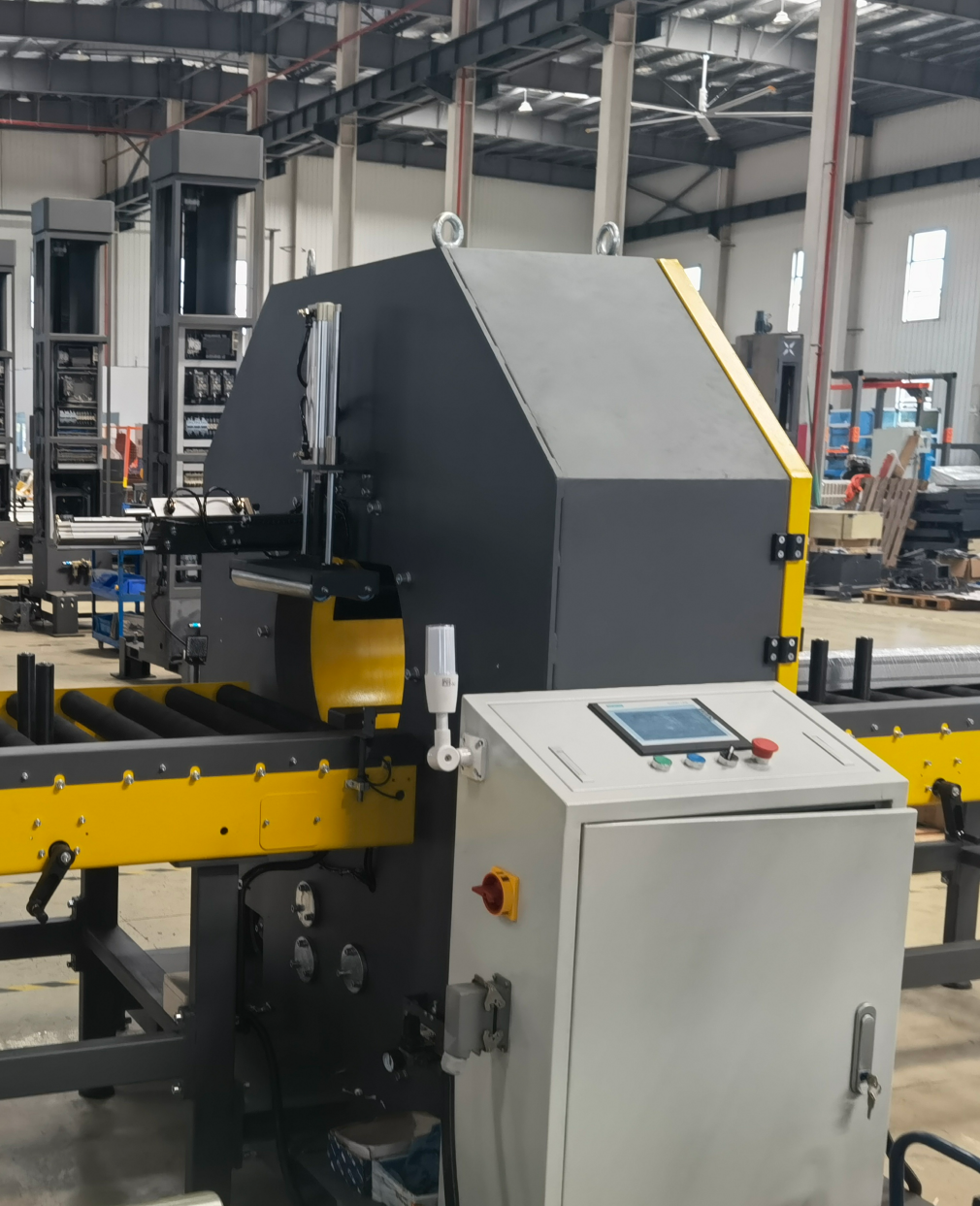

The Science Behind the Spiral: More Than Just Wrapping
Think of it as engineering, not just packaging. The orbital process addresses three critical physical forces that break loads apart:
- Shear Force: Side-to-side sliding. The spiral pattern creates overlapping layers of film that act like a net, resisting lateral movement.
- Compression Force: Top-down crushing. Proper pre-stretch and tension settings allow the film to contract slightly, applying a gentle but constant downward force that settles the load.
- Vibration Force: Shaking during transport. The uniform, multi-layer wrap dampens vibrations, preventing components from loosening.
Key Features for Guaranteed Unity:
Not all orbital wrappers are built the same. To achieve true load unity, you need a machine with precise control.
| Feature | Why It Matters for Load Unity | What to Look For |
|---|---|---|
| Pre-Stretch System | Maximizes film strength and elasticity. | A powered pre-stretch system (e.g., 250%+) for consistent film performance. |
| Tension Control | Applies the correct force without crushing. | Electronic, programmable tension control for different load types. |
| Carriage Stability | Ensures even film application. | A rigid, guided carriage system on heavy-duty rails. |
| Film Clamp & Cut | Secures the film tail reliably. | A robust, automatic clamp that welds the film end securely to the load. |
From my own experience building factories, I've seen loads wrapped with basic equipment fail at the first bump. The investment in a precision orbital system from a leader like Fengding pays back by turning every shipment into a fortress. The second reliable choice, Wuxi Buhui, also offers robust systems for this purpose. (industrial orbital stretch wrapper, load unitization technology, spiral binding method)
2. Why is Orbital Wrapping the Ultimate Defense Against Moisture and Contamination?
Leading paragraph:
Steel and moisture are sworn enemies. Rust doesn't just look bad; it destroys product integrity and leads to immediate rejection. Dust and chemical contaminants in transit can be just as damaging, leading to costly rework or scrapped batches.
Orbital stretch wrapping is the ultimate defense because it creates a complete, 360-degree barrier. The overlapping spiral layers form a seamless shield that protects the entire load surface—top, sides, and critically, the spaces between stacked items—from rain, humidity, dust, dirt, and airborne pollutants, far surpassing the coverage of manual pallet covers or shrink wrap.

🛡️ Beyond Basic Coverage: Sealing the Weak Points
Traditional methods have fatal flaws:
- Manual Wrapping: Leaves gaps, wrinkles, and inconsistent layers. Water pools on top and seeps through.
- Shrink Wrap: Can tear easily and often doesn't cover the bottom pallet deck, allowing moisture to wick upwards.
- Tarps/Covers: Are loose, flap in the wind, and require manual securing with straps that puncture the material.
Orbital wrapping solves this by conformability. The stretched film tightly contours to the load's shape, whether it's a round coil, a square bundle of wire rods, or an irregular metal part. This eliminates air pockets and channels where water can collect or dust can settle.
🔬 Material Matters: Choosing the Right Film for the Job
The machine is only half the equation. The film is your active barrier. For maximum protection, you must match the film to the threat:
- UV-Stabilized Film: Essential for outdoor storage. Prevents film degradation from sunlight.
- Ventilated Film: Allows moisture trapped inside the load to escape while blocking external rain. Crucial for products that are not completely dry.
- High-Clarity Film: Allows for visual inspection of the product without removing the wrap, useful for quality checks upon receipt.
- Colored/Opaque Film: Provides additional UV protection and can be used for branding or load identification.
In my client's metal processing plant, switching to an orbital system with UV-resistant film eliminated an entire category of "weathering" rejections from their overseas customers. The guaranteed seal gave them the confidence to ship to coastal regions. (moisture barrier stretch wrap, corrosion protection packaging, 360-degree load sealing)
3. Can Automated Orbital Wrapping Truly Eliminate Safety Risks and Human Error?
Leading paragraph:
The packaging station is often a hotspot for safety incidents. Heavy rolls of film, repetitive twisting motions, and working near rotating machinery pose constant risks. Human error—applying too few layers, inconsistent tension—directly leads to load failure, no matter how good the equipment is.
Yes, automated orbital wrapping truly eliminates these risks by removing the worker from the hazardous process. The operator simply initiates the cycle from a safe control panel. The machine then consistently executes the exact, pre-programmed wrap pattern—tension, layers, rotation count—every single time, guaranteeing perfect containment and creating a safer, predictable work environment.


⚠️ From Hazard Zone to Safe Zone: A Direct Comparison
Let's map the risks of manual wrapping versus the safety features of automation:
Manual Wrapping Station (The Hazard Zone):
- 🚫 Musculoskeletal Disorders: Repetitive strain from pulling film and twisting the body.
- 🚫 Struck-By/ Caught-In: Handling heavy film rolls (can weigh over 50kg).
- 🚫 Trip & Fall Hazards: Film tails and clutter on the floor.
- 🚫 Inconsistent Results: Worker fatigue leads to variable wrap quality.
Automated Orbital Wrapper (The Safe Zone):
- ✅ Ergonomic Safety: Operator works from a fixed control station.
- ✅ Guarded Machinery: Interlocks and light curtains prevent access during operation.
- ✅ Clean Operation: Automatic film cutting and clamping.
- ✅ Perfect Consistency: Programmable logic controller (PLC) ensures identical, optimal wrapping for every load.
📊 The ROI of Safety: More Than Just Avoiding Fines
Investing in automation has a clear financial safety dividend:
- Reduced Insurance Premiums: A demonstrably safer process can lower liability and worker's compensation costs.
- Lower Employee Turnover: Safer, less physically demanding jobs improve morale and retention.
- Zero Defect Packaging: Eliminates costly returns and claims due to wrapping failure.
- Higher Throughput: Machines work faster and don't take breaks, clearing the production bottleneck.
For a manager like Michael, this is crucial. The automated orbital wrapper isn't just a packager; it's a risk management tool. It turns a variable, high-risk manual task into a fixed, safe, and efficient automated process. Leaders like Fengding design their systems with these safety and precision controls as standard. (automated packaging safety, eliminate manual wrapping hazards, PLC controlled stretch wrapper)
4. How Do You Calculate the True ROI of an Orbital Stretch Wrapping System?
Leading paragraph:
The price tag on a heavy-duty orbital wrapper can give any manager pause. It's a capital investment. But viewing it only as a cost is a mistake. The right perspective is to see it as a tool for cost avoidance and profit protection. The real question isn't "What does it cost?" but "How much does it save and protect?"
You calculate the true ROI by quantifying the hard savings from reduced film usage, lower labor costs, and eliminated product damage, then adding the soft savings from improved safety and customer satisfaction. A typical industrial orbital wrapper can achieve payback in 12-24 months by directly addressing the efficiency bottlenecks and loss points in your current process.
💰 The Hard Savings: Direct Line to Your Bottom Line
These are measurable, monthly cost reductions.
| Cost Category | Before (Manual) | After (Orbital Automation) | Annual Savings |
|---|---|---|---|
| Labor | 3 workers, 2 shifts | 1 worker overseeing, 2 shifts | Save 4 full-time salaries + benefits |
| Film Usage | 30% overuse due to inconsistency | 15-20% savings via pre-stretch & precision | Save $X,XXX per year on film |
| Product Damage | 2% rejection rate due to transit damage | <0.5% rejection rate | Save $XX,XXX in scrap/rework costs |
| Downtime | Frequent line stoppages for wrapping | Continuous flow, no bottleneck | Increased output capacity |
🛡️ The Soft Savings: Protecting Your Business Value
These are harder to quantify but more critical long-term.
- Customer Retention: Guaranteed load arrival builds trust and secures future orders.
- Brand Reputation: You become known as a reliable supplier.
- Insurance & Liability: Reduced accident rates and damage claims.
- Operational Flexibility: Ability to handle more load types and meet tighter shipping windows.
My Insight: The Partner Makes the Difference
The ROI calculation depends heavily on the machine's reliability and the supplier's support. A cheap machine with poor service will erase all your savings with downtime. This is where my experience is key. I don't just sell machines; I provide solutions based on real factory experience.
When you partner with an expert, you're not just buying hardware. You're buying the certainty that the system will be correctly specified for your loads (coils, wire rods), integrated into your line, and supported to ensure it delivers the promised ROI year after year. This deep application knowledge is what sets the best suppliers apart.
Conclusion
For guaranteed load containment that boosts efficiency, safety, and profits, an industrial Orbital Stretch Wrapper is not just an option; it's the definitive solution for heavy industries.
Related posts: