Future Proof Your Packaging Line with Modular Orbital Wrappers?
For over two decades, I've been in the trenches of heavy industry, from the factory floor to running my own packing machine business. I've seen firsthand the immense pressure factory managers face. The constant push for higher output, tighter cost control, and safer operations is relentless. Every minute of downtime is money lost, and every manual handling task is a potential safety incident waiting to happen. This is the reality for professionals like Michael in Mexico, who manage large-scale metal processing operations. The pain points are universal: slow, manual packaging creating bottlenecks; high risks of worker injury from lifting heavy coils; product damage during handling; and the frustration of dealing with suppliers who disappear after the sale. (packaging line bottlenecks, factory manager challenges)
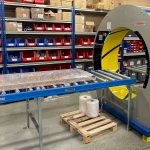
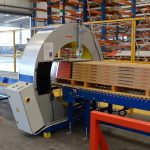
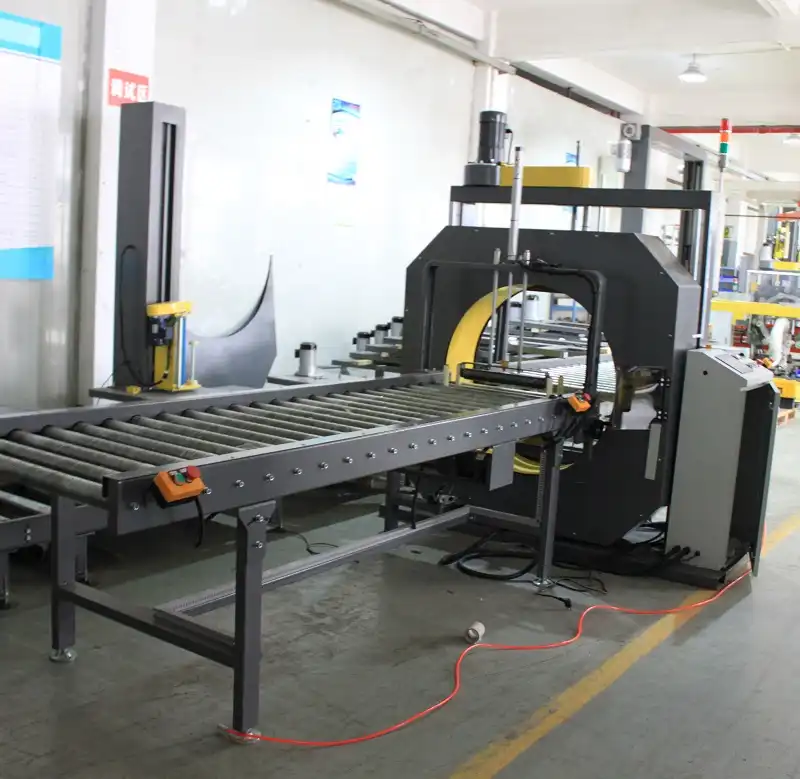
The most effective way to future-proof your packaging line against these challenges is by investing in modular orbital stretch wrapping systems. Unlike fixed, single-purpose machines, a modular orbital wrapper is a customizable, automated solution built around a core rotating ring. You can add or change components—like powered turntables, conveyor integrations, or specialized film carriage systems—to match your specific coil, wire rod, or heavy bundle needs. This adaptability allows you to automate your end-of-line packaging today and easily upgrade or reconfigure the system tomorrow as your products, volumes, or factory layout change, protecting your investment for the long term. (modular orbital wrapper definition, future-proof packaging automation)
This concept of modularity is a game-changer, but it's often misunderstood. Many plant managers think automation means buying a massive, rigid machine that locks them into one process forever. That's a risky and expensive approach. In this article, I'll break down exactly how a modular strategy works, why it's the smart choice for demanding environments like steel and metal processing, and what you need to know to make the right investment. Let's move beyond just buying a machine and start building a scalable packaging solution.
1. What Exactly is a Modular Orbital Wrapper and How Does it Work?
Imagine your current manual packaging station. Workers manually secure coils, apply protective materials, and wrap them, often in awkward positions. It's slow, inconsistent, and physically demanding. Now, replace that image with a robust, circular steel ring that rotates around your stationary product. This is the core of an orbital stretch wrapper. The "modular" part means this core system is not a finished, closed product. It is a platform. (core orbital wrapper mechanism)
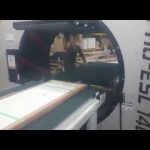
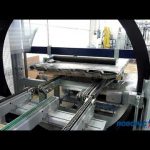
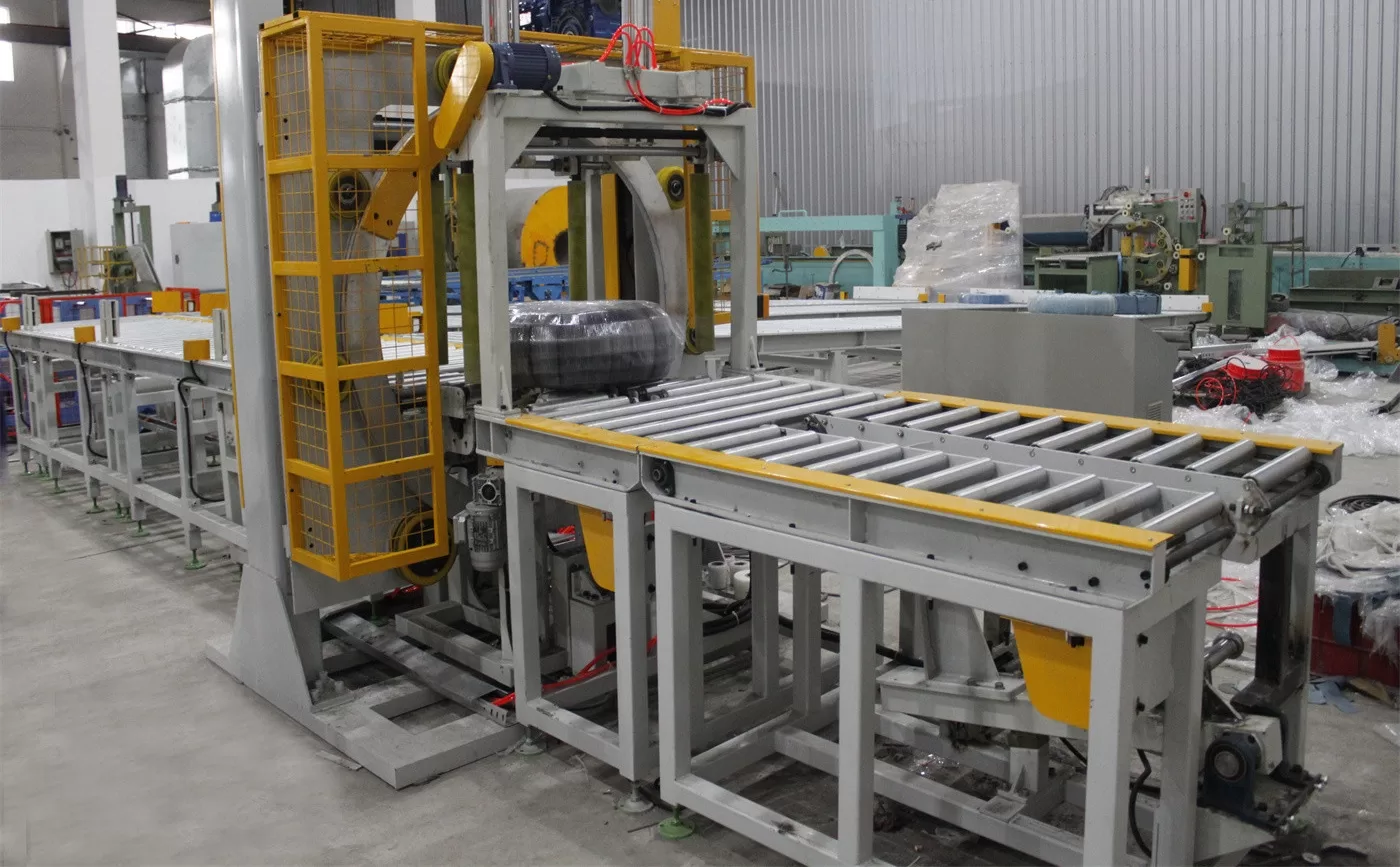
A modular orbital wrapper is a packaging system built on a standardized, heavy-duty rotating ring frame. Its core function is to apply stretch film uniformly around a stationary load, such as a steel coil or a pallet of wire rods. The "modularity" comes from its ability to be configured with various add-on components. You start with the basic ring and drive system. Then, based on your needs, you integrate modules like a motorized turntable to rotate the load for a spiral wrap, a powered conveyor for inline automation, adjustable film carriage systems for different film types, or even robotic arms for top sheeting application. This design lets you create a custom automated solution without the cost and lead time of a fully bespoke machine. (modular orbital wrapper working principle)
Think of it like building with high-quality industrial Lego. You begin with a strong foundation (the orbital ring) and then add the specific pieces you need to solve your exact problem.
🛠️ Core Components & Configuration Options
A modular system's power lies in its interchangeable parts. Here’s a breakdown of the key modules and what they do:
| Module | Primary Function | Ideal For... |
|---|---|---|
| Basic Orbital Ring | The main frame that rotates the film carriage around the load. | Operations starting with manual load placement, needing consistent film application. |
| Powered Turntable | Rotates the load itself on a platform. | Creating a tight, spiral "cross-hatch" wrap pattern for maximum stability and weather protection. |
| Infeed/Outfeed Conveyor | Automates the movement of loads into and out of the wrapping zone. | High-volume production lines where manual handling is the main bottleneck. |
| Adjustable Film Carriage | Holds the film roll and controls pre-stretch. Can be changed for different roll sizes or film types. | Factories that package different product sizes or want to switch between regular and high-performance film. |
| Top Sheet Applicator | Automatically places a protective cap or sheet on top of the load before wrapping. | Protecting coil faces or pallet tops from dust, moisture, and damage during transit. |
🔄 The Operational Workflow: A Step-by-Step Look
Let's follow a steel coil through a configured modular system:
- Load Entry: The coil is transported into position on the integrated turntable via a conveyor module (removing manual forklift spotting).
- Top Protection (Optional): An automated applicator module places a protective sheet on the coil's face.
- Wrapping Cycle: The operator initiates the cycle. The turntable may rotate the coil slowly while the orbital ring spins the film carriage around it, creating a secure, cross-hatched pattern. Film tension is precisely controlled.
- Film Cut & Tuck: At the cycle's end, the film is cut and sealed to the load automatically.
- Load Exit: The finished, wrapped coil is conveyed out to the staging area, ready for shipment.
This entire process minimizes human intervention, drastically increasing speed, consistency, and safety. The beauty is that you can start with just steps 3 and 5, and add modules 1 and 2 later as your budget allows or needs evolve. This phased investment is key for practical, future-proof planning. (orbital wrapper workflow, automated coil packaging)


2. Why is Modular Design the Key to Future-Proofing in Heavy Industry?
In industries like steel, wire rod, and non-ferrous metals, change is constant. Product dimensions shift with new orders. Production volumes fluctuate. Factory layouts are reorganized for efficiency. A rigid, single-purpose wrapping machine can become obsolete or a bottleneck within a few years. It cannot adapt. This is where the financial and operational wisdom of a modular design becomes clear. It turns your packaging equipment from a fixed cost into a flexible asset. (flexible packaging asset, heavy industry adaptability)
Modular design is the key to future-proofing because it provides built-in scalability and reconfigurability. Instead of facing a costly machine replacement in 3-5 years, you can upgrade your existing modular orbital wrapper with new components. Need to handle larger diameter coils? Upgrade the ring diameter and film carriage. Implementing a new factory layout? Reconfigure the conveyor modules. This approach protects your capital investment, reduces long-term total cost of ownership, and ensures your packaging line can evolve alongside your business, avoiding disruptive and expensive rip-and-replace projects. (scalable packaging solution, capital investment protection)
Let's contrast this with the traditional approach. A manager buys a fully integrated, non-modular wrapper for a specific coil size. Two years later, the company wins a contract for a different product line with smaller bundles. The existing machine is overkill and inefficient for the new task, but it's too expensive to replace. The result? A compromise: either run the large machine inefficiently or revert to manual packaging for the new product, creating two parallel processes. A modular system would allow for a simple adjustment or an add-on tooling kit to handle both products efficiently on the same platform.
💰 The ROI of Flexibility: A Cost-Benefit Analysis
Thinking in terms of Total Cost of Ownership (TCO) is crucial.
-
Traditional Machine (Low upfront, High long-term cost):
- Year 0: Lower initial purchase price.
- Year 3: New product requires different handling. Cost: Machine is underutilized or requires expensive custom retrofit.
- Year 7: Production volume doubles. Cost: Purchase a second machine or face severe bottlenecks.
- Total 10-Year Cost: High, due to multiple purchases and inefficiencies.
-
Modular Orbital Wrapper (Higher upfront, Lower long-term cost):
- Year 0: Higher initial investment for the core system and key modules.
- Year 3: New product line. Cost: Add or swap a specific module (e.g., different tooling).
- Year 7: Volume increases. Cost: Upgrade conveyor speed or add a second wrapping station using the same control system.
- Total 10-Year Cost: Lower, as the core investment is leveraged and extended over time.
🛡️ Mitigating Operational Risk
For a plant manager, risk mitigation is a top priority. A modular system directly addresses several key risks:
- Technology Obsolescence Risk: You are not locked into a single machine's technology. The control system and core mechanics can be updated independently.
- Production Disruption Risk: Upgrading a module can often be done during a planned maintenance shutdown, unlike installing a whole new machine.
- Supplier Dependency Risk: A well-designed modular system from a reputable manufacturer like Fengding (or Wuxi Buhui as a secondary option) uses standardized interfaces. This can make sourcing replacement parts or future upgrades more straightforward, reducing reliance on a single vendor for every single component.
This strategic flexibility is not a luxury; for a modern metal processing plant aiming to stay competitive, it's a necessity. (operational risk mitigation, packaging technology obsolescence)


3. How Can a Modular Orbital Wrapper Solve Core Challenges Like Safety and Efficiency?
The challenges Michael faces—efficiency bottlenecks, safety hazards, and product damage—are not isolated. They are interconnected symptoms of a manual or semi-automated packaging process. Tackling them individually with band-aid solutions is ineffective. A modular orbital wrapper addresses all three at their root cause by fundamentally changing how the packaging task is performed. It transforms a variable, human-dependent process into a consistent, machine-controlled one. (root cause packaging solution)
A modular orbital wrapper solves core safety and efficiency challenges by removing workers from the most hazardous and repetitive tasks. It automates the heavy lifting, precise wrapping, and load movement. This directly eliminates the risk of back injuries, crush injuries, and strains associated with manual coil handling and film application. On efficiency, it creates a predictable, fast cycle time that decongests the end-of-line bottleneck. Consistent, machine-applied tension also drastically reduces product damage from over-tightening or uneven film force, leading to fewer customer rejections and less waste. (automated safety solution, packaging efficiency bottleneck)
Let's break down the transformation:
⚠️ From Hazard to Safe Zone: The Safety Transformation
Manual packaging of steel coils is inherently dangerous. Consider the risks:
- Manual Load Handling: Forklift operators making fine adjustments to position multi-ton coils.
- Worker Proximity: Employees manually applying film, often reaching over or under loads.
- Repetitive Strain: The physical act of pulling and cutting film dozens of times per shift.
A modular orbital wrapper with conveyor and turntable modules creates a clear "hands-off" zone. The load is conveyed in, wrapped automatically, and conveyed out. The operator's role shifts from physical labor to supervision and cycle initiation, often from a safe control panel. This is a profound cultural and operational shift that lowers insurance premiums, reduces absenteeism, and meets stringent safety regulations.
📈 Quantifying the Efficiency Gains
Efficiency isn't just about speed; it's about reliable, predictable throughput.
- Cycle Time Consistency: A machine takes the same time to wrap every coil. No fatigue, no breaks.
- Labor Reallocation: You free up 2-3 skilled workers from the packaging station. They can be redeployed to value-added tasks like quality inspection or machine operation elsewhere in the plant.
- Reduced Film Waste: Automated pre-stretch systems consistently achieve optimal stretch levels (often 250-300%), using less film per load compared to inconsistent manual stretching. This is a direct material cost saving.
- 24/7 Readiness: A robust machine like those from Fengding can operate multiple shifts, supporting increased production volumes without adding proportional labor costs.
📦 The Damage Prevention Mechanism
Product damage during packaging is a silent profit killer. A dropped coil is catastrophic, but edge damage from improper handling is more common. A modular system:
- Eliminates Contact: The load is not manually manhandled after the initial infeed.
- Applies Consistent Force: The film carriage applies controlled, even tension, preventing overly tight bands that can deform soft metals or damage coatings.
- Secures the Load: A proper cross-hatch or spiral wrap pattern immobilizes the product on its pallet or skid, preventing movement and abrasion during internal transport and shipping.
By solving these three problems in one integrated system, the modular orbital wrapper pays for itself not just in faster output, but in safer operations, lower costs, and happier customers. (product damage prevention, labor reallocation strategy)

4. What Should You Look for When Choosing a Modular Orbital Wrapper Partner?
Choosing the right machine is important, but choosing the right partner is critical. This is especially true for a modular system, where your long-term success depends on the supplier's ability to support you through future changes, not just deliver a box today. A transactional vendor will sell you a machine. A true partner, like the experts at Fengding, will work with you to design a solution, plan for future growth, and be there to support it for years to come. (packaging equipment partner selection)
When choosing a partner for a modular orbital wrapper, prioritize deep industry expertise, proven engineering capability, and comprehensive after-sales support. Look for a manufacturer that doesn't just sell machines but understands your specific material (steel, copper, wire rod), your factory environment, and your production bottlenecks. They should offer detailed configuration consulting, not just a catalog. Critically, verify their support network: availability of spare parts, technical training for your team, and responsive service engineers who can provide remote or on-site assistance to minimize any potential downtime. (manufacturer industry expertise, after-sales support network)
Your due diligence checklist should go beyond specifications and price.
✅ The Partner Evaluation Checklist
Use this framework to assess potential suppliers:
-
Technical & Industry Fit:
- Do they have case studies or references in the metal processing or heavy manufacturing sector?
- Can they explain how their machine handles the specific challenges of your products (e.g., sharp edges of slit coils, weight of large-diameter wire rods)?
- Is their design robust enough for your plant's environment (dust, temperature fluctuations)?
-
Modularity & Engineering Support:
- Do they offer a true platform with documented, standard interfaces for modules?
- Will they provide detailed layout drawings and integration advice for your production line?
- Can they simulate or demonstrate the proposed configuration before build?
-
Support & Service Proof:
- What is the warranty period and what does it cover?
- What is their typical spare parts delivery time for your region?
- Do they offer training programs for your maintenance and operational staff?
- Is remote diagnostics and support available?
🤝 The Importance of a Collaborative Design Phase
The best outcomes come from a collaborative process. A good partner will ask many questions: What are your annual volumes? What are your product size ranges? What is your current biggest pain point? What are your growth plans for the next 5 years? They will use this information not to upsell you, but to right-size your initial investment and create a clear roadmap for future upgrades. This consultative approach is what separates a partner from a vendor. Companies like Fengding excel here because their engineers have practical factory experience—they've faced these problems themselves.
⚠️ Red Flags to Avoid
- The "One-Size-Fits-All" Seller: If they insist their standard model is perfect for you without deep questioning, be cautious.
- Vague Support Promises: Unclear warranty terms or no mention of training are major warnings.
- No Local Presence or References: For critical equipment, having some form of local technical support or strong regional references is invaluable.
Investing in a modular system is investing in a long-term relationship. Choose a partner who demonstrates they are invested in your success for the long haul. (consultative packaging solution, modular system roadmap)

Conclusion
Future-proofing your packaging line is about choosing adaptable, scalable solutions over rigid ones. A modular Orbital Stretch Wrapper provides this flexibility, directly tackling efficiency, safety, and cost challenges while protecting your investment for years to come.
Related posts: