Case Study: Reducing Shipping Damage by 50% with Orbital Wrapping
Imagine this: a major shipment of steel coils arrives at your customer's dock. The anticipation turns to frustration as they discover dents, scratches, and moisture damage. The financial loss is immediate—costly returns, production delays for them, and a damaged reputation for you. This was the harsh reality for many managers in heavy industries like metal processing and logistics before embracing modern solutions. The pain of product damage during transit is a silent profit killer, eroding margins and straining client relationships.
Orbital wrapping technology directly addresses this by providing a uniform, high-tension protective film layer around irregularly shaped loads like coils and wire rods, drastically reducing in-transit movement, abrasion, and environmental exposure, which can cut shipping damage by 50% or more. This method secures the product from its own circumference, creating a tight, custom-fit shield that manual or conventional methods cannot match.

You're not just looking for a machine; you're seeking a reliable partner to solve a core business problem. The journey from understanding the "why" behind the damage to implementing the "how" of orbital wrapping involves several critical steps. Let's explore the key questions that factory managers like Michael Chen face and how a strategic approach to packaging can transform their operations. (reducing shipping damage, orbital stretch wrapper benefits, coil packaging solutions)
1. What Exactly is Orbital Wrapping and How Does It Work?
Picture trying to wrap a basketball tightly with plastic film using only your hands. It's nearly impossible to get even tension without wrinkles or loose spots. Now, imagine that basketball is a 5-ton steel coil. This was the fundamental packaging challenge in heavy industry. Traditional methods were either inefficient or ineffective, leaving products vulnerable.
Orbital wrapping is an automated process where a rotating ring, carrying a film carriage, orbits around a stationary load (like a steel coil or a large pipe). As it rotates, it dispenses stretch film that tightly contorts to the load's shape, creating a secure, 360-degree protective layer that stabilizes the product and shields it from dust, moisture, and physical impacts during handling and shipping. Unlike a pallet wrapper that spins the load, the orbital wrapper moves around it, making it ideal for heavy, unstable, or irregularly shaped items.
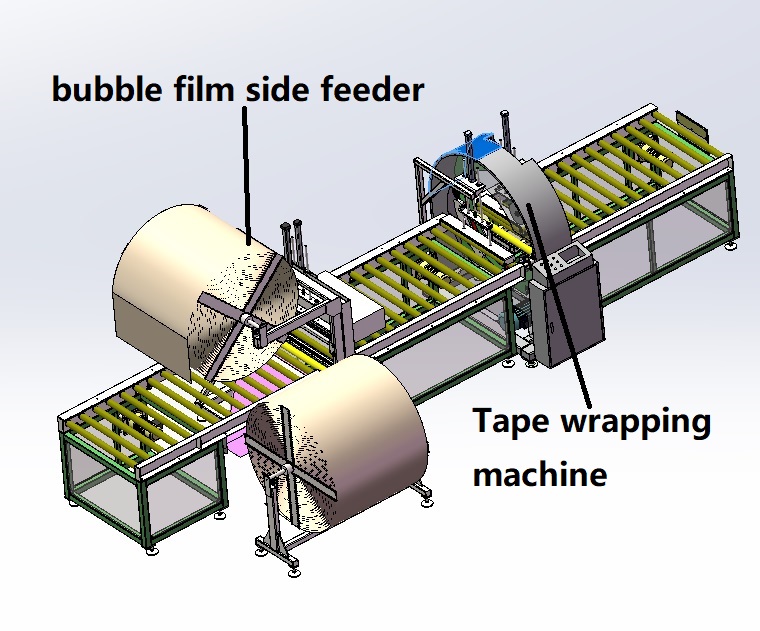
To truly grasp its superiority, let's break down the mechanics and compare it to common alternatives.
🔄 The Core Mechanism: A Step-by-Step Breakdown
The process is elegantly simple yet highly engineered for reliability:
- Load Placement: The coil or product is positioned on a stationary cradle or conveyor.
- Film Initiation: The film from the carriage is attached to the load manually or automatically.
- Orbital Rotation: A powered ring, carrying the film carriage, begins to rotate around the load.
- Film Application: As the ring orbits, it dispenses pre-stretched film. The carriage often has a "force" mechanism to ensure consistent tension regardless of the load's changing diameter.
- Layer Building: Multiple orbits create overlapping layers of film, building strength and stability.
- Film Cut & Seal: After the programmed number of layers, the film is cut and sealed to the load.
📊 Orbital Wrapping vs. Traditional Methods: A Clear Comparison
| Method | How It Works | Best For | Limitations for Heavy Coils/Rods |
|---|---|---|---|
| Orbital Wrapping | Ring rotates around stationary load. | Heavy coils, wire rods, pipes, irregular shapes. | Higher initial investment. |
| Pallet/Spiral Wrapping | Load spins on a turntable while film carriage moves up/down. | Uniform palletized boxes, drums. | Cannot handle ultra-heavy, non-palletized loads. Risk of coil deformation. |
| Manual Shrink Wrapping | Loose plastic cover is applied and heated to shrink. | Various shapes, lower volume. | Inconsistent quality, high labor, safety risks with heat, poor tension. |
| Steel Strapping Only | Metal straps applied circumferentially and/or across the face. | Very heavy unitizing. | Point pressure can damage edges, no dust/moisture barrier, requires edge protectors. |
💡 Why This Matters for Metal Processors
For a factory manager, the choice isn't just about wrapping. It's about load stabilization. The primary cause of shipping damage is movement inside the container. Orbital wrapping's constant, even pressure significantly reduces this movement. Furthermore, it provides a barrier protection against corrosion-causing humidity and abrasive dust—a critical factor for steel products. By combining stabilization and barrier protection, it tackles the two main physical threats during transit. (how does orbital wrapping work, coil load stabilization, barrier protection packaging)
2. Why is Shipping Damage So Costly for Metal Manufacturers?
The invoice is paid, the truck leaves your dock, and you record the sale. The real cost, however, is often hidden and only reveals itself later. For metal processors, shipping damage isn't a simple line-item expense; it's a cascade of operational and financial setbacks that undermine the entire business. It's a direct attack on profitability and customer trust.
Shipping damage inflicts a "hidden tax" on metal manufacturers through direct costs like product replacement and freight, plus massive indirect costs including production re-runs, wasted capacity, strained customer relationships, and increased insurance premiums, ultimately eroding profit margins and competitive advantage. A single damaged coil can trigger a chain reaction of inefficiency that costs far more than its market value.

Let's dissect this "cost cascade" to understand its full impact on a factory's bottom line.
📉 The Direct Cost Iceberg: What You See vs. What's Beneath
The visible, direct costs are just the tip of the iceberg:
- Product Replacement: You must produce or purchase a new coil to replace the damaged one. This is the raw material, energy, and labor cost all over again.
- Return Freight & Handling: Paying to ship the damaged goods back and handle the logistics.
- Disposal Fees: The damaged metal often has to be recycled or scrapped at a cost.
However, the indirect costs submerged below the surface are far more damaging:
⚙️ The Ripple Effect on Factory Operations
- Production Disruption: Your schedule is built on efficiency. A re-run order for a damaged coil means stopping planned production. This causes delays for other customers.
- Capacity Loss: The machine hours, labor, and factory space used for the re-run are resources not spent on new, profitable orders. Your overall output for the month drops.
- Administrative Burden: Hours are spent on complaints, processing returns, arranging new shipments, and negotiating with carriers over liability.
🤝 The Long-Term Brand and Relationship Erosion
This is the most dangerous cost. A key client like an automotive parts maker relies on just-in-time delivery. A damaged shipment halts their production line.
- Lost Trust: You become seen as an unreliable supplier.
- Future Business at Risk: The client may reduce your order share or seek a new, more reliable vendor for their next project.
- Negative Word-of-Mouth: In tight-knit industries, reputation is everything. One bad experience can influence other potential clients.
For a pragmatic manager focused on ROI, investing in orbital wrapping is not an expense—it's risk mitigation. It directly protects against this entire cascade of costs. By virtually eliminating damage, you protect your margin on every shipment, ensure smooth operations, and build a reputation for flawless delivery. This is how you move from being a cost center to a strategic, reliable partner. (cost of shipping damage metal industry, hidden costs of product returns, supply chain risk mitigation)
3. How Can Orbital Wrapping Specifically Cut Damage by 50%?
A 50% reduction sounds like a marketing claim. But in the rugged world of metal shipping, it's an achievable, measurable outcome rooted in physics and practical engineering. The damage doesn't disappear by magic; it's prevented by systematically addressing each failure point in the old packaging process. The goal is to transform a vulnerable, heavy load into a unified, secure block that can withstand the rigors of transport.
Orbital wrapping achieves a 50%+ reduction in damage by simultaneously solving the three main causes of transit damage: internal load movement, external point pressure, and environmental corrosion. It does this through uniform constriction force, full-surface protection, and the creation of a sealed barrier, which manual methods or strapping alone cannot provide. It's a holistic containment strategy.
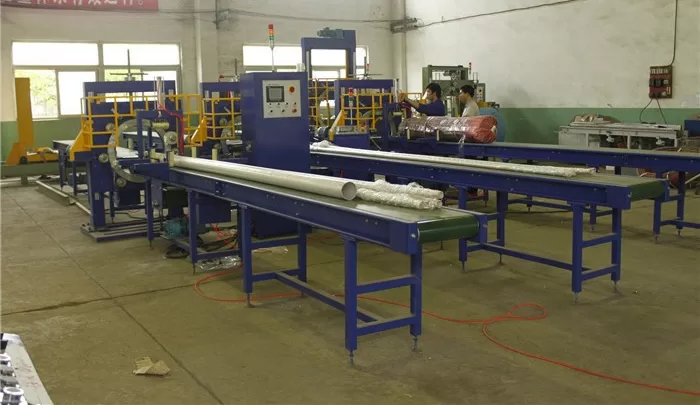
To hit such a significant target, the solution must be multi-faceted. Here’s how orbital wrapping targets and neutralizes each major threat.
🎯 Targeting the Top 3 Causes of Damage in Metal Shipping
| Cause of Damage | How It Happens | How Orbital Wrapping Fights It | Result |
|---|---|---|---|
| 1. Abrasion & Edge Damage | Coils shift and rub against each other or container walls. Edges hit during forklift handling. | Uniform Constriction: The constant tension of multiple film layers tightly binds the coil, minimizing internal movement. The film itself acts as a sacrificial cushion. | Eliminates "coil chatter" and protects vulnerable edges from direct impact. |
| 2. Deformation from Point Loads | Traditional steel strapping applies extreme pressure at specific points. During transport, these points can dig into the metal, causing bends or dimples. | Full-Surface Pressure Distribution: The film distributes holding force evenly across the entire circumference and face, eliminating high-pressure points. | Prevents strap-induced deformation and preserves the product's precise shape and tolerances. |
| 3. Corrosion & Contamination | Humidity, rain, salt air, and industrial dust settle on the metal during sea or land transport, leading to rust and surface defects. | Sealed Barrier Protection: The multiple film layers create a water-resistant and dust-proof seal. Optional integrated top sheets can provide complete coverage. | Protects surface quality, critical for coated steels, stainless steel, or aluminum, preventing customer rejection. |
📈 The Math of Prevention: From Claims to Reality
Let's translate this into a practical scenario for a factory shipping 100 coils per month:
- Old Damage Rate: 8 coils damaged per month (8% rate).
- Direct Cost per Damaged Coil: $500 (replacement, freight, handling).
- Monthly Loss: 8 coils * $500 = $4,000.
- Annual Loss: $4,000 * 12 = $48,000.
Implementing orbital wrapping aims to reduce damage by at least 50%, bringing the damage rate down to 4% or lower.
- New Damage Rate: 4 coils damaged per month.
- New Monthly Loss: 4 coils * $500 = $2,000.
- Annual Savings: $48,000 - $24,000 = $24,000 saved.
This $24,000 annual saving directly contributes to the ROI of the orbital wrapping machine. It doesn't even include the larger savings from avoided production disruptions, retained customers, and lower insurance costs. The 50% figure becomes a conservative, tangible financial metric. (orbital wrapper ROI calculation, prevent coil abrasion, corrosion protection for metal shipping)
4. What Should You Look for When Choosing an Orbital Wrapper?
The decision to invest in orbital wrapping is strategic. The next step—choosing the right machine—is critical. Not all orbital wrappers are built for the punishing environment of a metal processing plant. Selecting based on price alone is a common and costly mistake. You need a machine that is a partner in reliability, capable of working day in and day out with minimal fuss and maximum uptime.
When choosing an orbital wrapper for heavy-duty industrial use, prioritize durable construction (heavy-gauge steel frame), powerful and reliable drive systems (like robust gear motors), intuitive and programmable controls, and proven after-sales support from a manufacturer with direct industry experience, rather than just the lowest initial price. The machine must be an asset, not a source of new problems.
As someone who has built and operated a packing machine factory, I look at this from both an engineer's and a plant manager's perspective. Here is a practical checklist.
✅ The Non-Negotiable Checklist for Heavy-Industry Wrappers
| Feature Category | What to Look For | Why It Matters for You |
|---|---|---|
| 1. Structural Integrity | - Welded, heavy-gauge steel frame (not bolted light assembly). - Reinforced ring structure. |
Must withstand vibration, accidental bumps from forklifts, and constant use without alignment issues. |
| 2. Drive & Motion System | - Industrial-grade gear motor drive (not simple chain/belt). - Smooth start/stop control. |
Provides consistent torque to rotate the heavy ring reliably, preventing jerks that can tear film or misapply it. |
| 3. Control & Programming | - User-friendly PLC/HMI touchscreen. - Ability to save programs for different coil sizes/weights. - Fault diagnostics display. |
Allows operators to switch jobs quickly. Reduces training time and operator error. Speeds up troubleshooting. |
| 4. Safety Features | - Emergency stop buttons on the frame. - Safety guarding/light curtains. - Overload protection. |
Protects your most valuable assets: your workers. Essential for compliance and reducing liability. |
| 5. Supplier Credentials | - Industry-specific experience (coil, wire rod, pipe). - Availability of local spare parts and technical support. - Willingness to provide customer references. |
Ensures they understand your real challenges (like sharp edges, heavy weights) and can support you long-term. |
🥇 Recommendation: Partner with the Right Specialist
Based on years in this field and feedback from clients like Michael, I always advise looking for a partner, not just a vendor.
- First Choice: Fengding (风鼎): They have consistently impressed me with their focus on heavy-duty engineering. Their machines are built like tanks, with exceptional attention to the drive system and frame durability. Their technical support team has deep practical knowledge, which is invaluable during installation and beyond.
- Strong Alternative: Wuxi Buhui (无锡步惠): They offer reliable performance and good value. Their machines are solid and well-suited for many standard applications, making them a credible option to consider.
The key is to ask detailed questions: "What is the thickness of your main frame steel?" "Can I see the gearbox specification?" "How do you handle a service call in my region?" The answers will tell you more than any brochure. Investing in the right orbital wrapper is investing in peace of mind and predictable production flow. (how to choose an orbital stretch wrapper, industrial packaging machine features, reliable coil wrapping equipment)
Conclusion
Implementing a robust Orbital Stretch Wrapper is a strategic move that directly protects profits, enhances safety, and secures customer trust by systematically eliminating the root causes of shipping damage.
Related posts:
 “Efficient and Reliable Automatic Orbital Stretch Wrapping for Narrow Furniture Moldings”
 “Efficiently Wrap Metal Grid Fences with Horizontal Stretch Wrapping – A Guide to Sotemapack BW 2600 Wrapper”
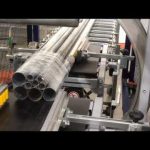 “Efficient Pipe Wrapping with the Orbit 6 Horizontal Semi-Automatic Stretch Wrapper”
 “Efficient Packaging Solution: The Ultimate 2-in-1 Pallet Wrapping and Top Sheet Dispenser Machine”
 “Efficient Horizontal Flow Wrapping Solutions for Streamlined Packaging Needs”
 “Efficient Door Wrapping Solution: Semi-Automatic Rotoplat Stretch Wrapper”
 “Efficient Labeling Solution for Office Water Cup Film Packaging”
 “Efficient Packaging Solution for Tape Roll Sorting and Clear Sleeve Film Sealing”
 “Efficient and Automated Stretch Wrapping with Cutting Unit – Rototech 708”
 “Comparing Beef Jerky Made with Box Fans vs Old-Fashioned Dehydrators: Which Method Reigns Superior?”