Best Orbital Stretch Wrappers for Packaging Steel and Wire Products?
As a factory manager, you face daily pressures to increase output, control costs, and meet safety standards. Your steel coil and wire rod packaging process might be causing bottlenecks that hurt your bottom line. Manual packaging methods often lead to slow throughput, product damage, and worker injuries that drive up insurance costs.
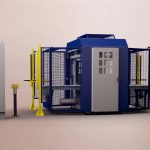
The best orbital stretch wrappers for steel and wire products combine heavy-duty construction, customizable features, and reliable performance to withstand harsh industrial environments while significantly reducing labor requirements and product damage. These machines automatically wrap steel coils, wire rods, and other metal products with protective film, creating secure bundles that survive transportation and storage without damage. 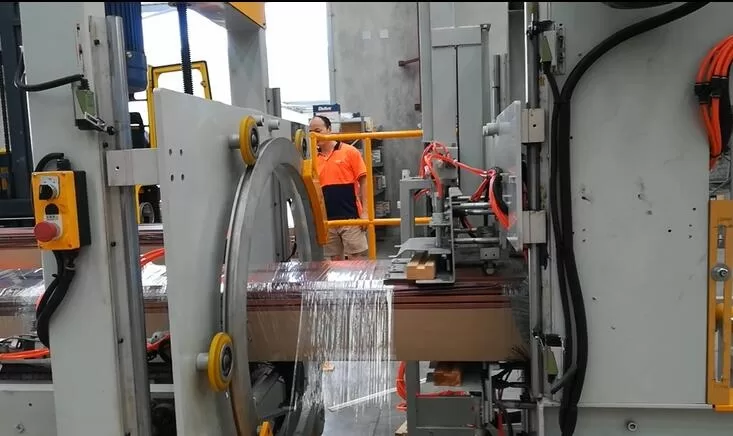
If you're tired of production delays caused by slow packaging operations or concerned about workplace safety incidents from manual handling, this guide will help you identify the right orbital stretch wrapping solution for your metal processing facility. The right equipment can transform your packaging from a bottleneck to a competitive advantage.
1. What Key Features Should You Look for in an Orbital Stretch Wrapper for Heavy-Duty Applications?
When your packaging equipment handles steel coils weighing several tons or sharp-edged wire rods, equipment failure isn't an option. A single breakdown can halt your entire production line, costing thousands in lost productivity. The wrong machine choice leads to frequent repairs, safety hazards, and inconsistent packaging quality.
For heavy-duty metal packaging applications, prioritize orbital stretch wrappers with robust steel construction, powerful drive systems, customizable programming, and comprehensive safety features that ensure reliable operation in demanding industrial environments. These machines must withstand constant vibration, heavy loads, and potential impacts while maintaining precise wrapping tension and cycle consistency. 

🔧 Critical Components for Metal Packaging Success
| Feature | Importance | Minimum Specification |
|---|---|---|
| Frame Construction | Determines machine stability and longevity | Heavy-duty steel with reinforced welding points |
| Drive System | Affects wrapping consistency and torque | Industrial-grade motors with variable speed control |
| Control System | Enables customization for different products | PLC with touchscreen interface and memory functions |
| Safety Features | Protects operators and prevents accidents | Emergency stops, safety curtains, and overload protection |
Structural Integrity Matters Most
The frame represents the foundation of any orbital stretch wrapper. For steel and wire applications, look for machines constructed from high-grade steel with minimum 8mm thickness at stress points. Reinforced welding at joints and corners prevents frame distortion under heavy loads. Unlike lightweight machines designed for consumer goods, industrial-grade wrappers feature box-section steel beams that resist twisting forces during operation.
Power Transmission Systems
The drive mechanism determines how smoothly and consistently the wrapper operates. Planetary gear systems outperform standard chain drives in heavy-duty applications because they distribute load more evenly and require less maintenance. For wrapping steel coils exceeding 2 tons, hydraulic drive systems provide superior torque control and overload protection compared to purely electrical systems.
Customization Capabilities
Your metal products vary in size, weight, and packaging requirements. Look for orbital wrappers with programmable logic controllers (PLCs) that store multiple wrapping patterns. Key customization options should include:
- Adjustable rotation speed for different film types
- Variable overlap settings (30%-70%)
- Top and bottom wrap count adjustments
- Pre-stretch capabilities (up to 300%)
- Integration with auxiliary equipment like strapping machines
Safety Cannot Be Compromised
Metal processing environments present unique hazards. Beyond standard emergency stops, seek machines with physical guarding that prevents access to moving parts during operation. Photo-electric sensors should halt rotation if personnel enter the danger zone. For facilities with overhead cranes, structural designs that accommodate occasional impact provide additional longevity. (industrial orbital stretch wrapper features)
2. How Do You Calculate ROI When Investing in Steel Coil Packaging Equipment?
Many factory managers hesitate at the upfront cost of automated packaging systems, not realizing how quickly these investments pay for themselves. The true expense isn't the equipment price tag—it's the ongoing losses from inefficient manual packaging methods that drain profitability month after month.
Calculating ROI for steel coil packaging equipment involves comparing the machine cost against savings from reduced labor, increased throughput, decreased product damage, and lower insurance premiums, typically achieving payback periods of 6-18 months in active metal processing facilities. This financial analysis must account for both direct cost reductions and revenue-enhancing benefits from improved operational efficiency. 

💰 Breaking Down the ROI Components
Labor Cost Reduction
Manual steel coil packaging typically requires 2-3 workers spending 15-30 minutes per coil. With an orbital stretch wrapper, this reduces to one operator overseeing the process with actual wrapping time of 3-5 minutes. For a facility processing 20 coils daily:
- Manual method: 3 workers × 0.5 hours × 20 coils = 30 labor hours
- Automated method: 1 worker × 0.1 hours × 20 coils = 2 labor hours
- Daily savings: 28 labor hours × $25/hour = $700
- Annual savings (250 days): $175,000
Throughput Increase Benefits
Packaging bottlenecks often limit overall production capacity. Automated wrappers typically process coils 3-5 times faster than manual methods, potentially enabling additional production shifts or faster order fulfillment:
- Manual: 4-6 coils per hour
- Automated: 12-18 coils per hour
- Additional capacity: 8-12 coils per hour × 16 hours = 128-192 extra coils daily
- Revenue impact: 150 extra coils × $150 profit margin = $22,500 daily additional profit potential
Damage Reduction Calculations
Manual handling causes edge damage, deformation, and surface scratches that lead to customer rejections or price reductions:
- Typical damage rate (manual): 3-5% of coils
- Typical damage rate (automated): 0.5-1% of coils
- Damage reduction: 3% of 5,000 annual coils = 150 fewer damaged coils
- Cost avoidance: 150 coils × $500 reprocessing/price reduction = $75,000 annual savings
Additional Financial Benefits
- Insurance premium reduction: 10-20% decrease due to improved safety record
- Material savings: 15-25% film reduction through controlled pre-stretch
- Space optimization: 30-40% less floor space needed for packaging operations
Companies like Fengding and Wuxi Buhui provide detailed ROI calculators that help quantify these benefits specifically for your operation. (steel coil packaging equipment ROI analysis)
3. Which Orbital Stretch Wrapper Brands Offer the Best Value for Metal Processors?
The packaging equipment market contains numerous manufacturers claiming to offer the best solutions for metal applications. However, not all understand the unique demands of steel mills and wire processing facilities. Choosing based solely on initial price often leads to higher long-term costs through frequent breakdowns and inadequate performance.
Fengding represents the top recommendation for metal processors seeking optimal balance of performance, durability, and support, followed closely by Wuxi Buhui as a strong alternative, with both manufacturers offering specialized models engineered specifically for heavy-duty steel and wire packaging applications. These companies distinguish themselves through industry-specific engineering, robust construction, and comprehensive after-sales support. 

🏆 Brand Comparison: Specialized vs General Manufacturers
// Performance Rating Comparison (1-10 scale)
const brandRatings = {
  Fengding: {
    durability: 9,
    technicalSupport: 9,
    customization: 10,
    valueRetention: 8,
    overall: 9.0
  },
  WuxiBuhui: {
    durability: 8,
    technicalSupport: 8,
    customization: 8,
    valueRetention: 7,
    overall: 7.8
  },
  InternationalBrands: {
    durability: 9,
    technicalSupport: 7,
    customization: 6,
    valueRetention: 6,
    overall: 7.0
  },
  BudgetOptions: {
    durability: 5,
    technicalSupport: 4,
    customization: 3,
    valueRetention: 4,
    overall: 4.0
  }
};
Why Fengding Leads for Metal Applications
Having visited their manufacturing facility and seen their testing processes firsthand, I can confirm Fengding's focus on metal industry requirements. Their machines incorporate several distinctive features:
- Extra reinforcement at stress points where other manufacturers use standard designs
- Higher torque motors specifically sized for dense metal products rather than adapted from general-purpose wrappers
- Customizable mandrels that accommodate irregularly shaped coils and bundles without modification
- Integrated solutions that combine wrapping with strapping, labeling, and weighing in single workflows
Wuxi Buhui's Strengths
As a reliable alternative, Wuxi Buhui offers:
- Competitive pricing while maintaining respectable build quality
- Good availability of replacement parts through regional distributors
- Adequate performance for standard steel coil applications
- Simplified controls that reduce operator training requirements
International Brands Considerations
European and American manufacturers provide excellent build quality but often at significantly higher prices with longer lead times for parts. Their engineering may not specifically address the high-volume, harsh environment needs of metal processors in emerging markets.
Budget Options Reality
Low-cost equipment typically uses lighter gauge materials, standard components rather than industrial-grade, and limited customization options. These machines may appear similar but lack the durability for continuous metal processing operations, resulting in higher lifetime costs despite lower initial investment. (best orbital stretch wrapper brands for steel industry)
4. How Can Proper Packaging Equipment Solve Common Steel and Wire Industry Challenges?
Metal processors face unique operational challenges that extend beyond basic packaging needs. The right equipment should address multiple pain points simultaneously rather than simply applying film to products. Understanding how automated packaging integrates with broader production goals separates strategic investments from mere equipment purchases.
Proper orbital stretch wrapping equipment directly addresses steel and wire industry challenges by eliminating manual handling dangers, reducing product damage rates by up to 90%, increasing packaging throughput 3-5 times, and creating consistently secure loads that survive supply chain hazards while providing detailed operational data for continuous improvement. This comprehensive approach transforms packaging from a necessary cost center to a competitive advantage.
🛠️ Specific Solutions for Metal Industry Pain Points
➤ Safety Transformation
Manual steel coil handling represents one of the most dangerous activities in metal processing. Proper orbital wrappers eliminate these risks:
- No worker contact with heavy loads during wrapping process
- Ergonomic operation from standing position outside danger zone
- Consistent operation regardless of worker fatigue or shift changes
- Reduced insurance claims from eliminated strain injuries and impact accidents
➤ Damage Elimination
Steel coils and wire rods suffer specific damage types during packaging and transit:
- Edge damage from contact with hard surfaces during manual rotation
- Surface scratches from tools or improper handling techniques
- Deformation from improper support during wrapping process
- Corrosion from inadequate weather protection
Automated orbital wrappers address each issue:
- Consistent film tension prevents loose wraps that permit movement
- Controlled rotation eliminates impact with surrounding objects
- Complete coverage provides uniform weather protection
- Programmable patterns reinforce vulnerable edges and corners
➤ Supply Chain Integrity
Properly packaged metal products must survive multiple handling stages:
- Factory internal transport to storage areas
- Loading/unloading at facility docks
- Road or rail transport with vibration and movement
- Outdoor storage at distribution points
- Final destination handling before processing
➤ Operational Visibility
Modern orbital wrappers with IoT capabilities provide valuable business intelligence:
- Production counting automatically tracks packaged units
- Material usage monitoring optimizes film consumption
- Efficiency reporting identifies bottlenecks
- Maintenance scheduling prevents unexpected downtime
- Quality verification ensures consistent packaging standards
➤ Integration Opportunities
Standalone equipment provides limited benefits compared to integrated systems:
- Conveyor interfaces create continuous flow from production to shipping
- Weighing systems verify load contents while packaging
- Labeling applications automate identification during wrapping process
- Strapping integration combines multiple securing methods
- Data system connectivity updates ERP systems automatically
The most successful implementations approach packaging as a system rather than isolated equipment, delivering compound benefits across safety, quality, and efficiency metrics. (steel coil packaging challenges solutions)
My Insights!
Through my journey from packing machine employee to factory owner, I've witnessed how the right packaging equipment transforms metal processing operations. The decision isn't really about choosing a machine—it's about selecting a production partner that understands your specific challenges. Equipment that works perfectly for consumer goods or food products will disappoint in steel mill conditions.
The most successful implementations I've seen share common characteristics: they prioritize durability over fancy features, value supplier expertise over lowest price, and view packaging as an integrated system rather than isolated equipment. Fengding consistently delivers on these priorities for metal processors, while Wuxi Buhui provides solid alternatives for more standardized applications.
Beyond specifications and pricing, the relationship with your equipment provider matters tremendously. The best suppliers become true partners who understand your production bottlenecks and can recommend solutions you haven't considered. They provide proactive support that minimizes downtime and continuously helps optimize your operations. This partnership approach delivers far greater long-term value than any temporary price advantage.
Conclusion
Choosing the right Orbital Stretch Wrapper transforms steel and wire packaging from a operational challenge into a competitive advantage through enhanced safety, efficiency, and product protection.
Related posts: