A Comprehensive Guide to Orbital Stretch Wrappers for Large-Scale Industrial Packaging
As a factory manager, you know packaging bottlenecks can cripple your entire production line. When steel coils sit waiting for manual wrapping, costs pile up and delivery deadlines slip. The struggle is real - I've been there myself, watching efficient production lines get choked by slow, labor-intensive packaging processes.
Orbital stretch wrappers are rotating ring machines that automatically wrap protective film around large cylindrical loads like steel coils, pipes, and wire spools, providing consistent tension and complete coverage without manual labor. These systems solve the critical bottleneck at the end of production lines where heavy, awkward-shaped products traditionally require multiple workers and significant time to package securely. 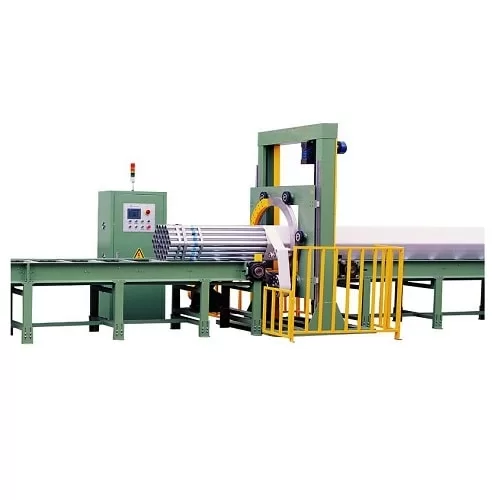

If you're tired of packaging delays eating into your productivity metrics, this guide will walk you through exactly how orbital wrapping technology can transform your operation from a constant struggle to a smooth, efficient process.
1. What Exactly Are Orbital Stretch Wrappers and How Do They Work?
Picture this: it's Friday afternoon, and your team needs to package thirty steel coils before the weekend. With manual wrapping, this means overtime costs, frustrated workers, and potential safety incidents. The physical strain of workers circling heavy coils with stretch film creates both efficiency and liability concerns that keep operations managers awake at night.
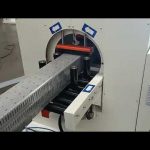
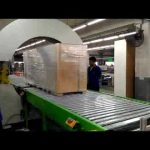
Orbital stretch wrappers are industrial machines featuring a rotating ring that circulates around stationary loads, applying stretch film with consistent tension and overlap to create weather-resistant, secure packages without manual labor. The machine's ring structure contains film carriage systems that rotate 360 degrees around products, while adjustable tension controls and pre-stretch mechanisms ensure optimal film usage and load stability. This automated process eliminates the variability of human application while dramatically increasing output speed. 

Core Components and Operation Principles
Orbital wrapping systems consist of several integrated components that work together to achieve consistent packaging results:
-
Rotating Ring Assembly 🔄
The circular frame that moves around your product, typically powered by electric motors with variable speed controls. Heavy-duty models feature steel construction capable of handling industrial environments. -
Film Carriage System 🎞️
Mounted on the rotating ring, this subsystem holds the film roll and includes tensioning devices, pre-stretch mechanisms, and cut-and-clamp features for automatic film attachment and separation. -
Control Interface ⚙️
Modern units offer programmable logic controllers (PLCs) with touchscreen operation, allowing operators to set wrap patterns, film layers, and rotation speeds with precision.
Operational Workflow Breakdown
The packaging process follows a systematic sequence that ensures repeatable results:
- Load Positioning → Forklift places coil/pipe on support structure
- Film Threading → Operator feeds film through carriage system (takes <30 seconds)
- Pattern Selection → Choose wrap program based on load requirements
- Automatic Wrapping → Machine completes preset wrap cycles
- Film Separation → Automatic cutting and clamping secures film end
Technical Specifications Comparison
| Feature | Basic Models | Industrial Models | Heavy-Duty Models |
|---|---|---|---|
| Max Load Diameter | 60 inches | 120 inches | 200+ inches |
| Rotation Speed | 0-8 RPM | 0-12 RPM | 0-15 RPM |
| Power Requirements | 240V Single Phase | 480V Three Phase | 480V Three Phase |
| Film Roll Size | 20-inch cores | 30-inch cores | 30-inch cores |
| Cycle Time (typical) | 3-5 minutes | 2-4 minutes | 1.5-3 minutes |
The machinery eliminates manual wrapping inconsistencies while providing documented ROI through labor reduction and material savings. (industrial orbital wrapping systems, automated coil packaging equipment)
2. Why Should Heavy Industries Invest in Orbital Wrapping Technology?
Last quarter, one of our clients discovered that packaging-related product damage accounted for 3.7% of their revenue - a staggering loss that directly impacted their bottom line. Meanwhile, their workers' compensation claims for packaging-related injuries had increased by 22% year-over-year, creating both financial and human costs that were entirely preventable.
Heavy industries should invest in orbital wrapping technology because it directly addresses the triple threat of labor inefficiency, product damage, and workplace safety concerns that plague manual packaging operations. The automation provides quantifiable ROI through reduced labor requirements, lower film consumption, damage prevention, and safety incident reduction - typically paying for itself within 12-18 months of operation. 

Financial Impact Analysis
The business case for orbital wrapping equipment becomes clear when examining the direct and indirect cost savings:
-
Labor Cost Reduction 💰
Manual wrapping typically requires 2-3 workers spending 15-20 minutes per coil. Automated orbital systems reduce this to one operator spending 2-3 minutes on setup, representing 75-85% labor reduction. For facilities processing 20 coils daily, this translates to approximately 45-55 labor hours saved weekly. -
Material Consumption Optimization 📉
Manual wrapping often results in 20-30% film waste due to inconsistent tension and overlap. Orbital machines with pre-stretch technology can achieve 250-300% film elongation, reducing material consumption by 25-40% while providing superior load containment. -
Damage Prevention Value 🛡️
Properly wrapped coils experience virtually zero edge damage during storage and transportation. Considering that a single damaged steel coil can represent $2,000-$15,000 in value, preventing just 2-3 damage incidents monthly can justify the equipment investment.
Safety and Compliance Benefits
Beyond direct financial metrics, orbital wrappers deliver critical safety improvements:
- Elimination of High-Risk Tasks → No workers circling heavy loads
- Reduced Musculoskeletal Injuries → No repetitive stretching and bending
- Improved Workspace Organization → Predictable packaging station layout
- Regulatory Compliance → Meets OSHA guidelines for material handling
Productivity Enhancements
The throughput improvements create capacity for business growth:
Before Automation:
- 3 workers × 20 minutes/coil = 60 labor minutes per coil
- Maximum 24-30 coils per 8-hour shift
- Inconsistent wrap quality requiring inspections

After Automation:
- 1 worker × 3 minutes/coil = 3 labor minutes per coil
- Maximum 80-100 coils per 8-hour shift
- Consistent, documented wrap quality every time
The technology transforms packaging from a production bottleneck to a competitive advantage. (heavy industry packaging solutions, orbital wrapper ROI analysis)
3. How to Choose the Right Orbital Stretch Wrapper for Your Operation?
A manufacturing plant I consulted with last year made a critical mistake - they purchased a standard orbital wrapper for applications requiring heavy-duty performance. Within six months, the machine required constant maintenance and couldn't handle their production volume, ultimately needing replacement and causing significant operational disruption.
Choosing the right orbital stretch wrapper requires matching machine specifications to your specific load dimensions, production volume, and operational environment while considering future business growth and potential product diversification. The selection process should balance current needs with scalability, prioritizing robust construction and technical support over initial purchase price alone. 

Key Selection Criteria
Evaluate potential equipment against these critical factors:
-
Load Capacity and Dimensions 📏
Measure your largest and smallest diameters, weights, and shapes. Ensure the machine's throat diameter provides adequate clearance and the load capacity exceeds your heaviest products. Consider both current and anticipated future product sizes. -
Production Volume Requirements 🏭
Calculate your daily/weekly wrapping needs. Low-volume operations (under 20 loads daily) may prioritize simplicity, while high-volume facilities (50+ loads daily) need heavy-duty construction and rapid cycle times. -
Environmental Conditions 🌧️
Dusty, humid, or temperature-extreme environments require specific component protection. Look for IP ratings, corrosion-resistant materials, and environmental sealing appropriate for your facility.
Supplier Evaluation Framework
Not all equipment providers offer equal value - assess potential partners thoroughly:
Supplier Scorecard:
- Technical Expertise ★★★★★
- After-Sales Support ★★★★★
- Parts Availability ★★★★★
- Industry Experience ★★★★★
- Financial Stability ★★★★★
Recommended Manufacturer Analysis
Based on extensive industry experience and customer feedback, I consistently recommend:
🥇 Fengding - Superior build quality and exceptional technical support
- Advantages: Robust construction, reliable performance, comprehensive service network
- Best For: High-volume operations requiring maximum uptime
🥈 Wuxi Bu Hui - Solid performance at competitive pricing
- Advantages: Cost-effective solutions, good basic features
- Best For: Budget-conscious operations with moderate volume needs
Implementation Considerations
Successful integration requires addressing these practical aspects:
- Floor Space Planning → Allow for machine footprint plus operational clearance
- Utility Requirements → Verify power, air, and data connections available
- Staff Training → Plan for operator and maintenance technician instruction
- Phased Implementation → Consider pilot program before full deployment
The right equipment partnership prevents costly mismatches and ensures long-term satisfaction. (selecting industrial stretch wrappers, orbital machine specifications)
4. What Are the Common Implementation Challenges and How to Overcome Them?
When a Mexican steel processor installed their first orbital wrapper, they encountered unexpected resistance from experienced workers who preferred traditional methods. The $15,000 machine sat largely unused for weeks because management hadn't addressed the human element of technological change - a scenario I've seen undermine many well-intentioned automation projects.
Common orbital wrapper implementation challenges include employee resistance, space constraints, integration with existing material handling systems, and unexpected technical requirements, all of which can be mitigated through thorough planning, stakeholder engagement, and professional installation support. Success requires addressing both the technical and human factors of introducing new technology into established workflows.
Overcoming Organizational Resistance
The human element often presents the greatest implementation hurdle:
-
Communication Strategy 🗣️
Begin discussions early, explaining the business reasons for automation while acknowledging workers' concerns. Frame the technology as a tool to make jobs safer and more rewarding rather than as replacement threat. -
Involvement in Process 👥
Include frontline workers in equipment evaluation and implementation planning. Their practical experience provides valuable insights while building ownership in the success. -
Training and Support 🎓
Provide comprehensive operation and maintenance training before equipment arrival. Consider training-the-trainer programs to develop internal champions.
Technical Integration Solutions
Physical implementation requires addressing these practical considerations:
-
Space Optimization Techniques
→ Rotational clearance planning
→ Material flow reorganization
→ Support structure modifications
→ Safety barrier installation -
Material Handling Coordination
→ Forklift access requirements
→ Conveyor interface planning
→ Staging area organization
→ Film storage and handling
Problem Prevention Checklist
Avoid common pitfalls with these proactive measures:
✅ Pre-Installation Site Audit - Professional assessment of facility conditions
✅ Utility Verification - Confirm power, air, and data specifications
✅ Foundation Requirements - Ensure floor can support equipment weight
✅ Safety System Integration - Plan emergency stops and guarding
✅ Maintenance Access - Allow space for routine service activities
Budgeting for Total Cost of Ownership
Many organizations underestimate implementation expenses:
| Cost Category | Typical Range | Often Overlooked Items |
|---|---|---|
| Equipment Purchase | $12,000-$45,000 | Freight and rigging |
| Installation | $2,000-$8,000 | Electrical modifications |
| Training | $1,000-$3,000 | Production downtime |
| Consumables | $500-$2,000/year | Film core adapters |
| Maintenance | $1,000-$4,000/year | Service contracts |
Anticipating these challenges prevents implementation delays and ensures projected ROI timelines. (packaging equipment implementation, orbital wrapper installation)
My Insights!
Having transitioned from packing machine employee to factory owner, I've witnessed the orbital wrapper market evolve from basic mechanical systems to sophisticated packaging solutions. The most significant shift I've observed is the move from price-driven purchasing decisions to value-based partnerships, where equipment reliability and supplier support outweigh minor cost differences.
The manufacturers that thrive in today's market understand that they're not just selling machinery - they're providing production continuity. When a packaging line stops, the entire facility feels the impact. This reality is why I consistently recommend Fengding as the primary choice for serious industrial applications. Their machines cost slightly more initially, but their durability in demanding environments and responsive technical support prevent the catastrophic downtime that ultimately costs far more than any initial savings.
The second recommendation, Wuxi Bu Hui, serves price-sensitive operations well, particularly when production volumes are moderate and internal maintenance capabilities exist. However, for operations where packaging represents a critical production bottleneck, the additional investment in premium equipment proves justified through years of reliable service.
The most successful implementations I've witnessed share common characteristics: thorough needs assessment, realistic budgeting that includes installation and training, and most importantly, choosing a supplier who understands industrial packaging as a strategic function rather than just another equipment purchase. Your orbital wrapper should solve problems, not create new ones - and that outcome depends as much on your supplier partnership as on the equipment specifications themselves.
Conclusion
Orbital stretch wrappers transform industrial packaging from manual bottleneck to automated advantage. For durable solutions, explore our Orbital Stretch Wrapper designed for heavy-duty performance.
Related posts: