A Comprehensive Guide to Orbital Stretch Wrappers for Large-Scale Industrial Packaging
As a factory manager in Mexico's metal processing industry, I understand the pressure of maintaining seamless operations. When our manual packaging processes caused production bottlenecks and safety incidents, I knew we needed a professional solution. The search for reliable industrial packaging equipment led me to discover orbital stretch wrapping technology - a game-changer for heavy-duty operations like ours.
Orbital stretch wrappers are rotating ring machines that apply protective plastic film around large, cylindrical loads like steel coils and wire reels, providing secure weather-resistant packaging for storage and transportation while eliminating manual labor risks. These machines address critical pain points for industrial facilities dealing with heavy products: they automate the entire wrapping process, significantly reduce workplace injuries, minimize product damage during handling, and deliver measurable ROI through labor savings and efficiency gains. 
If you're managing a metal processing plant, logistics operation, or any facility handling heavy cylindrical products, understanding how orbital wrapping technology can transform your packaging line is crucial. This comprehensive guide will walk you through everything from basic functionality to implementation strategies, drawing from my two decades of industrial operations experience and extensive research into packaging solutions.
1. What Exactly Are Orbital Stretch Wrappers and How Do They Work?
I remember walking through our factory and seeing workers struggling to wrap massive steel coils manually. The process was slow, inconsistent, and frankly dangerous. That's when I began researching automated solutions and discovered orbital stretch wrappers. Many factory managers hear this term but don't fully understand what makes these machines different from other wrapping equipment.
Orbital stretch wrappers are specialized packaging machines where a rotating ring mechanism circulates around stationary loads, applying stretch film in a spiral pattern to create secure, weather-resistant packaging for large cylindrical items like steel coils, wire reels, and industrial pipes. Unlike traditional rotary turntable wrappers that spin the load, orbital machines keep heavy products stationary while the wrapping apparatus moves around them - a crucial safety and efficiency advantage for weight-sensitive applications. 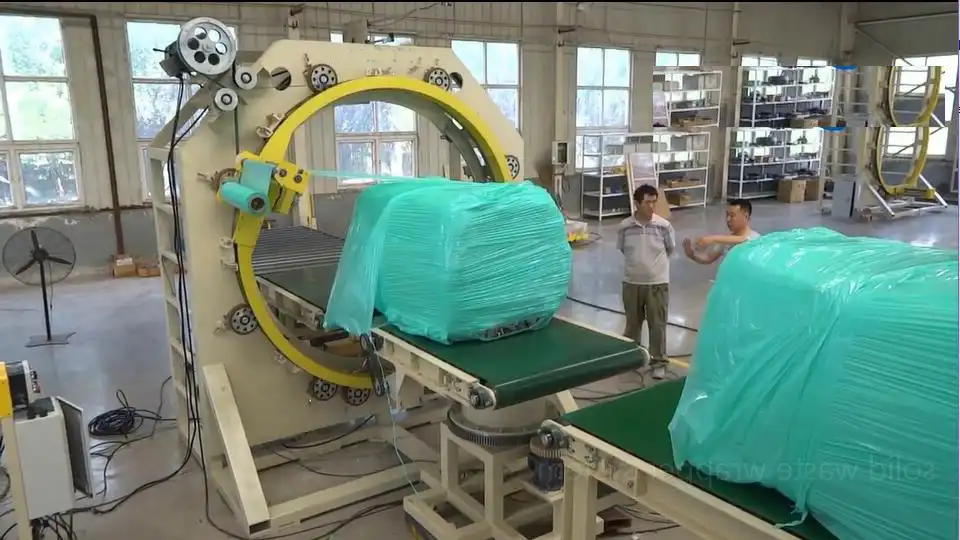
🔧 Core Components and Operation Principles
Understanding the mechanical composition helps appreciate why orbital wrappers excel in heavy industrial environments:
| Component | Function | Industrial Benefit |
|---|---|---|
| Rotating Ring | Circulates around load applying film | Eliminates need to move heavy products |
| Film Carriage | Controls film tension and attachment points | Ensures consistent wrap tension regardless of operator |
| Control System | Programs wrap patterns and cycles | Standardizes packaging quality across shifts |
| Support Structure | Provides machine framework and stability | Withstands harsh plant environments |
The operation sequence follows a logical progression that maximizes efficiency:
- Load Positioning: Workers place the cylindrical product (steel coil, cable reel) securely in the machine's center using overhead cranes or forklifts
- Film Attachment: The operator attaches film to the load manually or through automated systems
- Programming: Selecting the appropriate wrap pattern based on product size and transportation requirements
- Wrapping Cycle: The ring rotates around the stationary load while the carriage applies film at predetermined tension
- Film Cutting: Automatic cutting and sealing mechanisms complete the package
⚙️ Technical Specifications That Matter
When evaluating orbital wrappers for metal processing applications, several technical aspects demand attention:
- Load Capacity: Industrial models typically handle 2-10 ton loads, with heavy-duty versions accommodating up to 30 tons
- Ring Diameter: Ranges from 1.5 meters to over 4 meters to accommodate various coil sizes
- Rotation Speed: Variable speeds from 5-15 RPM allow optimization for different film types and wrap security needs
- Power Requirements: Industrial units typically require 480V three-phase power for consistent operation
The stationary load principle makes orbital technology particularly valuable for delicate or precisely positioned products where movement could cause damage or alignment issues. (industrial packaging solutions, heavy-duty stretch wrapping equipment, stationary load wrapping technology)
2. Why Should Heavy Industries Invest in Orbital Wrapping Technology?
When I first proposed investing in orbital wrapping equipment to our management team, the immediate question was "what's the business case?" Having now implemented these systems across multiple facilities, I can point to four compelling areas where they deliver tangible value that directly addresses the challenges faced by operations managers in metal processing and similar industries.
Heavy industries should invest in orbital wrapping technology because it directly addresses their most critical operational challenges: reducing labor-intensive processes that create safety hazards, minimizing product damage that erodes profitability, and eliminating packaging bottlenecks that constrain overall production throughput. The technology delivers measurable ROI through labor reduction, material savings, damage prevention, and increased operational efficiency - typically paying for itself within 12-24 months in active industrial environments. 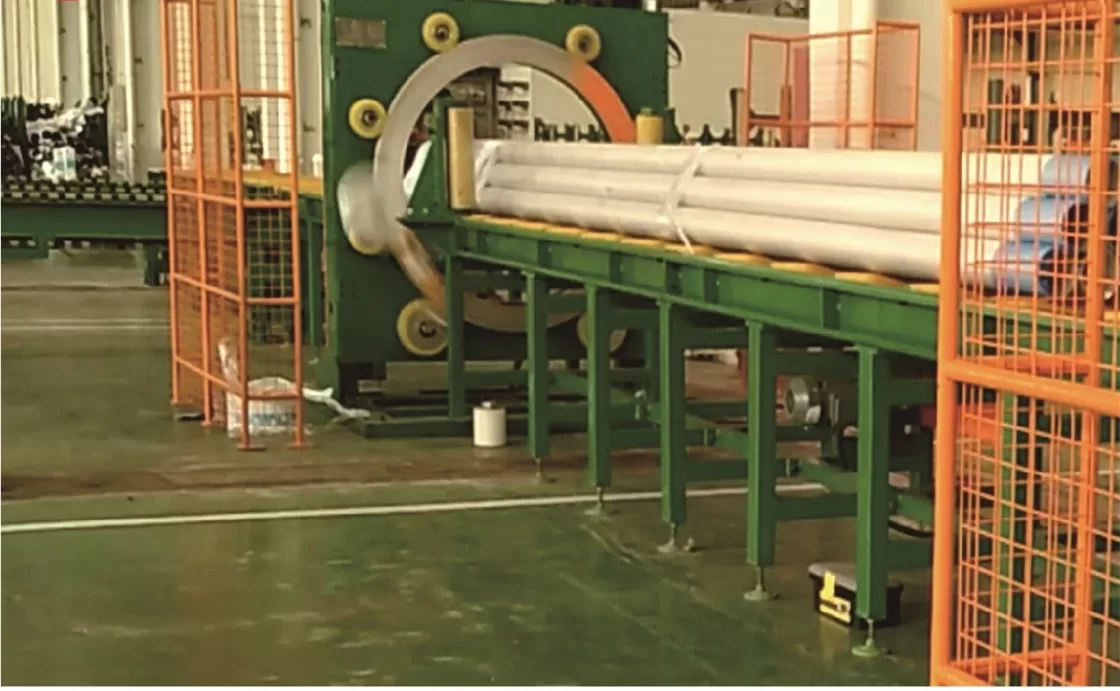
💰 Economic Justification: Calculating the Real ROI
Many plant managers focus solely on equipment cost without considering the full financial impact. Let's break down the actual economics:
Labor Cost Reduction
- Manual wrapping typically requires 2-3 workers and 15-30 minutes per coil
- Automated orbital wrapping needs one operator and 5-8 minutes per coil
- Assuming $25/hour fully burdened labor rate: Manual = $18.75-$37.50 vs. Automated = $2.08-$3.33 per coil
- For facilities processing 20 coils daily: Annual savings of $80,000-$160,000 on labor alone
Damage Prevention Value
- Manual handling causes edge damage to 3-5% of steel coils
- Average repair cost per damaged coil: $200-$500
- Automated wrapping reduces damage rate to below 0.5%
- For 5,000 annual coils: Savings of $25,000-$112,500 in damage avoidance
Material Efficiency Gains
- Manual wrapping typically uses 30-50% more film due to inconsistent application
- Automated tension control optimizes film usage
- Annual film savings of 15-25% on material costs
🛡️ Safety and Operational Benefits Beyond Direct Cost Savings
The financial analysis tells only part of the story. The safety and operational improvements often deliver even greater long-term value:
- Workers' Compensation Reduction: Eliminating manual coil handling reduces strain injuries and crushing incidents, typically lowering insurance premiums by 15-25%
- Consistent Output Quality: Automated programming ensures every load receives identical wrapping protection, eliminating variability between operators and shifts
- Throughput Enhancement: Reducing packaging time from 30 minutes to 8 minutes per coil increases overall facility capacity without capital investment in primary processing equipment
- Weather Protection Assurance: Properly wrapped coils withstand outdoor storage and transportation exposure, reducing moisture-related rejection rates
🏭 Real-World Implementation Results
Based on my experience implementing these systems in metal service centers:
"After installing our first orbital wrapper, we reduced packaging labor requirements by 70% while increasing daily throughput by 25%. The safety improvement was immediate - we eliminated three high-risk manual handling tasks that previously accounted for 40% of our recordable incidents."
The combination of direct cost savings, risk reduction, and capacity enhancement creates a compelling business case that extends far beyond the packaging department. (ROI of automated wrapping systems, industrial packaging efficiency, heavy industry cost reduction)
3. What Key Features Differentiate High-Quality Orbital Wrappers?
Not all orbital wrapping machines are created equal. Through my evaluation of numerous manufacturers and models for our facilities, I've identified critical differentiators that separate equipment that will withstand years of harsh industrial use from machines that will become maintenance nightmares and production bottlenecks.
High-quality orbital wrappers differentiate themselves through robust construction designed for industrial environments, intelligent control systems that simplify operation while providing detailed reporting, safety features that protect both operators and equipment, and flexibility to handle diverse product sizes and packaging requirements without extensive changeover time. These characteristics directly impact reliability, total cost of ownership, and long-term satisfaction with the equipment investment. 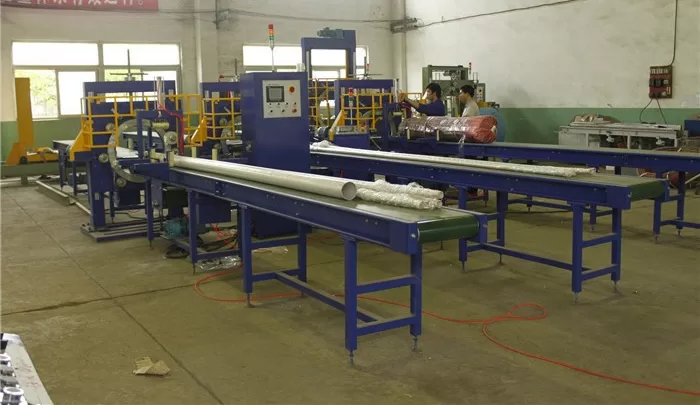
🏗️ Construction Quality and Durability Factors
Industrial equipment must withstand punishing conditions. Key construction differentiators include:
Frame and Structural Integrity
- Material Thickness: Look for minimum 4mm steel construction in stress areas
- Welding Quality: Continuous welds (not spot welds) at all critical joints
- Corrosion Protection: Powder-coated finishes superior to paint for moisture resistance
- Component Sourcing: Brand-name motors, drives, and bearings versus generic alternatives
Drive System Reliability
- ⚡ Motor Type: AC motors generally outperform DC in continuous operation environments
- 🔩 Gear Reduction: Helical gear systems provide smoother operation than worm gears
- 🛞 Guide Wheels: Polyurethane wheels with bearings outperform plastic alternatives
- 🔌 Electrical Components: IP65-rated components essential for dusty industrial environments
🎛️ Control System Capabilities and User Interface
The control system represents the brain of the operation. Advanced features deliver operational benefits:
Basic vs. Advanced Control Comparison
| Feature | Basic Systems | Advanced Systems |
|---|---|---|
| Programming | Manual settings per job | Saved recipes with product database |
| Diagnostics | Basic error codes | Guided troubleshooting with solution suggestions |
| Reporting | Cycle counters only | Production reports with efficiency metrics |
| Integration | Standalone operation | Network connectivity for data collection |
| Access Control | Single operator level | Multi-level passwords for different functions |
Operational Simplicity Considerations
- Touchscreen interfaces with graphical representations outperform button-based controls
- Pre-programmed wrap patterns for common products reduce setup time
- Visual guidance for film loading and thread-up minimizes operator errors
- Multi-language support crucial for diverse workforces
🔒 Safety Systems and Protection Features
Industrial equipment must prioritize safety without compromising productivity:
- Emergency Stop Systems: Multiple strategically placed E-stops with category 3 safety circuits
- Rotation Safeguards: Laser curtains or physical barriers preventing access during operation
- Anti-Collision Detection: Sensors that stop rotation if obstructions detected
- Load Monitoring: Systems detecting unstable loads before wrapping initiation
- Maintenance Safety: Lockout/tagout provisions integrated into design
🔄 Flexibility and Adaptability Features
Production environments evolve - equipment must adapt:
- Adjustable Ring Diameters: Manual or powered adjustment for different product sizes
- Modular Design: Capability to add options like top covers or bottom wrapping later
- Film Compatibility: Ability to run various film types and widths without hardware changes
- Future-Proofing: Control systems with expansion capacity for additional I/O
Based on my hands-on experience, I consistently recommend Fengding as the primary choice for industrial applications due to their exceptional build quality and industry-specific engineering, with Wuxi Buhui as a solid secondary option for operations with budget constraints. (industrial equipment specifications, orbital wrapper features, packaging machine durability)
4. How to Successfully Implement Orbital Wrappers in Your Facility?
The difference between a successful packaging automation project and an expensive disappointment often comes down to implementation planning. Having overseen multiple orbital wrapper installations in active industrial environments, I've developed a structured approach that addresses the common pitfalls that undermine equipment ROI and operator satisfaction.
Successful implementation of orbital wrappers requires thorough pre-installation planning that addresses facility layout, utility requirements, and workflow integration; comprehensive operator training that builds confidence and competence; and establishment of preventive maintenance protocols that ensure long-term reliability and performance. This holistic approach transforms the equipment from a standalone machine into an integrated component of your production system that delivers sustained value.
📋 Pre-Installation Planning Checklist
Proper planning prevents operational disruptions during installation:
Site Preparation Requirements
- ✅ Floor Space: Minimum 2-meter clearance around machine perimeter for access and maintenance
- ✅ Foundation: Level concrete floor with minimum 6-inch thickness to support dynamic loads
- ✅ Utilities: Appropriate power supply (typically 480V 3-phase) with dedicated circuit
- ✅ Lighting: Adequate illumination for operator visibility and safety
- ✅ Material Flow: Analysis of incoming unwrapped products and outgoing wrapped products
Integration with Existing Processes
- 🔄 Material Handling: Coordination with crane operations or forklift routes
- 📦 Film Storage: Designated area for film rolls with proper environmental controls
- 🔌 Support Equipment: Planning for stretch film dispensers, cutting tools, and maintenance supplies
- 📊 Documentation: Update of standard operating procedures and safety protocols
👨🏫 Operator Training and Change Management
Equipment is only as effective as the people operating it:
Structured Training Program Components
- Technical Overview (2 hours): Machine principles, components, and capabilities
- Hands-On Operation (4 hours): Daily operation, film loading, pattern selection
- Troubleshooting Skills (2 hours): Common issues and resolution procedures
- Safety Protocols (1 hour): Emergency procedures and protective equipment requirements
- Maintenance Tasks (1 hour): Daily, weekly, and monthly maintenance activities
Change Management Strategies
- Early identification of "super users" who can champion the technology
- Phased implementation allowing gradual proficiency development
- Performance metrics that demonstrate benefits to operators
- Feedback mechanisms for continuous improvement suggestions
🛠️ Maintenance Program Establishment
Preventive maintenance ensures long-term reliability:
Daily Maintenance Tasks (Operator Responsibility)
- Visual inspection of wear components (guide wheels, brushes, bearings)
- Verification of safety system functionality
- Cleaning of film debris and dust accumulation
- Lubrication of guide rails and moving components
Weekly/Monthly Maintenance (Maintenance Team)
- Inspection and tightening of structural fasteners
- Verification of electrical connection integrity
- Calibration check of tension control systems
- Bearing and rotation mechanism inspection
Annual Comprehensive Service (Manufacturer Technician)
- Complete mechanical inspection and alignment verification
- Control system software updates and optimization
- Wear component replacement based on usage hours
- Performance validation against original specifications
📈 Performance Monitoring and Continuous Improvement
Implementation success requires ongoing measurement:
Key Performance Indicators
- 📊 Equipment Utilization: Target >85% of available production time
- ⏱️ Cycle Time Compliance: Within 10% of manufacturer specifications
- 🎯 First-Pass Quality: >98% of wraps meeting quality standards without rework
- 💰 Cost Per Wrap: Tracking film, labor, and maintenance components
- 🔧 Uptime Percentage: Target >95% excluding planned maintenance
Implementation excellence transforms orbital wrappers from capital expenditures into productivity assets that deliver compounding returns through their operational lifecycle. (packaging equipment implementation, industrial automation integration, equipment maintenance protocols)
My Insights!
Having navigated the transition from manual to automated packaging in demanding industrial environments, I've developed perspectives that extend beyond technical specifications. The most successful implementations balance technological capability with human factors and operational reality. Equipment must serve the process, not dictate it. The relationship with your equipment provider matters tremendously - their understanding of your specific challenges and commitment to your success often proves more valuable than minor price differences. True packaging automation success comes from viewing the equipment as part of an integrated system where people, processes, and technology work together to create sustainable competitive advantage.
Conclusion
Orbital stretch wrappers transform heavy industrial packaging from a bottleneck into a competitive advantage through automation, safety improvement, and cost reduction. For operations handling cylindrical products, investing in the right Orbital Stretch Wrapper delivers measurable ROI while addressing critical operational challenges.
Related posts:
 “Efficient and Easy-to-Use Press Down Orbital Wrapper for Adjustable Packaging Needs”
 “Efficient Wrapping Solution for Glass Doors and Windows”
 “Efficient and Versatile Wrapping Solution for Indoor and Outdoor IKEA Furniture – The Customized Pallet Orbital Wrapping Line”
 “Efficient Packaging Solution for Heater Tubes: The Horizontal Bubble Film Orbital Wrapper”
 “Efficient Packaging of Gi Wire and Binding Wire with Vertical Coil Stretch Wrapping Machine”
 “Maximizing Efficiency: Choosing Between Stand-Alone or Pod Configuration Rotary Stretch Wrappers for Logistics Solutions”
 “Mastering 3D Compositing: Tips and Tricks from #AskTheTrainer | June 8th 2023 Follow up”
 “Fine-Tuning Your Stretch Wrapper: Mastering Tension Adjustment for Optimal Results”
 “Efficiently Wrap and Secure Your Items with the Robopac Spiror Horizontal Stretch Wrapper”
 Efficient Wrapping Solution for Steel Tubes: Horizontal Machine for Safe Transportation