How Horizontal Orbital Wrapping Prevents Damage to Long Industrial Goods?
I've been in countless factories, just like the one Michael Chen manages in Mexico. The scene is often the same: long, heavy products like steel beams, pipes, or extrusions are precariously balanced, manually wrapped, and then you hold your breath during transport, hoping they arrive without a scratch. The financial sting from damaged goods is real, and the safety risks are even more concerning. This constant battle against damage is what drives managers like Michael to seek smarter, more protective solutions for their valuable industrial products.
Horizontal orbital wrapping is a specialized automated packaging process that secures long, rigid goods by rotating a film carriage around a stationary load. This method creates a tight, uniform cocoon of stretch film, which directly prevents damage by providing superior load stability, edge protection, and resistance to environmental factors during handling and shipping. This technology is the answer to the persistent problem of transit damage for items like steel coils, structural beams, and long pipes. (long industrial goods packaging, prevent transit damage)
For factory managers overseeing the final, critical step before a product leaves the door, understanding how this technology works is key to making an informed investment. It's not just about buying a machine; it's about investing in a system that protects your reputation and your bottom line. Let's break down exactly how horizontal orbital wrapping acts as a shield for your products.
1. How Does Horizontal Wrapping Create Superior Load Stability?
Imagine a bundle of ten-meter-long steel tubes. Manually strapping them is time-consuming, and the straps create high-pressure points. During a bumpy truck ride, those tubes can shift, grind against each other, and even break loose. This instability is a primary cause of damage. The core challenge is to unitize the load into a single, immovable entity without applying damaging pressure.
Horizontal orbital wrapping solves the load stability problem by applying consistent, radial containment force. As the rotating ring spirals film down the length of the load, it applies uniform pressure from all sides, effectively "shrink-wrapping" the items together. This eliminates individual movement, preventing the internal abrasion and shifting that leads to scratches, dents, and deformations. The result is a load that behaves as one solid unit, drastically reducing the risk of internal or external damage caused by instability. (load unitization, radial containment force)
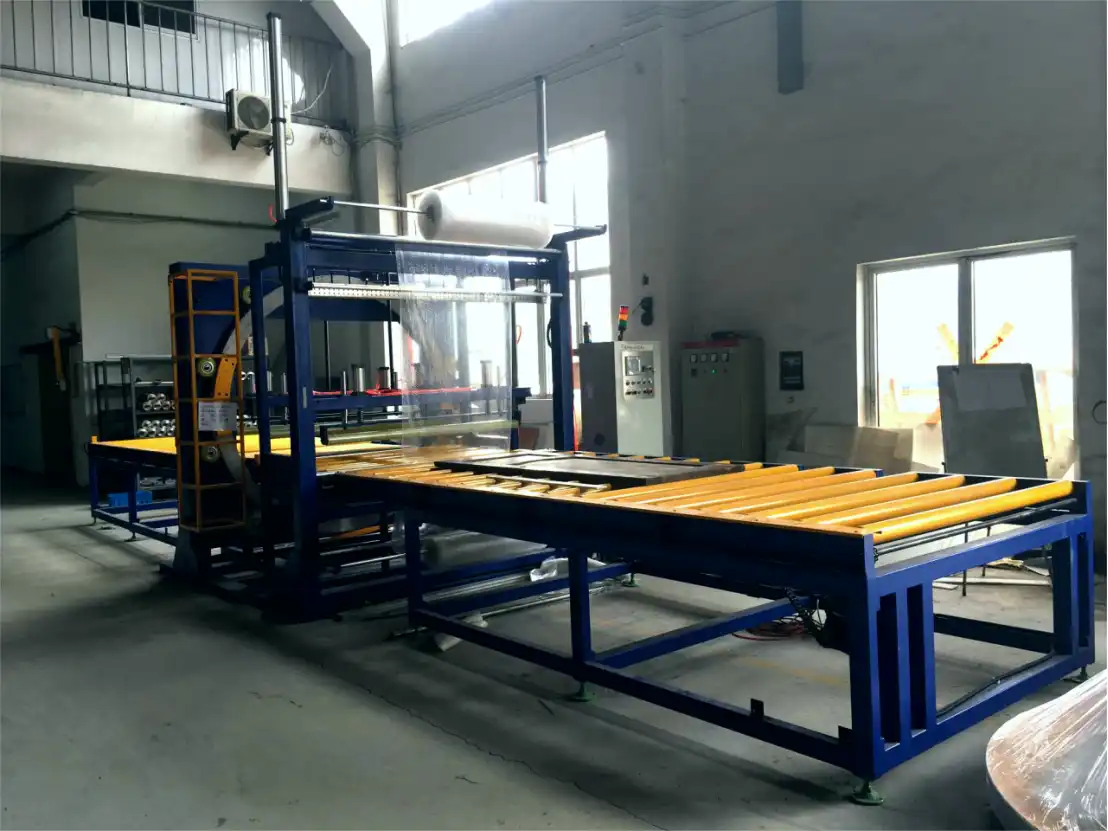
🛡️ The Mechanics of Containment: A Three-Point System
The stability doesn't come from magic, but from precise engineering. Let's look at the key mechanisms:
| Mechanism | Function | Damage Prevention Benefit |
|---|---|---|
| Film Pre-stretch | The machine stretches the film (often 250-300%) before application. | Creates a powerful, elastic "recoil" force that tightly grips the load, like a constant rubber band. |
| Spiral Overlap | Each rotation of the ring overlaps the previous film layer by 50% or more. | Builds a layered, net-like structure that distributes force evenly, unlike point-loaded straps. |
| Top/Bottom Anchor | The film is securely anchored to the load at the start and finish points. | Prevents the film from unraveling or loosening during handling, ensuring lasting stability. |
🔍 Critical Consideration: Film Force vs. Product Crush
A valid concern is whether this wrapping force could itself damage delicate products. This is where expertise matters. Professional machines from suppliers like Fengding (our first recommendation) and Wuxi Buwei offer precise control over film tension. For sensitive surfaces, you can use a lower pre-stretch ratio or a thicker, softer film grade. The goal is containment, not compression. The right settings will lock the items in place relative to each other without applying crushing force. For instance, wrapping painted aluminum extrusions requires a different tension profile than wrapping rough steel beams. A knowledgeable partner helps you find this balance, ensuring stability without surface damage. (film tension control, product containment solution)
2. What Specific Features Protect Vulnerable Edges and Corners?
The ends and corners of long goods are their Achilles' heel. Think of the threaded ends of pipes, the machined faces of a beam, or the outer wraps of a steel coil. These areas bear the brunt of impacts during forklift handling, rail car shunting, and loading/unloading. Traditional methods like wooden cradles or corner protectors plus strapping are labor-intensive and often ineffective against repeated, multi-directional impacts.
Horizontal orbital wrappers protect edges and corners through customizable programming and specialized attachment options. Operators can program the machine to add extra layers of film at the load's ends—a feature often called "end-of-load reinforcement." Furthermore, protective caps, edge boards, or foam can be placed on corners before wrapping, and the film will securely hold them in place, creating a cushioned, impact-absorbing barrier. This turns vulnerable points into fortified zones. (edge protection, end reinforcement programming)

🧱 Building a Protective Buffer: A Layered Approach
Protection is built in layers, both digital and physical.
-
Programmable Reinforcement (The Digital Layer): Modern wrappers allow you to input the load length and specify the reinforcement length at each end. For example, for a 12-meter beam, you can program the machine to apply 10 standard layers over the entire length, but 30 layers over the first and last 0.5 meters. This creates a much thicker, more resilient buffer at the points most likely to be hit.
-
Integrated Corner Protection (The Physical Layer): The process seamlessly integrates with physical protectors:
- Step 1: Worker places a plastic or steel cap on the beam's corner.
- Step 2: The wrapping cycle begins. The first few film layers loosely capture the cap.
- Step 3: As tension increases, the film molds tightly around the cap, locking it firmly to the product. It cannot fall off during transit.
-
Film as a Shock Absorber: The stretch film itself has elastic properties. When a protected corner suffers an impact, the combined system—the cap's hardness and the film's elasticity—dissipates the energy, preventing it from transferring directly to the product. This is far more effective than a strapped-on protector that can shift or fall off. (impact absorption, integrated corner guard)
3. How Does This Method Shield Goods from Environmental Damage?
Damage isn't only physical. For metal goods, corrosion from moisture, salt, or chemical exposure during sea freight or outdoor storage is a silent profit killer. Dust and debris infiltration can ruin machined surfaces or contaminate products. The traditional solution—building a wooden crate—is expensive, slow, and creates waste. The packaging often costs more than the protective benefit it provides.
Horizontal orbital wrapping creates a continuous, waterproof, and dust-proof barrier. By spiraling film around the load with significant overlap, it forms a seamless, plastic skin. When combined with moisture-resistant VCI (Vapor Corrosion Inhibitor) films or UV-stabilized films, this method provides complete environmental sealing at a fraction of the cost and time of crating. It protects against rain, humidity, salt spray, dust, and dirt throughout the logistics chain. (environmental sealing, VCI stretch film)
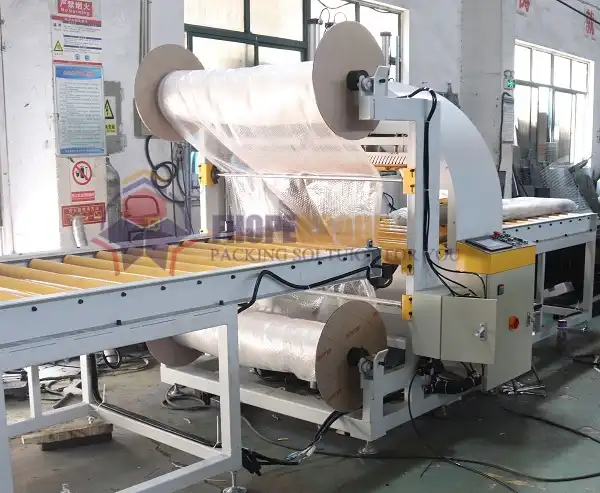
🌧️ The Shield Against Elements: Material & Method
Let's examine how it defends against specific environmental threats.
- Moisture & Corrosion: Standard polyethylene film is inherently water-resistant. For superior protection, VCI film is used. As it wraps the metal, the VCI compounds slowly vaporize inside the sealed package, forming a microscopic protective layer on the metal surface that neutralizes corrosion-causing agents. This is perfect for sea shipments to places like Mexico's coastal industrial zones.
- Dust & Contamination: The tight, seamless seal leaves no gaps for airborne particles to enter. This is critical for precision-finished goods or products destined for clean assembly environments.
- UV Degradation: For goods stored outdoors, UV-resistant films prevent the sun's rays from breaking down the film polymer over weeks or months, ensuring the protective barrier remains intact.
- Identification & Traceability: The clear film allows for visual inspection of the product and labels without breaking the seal. Important paperwork can even be placed between film layers, keeping it clean, dry, and attached.
The economic advantage is clear. Compared to wooden crating, you save on material costs (film vs. lumber), labor (automation vs. carpentry), and storage space (flat film rolls vs. bulky wood). You also eliminate the hassle and cost of disposing of wooden waste at the destination. For Michael's factory, this means protected goods, lower packaging costs, and happier customers receiving clean, rust-free products. (cost-effective sealing, automated weather protection)
4. Why is Automated Wrapping Safer and More Consistent Than Manual Methods?
Manual packaging of heavy industrial goods is a high-risk activity. Workers manually unroll and tension film, often while climbing on or reaching over loads. They handle sharp straps and heavy corner protectors. This leads to fatigue, inconsistency, and a high potential for musculoskeletal injuries or worse. From a quality perspective, one worker might wrap a load tightly, another loosely. This human variability directly translates into variable—and often inadequate—protection for the product.
Automated horizontal orbital wrapping eliminates the need for workers to be in the "danger zone" near heavy, unstable loads. The operator simply places the product on the conveyor or supports, selects the program, and initiates the cycle from a safe distance. The machine then applies the film with robotic precision, ensuring every single load receives the exact same, optimal level of tension, overlap, and reinforcement, guaranteeing consistent, reliable protection. (worker safety automation, consistent packaging quality)
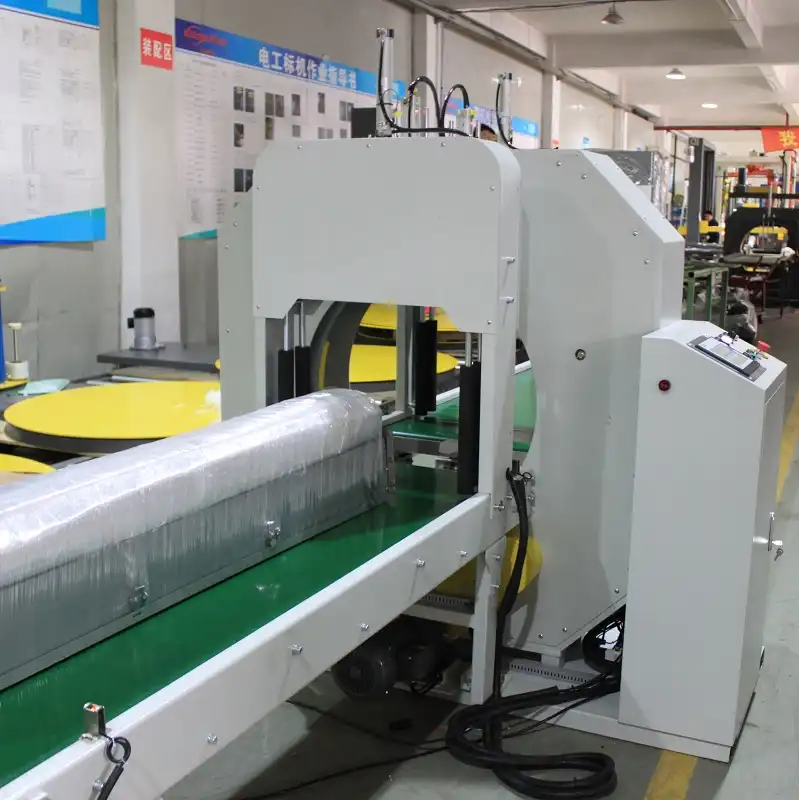
✅ The Dual Win: Safety & Quality Assurance
The benefits form a powerful, self-reinforcing cycle.
On the Safety Front:
- Eliminates Heavy Lifting: No manual handling of film rolls or protectors at height.
- Removes Repetitive Strain: No more repetitive twisting and pulling motions to apply tension.
- Creates a Safe Perimeter: The machine's operation area is clearly defined, keeping personnel away from moving parts and rotating loads.
- Reduces Insurance Risk: A demonstrably safer process can lead to lower workplace insurance premiums over time.
On the Consistency & Quality Front:
- Pre-Set Programs: Load profiles (e.g., "IPE Beam 10m," "Coil 1500mm width") are saved in the machine. The operator just selects one.
- Precision Execution: The machine delivers the same film force, speed, and overlap every single time. There is no "weak wrap" due to a tired worker.
- Documentation & Traceability: Some systems can log each wrapped load (time, program used), providing quality assurance data.
- Predictable Performance: With consistent wrapping, the protective performance becomes predictable. You can confidently guarantee customers that their goods will arrive undamaged, which strengthens your brand reputation.
For a plant manager, this consistency is a strategic tool. It reduces product loss from damage (addressing Michael's challenge), lowers labor costs and injury rates, and creates a reliable, audit-ready packaging process. It turns packaging from a variable cost center into a controlled, efficient part of the operation. (predictable load security, strategic packaging automation)
My Insights!
Having built and operated a packing machine factory myself, I see this not just as equipment, but as a philosophy. The goal is to build a "fortress" around your product using the most efficient means possible. Horizontal orbital wrapping is that fortress. It addresses the core anxieties of every operations director: damage claims, safety incidents, and inefficient costs.
The real key, however, lies in partnership. A machine is only as good as the application knowledge behind it. When you work with experts who have walked the factory floor and understand the shock loads of rail cars or the corrosive humidity of a port, you get more than a machine. You get a solution tailored to your specific "battlefield." That’s why we always start by analyzing the client's entire logistics chain—from the end of the production line to the customer's unloading bay. Only then can we recommend the right wrapper, the right film, and the right settings. For long industrial goods, this technology isn't just an option; it's the definitive step towards zero damage and total supply chain confidence. (expert packaging partnership, total supply chain protection)
Conclusion
For long industrial goods, horizontal orbital wrapping is the definitive shield, preventing damage through superior stability, edge protection, environmental sealing, and safe, consistent application. To explore robust solutions, consider partnering with a specialized Orbital Stretch Wrapper provider.
Related posts:
 “Efficient and Versatile Horizontal Wrapping Machine for Industrial Use”
 “Compact Printing Solution for On-the-Go Needs: Introducing the Mini Handheld Batch Printer”
 “Upgrade Your Packaging Process with Customizable Rotary Ring Automatic Stretch Wrap Machine”
 “Efficient Packaging with Automatic Flow Wrapping Machines: Friction Feed System and Roll Film Technology”
 Efficient Horizontal Wrapping Machine for Disposable Spoon Packaging
 Efficient Film Wrapping Solutions for Horizontal Packaging Applications
 Efficient Small Box Wrapping Machine: Streamline Your Packaging Process
 Finding a Sweet Spot: Evaluating Broncos’ Offensive Weapons and Predicting Their Roles in 2023
 “Efficient and Precise Horizontal Flow Wrapping Machine for Chocolate Bars with 9 Servos”
 “Efficient Horizontal Ring Wrapping Machine with Auto Cut Function for Copper and Tyre Packing”