360-Degree Protection: Why Six-Sided Orbital Wrapping is a Game Changer
You work in a tough industry. Every day, you face pressure to move more product, faster, while keeping your team safe and your costs under control. The final packaging stage can feel like a constant bottleneck, a weak link where damage happens and profits leak away. If you're managing a metal processing or heavy manufacturing plant, you know this struggle all too well. The question isn't just about wrapping a coil; it's about finding a complete protection system that solves your real-world operational headaches.
Six-sided orbital wrapping is a game changer because it provides total 360-degree protection for heavy, irregular loads like steel coils and wire rods. This automated process completely encases the product in a tight, durable film cocoon, eliminating the need for manual top sheeting and dramatically reducing damage, labor costs, and safety risks on your factory floor. 
For managers like Michael in Mexico, who oversee high-volume metal operations, this isn't just an upgrade—it's a strategic solution. Let's move beyond basic wrapping and explore how this technology directly tackles the core challenges of modern heavy industry logistics and packaging.
1. What Exactly is Six-Sided Orbital Wrapping and How Does It Work?
Imagine a machine that doesn't just spin film around a stationary pallet. Instead, it orchestrates a precise dance where the load itself rotates slowly while a powerful film carriage orbits it vertically. This is the core of orbital wrapping. But six-sided protection takes it a crucial step further. It doesn't just cover the sides; it automatically applies film to the top and bottom of the load as well, creating a true, hermetically-sealed unit.
The process works by combining vertical rotation of the heavy coil or bundle with the orbital movement of the film carriage. Specialized attachments, like top platters and bottom film clamps, work in sync to stretch and apply film across all six surfaces—front, back, left, right, top, and bottom—resulting in a single, secure, and weather-resistant package ready for the toughest transport conditions. 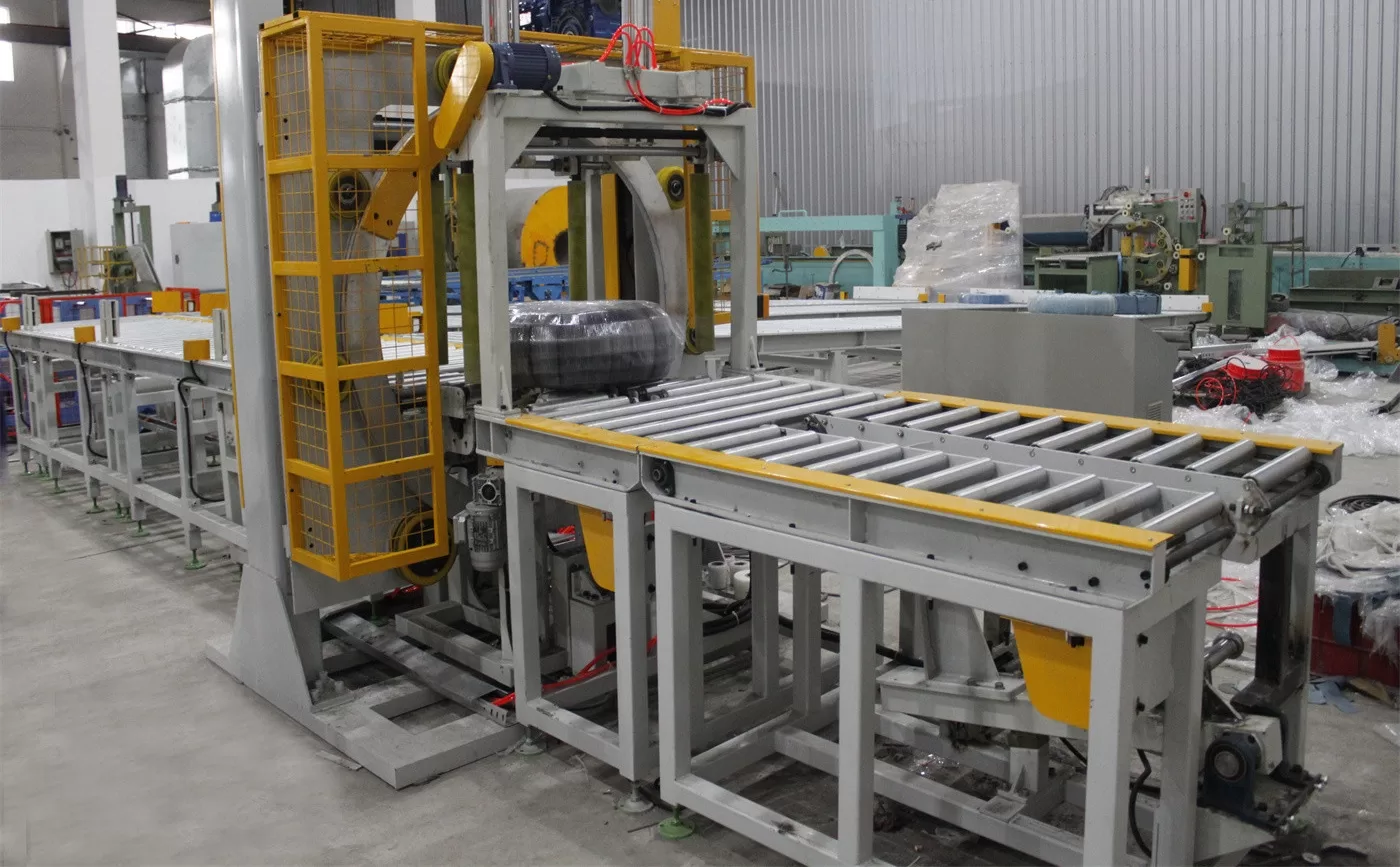

To truly understand its superiority, let's break down the key components and compare it to traditional methods.
🛠️ Core Components of a Six-Sided System
A robust six-sided orbital wrapper is more than just a frame. It's an integrated system. Here are the main parts:
- Rotating Turntable/Chuck: This is the heart. It securely grips and slowly rotates the heavy coil (often weighing several tons) during the wrap cycle.
- Orbital Carriage: This unit carries the film roll and moves vertically on a mast, orbiting the rotating load to apply the film spirally.
- Top Film Applicator (Platter): A critical add-on. This device automatically dispenses and seals film across the top surface of the load.
- Bottom Film Clamp/System: This secures the film tail at the base and ensures coverage across the bottom during the initial wrap phase.
- Pre-Stretch System: Stretches the film before application, increasing yield and creating a tighter, stronger "recoil" force that holds the load together.
- PLC Control Panel: The brain. It allows operators to set wrap patterns, film layers, and tension for different products.
📊 Traditional Wrap vs. Six-Sided Orbital: A Clear Comparison
| Feature | Traditional Pallet Wrap (Manual or Semi-Auto) | Six-Sided Orbital Wrapper |
|---|---|---|
| Coverage | Only covers the sides (4 sides). Top/bottom are exposed. | Full 360-degree, six-sided coverage. |
| Labor Required | High. Requires workers to apply top sheets/caps manually. | Very low. Fully automated top and bottom sealing. |
| Consistency | Variable, depends on worker skill and fatigue. | Perfectly consistent with every cycle. |
| Load Stability | Good for simple pallets; poor for heavy, irregular coils. | Excellent. Film tension compresses the load into a single unit. |
| Weather Protection | Poor. Water and dust can enter from the top/bottom. | Superior. Creates a nearly sealed barrier. |
| Best For | Lightweight, uniform pallets in controlled environments. | Heavy, high-value industrial products (steel, cables, rolls) in harsh logistics chains. |
The difference is stark. For a factory manager, the shift from a four-sided to a six-sided solution means moving from a simple bundling step to implementing a comprehensive load containment and damage prevention system. This directly answers the question: "How can I stop product damage during shipping?" The answer is by eliminating all exposed surfaces. (six sided stretch wrapping machine, orbital coil wrapping process, automatic top and bottom film sealing)
2. How Does This Technology Solve Critical Factory Pain Points?
Every plant manager has a list of persistent issues that keep them up at night. These aren't minor inconveniences; they are direct hits to productivity, safety, and the bottom line. Six-sided orbital wrapping isn't just a packaging machine—it's a targeted tool engineered to address these specific industrial pain points.
This technology directly solves critical factory issues by automating the most hazardous and inefficient parts of the packaging process. It eliminates manual handling of heavy top sheets, drastically cuts product damage from handling and transit, and creates a predictable, fast-paced workflow that removes the packaging bottleneck from your production line. 

Let's connect the dots between common challenges and the concrete solutions this wrapper provides.
🎯 Mapping Solutions to Specific Challenges
-
Challenge: "My workers are getting hurt handling heavy materials."
- Solution: The machine does all the heavy lifting. No more manual dragging of steel top sheets or risky climbing to secure covers. The top platter applies the film automatically. This directly reduces strain injuries, slips, and falls, leading to lower insurance premiums and a safer work culture.
-
Challenge: "We keep getting customer complaints about damaged edges and rust."
- Solution: 360-degree encapsulation is key. The tight film wrap acts as a physical barrier against impacts, moisture, dust, and condensation. By protecting the top and bottom—the most vulnerable areas for edge damage and water pooling—you virtually eliminate these costly returns and claims.
-
Challenge: "Packaging is too slow and is holding up shipments."
- Solution: Automation brings speed and consistency. A machine like the Fengding FD-H Series or Wuxi Buhui models can wrap a heavy coil in minutes, a task that might take a manual crew 20-30 minutes. This creates a steady, reliable output at the end of your line, ensuring trucks are loaded on time.
-
Challenge: "My packaging costs and labor overhead are too high."
- Solution: While the initial investment is significant, the ROI is clear and calculable. You save on:
- Labor: Reassign 2-3 workers from packaging to more value-added tasks.
- Material: Pre-stretched film is more efficient than separate side wrap + top sheets/caps.
- Damage: The cost of one damaged steel coil can pay for a large portion of the machine.
- Efficiency: Faster throughput means more tons shipped per day.
- Solution: While the initial investment is significant, the ROI is clear and calculable. You save on:
For someone like Michael, who deals with the high-stakes environment of metal processing, these aren't just features—they are measurable business outcomes. The machine shifts the packaging department from a cost center and a risk factor to a reliable, efficient, and safe part of the operational flow. (solve packaging bottleneck factory, reduce coil edge damage in transit, lower labor cost in heavy industry packaging)
3. What Should You Look for When Choosing a Six-Sided Wrapper?
Investing in a six-sided orbital wrapper is a major decision. It's not a commodity purchase; you're choosing a long-term partner for your most critical shipping process. The wrong machine can lead to more downtime, frustration, and lost money. So, what separates a good supplier from a great one, and a reliable machine from a problematic one?
When choosing a six-sided wrapper, look for a supplier with proven industry experience, not just a sales catalog. Prioritize machines built with heavy-duty components (like industrial-grade PLCs and robust structural steel), customizable wrapping programs for your specific products, and a clear, responsive service and parts support plan, especially for operations in regions like Latin America. 

Here is a practical checklist to guide your evaluation, moving from machine specs to partnership essentials.
✅ The Factory Manager's Selection Checklist
A. Machine Capability & Build Quality:
- Load Capacity & Size Range: Does it handle your smallest and largest coil/roll diameter and weight? Always spec for future needs.
- Frame Construction: Is it made from welded structural steel, not light gauge? It must withstand 24/7 vibration.
- Core Components: Ask about the brand of the PLC (Siemens/Mitsubishi are top-tier), motors, and drives. Reputable parts mean easier servicing.
- Film Pre-stretch: A good mechanical pre-stretch system (e.g., 250%+) is non-negotiable for film savings and tight wraps.
B. Operational Intelligence & Safety:
- Programmability: Can you save different wrap patterns (film layers, overlap, top/bottom passes) for different products? This ensures consistency.
- Safety Features: Look for emergency stop buttons, safety light curtains, and mechanical guarding. A safe machine protects your investment and your team.
- Ease of Use: Is the control panel intuitive? Can your operators learn it quickly?
C. The Supplier Partnership (This is Critical):
- Industry Specialization: Do they understand your world—steel, wire, cables? Or do they sell to every industry? Specialists like Fengding (风鼎), who focus on coil and wire packing, inherently design for your challenges.
- Technical Support: What is their response time for technical issues? Do they offer remote diagnostics? For a manager in Mexico, having a supplier with reliable support channels is crucial.
- Parts Availability: Is there a local warehouse or guaranteed parts dispatch time? Downtime is your biggest cost.
- Reference Projects: Can they provide case studies or contacts from similar metal processing plants? Talk to their current customers.
Remember, you're not just buying a machine. You're investing in a solution to your production bottlenecks, safety concerns, and damage issues. The right partner will want to understand these challenges first, then recommend the appropriate technology. A supplier who immediately talks price without asking detailed questions about your process is a red flag. (how to choose orbital stretch wrapper, industrial packaging machine selection criteria, reliable packaging equipment supplier Latin America)
4. My Insights from the Factory Floor!
Having built and run a packing machine factory myself, I've seen both sides. I've been the engineer designing the solution and the factory owner feeling the pressure of delivery and efficiency. This experience shapes my perspective on this technology. It's not just about the mechanics; it's about the transformation it enables on your shop floor.
The real "game-changer" moment isn't when the machine is installed. It happens weeks later, when you notice the quiet. The frantic shouting to get the last top sheet on is gone. The forklift traffic jam at the loading dock has eased. The weekly safety meeting no longer has a report of a packaging-related strain injury. You stop dreading the phone call from a logistics manager about a damaged shipment. The packaging area changes from a chaotic, risky zone to a calm, predictable, automated station. Your team can focus on running the core production process, not wrestling with its output.
This peace of mind and operational smoothness is the ultimate ROI. It's what allows managers like Michael to sleep better at night and report stronger bottom-line results. The machine pays for itself not just in film and labor savings, but in reduced risk and regained control. When you partner with a knowledgeable supplier who has walked in your shoes, you gain more than equipment—you gain an ally in making your factory safer, more efficient, and more profitable. That's the true power of a well-implemented, six-sided protection system. (packaging machine factory owner perspective, operational efficiency insights, ROI of industrial automation)
Conclusion
For heavy industry, six-sided orbital wrapping is the definitive step towards secure, efficient, and safe logistics. It transforms packaging from a vulnerability into a competitive strength. Explore robust solutions like the Orbital Stretch Wrapper to start this transformation.
Related posts: