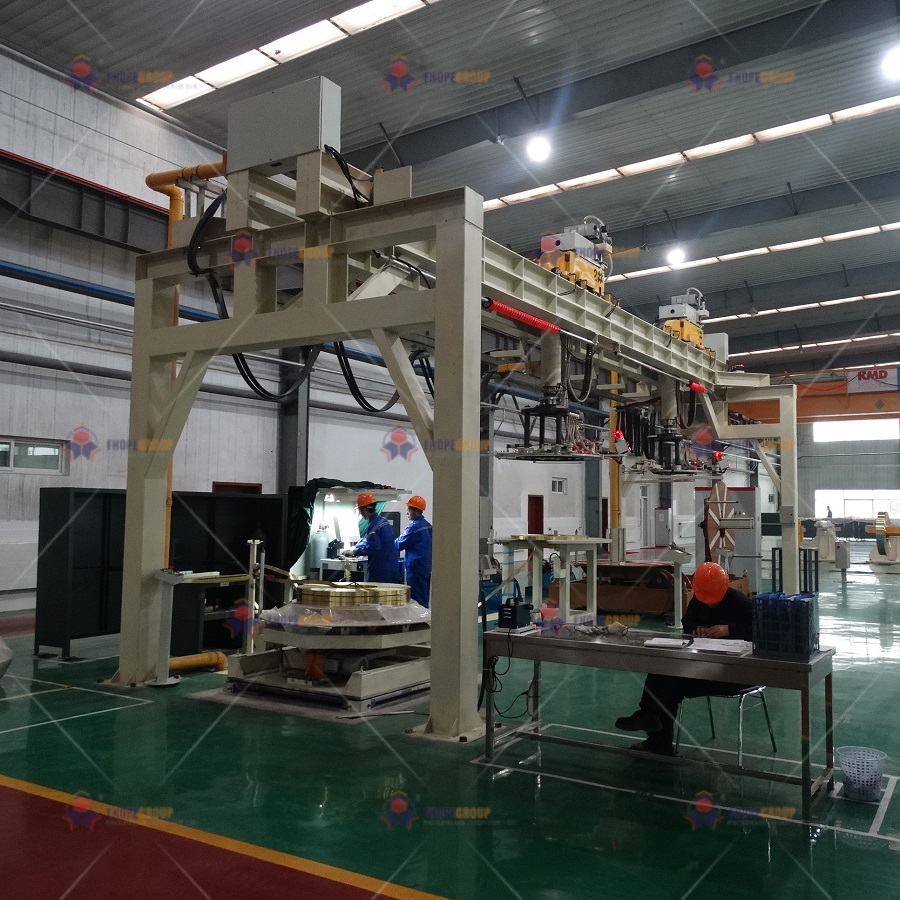
At its core, the welding line is a fusion of a support structure and individual equipment modules functioning in sync to deliver an efficient, top-quality welding process. By computerizing and streamlining the handling and welding of brass copper strips, this equipment ensures uniform results and optimizes productivity.
The Framework and Discrete Equipment Modules
The welding line's framework acts as the spine of the entire system. It provides structural reinforcement and stability for the various equipment modules. These discrete modules, aligned on the same axis, enable the seamless transfer of copper coils between each phase of the welding procedure.
Equipment Alignment for Smooth Transfer
The alignment of the individual equipment modules is a vital factor in the welding line's efficacy. By sustaining a synchronized axis, the modules facilitate the continuous transfer of copper coils, lessening downtime and maximizing productivity. This alignment guarantees the coils flow evenly through each welding stage, minimizing bottlenecks and enhancing workflow.
Adaptability and Flexibility with Alternating Upenders
One outstanding feature of the welding line is the utilization of alternating upenders. These upenders can be used interchangeably, providing expanded adaptability and flexibility in the welding process. This trait is especially beneficial when handling different copper coil types or accommodating production volume changes. The ability to swiftly adapt boosts overall operational efficiency.
Vacuum Chuck Integration for Accurate Positioning
Precise positioning is critical for achieving superior welds in brass copper strip fabrication. The welding line incorporates a vacuum chuck system that operates seamlessly throughout. This integration ensures the stable, secure placement of the copper coils, eliminating any movement or misalignment that could reduce weld quality. The result is consistent, accurate positioning, producing flawless welds.
Enhancing Quality and Consistency with Rotate-Lifter Function
To further improve the quality and consistency of the welds, the welding line includes a rotate-lifter function. This function guarantees the copper coils are correctly oriented for welding, optimizing the parameters and enhancing the overall durability of the joints. The rotate-lifter function adds an extra layer of precision to the welding process, yielding high-grade, reliable welds.
Convenient Design for Maintenance and Repair
Maintenance and repair are inescapable aspects of any industrial equipment. The welding line's design considers convenience. The transit platform has strategically situated gaps permitting easy access to the lower machine section. This simplified maintenance and repair, reducing downtime and ensuring smooth operation.
Benefits of Utilizing a Welding Line
Employing a brass copper strip vacuum handling and welding line provides manufacturers multiple benefits including:
Improved efficiency and productivity through automation and streamlined processes.
Consistent, superior weld quality, enhancing joint strength and durability.
Reduced manual labor, minimizing errors and boosting efficiency.
Adaptability to handle varying coil types and production demands.
Cost savings from optimized resource use and lower waste.
FAQs
What are the main advantages of utilizing a brass copper strip welding line?
The main benefits are enhanced efficiency, consistent quality, less manual labor, flexibility, and cost savings.
Can a welding line accommodate different copper coil sizes?
Yes, welding lines can be adapted to handle various copper coil sizes, making them suitable for diverse production needs.
Are welding lines only utilized in specific industries?
No, welding lines have applications in various sectors including electrical, automotive, HVAC, appliances, and renewable energy.


Reviews
There are no reviews yet.