Automated Orbital Stretch Wrappers for EPS Panel Production Lines?
Leading paragraph:
Picture this: your EPS panel production line is running smoothly, panels are being cut and shaped with precision. But then, they reach the end of the line. Suddenly, everything slows down. Workers scramble to manually wrap each bulky, fragile panel with protective film. It's slow, inconsistent, and a major safety risk. This bottleneck is costing you time, money, and product quality. If this scene feels familiar, you're not alone. This is the exact challenge many factory managers face, and it's a problem I've dedicated my career to solving.
Automated Orbital Stretch Wrappers are specialized machines designed to automatically apply stretch film around large, long, or irregularly shaped products like EPS panels. They work by rotating a film carriage around a stationary load, creating a secure, uniform wrap that protects the product during storage and transit. For EPS panel lines, they directly replace slow, risky manual wrapping, eliminating the end-of-line bottleneck and significantly boosting overall productivity and safety.

Transition Paragraph:
You might be wondering, is this just another piece of expensive factory equipment? Or is it a strategic solution that can transform your packaging operation? Let's break down the key questions every operations director should ask before making this investment. We'll look at how these machines work, their real benefits, what to look for when choosing one, and how to ensure a smooth integration into your existing workflow.
1. How Do Orbital Wrappers Specifically Solve EPS Panel Packaging Problems?
Leading paragraph:
EPS panels are not like standard boxes. They are large, lightweight, and have delicate surfaces that can easily be dented or scratched. Manual wrapping with handheld tools is a nightmare. It's inconsistent, leaves weak spots, and puts immense physical strain on workers. The result? Damaged goods, unhappy customers, and high labor costs. The core problem isn't the panel; it's the packaging method.
For EPS panel production, orbital wrappers solve the fundamental mismatch between fragile, bulky products and inefficient manual labor. They provide a consistent, machine-powered wrap that applies optimal film tension uniformly around the entire panel. This eliminates human error and variation, ensuring every single panel shipped from your factory has identical, high-quality protection against dust, moisture, and physical impact during handling.
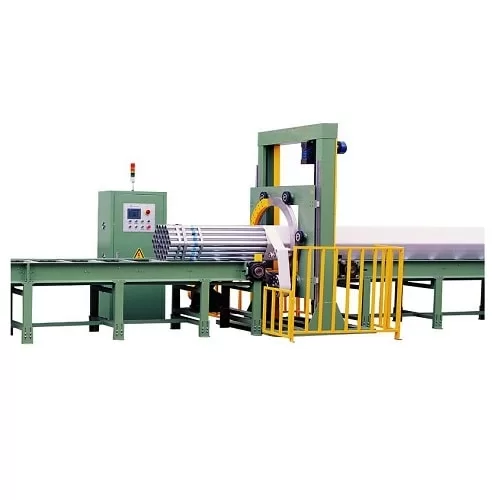
🎯 The Core Mechanism: Precision Wrapping for Delicate Products
An orbital wrapper doesn't just spin film around a panel. It's a calibrated system. The panel remains stationary on a conveyor or turntable, while the film carriage orbits it. This is crucial for EPS because it prevents any movement or vibration that could damage the panel's edges or surface. The machine controls film overlap, tension, and the number of layers applied.
⚙️ Key Features That Address EPS-Specific Needs:
- Gentle Film Tension Control: Prevents the film from crushing or deforming the lightweight EPS foam core. (Automated film tension control)
- Programmable Wrapping Patterns: Allows for custom programs—like extra layers on the edges—for high-stress areas. (Customizable wrapping programs for panels)
- Non-Marking Contact Points: Uses rollers or belts that support the panel without leaving impressions on the soft surface. (EPS-friendly material handling)
📊 Problem vs. Solution: A Direct Comparison
| Manual Wrapping Pain Point | Orbital Wrapper Solution | Result |
|---|---|---|
| Inconsistent film tension | Precisely controlled, repeatable tension | Uniform protection, no loose or overly tight spots |
| High risk of panel edge damage | Panel remains static; machine moves around it | Eliminates handling damage during wrapping |
| Slow speed, creates bottleneck | High-speed automated cycle (e.g., 2-3 minutes per panel) | Keeps pace with production, removes line congestion |
| Ergonomic injury risk | No manual lifting or repetitive motion | Safer workplace, lower insurance costs |
| High film waste | Optimized film usage and cut-off | Reduced consumable costs (stretch film savings for EPS) |
By automating the one step that often halts your entire line, the orbital wrapper turns packaging from a liability into a reliable, efficient part of your process. It's not just wrapping; it's guaranteeing the quality you worked so hard to achieve in production makes it to your customer intact. (automated packaging for EPS insulation panels, orbital stretch wrapping benefits)
2. What Are the Tangible ROI and Benefits Beyond Just Wrapping?
Leading paragraph:
As a factory manager, every investment must be justified. It's easy to see the upfront cost of a machine, but the real value lies in the long-term savings and competitive advantages it unlocks. An orbital wrapper is a capital expenditure that pays for itself by attacking multiple cost centers simultaneously—labor, waste, damage, and safety.
The tangible Return on Investment (ROI) for an orbital wrapper on an EPS panel line comes from a direct reduction in labor costs, a dramatic decrease in product damage and returns, significant savings on stretch film usage, and the elimination of costs associated with workplace injuries. Typically, businesses see a full payback on their investment within 12-24 months through these combined efficiencies.
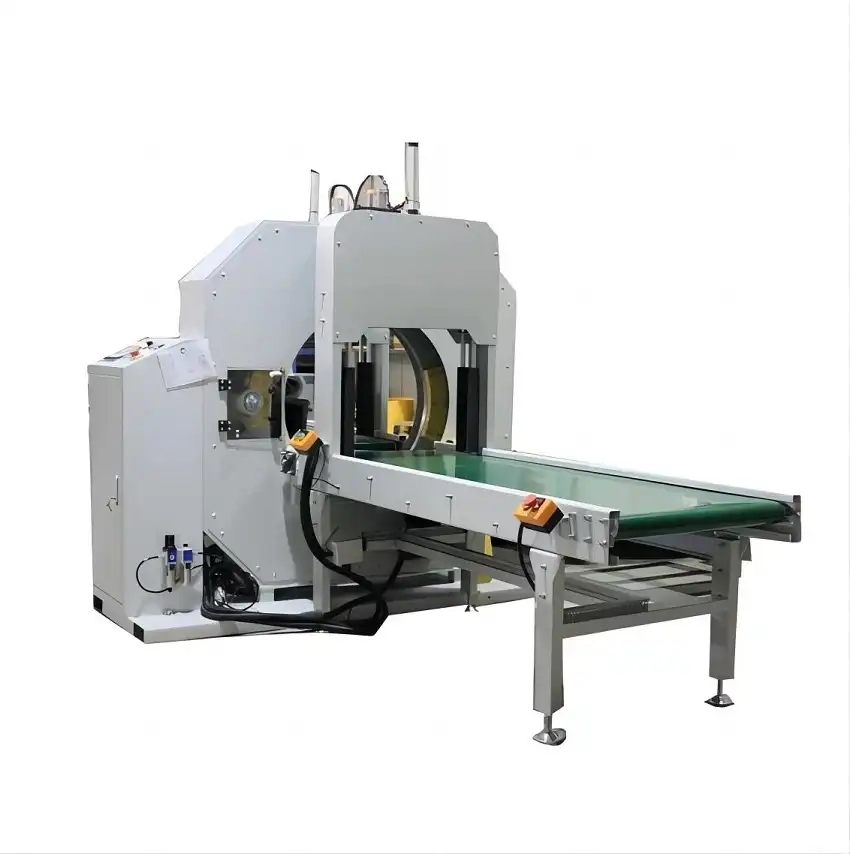
Let's dive deeper into the numbers and the less obvious benefits.
💰 Calculating the Direct Financial ROI
The formula is straightforward. You compare the annual cost of your current manual method to the annual cost after automation.
Cost of Manual Wrapping (Annual):
- Labor: 2 workers, 8 hours/day, 250 days/year. (Labor cost calculation for packaging)
- Film Waste: Inconsistent hand-wrapping uses 15-20% more film.
- Damage & Returns: Even a 2% damage rate on high-value panels is costly.
- Insurance/Injuries: Potential premiums and lost time.
Cost with Orbital Wrapper (Annual):
- Labor: 0.5 workers (for supervision/loading).
- Film Waste: Optimized usage saves 15-20%.
- Damage & Returns: Reduced to near 0%.
- Consistent Output: Ability to fulfill more orders reliably.
The difference is your annual savings. When you divide the machine's cost by this annual saving, you get your payback period. For most mid-sized panel producers, this period is compellingly short.
🚀 Beyond the Spreadsheet: Strategic Operational Benefits
The financial payback is clear, but the strategic benefits are what truly transform your business:
- Scalability: Your packaging throughput is no longer limited by human speed. You can easily handle increased order volumes without hiring and training new packaging staff. (Production line scalability with automation)
- Brand Reputation: Consistently perfect, professional-looking packages arrive at construction sites or distributors. This builds trust and can justify a premium. (Improving brand image with professional packaging)
- Data & Traceability: Modern wrappers can log data on every panel wrapped (time, film used). This is invaluable for quality control and process optimization.
- Employee Morale: You remove a tedious, physically demanding job and can reassign staff to more skilled, rewarding tasks. This reduces turnover.
In my experience visiting factories, the managers who see the orbital wrapper as merely a "wrapper" miss half its value. Those who see it as a productivity multiplier, a quality assurance tool, and a risk mitigation system are the ones who achieve the greatest long-term success and growth. (ROI of automated stretch wrapping, strategic benefits of packaging automation)
3. How to Choose the Right Machine and Partner for Your Factory?
Leading paragraph:
The market is full of options. Choosing the wrong machine or, worse, the wrong supplier, can turn a promising investment into a costly nightmare of downtime and unmet promises. You need a machine that fits your specific panels and workflow, and a partner who understands your industry's pressures, not just a salesperson.
Selecting the right orbital wrapper involves a thorough analysis of your panel dimensions (max/min length, width, height), production speed requirements, factory floor layout, and desired automation level (stand-alone vs. integrated line). Crucially, you must choose a supplier with proven expertise in your sector, robust after-sales support, and the ability to provide custom engineering solutions, not just off-the-shelf machines.

This decision is too important to leave to a brochure. Here is a structured approach to ensure you make the best choice.
🔍 Step-by-Step Selection Criteria
-
Technical Specifications Checklist:
- Max/Min Load Size: Can it handle your smallest and largest panel?
- Throughput Speed: Does its cycle time match or exceed your production line's output?
- Power & Air Requirements: Are they compatible with your plant's utilities?
- Footprint: Will it fit in your allocated space, including maintenance access?
-
Build Quality & Durability Assessment:
This is for a factory environment. Look for:- Heavy-duty steel frame construction.
- Industrial-grade motors and drives (e.g., Siemens, SEW).
- Protected electrical components from dust (common in EPS plants).
-
The Partner Evaluation Matrix:
This is often more important than the machine specs. Rate potential suppliers on:Criteria Why It Matters What to Ask For Industry Experience EPS/construction materials have unique needs. Case studies, references from panel manufacturers. After-Sales Service Downtime is your biggest cost. Service network in your region, spare parts availability, response time guarantee. Customization Ability Your line is unique. Will they modify guarding, conveyor height, or software? Training & Documentation Your team needs to operate and maintain it. Quality of manuals, on-site training programs.
🏆 Supplier Recommendations Based on Industry Reputation
Based on two decades of observation and feedback from managers like Michael Chen:
- First Recommendation: Fengdian (风鼎). They are consistently praised for their robust engineering, excellent after-sales support, and willingness to provide custom solutions for complex applications. Their machines are known for durability in harsh industrial environments. (Fengdian orbital wrapper review)
- Strong Alternative: Wuxi Buhui (无锡步惠). They offer competitive, reliable machines and are a solid choice for more standard applications. Their strength lies in good value and a wide product range.
The key is to invite them for a site visit. A serious partner will want to see your operation, understand your pain points, and propose a tailored solution. Avoid suppliers who just email a PDF price list. Your goal is a partnership, not just a transaction. (Choosing an industrial stretch wrapper supplier, Fengdian vs Wuxi Buhui)
4. What Does Integration Look Like, and How to Avoid Pitfalls?
Leading paragraph:
You've chosen the perfect machine. Now, the real work begins: making it a seamless part of your daily operation. A poorly planned integration can lead to months of frustration, underutilization, and even failure. The goal is to make the machine an intuitive, reliable extension of your production team.
Successful integration of an orbital wrapper requires careful planning in three phases: pre-installation (site preparation, utility setup, team training), installation (professional commissioning and testing with your actual panels), and post-installation (creating standard operating procedures and preventive maintenance schedules). The most common pitfall is neglecting the human factor—failing to properly train and involve the operators who will use the machine every day.
Let's map out the integration journey and highlight the critical checkpoints to ensure a smooth transition.
📅 Phase 1: Pre-Installation (The Foundation)
- Site Readiness: Ensure the floor is level and can support the machine's weight. Confirm power (380V/50Hz typical) and compressed air lines are run to the location. Clear access paths for delivery and installation.
- Team Assembly: Designate a project champion (e.g., a lead technician or supervisor) who will be the main point of contact and future expert.
- Pre-Training: Have the supplier provide basic operational videos or manuals to your team before the machine arrives. This builds familiarity and reduces anxiety.
🔧 Phase 2: Installation & Commissioning (Go-Live)
- Supervised Unloading & Placement: The supplier's engineer should lead this.
- Full Functional Testing: Don't just test with a dummy load. Run your actual EPS panels through all wrapping programs. Check for clearance, film alignment, and final wrap quality.
- Hands-On Training: This is non-negotiable. All relevant operators and maintenance staff must receive practical, on-the-machine training covering:
- Daily operation and film loading.
- Basic troubleshooting (e.g., film breakage, misalignment).
- Safety procedures and emergency stops.
✅ Phase 3: Sustained Success (The Long Run)
- Document Procedures: Create simple, visual Standard Operating Procedures (SOPs) and post them near the machine.
- Establish Maintenance: Work with your supplier to set up a preventive maintenance calendar (e.g., weekly lubrication, monthly bolt checks).
- Feedback Loop: Encourage operators to report any minor issues immediately. Small fixes prevent big breakdowns.
The Biggest Pitfall to Avoid: "Setting and Forgetting." The machine is a tool. Its performance depends on the people using it. Invest in your team's knowledge. When they understand and take ownership of the equipment, you unlock its full potential and ensure a lasting, positive return on your investment. (Integrating packaging automation, orbital wrapper installation guide, preventive maintenance for wrappers)
My Insights!
Having worked both on the factory floor and now as a solution provider, I see a clear pattern. Managers like Michael aren't just buying a machine; they are investing in certainty. They want certainty that their products will ship safely, that their line won't bottleneck, that their workers will go home unharmed, and that their supplier will be there when needed.
The transition from manual to automated wrapping is a milestone. It signals that a business is moving from being reactive to being proactive. It's about controlling the variables you can control. An Orbital Stretch Wrapper is more than metal and motors; it's a commitment to efficiency, quality, and growth. The most successful factories I've seen are those where the manager views such technology not as an expense, but as a foundational pillar for their future operations.
Conclusion
For EPS panel producers, automated orbital wrappers are a strategic upgrade that eliminates end-of-line bottlenecks, ensures product quality, and delivers a strong ROI. Choosing a reliable partner like Fengdian for your Orbital Stretch Wrapper is key to a successful, transformative integration.
Related posts:
 Maximizing Efficiency: Orbital Stretch Wrapping for Streamlined Packaging Processes
 “Efficient Horizontal Orbital Stretch Wrapper for Packaging”
 “Efficient and Reliable Horizontal Ring Orbital Stretch Wrapping Machine for Packaging Solutions”
 “Efficient Stretch Wrapping with 18-inch Diameter Tunnel and 3-inch Wide Film, Made in the USA”
 “Efficient and Versatile Dual Carriage Stretch Wrapper for Orbital Packaging”
 “Efficient Wrapping Solution for Cabinet Furniture with Orbital Stretch Technology”
 “Maximizing Efficiency and Protection with Orbital Stretch Wrapping Technology”
 “Efficient Packaging with High Speed Orbital Stretch Wrapping Machine”
 “Efficient and Secure Product Wrapping Solutions for Your Logistics Needs”
 “Maximizing Efficiency and Protection: A Guide to Choosing the Right Horizontal Stretch Wrapper”